
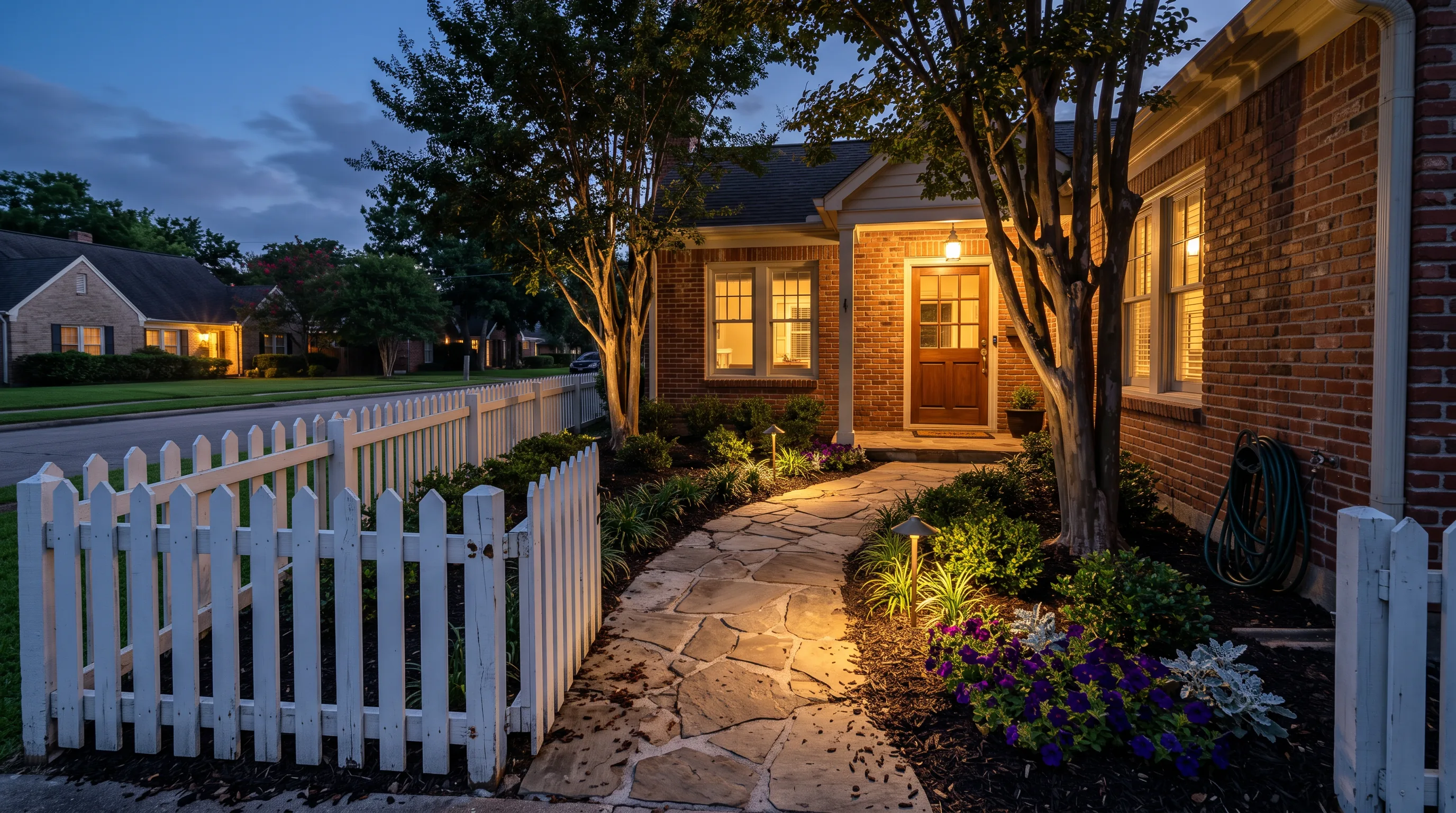
Landscape lighting
Low-voltage lighting that makes the garden work after dark
Path, uplighting, wash and step lighting across The Woodlands, Spring and Conroe — laid out on site after dark, aimed by eye, and balanced so nothing glares.
Landscape lighting is a design job carried out at night, not a set of fixtures installed during the day. The three decisions that determine whether it looks expensive are colour temperature, aiming, and what you deliberately leave dark. Boone's designs low-voltage LED systems on site after dusk, aims every fixture by eye once planting is in, and specifies brass or copper because plastic fixtures do not survive Gulf-coast summers.
Done properly it roughly doubles the hours a garden gets used and transforms how the house looks from the street. What follows is the technique, the specification, what it costs here, and why the transformer size matters more than the fixture count.
What we build
The techniques that do the work
A good scheme uses three or four of these and resists using all of them. Restraint is most of the craft.
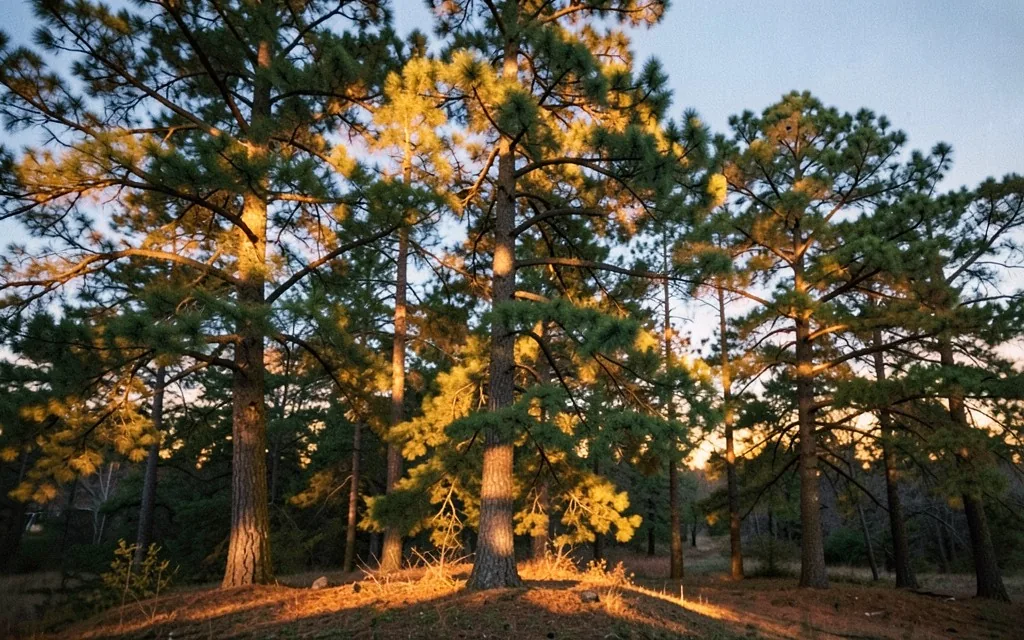
Uplighting trees and structure
Fixtures set at the base and aimed up through the canopy, which turns mature loblolly pines into the strongest feature the property has after dark. Two fixtures at different angles read as depth; one reads as a spotlight.
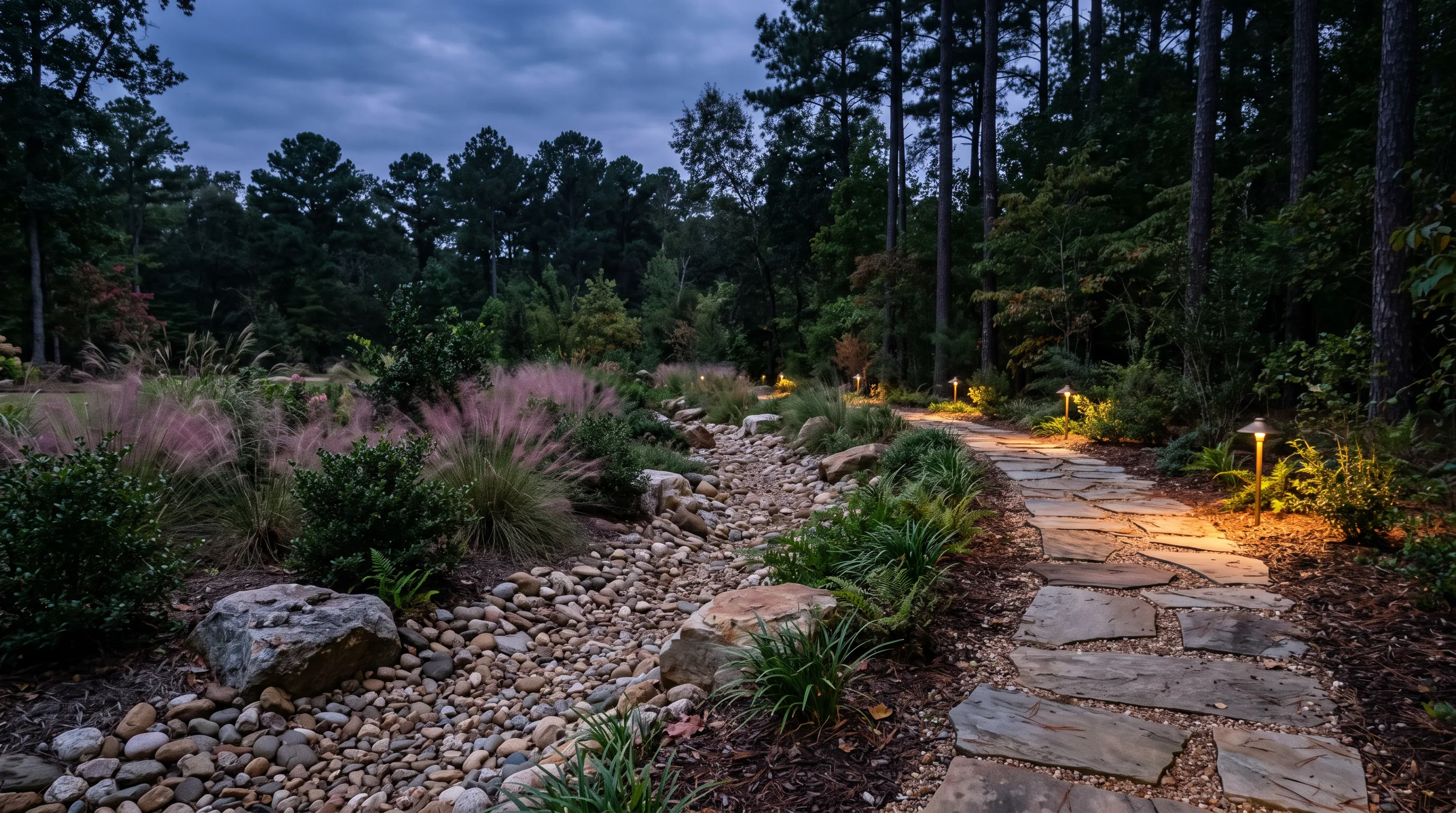
Path and area lighting
Low fixtures washing the surface rather than shining into the eye. Spaced so pools of light overlap gently instead of forming the runway of evenly spaced hats that marks out a catalogue install.
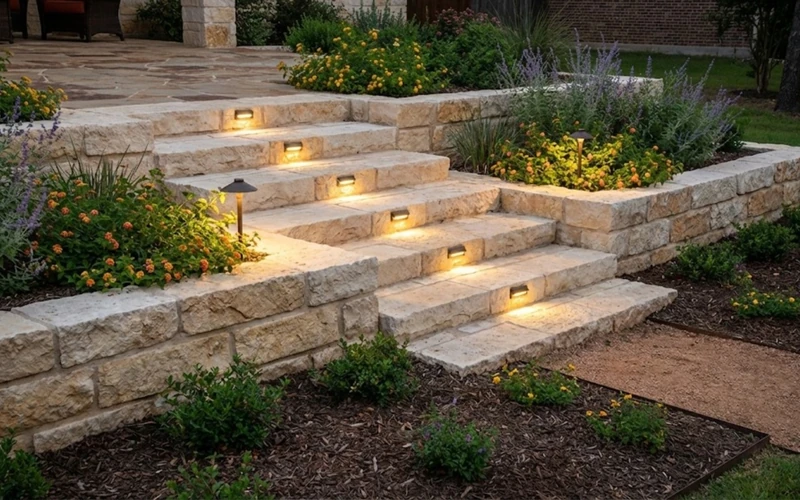
Step, wall and hardscape lighting
Recessed step lights and linear strips under seat wall caps and counter overhangs. This is the layer that makes hardscape safe and makes it look designed rather than lit.
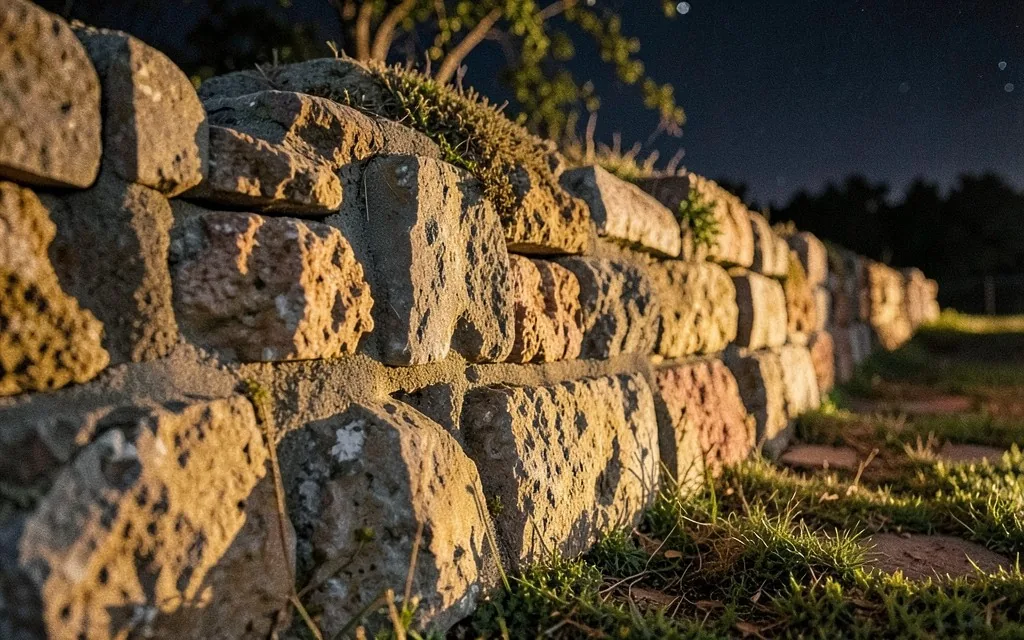
Façade wash and grazing
Wide wash to lift an elevation evenly, or a tight graze close to the wall to bring out stone and brick texture. Which one depends entirely on how good the surface is — grazing flatters good masonry and exposes bad.
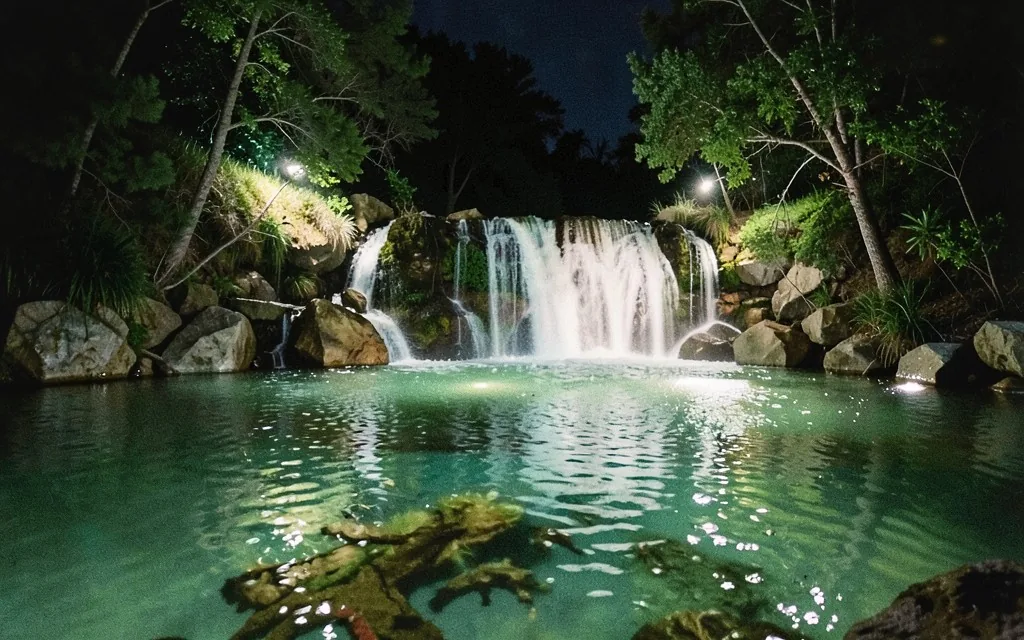
Water feature and pool lighting
Submersible fixtures under a waterfall or in a pond, and lighting around a pool surround kept low and warm so the water reads as the bright element rather than competing with the deck.
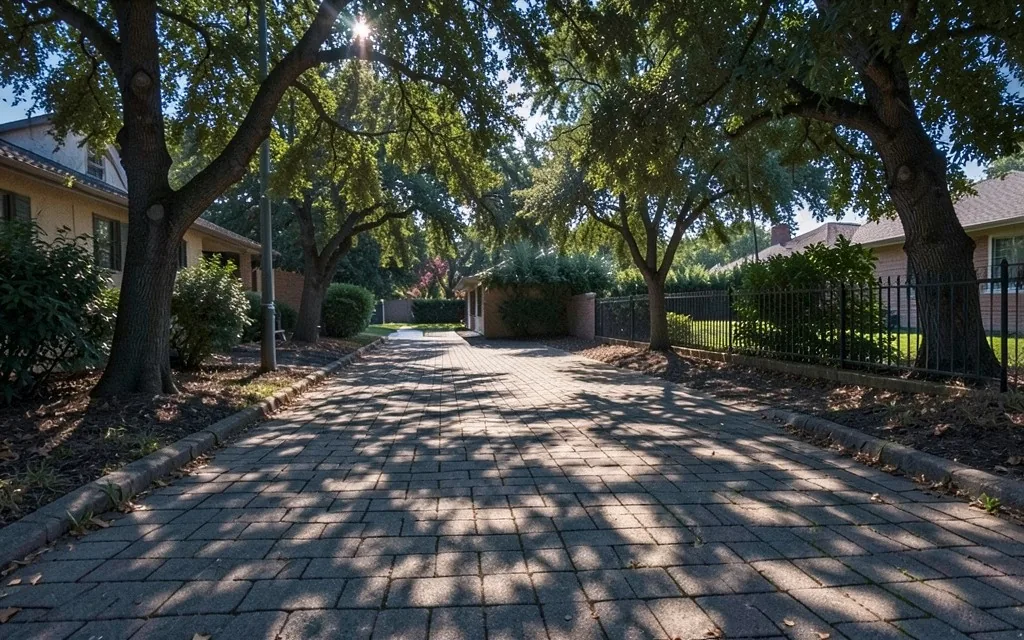
Moonlighting and shadow
Fixtures mounted high in a tree, aimed down through branches to throw dappled shadow across a terrace. The most natural-looking technique available and the one most commonly missing.
Local conditions
Why does most landscape lighting look cheap?
Four faults, and only the last one is about how much was spent.
The wrong colour temperature
CauseCool white LEDs at 4000K or above make planting look grey and skin look ill. It is the single most common reason a scheme looks like a car park rather than a garden.
FixWe specify 2700K throughout, which reads as warm incandescent and flatters foliage, stone and brick. Consistency matters as much as the number — mixed temperatures look like a fault.
Fixtures aimed in daylight
CauseAiming set by eye at noon has nothing to do with how the beam lands at night, and glare into a window or across a seating area is invisible until dark.
FixEvery fixture is aimed on site after dusk, with the client present where possible. It takes an evening and it is the difference between a lit garden and a glaring one.
An undersized transformer
CauseVoltage drop across a long run leaves the far fixtures dim and colour-shifted. Adding fixtures to a transformer already at capacity makes the whole scheme worse, not brighter.
FixTransformer sized with real headroom, runs balanced with voltage measured at the last fixture, and multi-tap outputs used to compensate on longer runs.
Plastic fixtures in a Gulf-coast summer
CauseComposite housings go brittle and chalky in direct sun and humidity, lenses fog, and gaskets fail. Most fail visibly within three seasons.
FixSolid brass or copper fixtures with replaceable lamps. They cost more up front, weather to a patina rather than degrading, and are still serviceable in ten years.
Specification
What we specify
Four choices decide whether a scheme still looks right in year five.
Solid brass and copper fixtures
Cast brass or copper bodies with sealed optics and replaceable lamps. They weather to a patina instead of degrading, survive mowers and string trimmers better than composite, and can be re-lamped rather than replaced.
2700K LED throughout
Warm white, consistently, across every fixture on the property. Colour consistency is more visible than brightness — one 4000K lamp in a 2700K scheme is immediately obvious and reads as a fault.
Correctly sized transformers
Stainless multi-tap transformers with real spare capacity, so the scheme can be extended later without dimming what already exists. Voltage is measured at the end of each run, not assumed.
Direct-burial cable and connectors
Properly sized cable for the run length and waterproof direct-burial connectors rather than push-on splices. Connections are where low-voltage systems fail, and they fail underground where nobody looks.
Glare shields and lens options
Hoods, honeycomb louvres and frosted lenses to control where light does not go. A fixture that lights the tree beautifully and also shines into a bedroom window is a failure, and the fix is a two-dollar accessory chosen at aiming time.
Adjustable tree mounts
Moonlighting fixtures fitted with hardware that allows for trunk and limb growth, rather than strapped tight. A cable cinched to a growing limb girdles it over several years, so the mounts are designed to be let out at the annual visit.
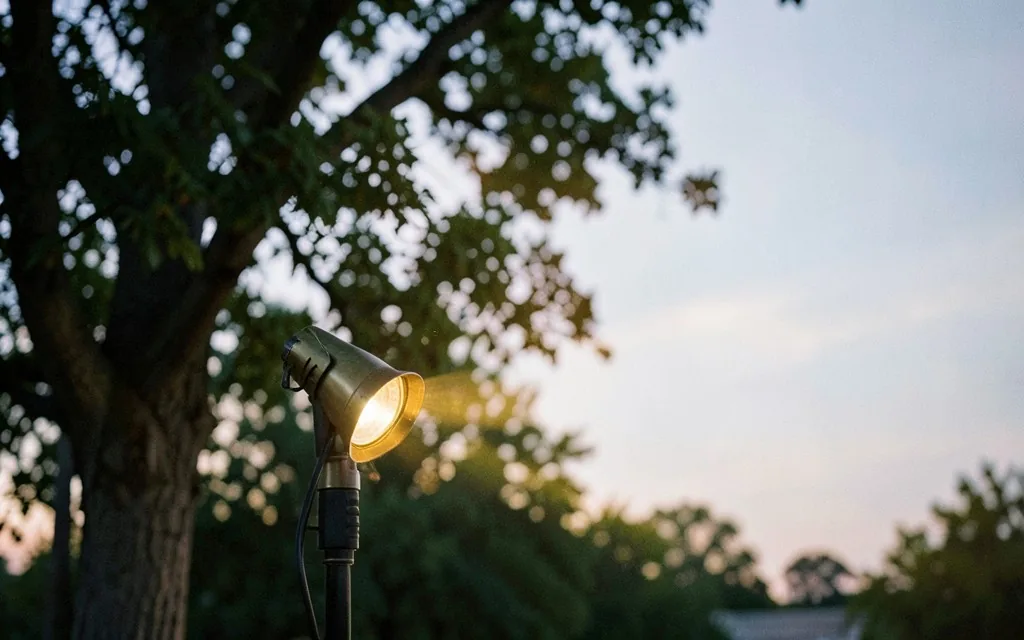
How it runs
Designed at night, not at noon
The layout is done on site after dark. Everything else follows from what you can actually see.
- 01
Evening walk
We walk the property after dark to see what is already there — street light, house light, spill from neighbours — and decide what should stay dark.
- 02
Scheme design
Techniques chosen per element and fixture positions marked, with transformer locations and run lengths planned so nothing ends up at the end of an overloaded circuit.
- 03
Demonstration where it matters
On larger schemes we set temporary fixtures on the key trees and elevations so you see the effect before anything is buried.
- 04
Cable runs and transformer
Cable trenched or tucked below mulch depth, transformer mounted and wired by a licensed electrician, runs balanced and voltage checked at the last fixture.
- 05
Fixture set and aim after dusk
Fixtures set, then aimed on a second evening visit once everything is live. This is the stage that makes the difference and it cannot be rushed.
- 06
Timing, zones and handover
Astronomic timer or app control set to dusk with seasonal tracking, zones grouped sensibly, and the layout and any agreed warranty terms in writing.
What it costs
What does landscape lighting cost in The Woodlands?
Installed ranges for Montgomery County properties. Fixture count and cable run length drive the number; the transformer is a small part of it.
Front elevation and entry $2,500 – $5,000
Uplighting on the key trees and architectural features, path lighting to the door, and a correctly sized transformer with capacity to extend later. The scheme that changes kerb appeal most per dollar.
Whole-property scheme $8,000 – $15,000
Front and rear, hardscape and step lighting, tree uplighting and moonlighting, water feature lighting, multiple zones and app control. Designed and aimed across two evening visits.
Typical project range $2,500 – $15,000
Most Montgomery County lighting projects land inside this band. Where a scheme sits is decided by property size and by how much of the garden is intended to be used after dark.
Recent work
Recent lighting work
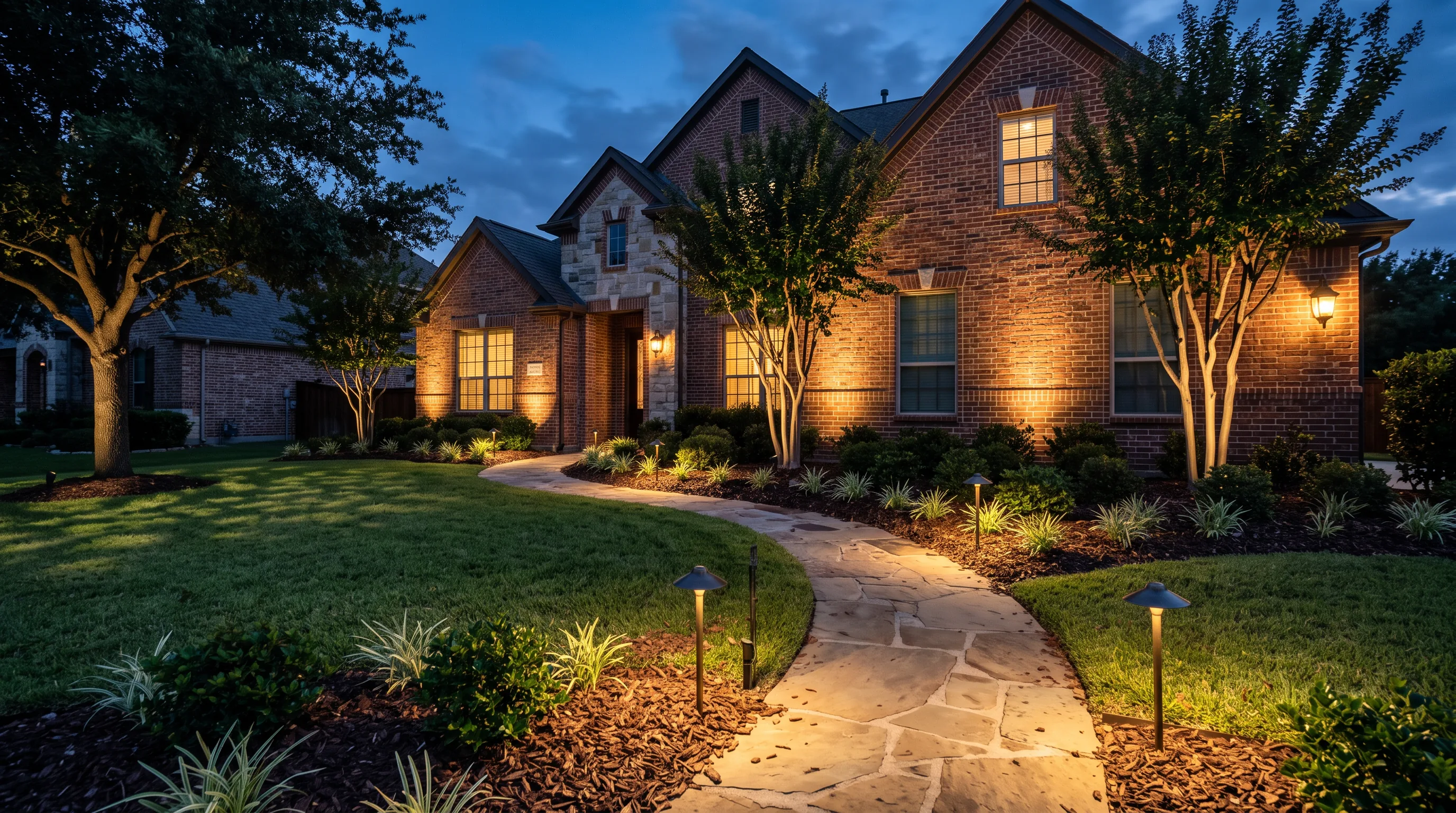
The Woodlands
Front elevation scheme with pine uplighting, a grazed stone façade and a washed walkway, all at 2700K on a single zoned transformer.
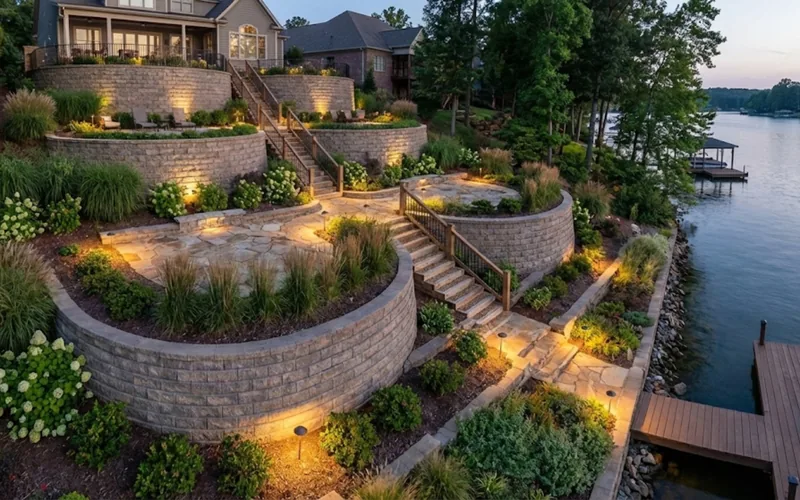
Bentwater, Montgomery
Terrace and retaining-wall lighting with recessed steps, aimed low so the lake view stayed the brightest thing in front of you.
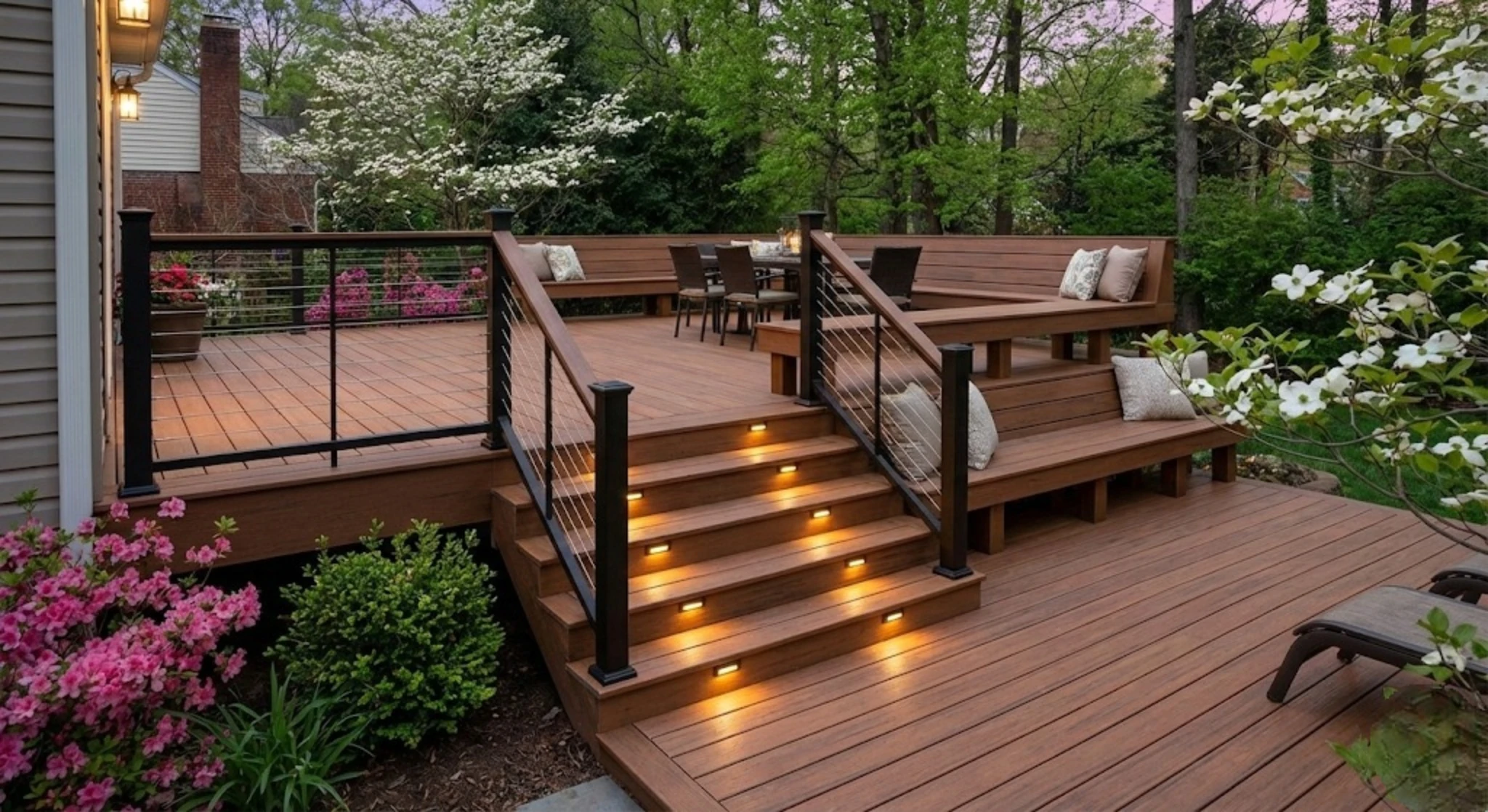
Spring
Moonlighting from high in two mature pines onto a multi-level deck, with step lighting recessed into each riser.
Why homeowners choose us
What makes a lighting scheme look expensive
- 01
Aimed after dark
Every fixture is aimed on a night visit once the system is live. Daylight aiming is why most schemes glare.
- 02
One colour temperature
2700K throughout. Consistency reads as considered; a mixed scheme reads as an accumulation of repairs.
- 03
Brass, not plastic
Solid brass and copper with replaceable lamps, because composite housings do not survive Gulf-coast sun and humidity.
- 04
Transformer with headroom
Sized so the scheme can grow later without dimming what is already installed. Voltage measured at the last fixture, not estimated.
- 05
Deliberate darkness
What is left unlit does as much work as what is lit. Lighting everything flattens a garden and wastes the effect.
- 06
Workmanship guarantee
If our installation is the reason something failed, we put it right. Damage, drought and neglect are not covered, and we will quote cover for those separately. In writing either way. — against one year on labour from most local firms.
Questions
Landscape lighting in Montgomery County — frequently asked
How much does landscape lighting cost in The Woodlands?
A front elevation and entry scheme runs $2,500–$5,000, and a whole-property scheme covering front, rear, hardscape and water features is typically $8,000–$15,000. Most projects here land between $2,500 and $15,000. Fixture count and cable run length are what move the number — the transformer and controls are a small share of the total.
What type of landscape lighting is best?
Low-voltage LED in solid brass or copper, at 2700K, on a correctly sized multi-tap transformer. Low voltage is safe to work around and easy to extend, LED has effectively removed the running cost argument, brass survives the climate, and 2700K is the colour temperature that flatters planting and masonry rather than draining them.
How long does installation take?
A front elevation scheme is usually one to two days plus an evening aiming visit. A whole-property scheme runs three to five days with two evening visits — one to set the design and one to aim. The evening work is not optional padding; it is where the result is actually decided.
Can lighting be added to an existing landscape?
Yes, and it is one of the least disruptive improvements available. Cable is tucked below mulch depth in beds and slit-trenched across turf, which heals within a couple of weeks. No planting needs to be lifted in most cases, and the work can be done in stages if you would rather start with the front.
What does it cost to run?
Very little. A typical whole-property LED scheme draws roughly what a couple of household light bulbs would, and on an astronomic timer it only runs from dusk for the hours you choose. Running cost is essentially a non-issue now, which was not true of the halogen systems these replaced.
Will lighting attract insects?
Warm 2700K light attracts noticeably fewer insects than cool white or blue-rich light, which is another argument for the specification. Fixture placement helps too — lighting a tree from a distance rather than sitting a bright fixture on the table next to you keeps the insects away from where people are.
What maintenance does it need?
An annual check: clean lenses, re-aim anything a mower or growth has shifted, check connections and adjust the timer for the season. Planting grows, so a scheme aimed perfectly in year one will need small corrections by year three. We offer this as a visit rather than a contract.
Can it be controlled from a phone?
Yes. We fit app-controlled transformers as standard on larger schemes, which lets you set zones, scenes and schedules, and turn the rear garden on without walking outside. Simpler schemes get an astronomic timer that tracks dusk through the year without being reset.
How many fixtures does a property actually need?
Fewer than most quotes suggest. A strong front elevation scheme is often eight to fourteen fixtures placed deliberately, not thirty spread evenly. Lighting everything removes the contrast that makes a scheme read as designed, and it costs more to install and more to maintain. We would rather light six things properly than twenty things adequately.
Will lighting damage my trees?
Not if it is installed and revisited properly. Fixtures at the base sit outside the root flare and cause no harm, and LED runs cool enough to be close to foliage. The risk is with tree-mounted moonlighting fixtures, which must be fitted with hardware that allows for growth and checked periodically — a cable strapped tight to a limb will girdle it over several years, so we use adjustable mounts and include it in the annual visit.
Can lighting be installed in stages?
Yes, and it is often the sensible way to do it. We size the transformer and run the cable for the full scheme at the outset, then fit fixtures in phases — front elevation first, rear and hardscape later. The infrastructure is the disruptive part, so doing it once and adding fixtures afterwards costs less overall than two separate installations.
Will landscape lighting noticeably raise the electricity bill?
Barely. A typical low-voltage scheme of twenty to thirty LED fixtures draws less than one old-style floodlight, somewhere between 60 and 120 watts in total. Run dusk to midnight on a photocell and timer across a full season, that is a few dollars a month. The transformer is the only component drawing anything while the fixtures are off.
Where we work
Landscape lighting across North Houston
Core service area is Montgomery County, and we design and install lighting across North Houston into Harris and Walker County. Lighting is also the service most often added to a completed build a season later, which the transformer sizing allows for.
Often specified alongside: hardscaping, outdoor kitchens and fire pits, water features, landscape design, decks and patios.
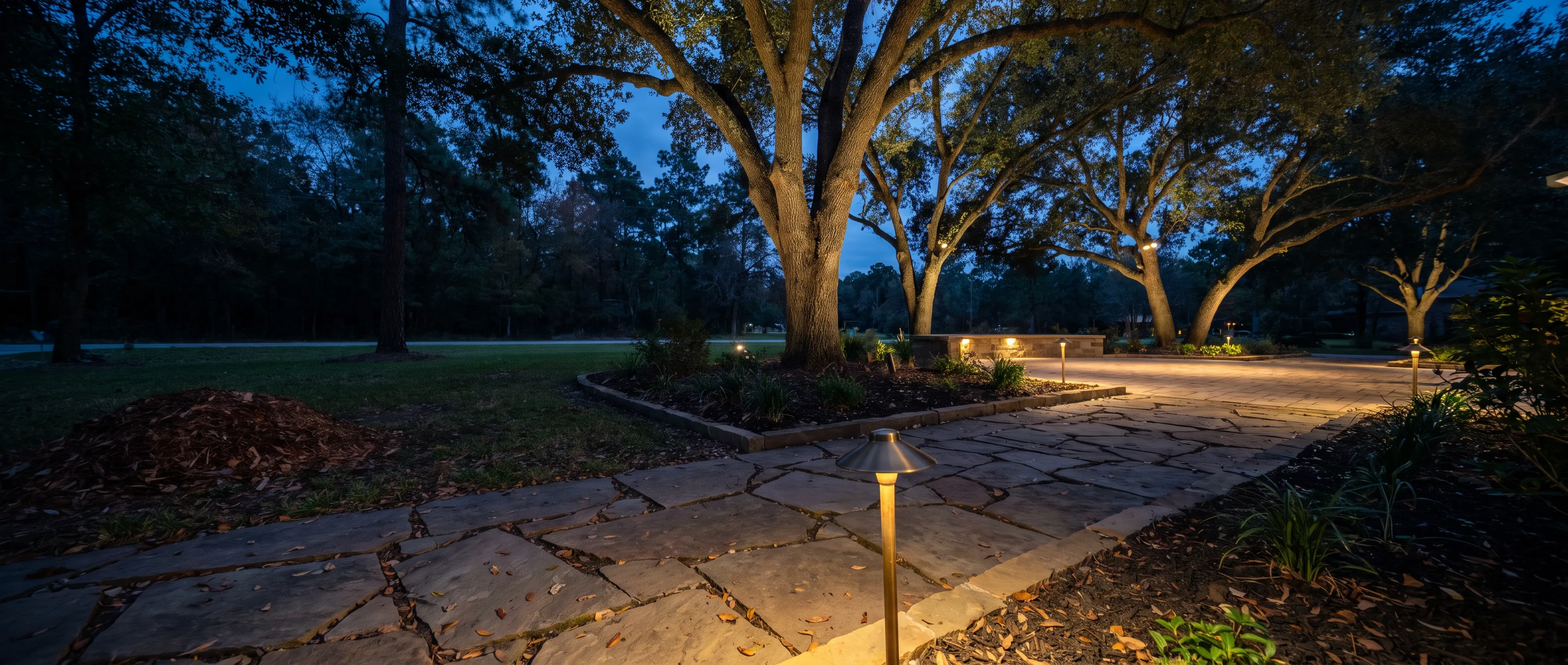
Start here
See the scheme demonstrated before you buy it
We walk the property after dark, show you the effect on the key trees and elevations, and put an itemised estimate in writing at no cost.