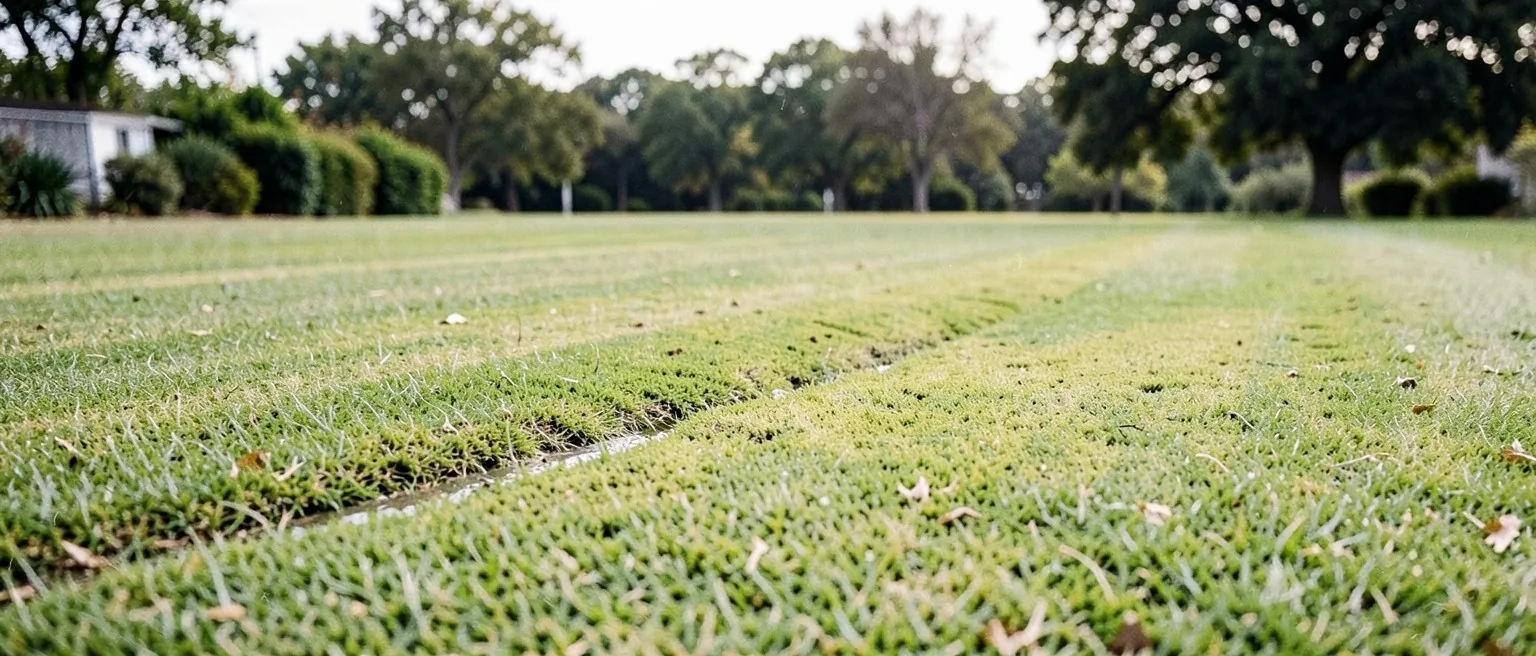
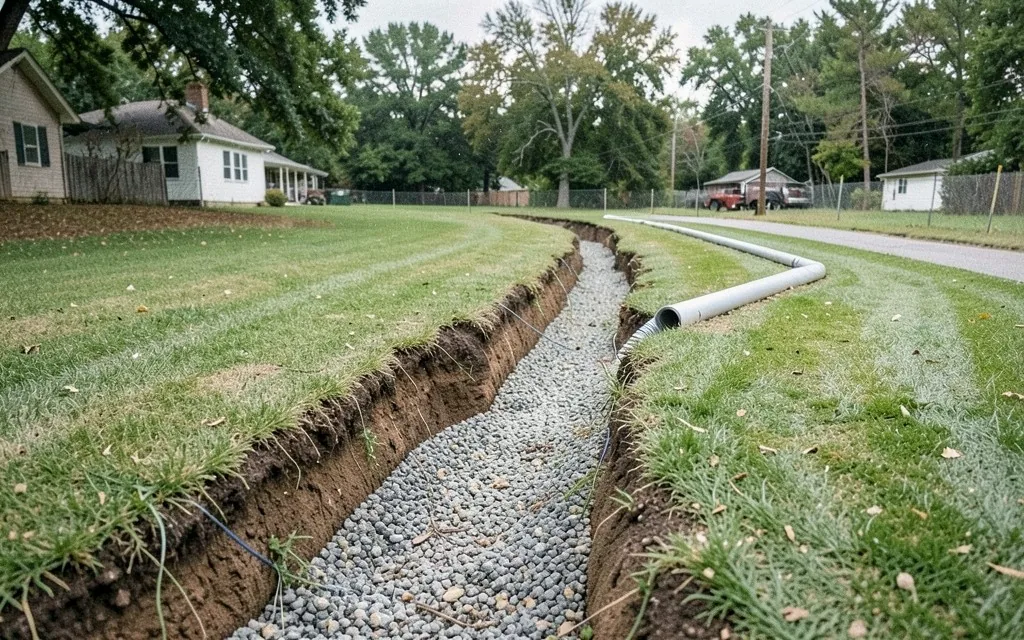
Yard Drainage and Lawn Drainage Company in The Woodlands, TX
Drainage design and installation across The Woodlands, Spring and Conroe — grading, French drains, catch basins, dry wells and swales, each specified to a named discharge point.
Every yard drainage solution needs somewhere for the water to go. On flat Beaumont clay, which absorbs almost nothing, the discharge point is the hard part of the design — a street, a swale, a ditch or a dry well with the capacity to hold a storm. A drain that collects water and delivers it four feet away has moved the puddle, not solved it. That is why we survey the fall across the whole property before specifying anything.
Below: what each solution costs, why your yard holds water, how surface and subsurface drains differ, and when drainage is genuinely a foundation issue.
What we build
What do we actually install to fix a wet yard?
Six solutions. The right one depends on where the water comes from and where it can legally go.
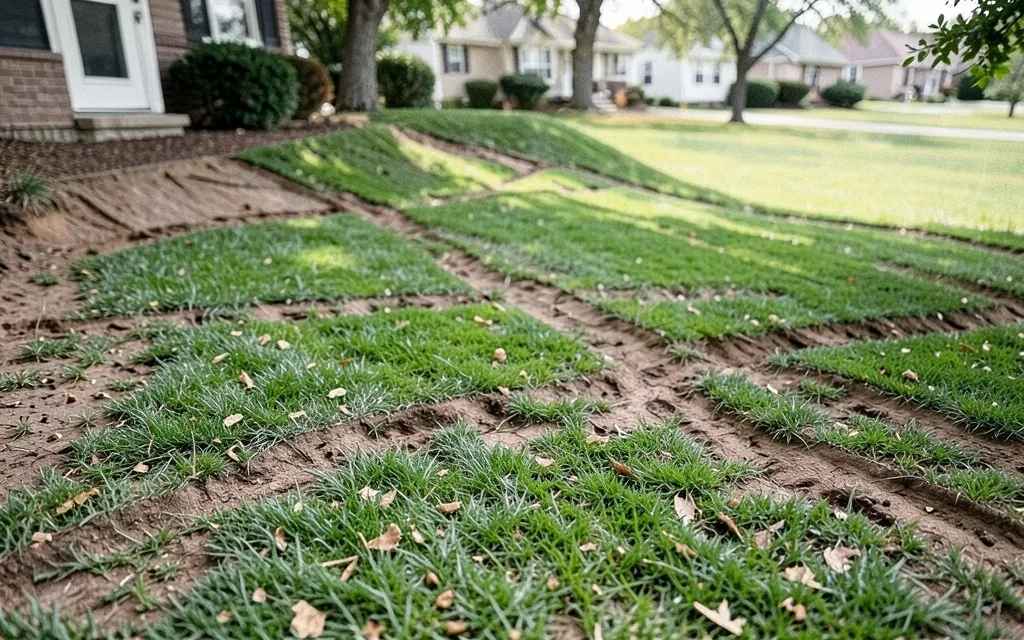
Yard regrading
Reshaping the land so it sheds water on its own, at a one to two percent fall. No visible components, permanent, and the first thing to consider before burying anything.
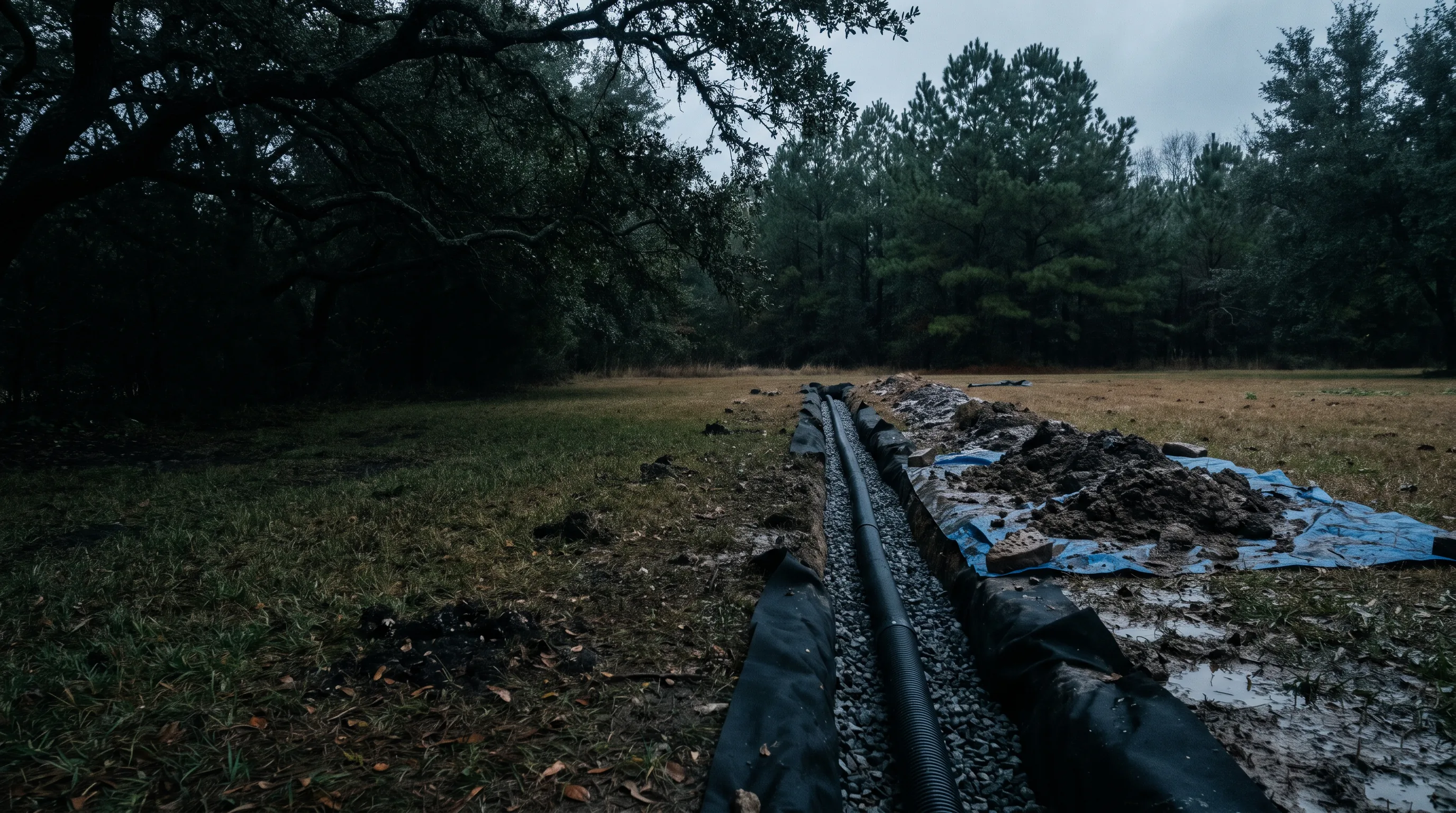
French drains
Perforated pipe in a gravel-filled trench collecting subsurface water, typically 18 to 36 inches deep. Invisible once complete and good for 15 to 25 years.
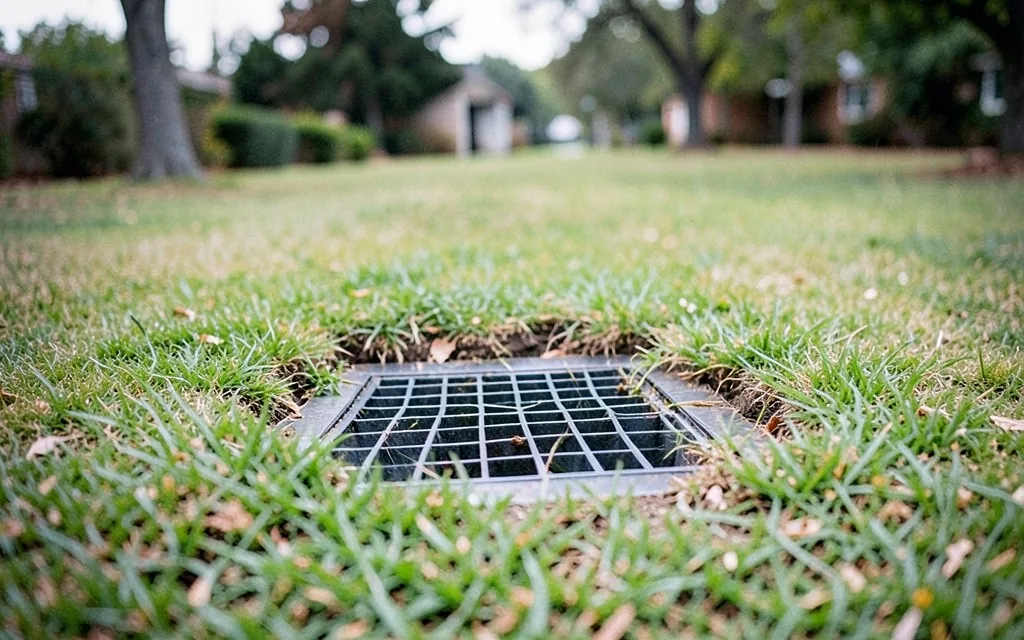
Catch basins
Surface drains set at low points and connected to a discharge line. Where water visibly pools after every storm, this is usually the direct answer.
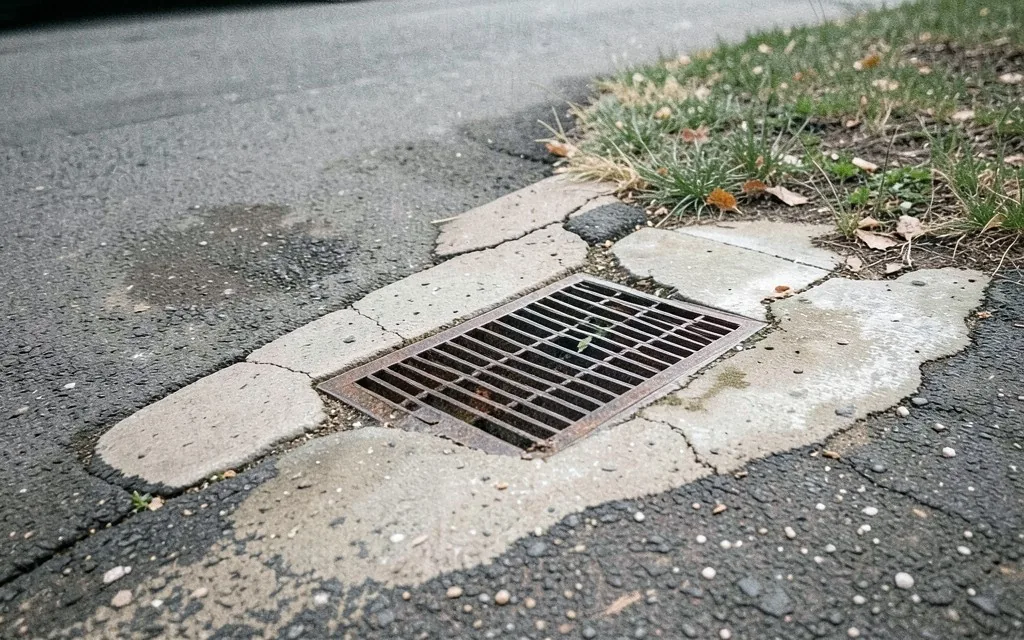
Channel drains
Linear grated drains across drives, patios and garage thresholds, intercepting sheet flow before it reaches a door or a slab.
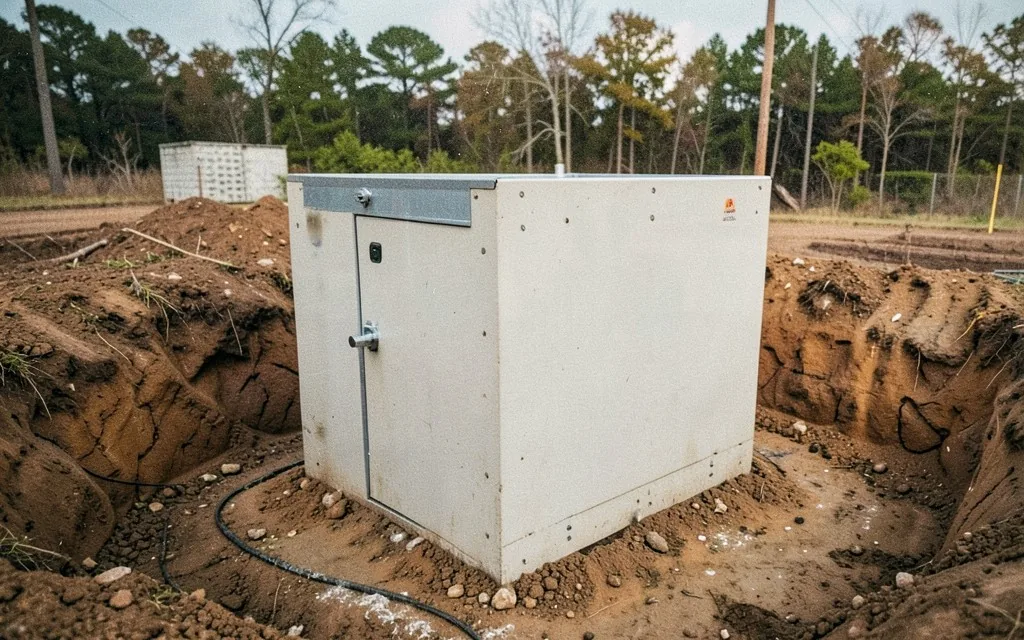
Dry wells
Buried chambers of 50 to 500 gallons that hold runoff and release it slowly. The answer where there is no legal discharge point available.
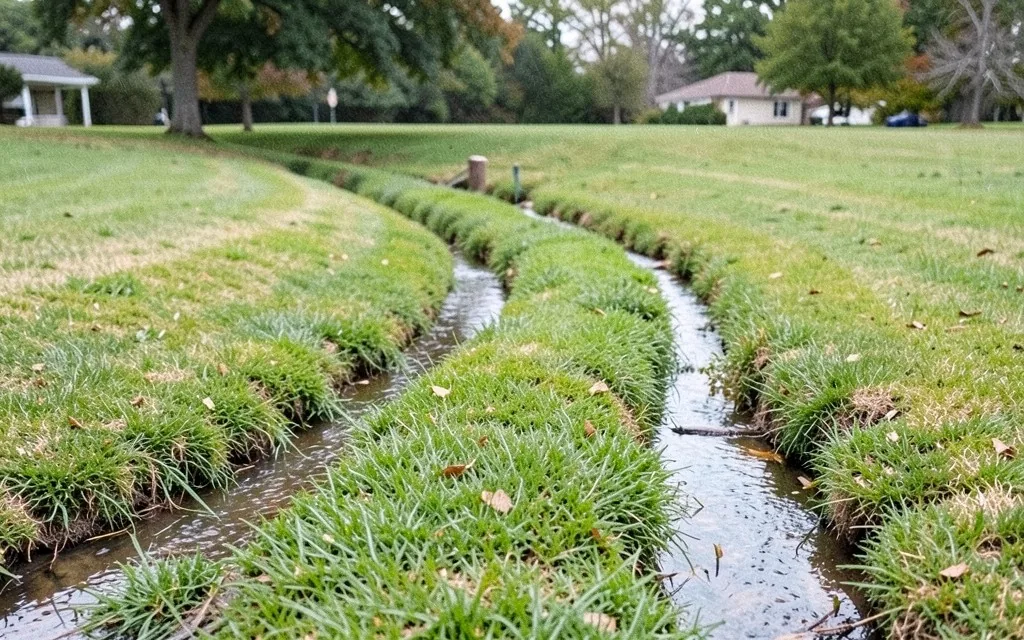
Swales and berms
Shaped landscape contours that direct water where you want it, planted so they read as part of the landscape. Best on larger properties.
Local conditions
Why does my yard hold water?
Four causes, and on this soil the first two are almost always involved.
Beaumont clay absorbs almost nothing
CauseDense clay has an extremely low infiltration rate. Rain that would soak away on sandy soil sits on the surface here, so any low spot becomes standing water for days.
FixSurface water intercepted and routed rather than relied on to soak away. On this soil, drainage design is about conveyance, not absorption — dry wells work only where sized properly.
The lot is graded flat or backwards
CauseBuilder grading that never established fall, or settlement since. Many Montgomery County lots slope gently towards the house rather than away from it.
FixFall surveyed across the whole property and the grade corrected to a one to two percent slope away from the foundation. Regrading fixes more problems than drains do, and it is often cheaper.
Compaction from construction
CauseHeavy equipment over clay during the build compresses it to a state water cannot enter at all. New-build lawns frequently hold water everywhere, not just in one dip.
FixThe compacted layer broken and organic matter incorporated, combined with grading. Drains alone will not fix a lot where the entire surface has been sealed.
Downspouts discharging at the slab
CauseGutters dropping the whole roof area within a foot of the foundation. It is the largest single volume of water arriving on the property and it lands in the worst place.
FixDownspouts piped underground to a discharge point or a dry well. Often the cheapest single drainage improvement available, and frequently the only one needed.
Specification
What's the difference between surface and subsurface drainage?
Surface and subsurface water are two different problems, and these six specification points are where a yard drainage system succeeds or fails once you know which one you actually have.
Surface drainage
Grading, swales, catch basins and channel drains. These move water that is sitting on top of the ground, which is most standing water on clay. Usually the first thing to get right.
Subsurface drainage
French drains and dry wells. These collect water moving through the soil or held in a saturated layer — a soggy lawn that never firms up rather than a visible puddle.
The discharge point
Where the water actually ends up: a street, a ditch, a swale or a sized dry well. Without a legal, functioning discharge, every other component is decoration.
Pipe and gravel spec
Perforated pipe in washed gravel with filter fabric on a French drain, solid pipe on a conveyance run. Fine soil entering the gravel is what silts a drain up and ends its life early.
Depth and slope
18 to 36 inches deep depending on the application, laid to a consistent fall. A drain with a dip in it holds water and silt at the low point and stops working there.
Restoration
Trenches backfilled properly and turf or beds relaid. A drainage job is judged on whether you can see where it went in six months later.
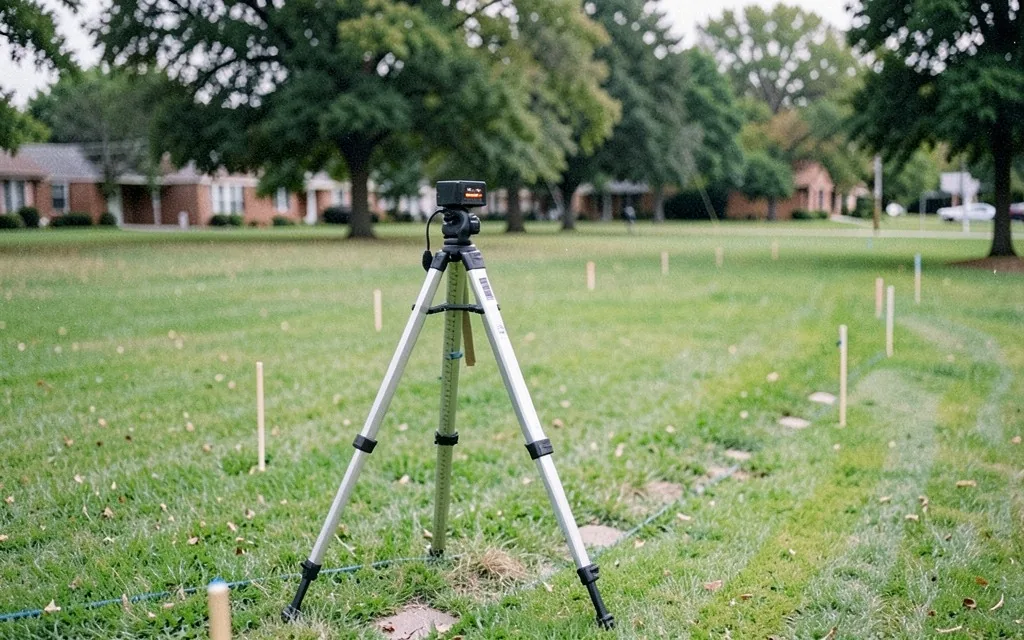
How it runs
Survey, design, install, verify
The survey decides the design. Guessing at fall on a flat lot is how drains get installed the wrong way round.
- 01
Free on-site yard drainage assessment
Where the water comes from, where it pools, how long it stays, and what the fall across the property actually is — measured, not eyeballed.
- 02
Find the discharge
We identify the legal outlet before anything else is decided — a street, a roadside ditch, a natural swale, or, where none of those exist, a properly capacity-rated dry well. That single point is what the rest of the design gets worked backward from.
- 03
Specify the solution
Grading, surface drains, subsurface drains or a combination, with the components and depths named and priced.
- 04
Locate services
Irrigation, gas, electric and septic marked before trenching. Drainage trenches cross exactly the depth irrigation lines run at.
- 05
Install to fall
Trenches cut and checked for consistent slope, pipe bedded, gravel and fabric placed correctly, structures set to finished level.
- 06
Test and restore
System flow-tested with water before backfilling, then trenches restored and turf or beds relaid so the work disappears.
What it costs
What does lawn drainage cost in The Woodlands?
Prices include materials and labor, and state what the workmanship covers. Every project starts with a free on-site assessment and a detailed written quote.
Yard regrading, small area $500 – $1,500
Reshaping to establish fall. Often the cheapest fix and the one with nothing to maintain afterwards.
Catch basin, each installed $300 – $500
Surface drain set at a low point and connected to a discharge line. Twenty-year-plus lifespan.
French drain $25 – $50 per linear foot
Perforated pipe in gravel at 18 to 36 inches, invisible when complete, 15 to 25 year lifespan.
Channel drain $30 – $60 per linear foot
Linear grated drain across a drive, patio or threshold. Polymer or metal grates, 10 to 15 year lifespan.
Dry well, each installed $500 – $1,500
50 to 500 gallon buried chamber, invisible once in, for properties with no available discharge point.
Complete yard system $2,500 – $8,000+
Combined grading, surface and subsurface drainage across a whole property. Most complete systems land at $2,500 to $6,000.
Rates reviewed 2026-09-03. Every project is priced in writing after a site visit; these bands are what recent work has landed in, not a quote.
Recent work
Recent drainage work
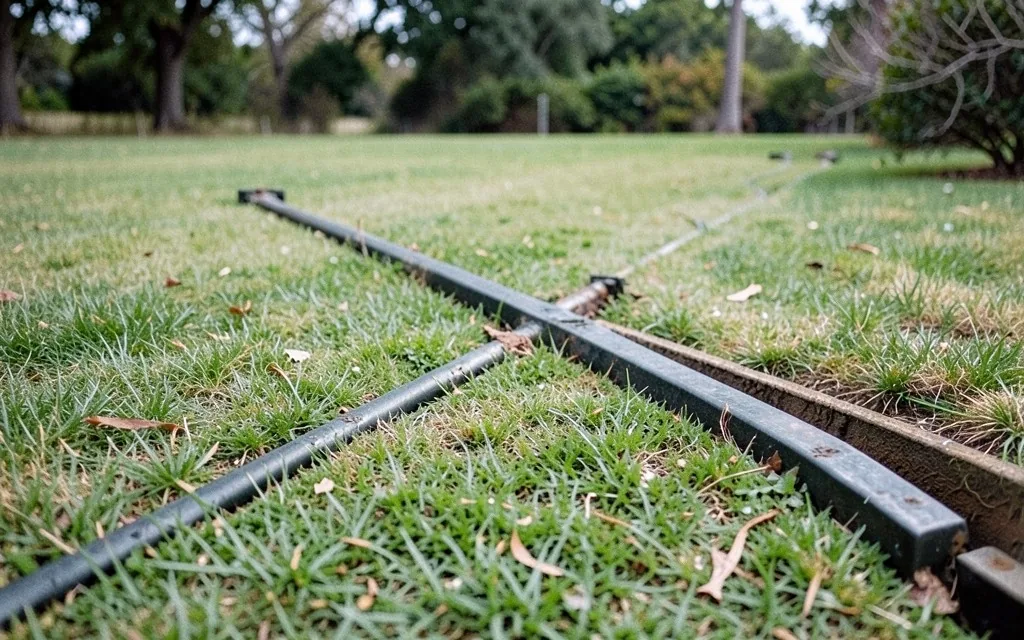
The Woodlands
A rear lawn that stayed wet for days after rain, resolved with regrading, a French drain run and two catch basins.
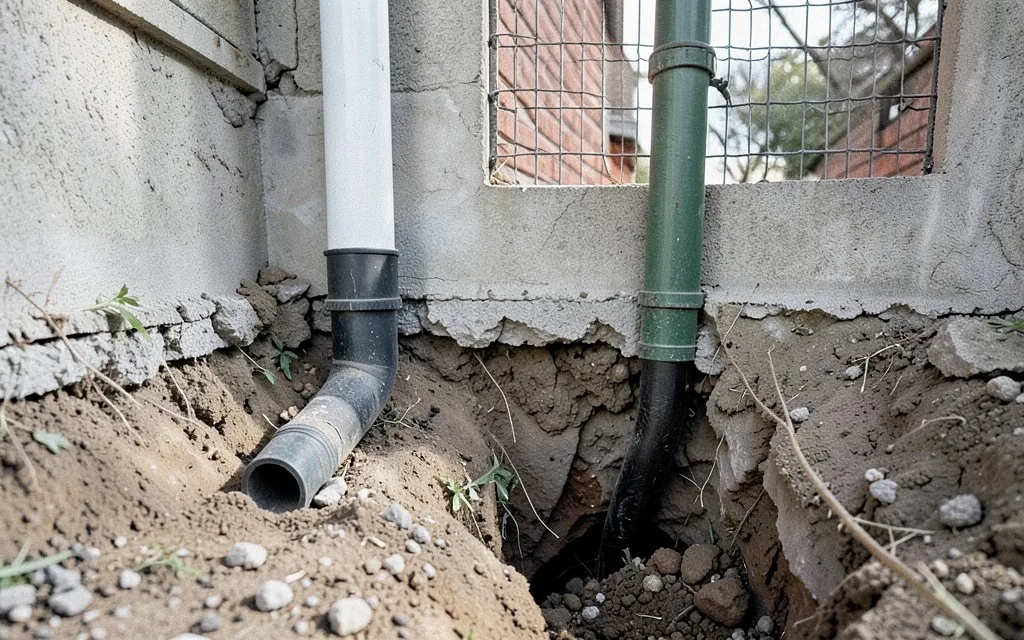
Spring
All downspouts piped underground to a street discharge — the whole problem, solved for a fraction of a drain system.
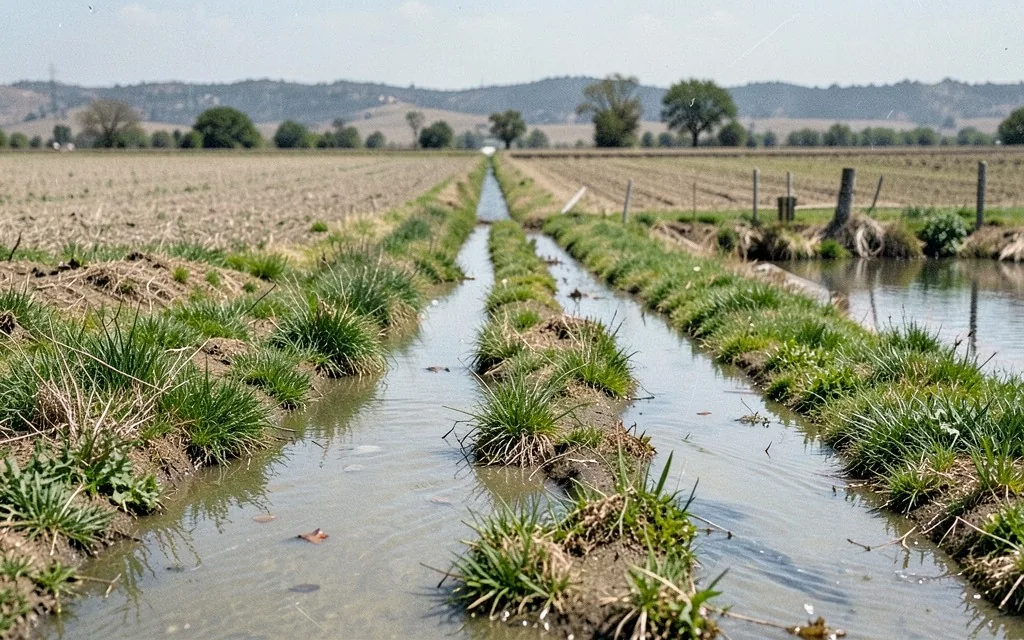
Conroe
A planted swale across a large lot, carrying runoff to a roadside ditch and reading as part of the landscape.
Why homeowners choose us
Why do our drainage designs actually hold up?
- 01
The discharge point comes first
We identify where water can legally and physically go before specifying a single component. Without it, a drain just relocates the puddle.
- 02
Fall is measured
Levels taken across the property. On a lot this flat, eyeballing the slope is how drains end up running the wrong way.
- 03
Grading before pipework
If reshaping solves it, we say so — even though it is usually the cheaper option and nothing gets installed.
- 04
Services located first
Irrigation, gas, electric and septic marked before trenching. Drain trenches run at exactly irrigation depth.
- 05
Flow-tested before backfill
Water run through the system while the trench is still open, which is the only point at which a fall error is cheap to correct.
- 06
Built to ask nothing of you afterward
A correctly sized French drain or dry well needs no attention beyond an occasional look at the outlet. If a system we design is high-maintenance, that is a design failure, not a fact of life you should have to manage every season.
Questions
Lawn drainage — frequently asked
How much does lawn drainage cost in The Woodlands?
It ranges from $500 to $8,000 and up depending on the solution. Simple regrading starts at $500 to $1,500, catch basins are $300 to $500 each installed, French drains run $25 to $50 per linear foot, and channel drains $30 to $60. Dry wells are $500 to $1,500 each. Complete yard drainage systems typically land at $2,500 to $6,000. Every project begins with a free on-site assessment and a written quote.
Why does my yard hold water after rain?
Usually a combination of Beaumont clay and grade. Clay has a very low infiltration rate, so rain that would soak away elsewhere sits on the surface here. Add a lot graded flat or towards the house, construction compaction, and downspouts discharging at the foundation, and water has nowhere to go. The fix is almost always conveyance — moving water to a discharge point — rather than trying to make clay absorb it.
What is the difference between French drains and surface drains?
Surface drains — catch basins, channel drains, grading and swales — move water sitting on top of the ground, which is most standing water on clay. French drains are subsurface: perforated pipe in gravel that collects water moving through the soil, for a lawn that stays soggy and never firms up rather than one with a visible puddle. Installing a French drain where the problem is surface water is the commonest wasted spend in drainage.
Can lawn drainage help prevent foundation damage?
It helps significantly with the moisture cycling that causes the problem. Beaumont clay swells when saturated and shrinks in drought, and that repeated movement against a slab is what stresses foundations here. Keeping water away from the perimeter — correct grade, piped downspouts, and drainage that discharges well clear — reduces the swing. It is not a substitute for a structural assessment if you already have movement, and we will say so rather than sell you drainage.
How long does lawn drainage installation take?
Most residential projects take one to three days. A simple regrade or a set of catch basins is often a single day; a full system combining grading, French drains and a discharge run takes two to three. Wet ground extends everything, because trenching saturated clay is slow and it damages the lawn you are about to restore. We schedule around the forecast where we can.
Will drainage work damage my lawn?
Trenching is disruptive while it happens, and restoration is part of the job rather than an extra. Trenches are backfilled in layers and compacted so they do not sink into visible lines later, and turf is relaid or new sod laid over the runs. Six months on you should not be able to see where the work went in. Ruts from equipment are avoided with ground protection on soft ground.
Where does the water actually go?
To a legal discharge point, which we identify before designing anything — usually a street, a roadside ditch, a natural swale, or a dry well sized to hold the volume. This is the constraint that shapes the whole design, and it is what separates a working system from an expensive one. You cannot discharge onto a neighboring property, so where no outlet exists, a properly sized dry well is the answer.
Do French drains need maintenance?
Very little, if built correctly. Filter fabric and washed gravel keep fine soil out of the pipe, which is what silts a drain up and shortens its life. Catch basin grates should be cleared of leaves seasonally, and the discharge outlet checked once a year to make sure it has not been buried or blocked. A well-built French drain here should give 15 to 25 years.
Can I just regrade instead of installing drains?
Often, and we will tell you when that is the case. Regrading to a one to two percent fall solves a great many yard drainage problems with nothing buried and nothing to maintain, and it is usually cheaper than a drain system. It works where there is somewhere for the water to run to. Where the lot is landlocked, the low point is against the house, or the problem is subsurface, grading alone will not do it.
Do I need a permit for drainage work?
Residential yard drainage generally does not require county permitting, but the discharge matters legally — you cannot direct concentrated runoff onto a neighbor’s property, and some communities have rules about connections to their storm systems. Covenanted areas including The Woodlands may require review for visible work such as swales and regrading. We check before we design, because a system that has to be removed is the most expensive outcome available.
What is the best time of year for yard drainage installation?
Late fall through winter, if you can plan ahead of it — the ground is workable, our schedule is lighter, and a system installed then is proven before the next wet spring rather than being installed reactively during one. That said, most drainage work here happens in direct response to a storm that just exposed the problem, and we run projects year-round for exactly that reason. Wet ground slows any season down, because trenching saturated clay damages the lawn we are about to restore.
Where we work
Is yard drainage work available outside The Woodlands?
Yes — we design and install drainage across Montgomery County and into North Houston — The Woodlands, Spring, Conroe, Magnolia, Tomball, Willis and Montgomery. Flat lots on Beaumont clay are the local condition, and it makes the discharge point the whole design problem.
Often specified alongside: French drains, grading and dirt work, sod installation, irrigation repair, hardscaping and paving.