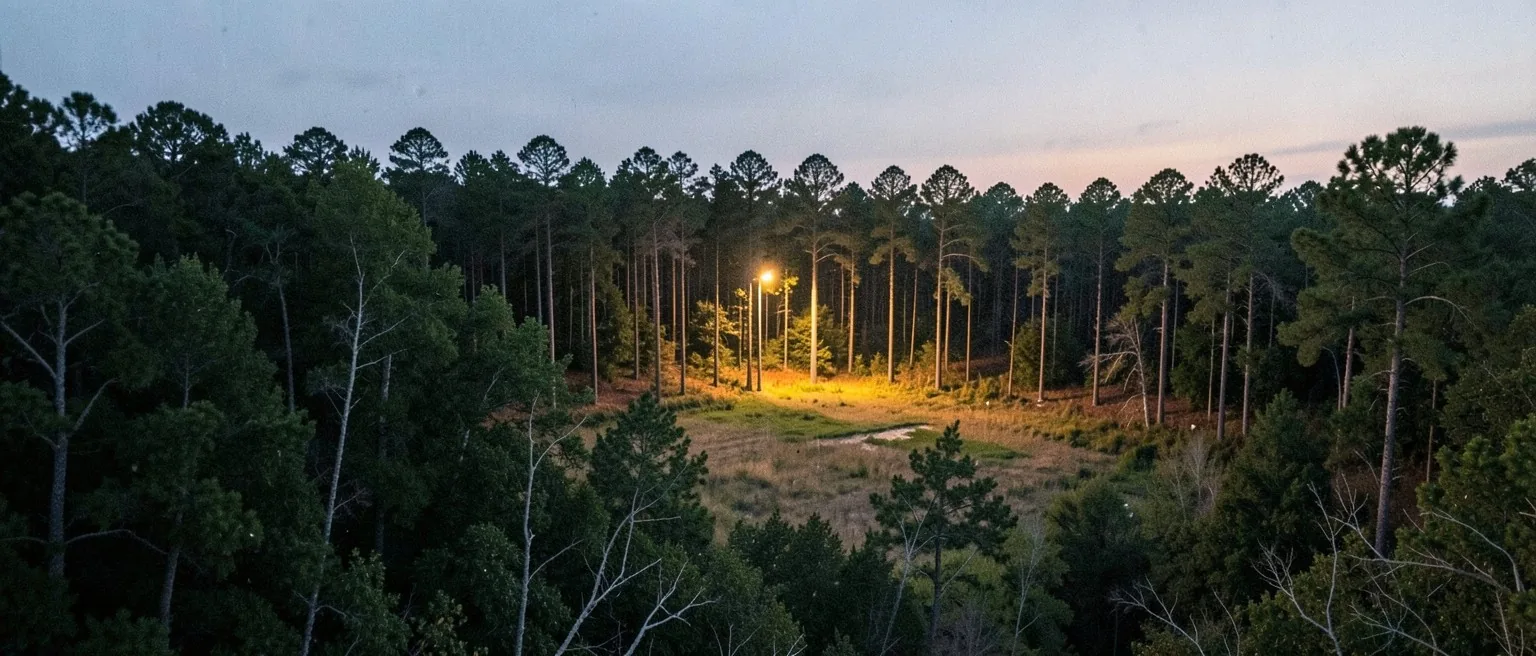

Land Clearing in New Waverly, TX: Grading and Site Prep
Land clearing and landscape design across New Waverly, the Sam Houston National Forest boundary, and acreage throughout Walker and San Jacinto Counties.
Land clearing in New Waverly is created by deciding what to remove, not by deciding what to plant — on a heavily wooded property that decision comes before any landscaping conversation can start. Selective clearing that opens usable ground while keeping the pines and hardwoods worth keeping is both the largest part of the budget and the part that cannot be undone. Everything after it — grading, drainage, hardscape, planting — is straightforward by comparison. Most New Waverly homeowners invest $8,000 to $30,000.
Below: what clearing and landscaping cost here, how selective clearing actually works, how drainage behaves on wooded East Texas ground, and which plants suit sandy loam under a forest canopy.
What we build
What comes after clearing on a New Waverly lot?
Six scopes, and on most properties here the first one determines everything else.
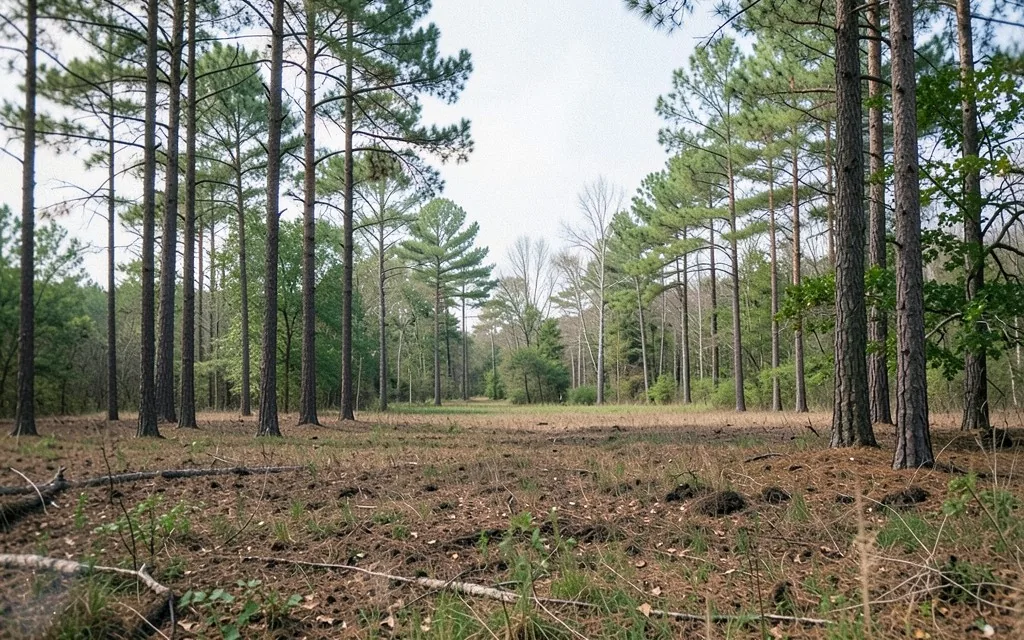
Selective land clearing
Underbrush, cedar and yaupon removed, strategic tree removal, stumps ground and the site prepared — with the pines and hardwoods worth keeping identified first.
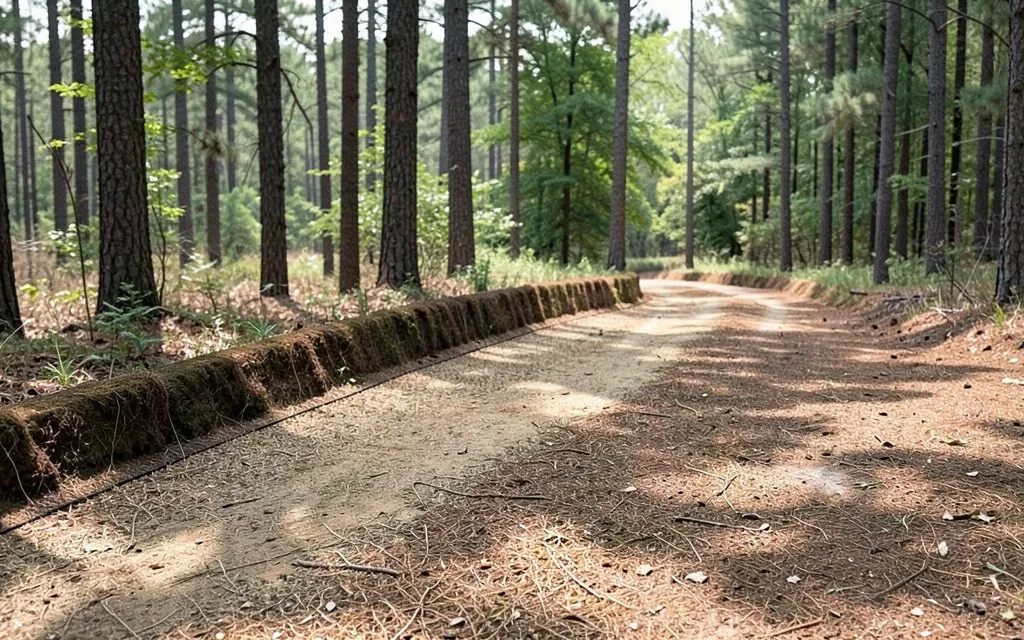
Forest-edge design
A deliberate transition between the maintained area and the woodland beyond, so the property reads as designed rather than partly cleared.
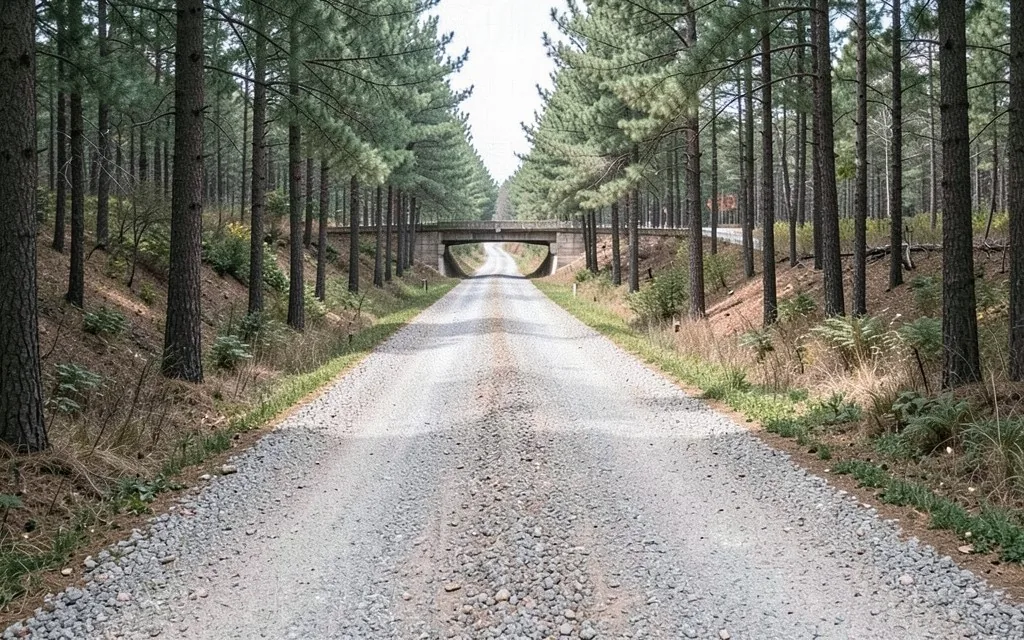
Drive and entry work
Long gravel and stabilized drives built to shed water, with culverts at crossings and a planted entry where the property is approached from the road.
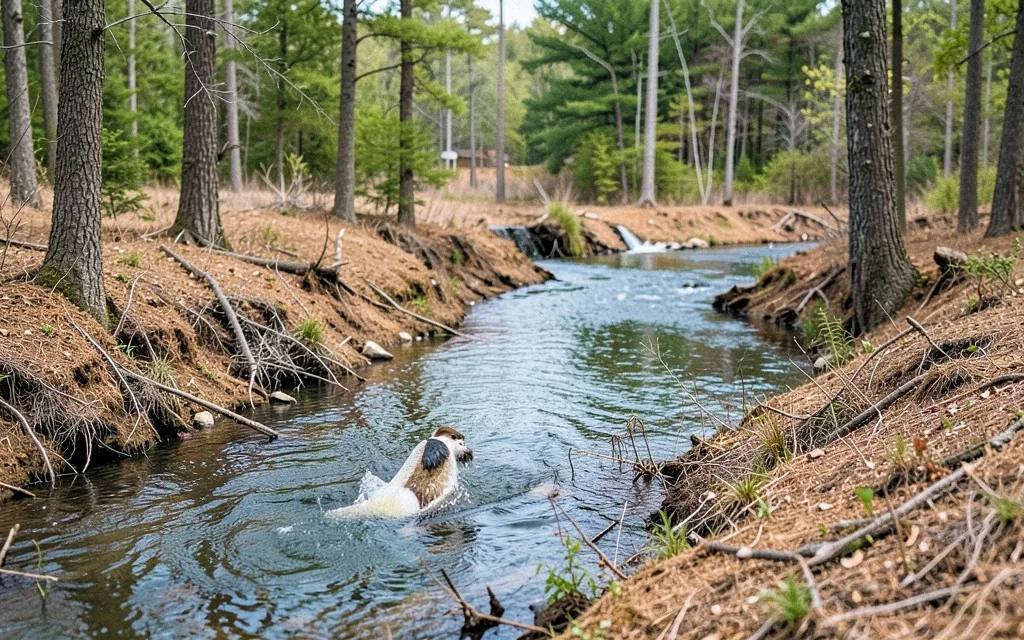
Acreage drainage
Swales, culverts and grading across rolling wooded ground. Sandy loam drains well vertically and still moves a lot of water across the surface after a storm.
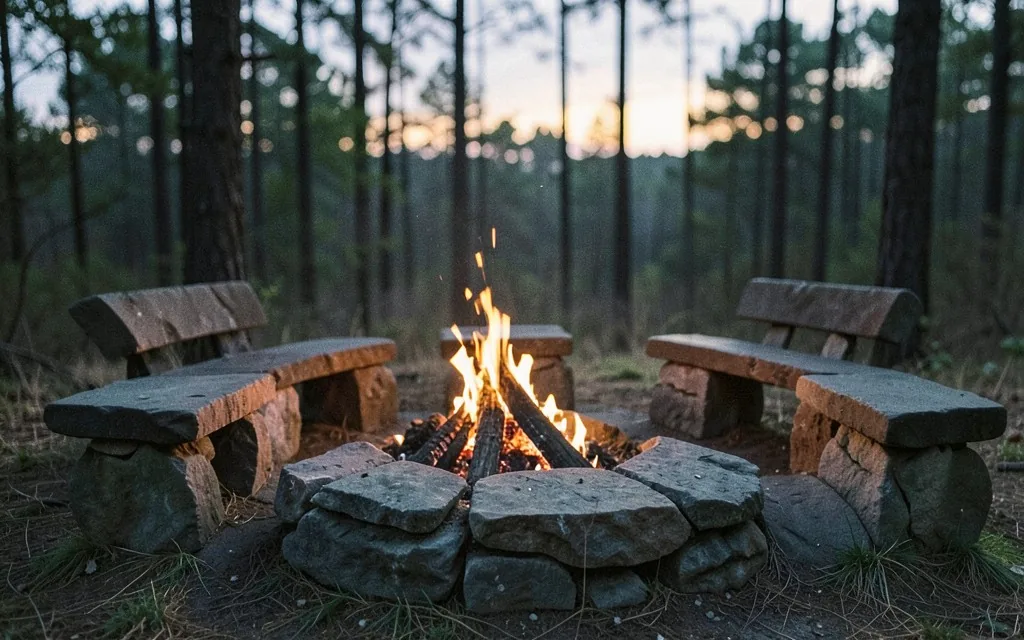
Outdoor living
Terraces and fire features that make a room out of a clearing, positioned for the treeline and the evening rather than centered on the house.
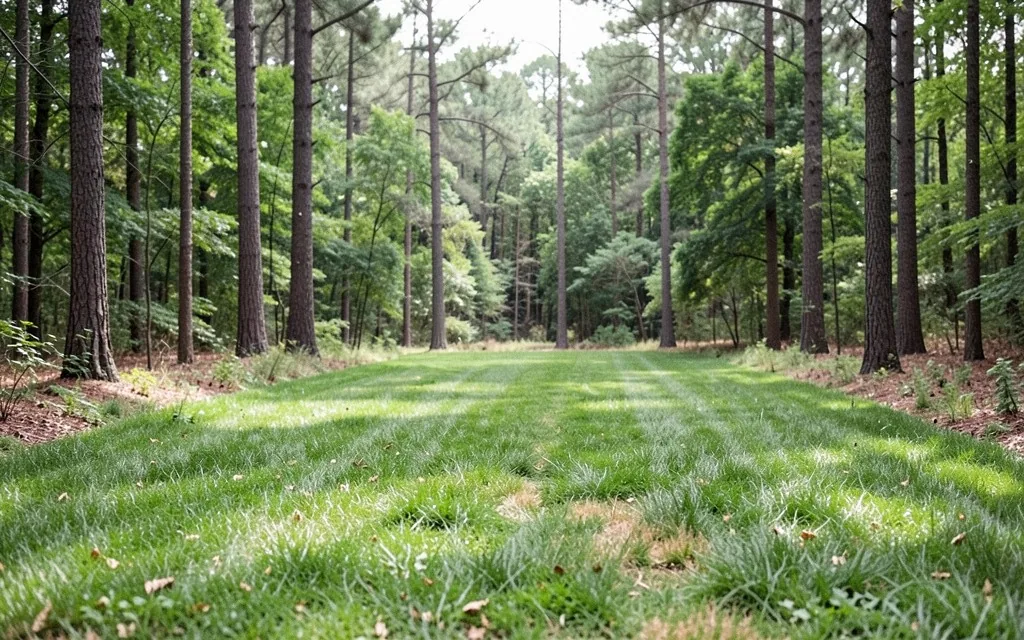
Lawn establishment
Turf on the areas that genuinely get used, over prepared soil, with irrigation confined to the defined landscape rather than spread across acreage.
Local conditions
What goes wrong on a wooded property here?
Five failures. All of them are decided during clearing, which is the phase most people rush.
The lot was mulched flat
CauseA clearing contractor running a mulcher across everything. It is the fastest and cheapest method and it removes in a single day the mature timber that made the land worth buying.
FixKeepers marked and flagged before any machine arrives, then underbrush, cedar and yaupon taken out around them. The result is usable ground that still looks like East Texas.
Cleared ground with no defined edge
CauseAn area opened up with no boundary between it and the forest. It reads as unfinished from every direction, and the forest edge steadily re-colonizes it.
FixA deliberate transition — a mown line, a planted margin or a change of surface — maintained as part of the design so the clearing stays a clearing rather than reverting.
Merchantable timber given away
CauseA whole stand felled and chipped without anyone asking what was in it. On a larger clearing there can be real value standing in pine and hardwood, and once it is mulch that value is gone.
FixSpecies, size and volume assessed before anything is felled, and the option of selling or milling put in front of you. It sometimes offsets a meaningful part of the clearing cost.
Understorey grows straight back
CauseYaupon and privet cut at ground level without the root systems dealt with. Both resprout vigorously, and within two seasons the cleared area is thicket again.
FixRoot systems grubbed or ground rather than the stems simply cut, and the cleared area brought into a maintenance regime early while regrowth is still small and cheap to control.
Everything planted gets eaten
CauseDeer pressure out here is constant, and ornamental planting chosen from a suburban list is browsed to the stems within a season. People replant the same species and lose them again.
FixSpecies selected for browse resistance in the outer areas, with the more tender planting concentrated close to the house where there is more disturbance, and protection on anything young that has to establish.
Villages
Which New Waverly-area villages do we serve?
New Waverly and the surrounding country, across two counties and a national forest boundary. A landscaping company here has to be licensed and insured before the mulcher ever starts, and once ground is open the work becomes what a landscape contractor should offer beyond clearing — tree service for what stays standing, sod installation over graded ground, mulch and flower beds near the house, and sprinkler and irrigation systems for the defined lawn. Curb appeal at the end of a long drive and a free estimate up front matter more to residential landscaping out here than a catalog of landscapers or weekly lawn care and mowing ever will. We serve 77358 from a shop close enough at 100 Bentwater Dr #105, Montgomery, TX 77356 that a same-day site visit is easy to schedule.
New Waverly and Waverly
In-town and near-town properties on settled ground. Standard drainage, hardscape and planting, generally without the clearing overhead.
Sam Houston National Forest boundary
Properties backing onto forest land. A managed transition with cleared understorey and low fuel loads near structures, and the natural treeline kept beyond it.
Highway 75 corridor
Mixed residential and larger lots with reasonable access. Drive work and entry landscaping are often part of the scope.
FM 1375 area
Wooded acreage where selective clearing and drainage across rolling ground come first. Equipment access decides both method and schedule.
Riverside and Walker County acreage
Larger tracts where the design question is where the maintained landscape stops and the forest begins.
San Jacinto County
Country properties east of the forest, mostly acreage. Clearing, drives and property-scale drainage lead these projects.
Soil across the area
East Texas sandy loam, acidic and free-draining. It supports a different plant list from Houston clay and holds water for a much shorter time.
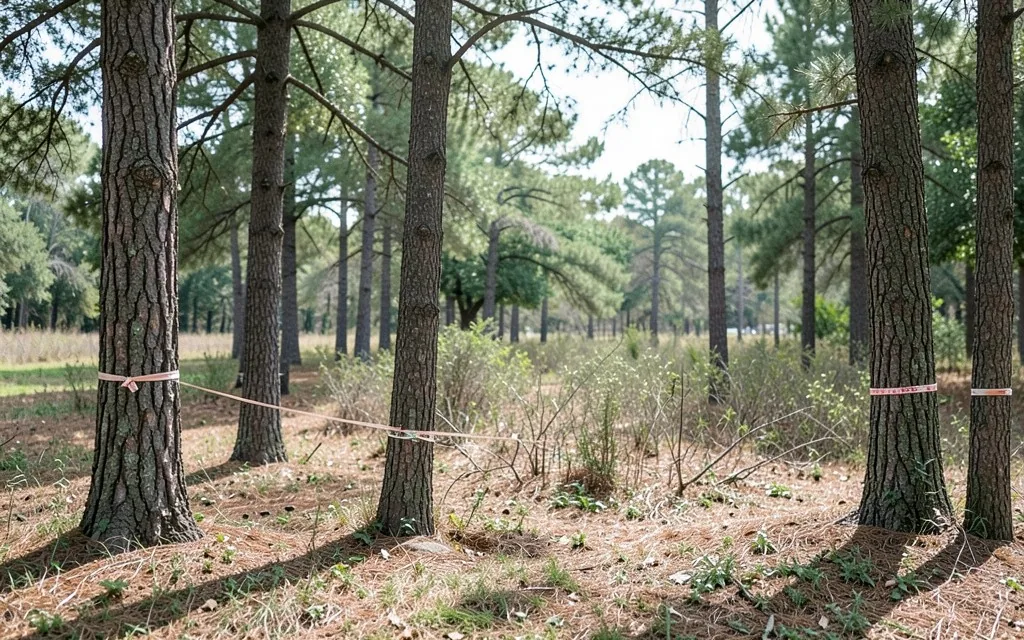
How it runs
How do we flag, clear and grind a New Waverly lot?
The flagging walk is the most important hour of the project. Everything after it is recoverable.
- 01
Walk the tract
The whole property — tree cover, quality of the timber, slope, drainage paths, access and where the usable ground actually is.
- 02
Flag the keepers
Trees worth retaining marked with you before any machine is booked. This is the decision that cannot be reversed.
- 03
Design the clearing
The shape and edge of the cleared area drawn deliberately, so it becomes a room in the landscape rather than a gap.
- 04
Clear and grind
Underbrush, cedar and yaupon out, strategic removals, root systems dealt with and stumps ground — one mobilization, one set of equipment.
- 05
Grade and drain
Ground shaped, drive work done, swales and culverts installed sized for what actually crosses the land after a storm.
- 06
Build, plant and walk it with you
Hardscape, outdoor living, turf and planting on the finished ground, with a maintenance plan for the cleared edge while it establishes.
What it costs
What does New Waverly land clearing cost?
Ranges for New Waverly and the surrounding country. How much clearing is involved is the single biggest variable.
Basic landscape work from $3,500
Planting beds, mulch and improvements around the house on a property that does not need clearing.
Comprehensive landscaping $8,000 – $30,000
Where a property with real clearing on it usually lands — the site prep, plus the drive, drainage and planting that follow it as one mobilization rather than three.
Acreage with significant clearing $75,000+
Substantial selective clearing, grinding, drive work and property-scale drainage on larger wooded tracts, usually phased.
Rates reviewed 2026-09-03. Every project is priced in writing after a site visit; these bands are what recent work has landed in, not a quote.
Recent work
Typical projects here
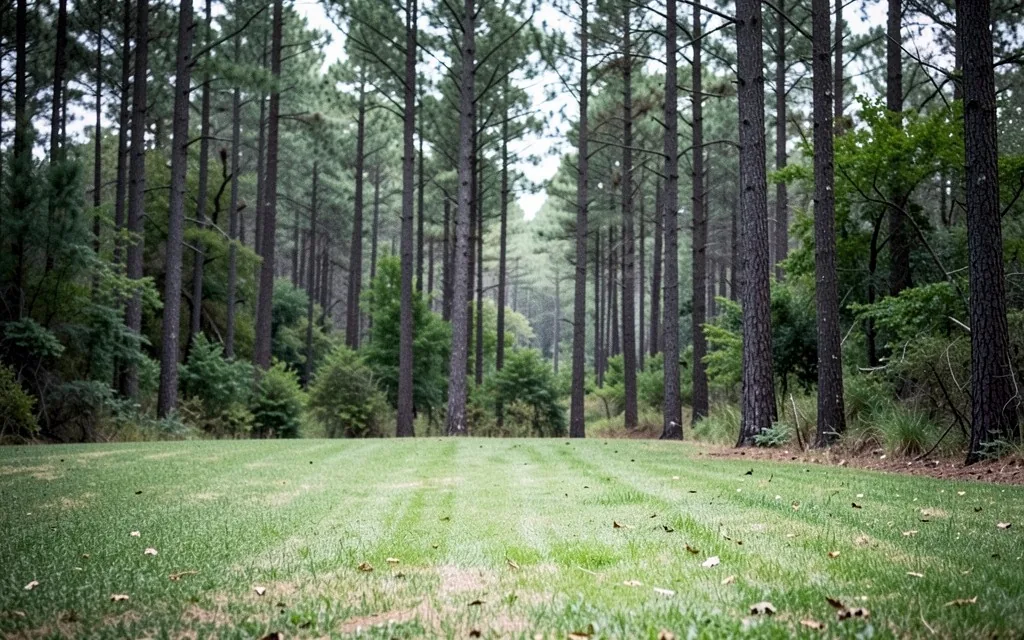
Land clearing New Waverly: forest edge
A managed forest-edge transition — understorey cleared near the structures, natural treeline kept beyond a defined line.
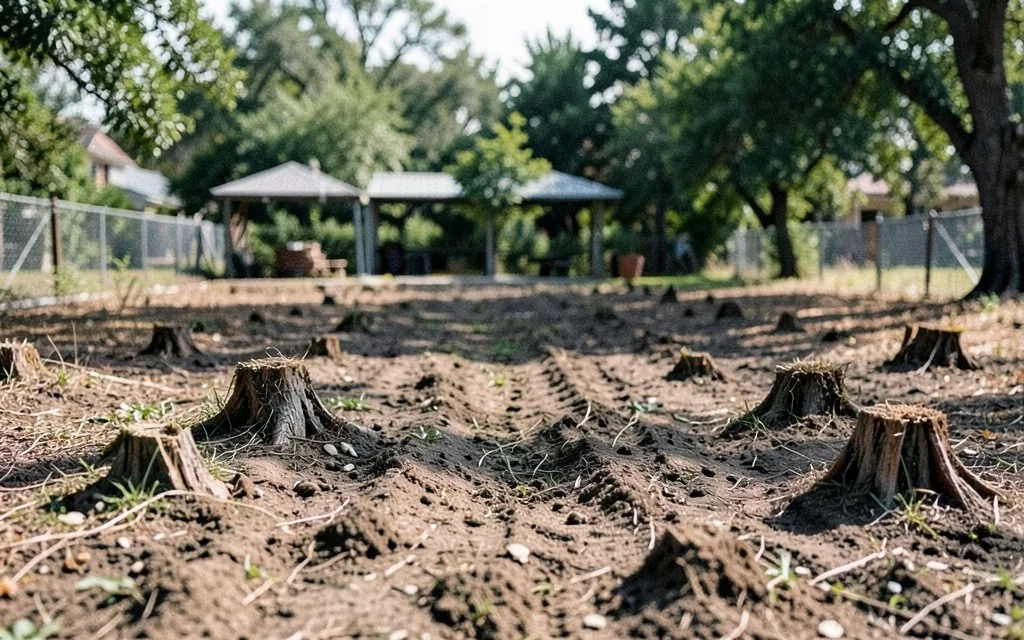
FM 1375 acreage landscaping
Selective clearing with the pines flagged and kept, stumps ground in the same mobilization, and a defined outdoor room near the house.
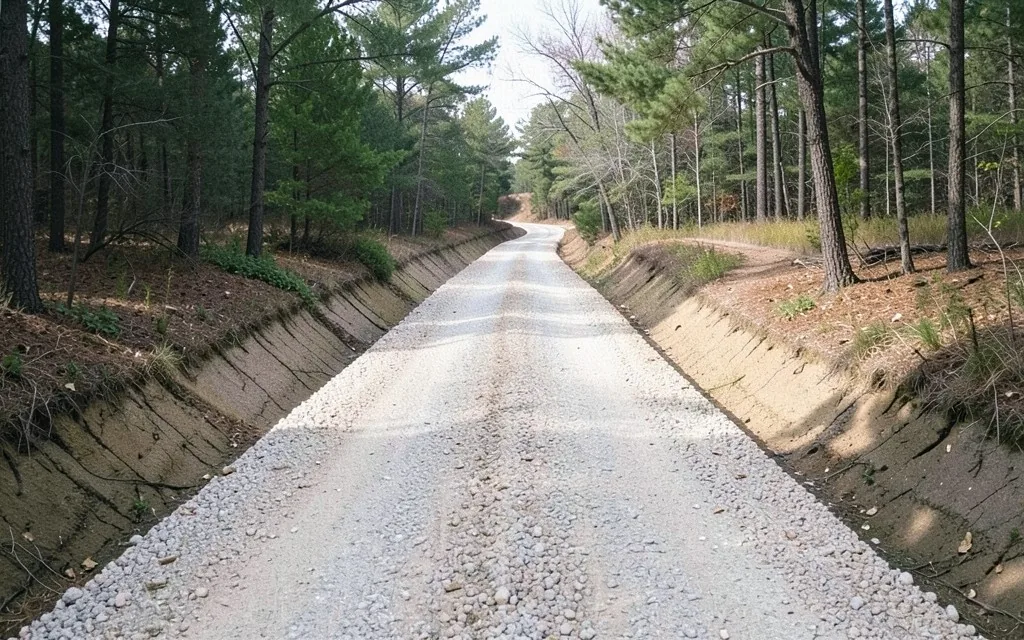
New Waverly
A long wooded drive rebuilt with a crown, sized culverts at the crossings and roadside swales.
Why homeowners choose us
Why do New Waverly property owners choose us to clear their land?
- 01
Keepers flagged before machinery
The clearing decision is irreversible, so it is made with you on a walk rather than by an operator on the day.
- 02
Roots dealt with, not just stems
Yaupon and privet resprout vigorously. Cutting at ground level gives you a thicket again in two seasons.
- 03
Timber assessed before felling
Merchantable pine and hardwood is worth knowing about while it is still standing, not after it has been chipped.
- 04
The cleared edge is designed
A deliberate transition so the property reads as intentional and the forest does not simply grow back into it.
- 05
Planting chosen for browse pressure
Deer are constant out here. Species are picked for what survives them rather than for a suburban catalog.
- 06
Planting for sandy loam
East Texas soil is acidic and free-draining. Species and irrigation are set for that, not for Houston clay.
From Google
What clients say about the work
Every review below was left on Google, shown with the reviewer’s own name and photograph. Read them all on the Google profile.

I have seen several of Boones Landscapes that He has done and they are a work of art! He has great vision and imagination!! I highly recommend Boones Landscaping!!!

They did an amazing job on my back yard. The grass looks amazing and professionally done definitely would recommend them. And use them for future work.

Watched my wretched yard transform in 3 1/2 hours! Boone suggested a tree and it is gorgeous. Sod layed so fast and precise (magical). Back yard tomorrow and I cannot wait. Boone, office staff and workers are so nice.
Read full review
Reviews sourced from Google · last checked 2026-08-25
Questions
Landscaping in New Waverly TX — frequently asked
How much does landscaping cost in New Waverly TX?
Basic work starts around $3,500. Most New Waverly homeowners invest $8,000 to $30,000 for comprehensive landscaping. Properties requiring significant land clearing need additional investment for site preparation, and larger wooded tracts can reach $75,000 and beyond. How much clearing is involved is the single biggest variable, which is why every property gets a site visit before a figure.
Do you handle land clearing in New Waverly TX?
Yes, it is our primary service here. Many properties are heavily wooded with dense East Texas forest. We handle selective clearing to create lawns and outdoor living space, underbrush removal, cedar and yaupon clearing, strategic tree removal while preserving desirable pines and hardwoods, stump grinding, and complete site preparation — planned so the property becomes usable without losing the character that made it worth buying.
Do you work on acreage properties near Sam Houston National Forest?
Yes, and it is a good part of what we do here. Properties bordering the national forest have their own considerations: a managed transition with cleared understorey and reduced fuel loads near structures, with the natural treeline kept intact beyond it. The design aim is a landscape that complements the forest setting rather than competing with it, and gives you outdoor space you actually use.
What plants grow best in New Waverly TX?
Species suited to East Texas Piney Woods conditions and acidic sandy loam. Native performers include longleaf and loblolly pine, southern magnolia, yaupon holly, wax myrtle, American beautyberry and native azaleas, with ferns and shade-tolerant groundcover in the understorey. This soil is chemically different from Houston clay, so plants chosen from a Houston list frequently underperform here without anyone identifying why.
How do you handle drainage on wooded New Waverly properties?
At property scale rather than lot scale. Sandy loam drains well vertically, but rolling wooded ground still moves a lot of water across the surface during a storm, and clearing changes where it goes. We use swales to direct flow, culverts at drive crossings sized to the catchment, and grading across the property, with structures near the house sized for what actually reaches them.
How long does a landscaping project take in New Waverly TX?
Design takes three to six weeks. Construction depends almost entirely on how much clearing is involved: a planting and hardscape plan on already-open ground is two to four weeks, while a project with substantial clearing, grinding, drive work and drainage is a two- to three-month job, and unimproved land sets the pace: the machines are heavy, the ground has never been built up, and a wet week stops it cold, so the calendar carries a rain allowance from the start.
Will the cleared area grow back?
It will if the clearing was done badly and the area is left alone. Yaupon and privet resprout vigorously from cut stems, so root systems have to be grubbed or ground rather than the stems simply cut. Beyond that, a cleared area on a forest edge needs a maintained boundary and periodic attention while it establishes. Handled properly it stays open with modest upkeep; handled as a one-off cut, it is thicket again in two seasons.
What happens to the timber and brush?
Brush and small material is chipped on site, and the chips either stay as mulch for paths and woodland margins or are hauled — your choice, and it affects the price. Merchantable timber can sometimes be sold or milled depending on species, size and volume, and on a larger clearing that is worth discussing before anything is felled rather than afterwards. Trunk wood is otherwise cut to length for firewood or removed.
Do you serve San Jacinto County?
Yes, along with Walker County and the areas either side of the national forest. These are mostly acreage properties where clearing, drive work and property-scale drainage lead the project. Travel and equipment mobilization are quoted honestly rather than absorbed into a vague figure, and access is assessed on the site visit because it genuinely decides what can be brought in.
Should I clear before deciding on a design?
No — the other way round. Once timber is down it cannot be put back, and the shape and edge of the cleared area are the most important design decisions on a wooded property. We walk the tract, flag the keepers with you, and draw the clearing deliberately before any machine is booked. Clearing first and designing afterwards is how people end up with an open lot that has no shape to work with.
Can the clearing and landscaping be done in phases?
Yes, and on a wooded property it usually should be. One master plan, built in the order the land dictates: clearing and grinding come first, drainage right behind them, and only then the spaces near the house and the wider planting. On a forest-edge property the phase boundaries have to be drawn so that a stopping point looks intended, because a half-cleared lot reads worse than one nobody has touched.
How much clearing should a forest-edge lot actually get?
Less than most people first ask for. Clearing to the property line removes the wind protection and the privacy that made the lot worth buying, and it exposes retained trees that grew up sheltered. Selective clearing keeps specimens with sound structure and opens sight lines where you use the property, which is a design decision rather than a machine decision.
Where we work
Is New Waverly inside our service area?
We work throughout Walker and San Jacinto Counties and south into Montgomery County. Heavy tree cover and acidic sandy loam are the two local conditions, and both start with clearing.
Often specified alongside: land clearing and dirt work, tree removal, stump grinding, driveways and entries, drainage, landscape design.