
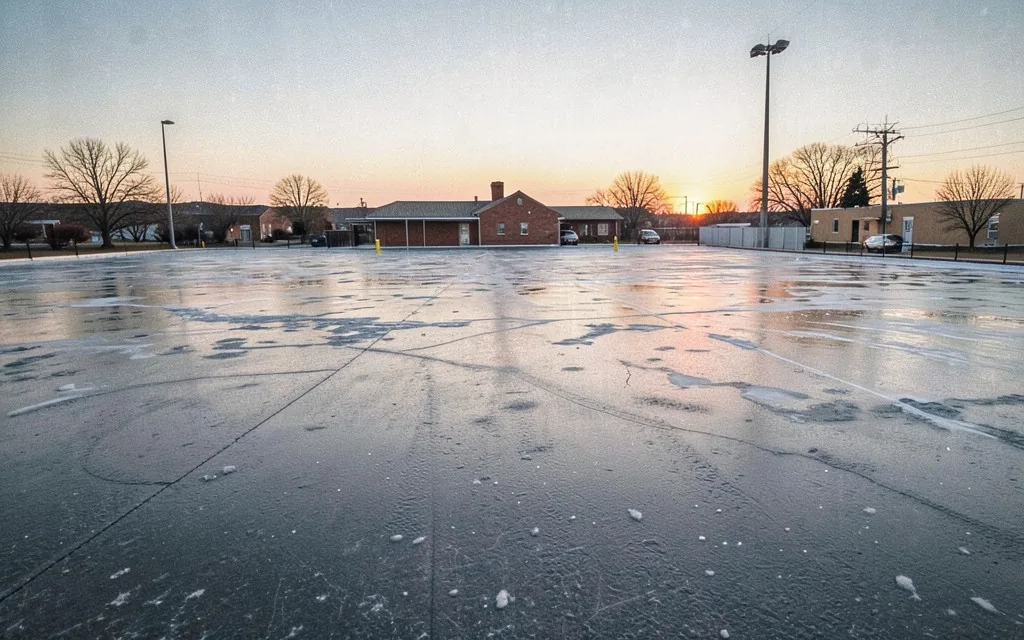
Winter weather
Texas ice events are rare, short, and land on whoever was not ready
Commercial de-icing and ice management across The Woodlands, Spring and Conroe — anti-icing before the event, parking lot and walkway treatment during it, and 24/7 response throughout.
Anti-icing and de-icing are different jobs. Anti-icing is treating a surface before the freeze so ice cannot bond to it — cheaper, faster and far more effective. De-icing is breaking a bond that has already formed, which needs more material, more time and more passes. Because Texas ice events are short and announced days ahead, the properties that come through cleanly are almost always the ones that treated in advance. Event pricing here runs $500 to $2,500 and up.
Below: what treatment costs per event, how quickly we can respond once conditions turn, what the difference means in practice, and how a seasonal agreement works in a climate where you may need it twice a year.
What we build
What we treat
Priority order, which is also the order that matters for liability.
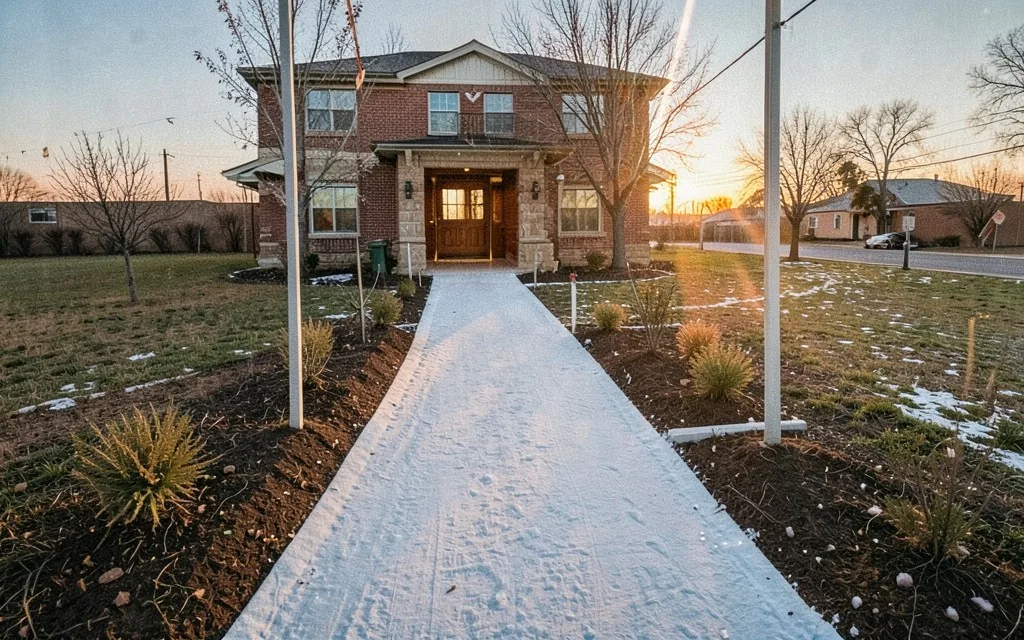
Pedestrian walkways and entrances
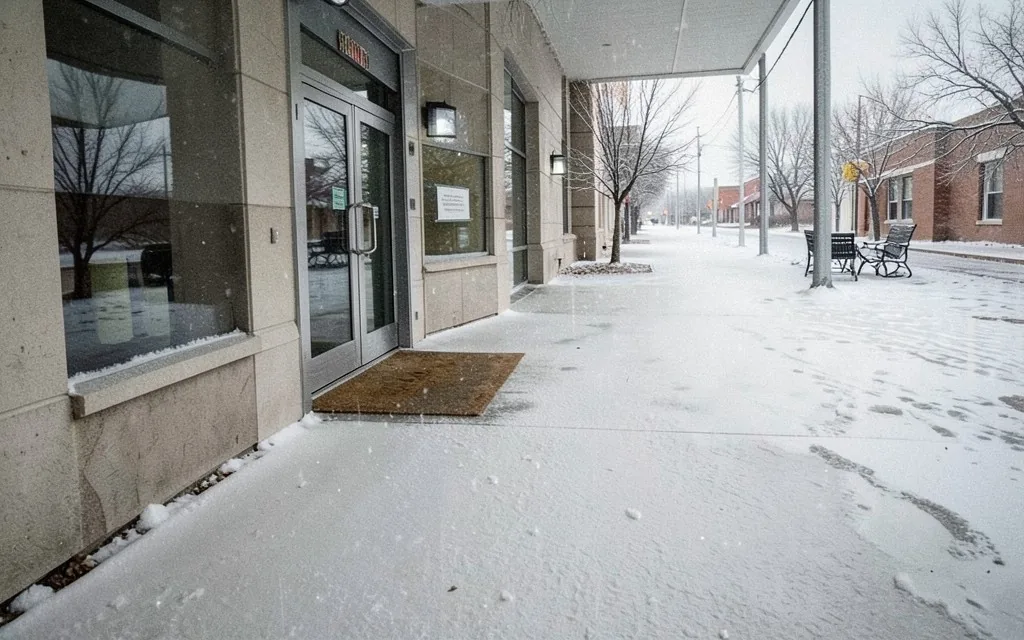
The routes people actually slip on. Treated first and re-treated through an event, because a car park with one icy doorway is still an incident waiting to happen.
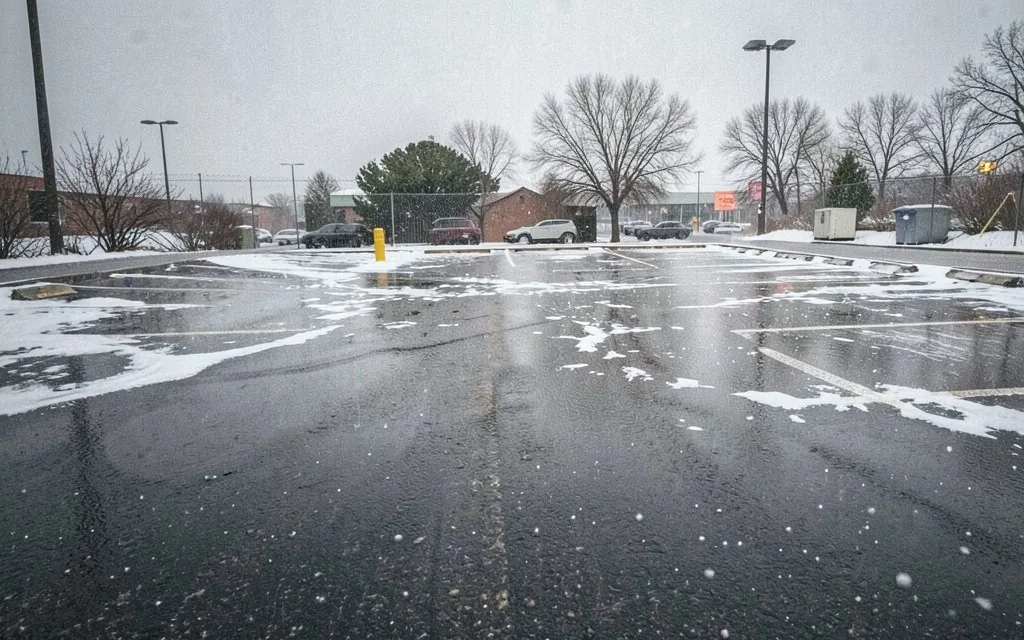
Parking lots and drives
Vehicle surfaces treated to keep the property accessible, with the drive and the exit line prioritised so nobody is trapped or blocked from leaving.
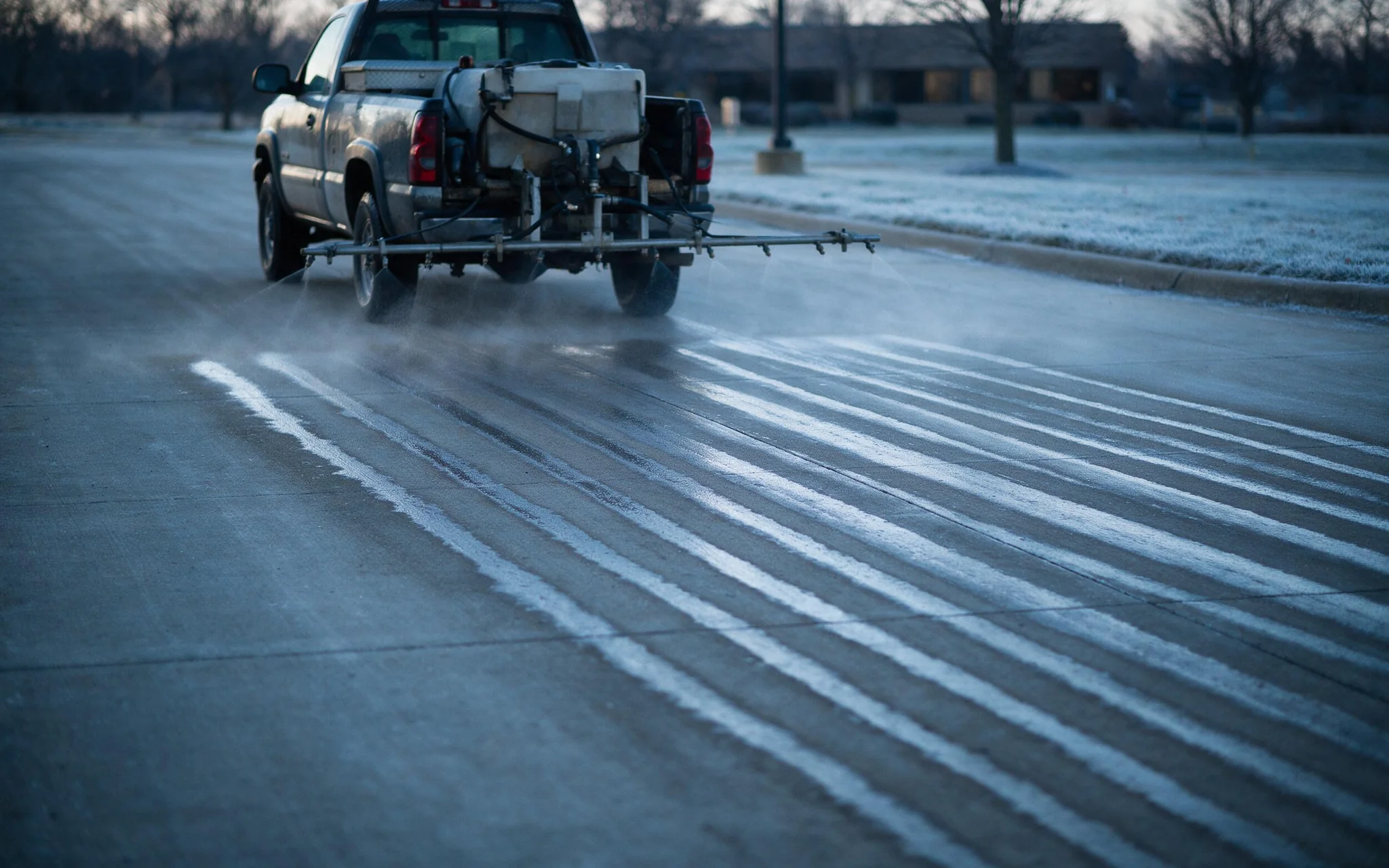
Anti-icing pre-treatment
Applied before the freeze arrives so ice cannot bond to the surface. The single most effective thing available, and it has to happen before the event rather than during it.
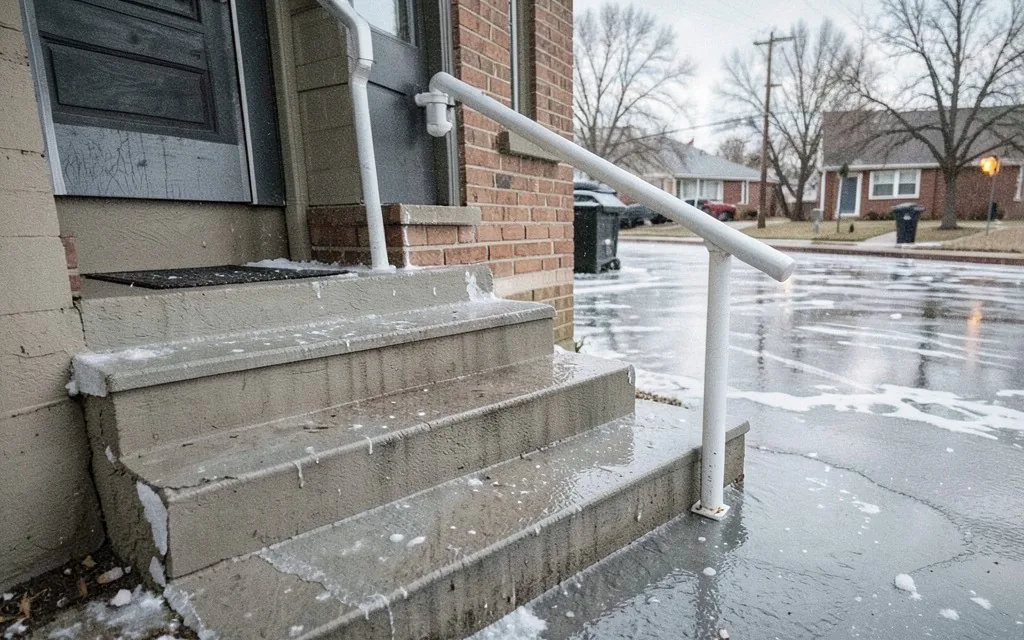
Ramps, stairs and level changes
Loading ramps, steps and any change of level, which ice more readily than flat ground and are where falls do the most damage.
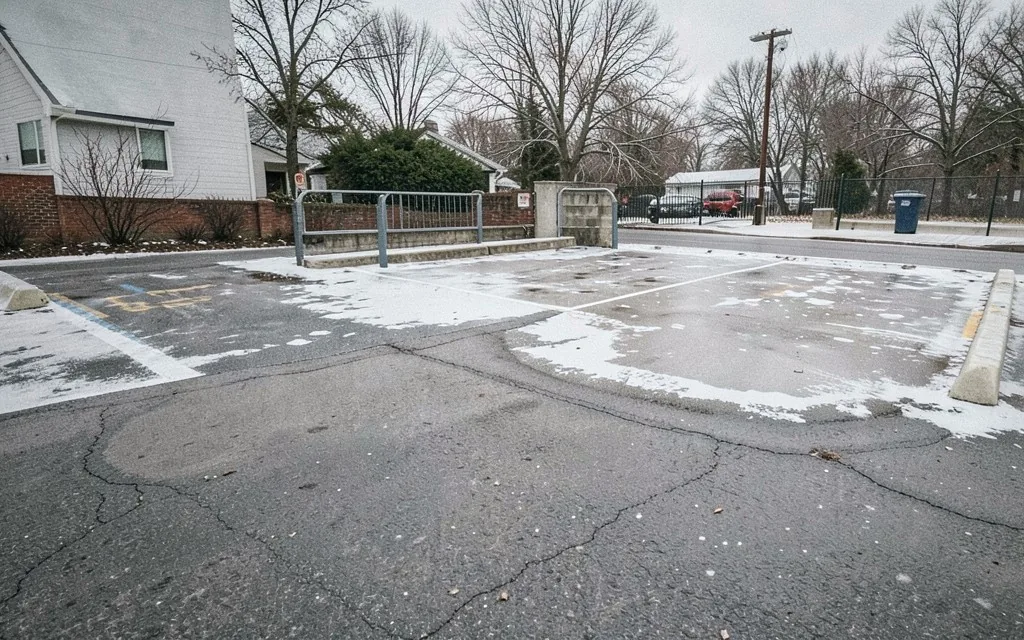
Accessible routes and bays
Accessible parking, ramps and the routes from them, kept clear and treated as a priority rather than as part of a general sweep.
Documented service records
Time-stamped records of what was treated and when. In a slip-and-fall claim this documentation is the difference between a defence and a recollection.
Local conditions
Why do Texas properties get caught out?
Five reasons, and the first is simply that it happens rarely enough to feel unlikely.
Nobody arranged cover in advance
CauseA hard freeze is forecast, and the property manager starts calling contractors thirty-six hours out — along with everyone else in Montgomery County. Capacity is gone by then.
FixA seasonal agreement in place before winter, so the property is on a response list rather than in a queue. In a climate this mild it costs little and it is entirely about the days it matters.
Treating after the ice has bonded
CauseWaiting until there is visible ice, then de-icing. Breaking an existing bond takes several times the material and several times the passes, and the surface stays hazardous throughout.
FixAnti-icing applied before the freeze arrives so ice never bonds. Forecast-triggered, cheaper per event, and it keeps the surface usable rather than recovering it afterwards.
The car park is treated and the doorway is not
CauseVehicle surfaces prioritised because they are the biggest area. Pedestrians are where the injuries and the claims come from, and one untreated entrance undoes the whole exercise.
FixWalkways, entrances, steps and accessible routes treated first and re-treated through the event, with vehicle surfaces handled alongside rather than before.
No record of what was done
CauseTreatment carried out with nothing written down. Months later, in a slip-and-fall claim, nobody can evidence that reasonable measures were taken or when.
FixTime-stamped service records for every treatment, by area, issued to the property. It costs nothing at the time and it is the entire difference in a claim.
Material that damages the property
CauseHeavy-handed application of aggressive salt onto concrete, paving and adjacent planting. The ice goes; the spalled concrete and the dead bed edges are still there in spring.
FixMaterial selected for the surface and applied at rate, with planting margins considered. Over-application is a cost as well as a hazard, and it is entirely avoidable.
Specification
Anti-icing against de-icing
Six practical differences. The distinction decides both the cost and the outcome of an event.
Anti-icing: what it is
Treatment applied to a dry surface before freezing precipitation arrives, leaving a residue that prevents ice bonding. Proactive, forecast-triggered, and done in daylight before conditions turn.
De-icing: what it is
Treatment applied to ice already bonded to the surface, to break that bond so it can be cleared. Reactive, done in the conditions themselves, and far harder work.
Material used
Anti-icing uses considerably less material for the same result. De-icing needs more, applied in more passes, and often repeated as conditions continue.
Time to safe
An anti-iced surface is largely usable throughout the event. A de-iced one is hazardous until the treatment works, which on a cold surface can take a long time.
Cost per event
Anti-icing is markedly cheaper per event. It is also the option that requires having arranged cover in advance, which is why properties end up de-icing instead.
When de-icing is unavoidable
When the event arrives faster than forecast, when freezing rain falls on an untreated surface, or when a property was not on a response list. It is a recovery, not a plan.
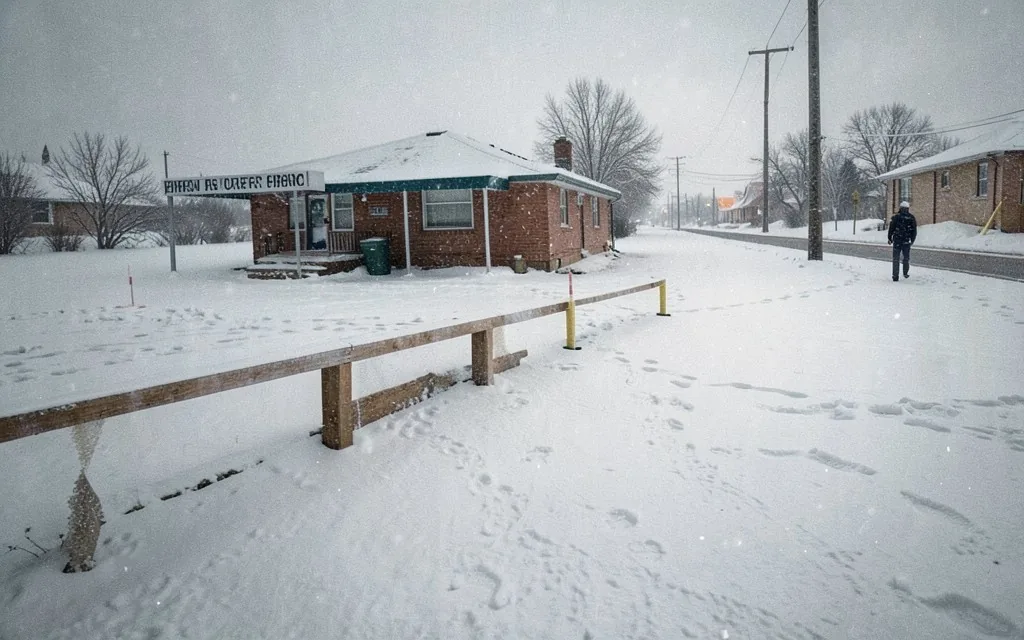
How it runs
Watch, pre-treat, respond, record
The work that decides an ice event happens in the two days before it, not during it.
- 01
Seasonal agreement
Property assessed, priority areas and access agreed, and the site placed on the winter response list before the season starts.
- 02
Monitor the forecast
Conditions watched through winter so pre-treatment is triggered by the forecast rather than by a phone call once ice has already formed.
- 03
Anti-ice before the event
Walkways, entrances, ramps and drives pre-treated while surfaces are dry, so ice cannot bond when the freeze arrives.
- 04
Respond through the event
Re-treatment and clearance during the event, prioritised by pedestrian routes first, with 24/7 cover while conditions persist.
- 05
Record everything
Time-stamped records by area for every treatment, issued to the property so the documentation exists before anyone needs it.
- 06
Clear up afterwards
Residual material cleared from hard surfaces and planting margins checked, so the treatment does not leave its own damage behind.
What it costs
What does commercial de-icing cost in The Woodlands?
Priced per event rather than monthly, which suits a climate where a winter may bring one freeze or none.
Per-event treatment $500 – $2,500+
Depends on property size, how many pedestrian routes and entrances need covering, and how many treatment passes the event requires. Anti-icing sits at the lower end; de-icing an already-bonded surface at the upper.
Recent work
Typical winter response
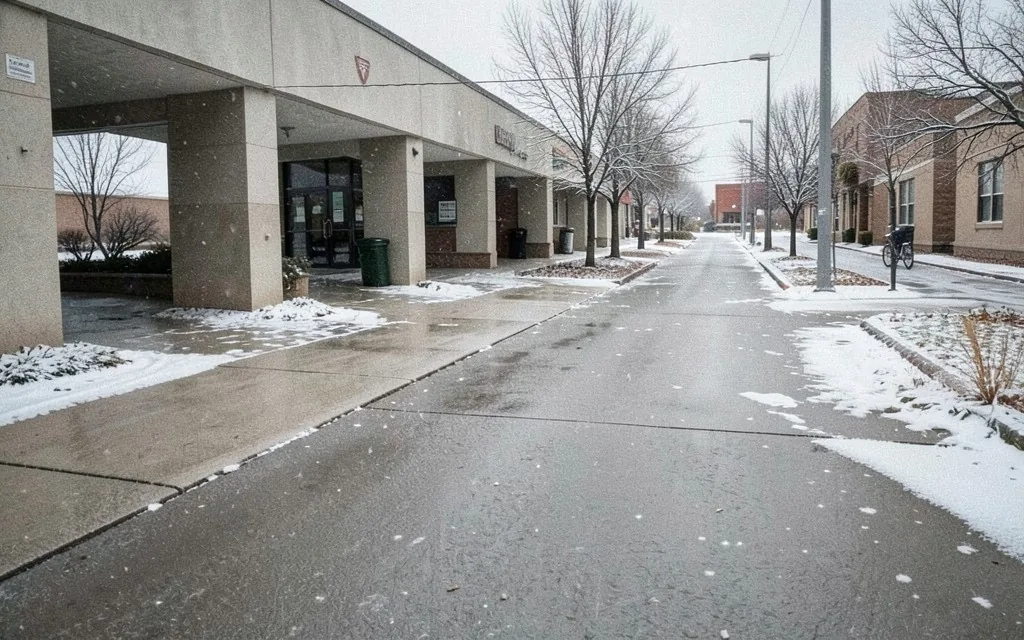
The Woodlands
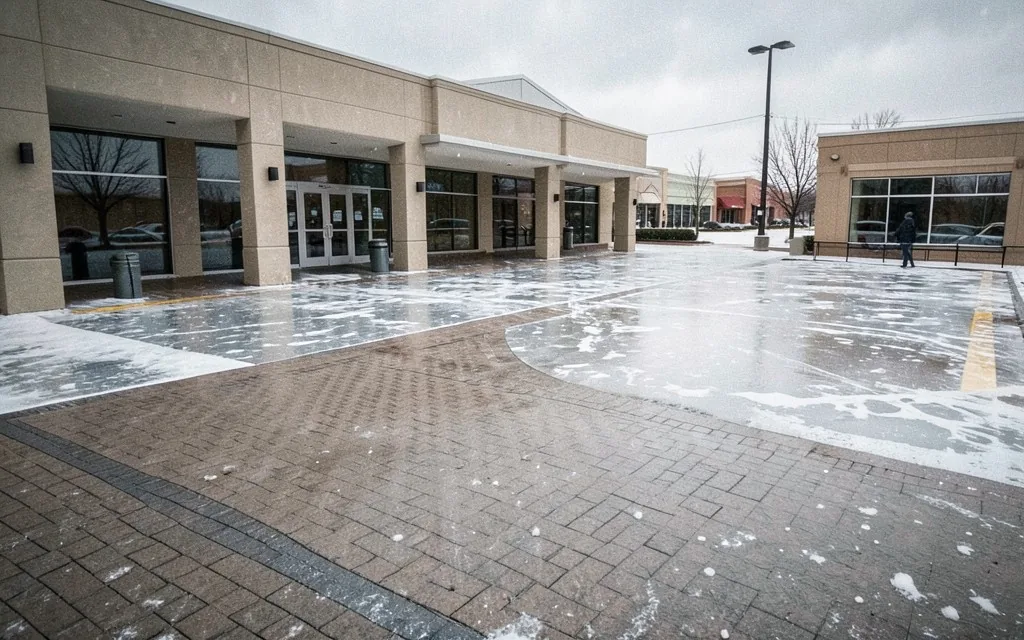
Office park pre-treated the afternoon before a forecast freeze — entrances and walkways stayed usable throughout.
Spring
Retail centre treated through an overnight event, with accessible bays and routes prioritised alongside the entrances.
Conroe
Time-stamped records issued by area after a multi-day event, giving the owner documentation before it was needed.
Why homeowners choose us
Why properties keep us on the list
- 01
Pre-treatment, not just response
Forecast-triggered anti-icing before the event. It is cheaper, it works better, and it requires arranging cover in advance.
- 02
Pedestrian routes first
Entrances, walkways, steps and accessible routes before car park acreage. That is where injuries and claims come from.
- 03
24/7 through the event
A line that reaches someone who can dispatch while conditions persist, not a voicemail box until Monday.
- 04
Everything documented
Time-stamped records by area, issued to the property. In a claim it is the difference between a defence and a recollection.
- 05
Material chosen for the surface
Applied at rate, with planting margins considered. Aggressive over-application leaves spalled concrete and dead beds behind.
- 06
A place on the list, not in the queue
A seasonal agreement means capacity is allocated before the forecast turns and everyone starts calling at once.
Questions
Commercial de-icing — frequently asked
How much does commercial de-icing cost in The Woodlands?
Treatment is priced per event and typically runs $500 to $2,500 and up. The figure depends on property size, how many pedestrian routes and entrances need covering, and how many passes the event requires. Anti-icing applied before a freeze sits at the lower end because it uses less material and takes less time; de-icing a surface where ice has already bonded sits at the upper end.
What is the difference between anti-icing and de-icing?
Anti-icing is treating a dry surface before freezing precipitation arrives, leaving a residue that stops ice bonding. De-icing is breaking a bond that has already formed. Anti-icing uses considerably less material, keeps the surface usable throughout the event, and costs less. De-icing is a recovery operation — more material, more passes, and the surface stays hazardous until it takes effect.
How quickly can you respond during an ice event?
For properties on a seasonal agreement we target a two-hour response once conditions require it, and we run a 24/7 line while an event is in progress. The honest caveat is that a regional freeze puts every commercial property in Montgomery County into the same window at the same time. Response order follows the agreement list, which is the practical reason to arrange cover before winter rather than during it.
Why do we need this in Texas?
Because the events are rare, short, and land on properties that were not ready. A hard freeze here may come once a winter or not at all, which makes it easy to defer — and then everyone calls in the same thirty-six hours and capacity is gone. The exposure is not weather damage, it is slip-and-fall liability on a walkway nobody treated, and that does not scale with how often it happens.
What gets treated first?
Pedestrian routes: entrances, walkways, steps, ramps and accessible bays and the paths from them. Those are where injuries and claims originate. Car parks and drives are treated alongside, prioritising the drive and the exit line so nobody is blocked in. A property with a perfectly treated car park and one untreated doorway has not reduced its exposure at all.
Do you provide documentation of treatments?
Yes, and it is one of the more valuable parts of the service. Every treatment is recorded by area with a time stamp, and the record is issued to the property. Months later, in a slip-and-fall claim, that documentation is what evidences reasonable measures were taken and when. It costs nothing at the time; reconstructing it afterwards is impossible.
Will de-icing material damage our concrete or planting?
It can, if it is the wrong material or applied heavily. Aggressive salt on concrete causes surface spalling that is still visible in spring, and run-off into bed edges kills planting along the margins. We select material for the surface, apply it at rate rather than generously, and consider where run-off goes. Over-application is a cost as well as a hazard, and it is entirely avoidable.
Do we need a seasonal contract or can we call when needed?
You can call, but be aware what you are relying on. In a regional freeze every commercial property calls in the same window, and capacity is committed to the properties already on the list. A seasonal agreement puts you on that list and enables forecast-triggered pre-treatment, which is the part that actually works. In this climate it is inexpensive precisely because the events are infrequent.
How do you know when to pre-treat?
We monitor forecasts through the winter and trigger pre-treatment on the forecast rather than on a phone call. That is the whole point: by the time someone is looking at ice on a walkway, the anti-icing window has closed and the only remaining option is the slower, costlier one. Properties on an agreement get treated in daylight the day before, which is also safer for the crews doing it.
Do you clear snow as well?
Snow is uncommon enough here that ice is almost always the actual problem, and our equipment and materials are set up for ice management. Where accumulation does occur we clear pedestrian routes and access lanes as part of the response. For a genuinely significant snow event this region does not have the plough fleet a northern city does, and we would tell you that rather than over-promise.
Can this be added to our existing maintenance contract?
Yes, and for contract clients it is the simplest arrangement — we already know the property, the access, the priority routes and who to contact. It is quoted as a separate seasonal line rather than folded into the monthly figure, because it is event-based and a winter may bring one activation or none, and neither of those should distort a recurring maintenance cost.
What if the forecast is wrong and nothing happens?
Pre-treatment applied ahead of an event that does not materialise is a cost, and we are straightforward about it: you have paid for a treatment you did not need. The alternative is waiting for certainty, by which point anti-icing is no longer available and you are paying more for a worse outcome. We use the forecast conservatively and will discuss the call with you rather than triggering automatically on every cold night.
How much notice do you need before a Texas freeze?
Twenty-four hours is enough to pre-treat, and pre-treating is the whole game. Anti-icing before the front arrives stops the bond forming between ice and pavement, which is far cheaper and safer than breaking that bond afterwards. We watch the forecast for contracted sites and call you rather than waiting to be called, because by the time the sleet starts the window has closed.
Where we work
Winter response across North Houston
We cover commercial properties across Montgomery County and North Houston — The Woodlands, Spring, Conroe, Magnolia, Tomball, Willis and Montgomery. Response order follows the seasonal agreement list, because a regional freeze arrives everywhere at once.
Often specified alongside: commercial landscape maintenance, office park landscaping, HOA landscaping, storm damage response.
Start here
Get on the winter response list
We assess the property, agree the priority routes and access, and put you on the list before the season — so pre-treatment happens on the forecast rather than on a phone call.