
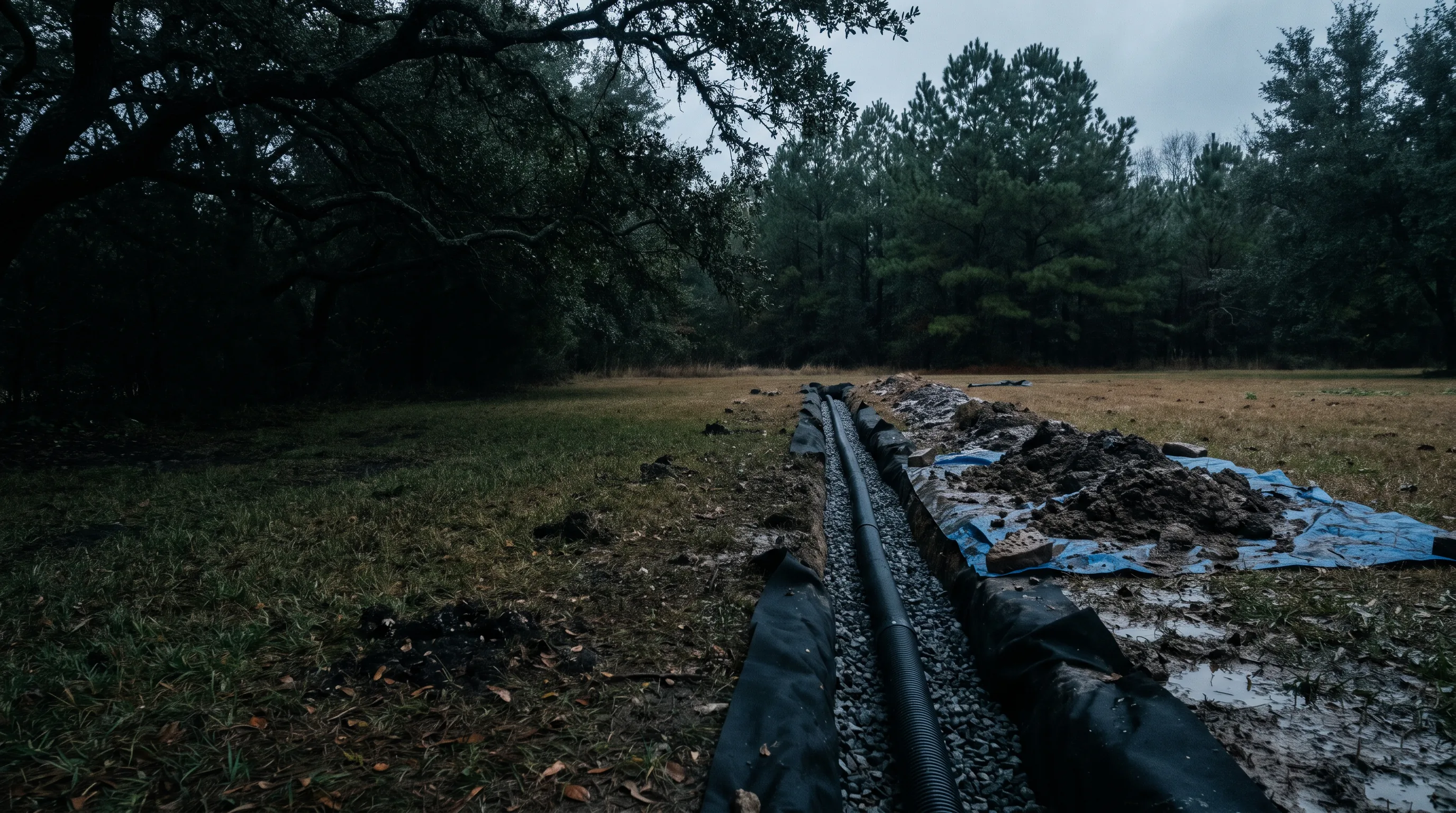
French Drain Installation in The Woodlands, Spring and Conroe
French drain installation in The Woodlands, Spring and Conroe starts with a laser, not a shovel. On this clay a pipe laid to a point no lower than where it started only moves the puddle. A typical yard system.
Since 2010 · Own crews · Workmanship guarantee · Montgomery County and North Houston
What it is for
What a French drain is for on this clay
Beaumont clay holds a two-inch rain for days in The Woodlands, Spring and Conroe. A French drain is perforated pipe in washed gravel, wrapped so clay cannot silt it, laid to somewhere lower. On flat lots in Klein, Gleannloch Farms and much of The Woodlands that lower point is not obvious. Finding it is the first hour of the job.
Water on a property is one system, and irrigation and drainage covers all of it. Surface water that sits because the ground falls the wrong way is a regrading problem and usually cheaper; water building behind a retaining wall is a drain that should have gone in before backfill; a lawn that is wet in one corner because a head is leaking is an irrigation repair, and one that is soaked everywhere is usually a sprinkler schedule written for sand rather than clay. A French drain is the answer when water is moving through clay and needs a pipe.
What fails
Why French drains fail here
The four faults we still dig up — and what a run built to fall does instead.
Laid to nowhere lower
CauseThe trench follows the fence, not the fall. The pipe holds water instead of carrying it and the puddle appears twenty feet away.
FixFall shot with a laser before the quote, and the run laid to a real outfall — street, storm inlet, swale, or a dry well where nothing lower exists.
Unwrapped gravel in clay
CauseFines migrate into the gravel within two seasons and the drain becomes a clay-filled ditch.
FixWashed gravel wrapped in non-woven fabric top and sides, so the pipe stays open for decades rather than years.
Corrugated pipe with no cleanout
CauseCheap slotted corrugated pipe collapses under a mower and cannot be jetted when it silts.
FixRigid perforated PVC where it matters, cleanouts at the head and turns, and downspouts piped into solid line, not into the perforated run.
Downspouts dumped into the drain
CauseFour roof valleys overwhelm a perforated run built for groundwater. It surcharges in every storm.
FixRoof water in its own solid pipe to the outfall; the French drain handles the soil water it was sized for.
The parts
What goes in the trench
Four decisions that decide whether the drain is still working in year ten.
Pipe
Perforated rigid PVC for the collecting run, solid PVC for downspout and discharge lines, cleanouts where the line turns.
Gravel and fabric
Washed stone with no fines, wrapped in non-woven geotextile so Beaumont clay does not silt the void.
Fall and outfall
A minimum of one percent, verified with a laser, to a street, inlet, swale or dry well. Without an outfall there is no drain.
Basins and grates
Catch basins at surface low points and channel drains across thresholds, tied into the same run rather than left as separate systems.

Method
How the run is built
The trench is a morning. The decisions before it are what you live with.
- 01
Walk it wet, or read the signs
Where water sits, where it runs, stain lines on fences and slabs, the corner that never dries.
- 02
Shoot the fall
Laser across the lot to find the outfall and prove the run can reach it at one percent. If it cannot, the answer changes to regrading or a dry well.
- 03
Locate and mark
Irrigation laterals, gas, cable and the sprinkler wire, so the trench misses what is already in the ground.
- 04
Trench, bed, lay, wrap
Fabric down, gravel bedded, pipe set to fall with holes down, gravel over, fabric closed, backfilled and the turf restored.
- 05
Connect the surface
Catch basins at low points, downspouts in solid line, cleanouts capped, then the whole run tested with a hose before the crew leaves.
Cost
What decides the number
Depth, length and how far the outfall is move the number more than lot size.
French drain
Perforated pipe in washed gravel, wrapped, laid to a verified one-percent fall.
Targeted drain or downspout work
One wet corner, a side yard, or downspouts piped underground to the outfall.
Typical yard drainage system
Collecting run, basins and discharge on a typical Woodlands or Spring lot.
Whole-property or foundation drainage
Perimeter runs along the slab, multiple outfalls, dry wells where needed.
If the levels show regrading will do it, we say so; of grading beats of pipe that was not needed.
On site
Drainage work built on this clay
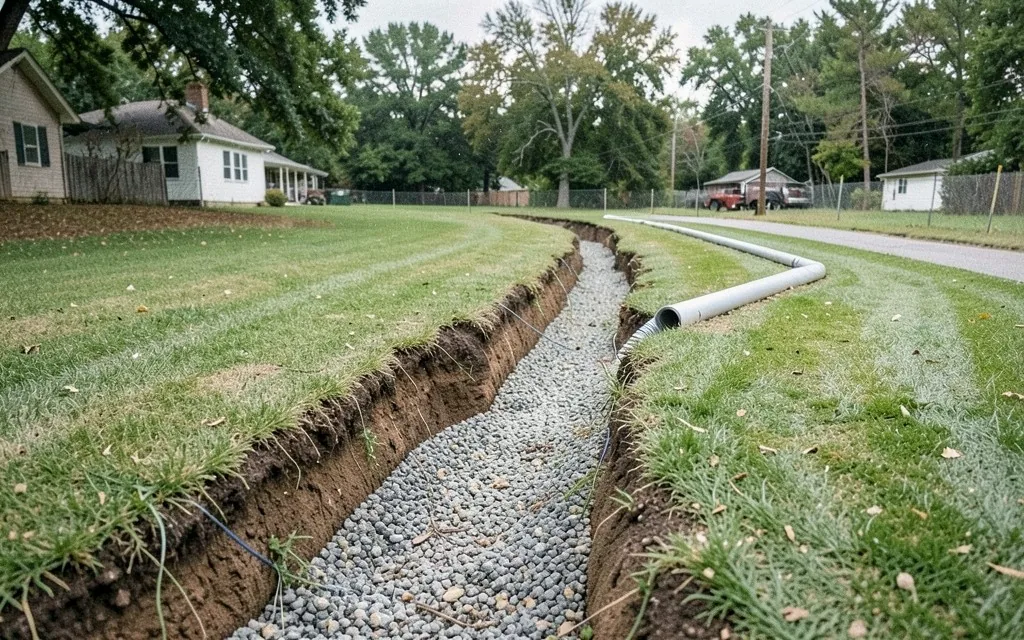
Trench cut across a lawn with gravel staged
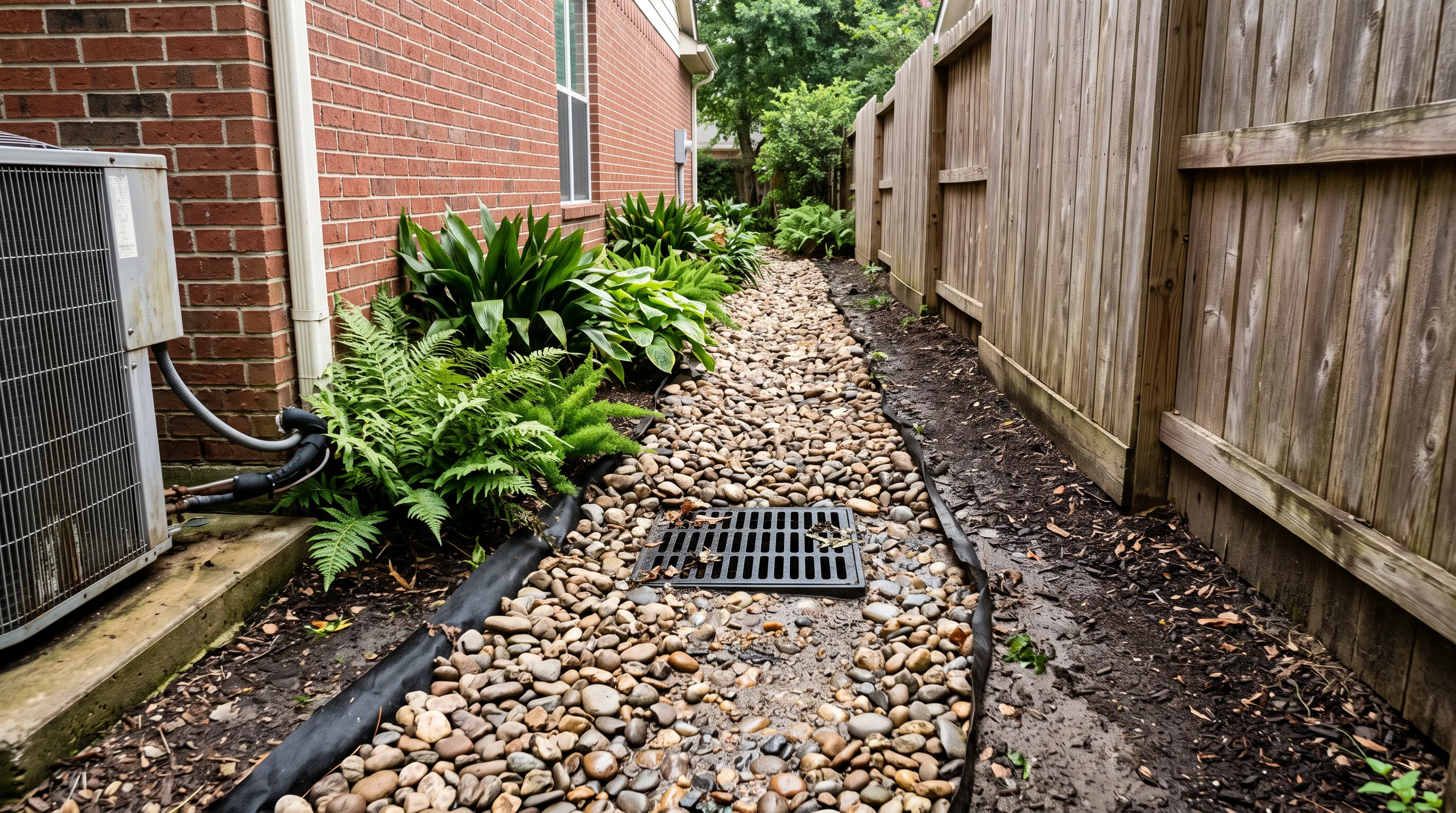
Side-yard rock trench with a catch basin
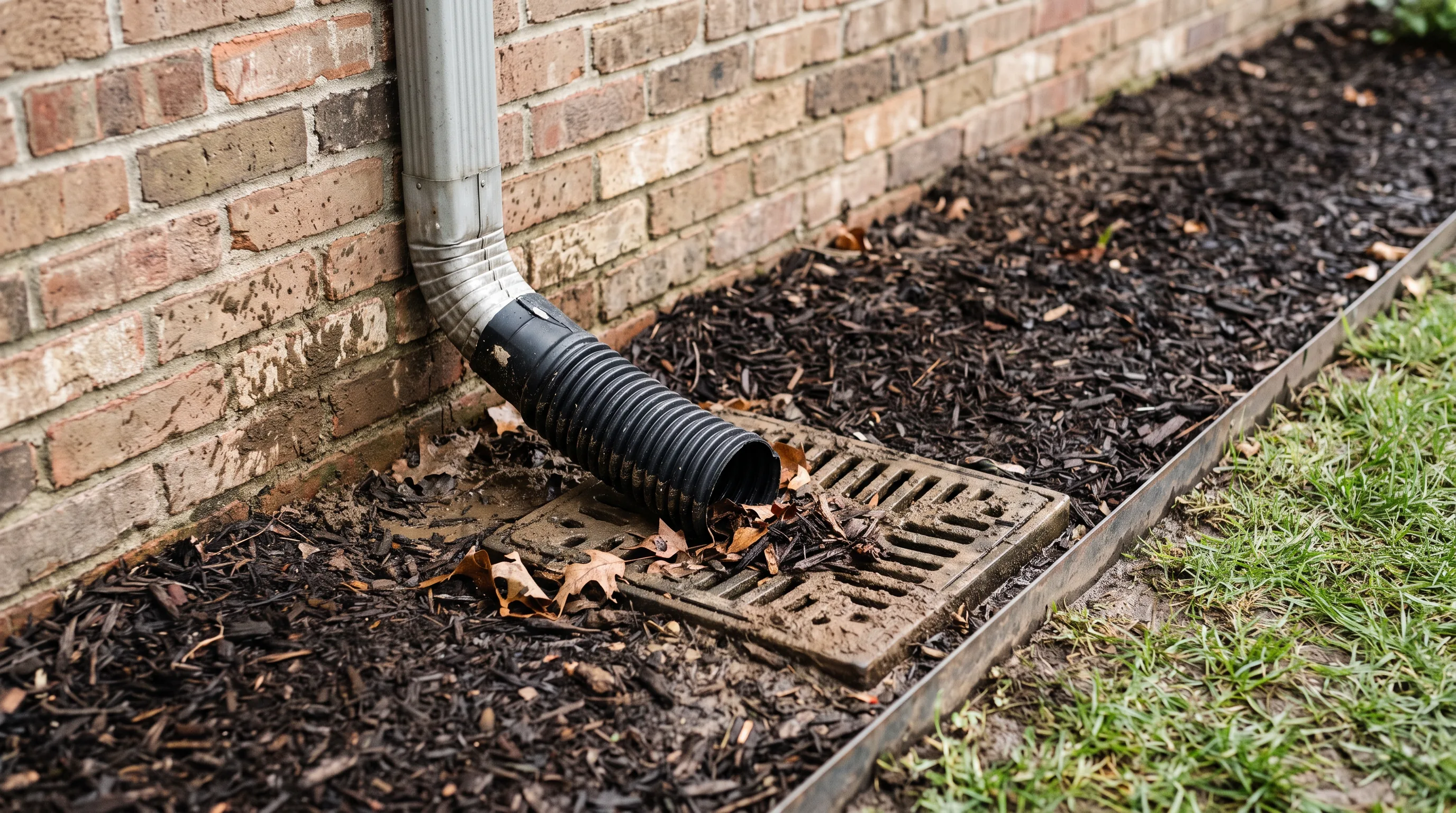
Downspout piped underground in a buried solid line
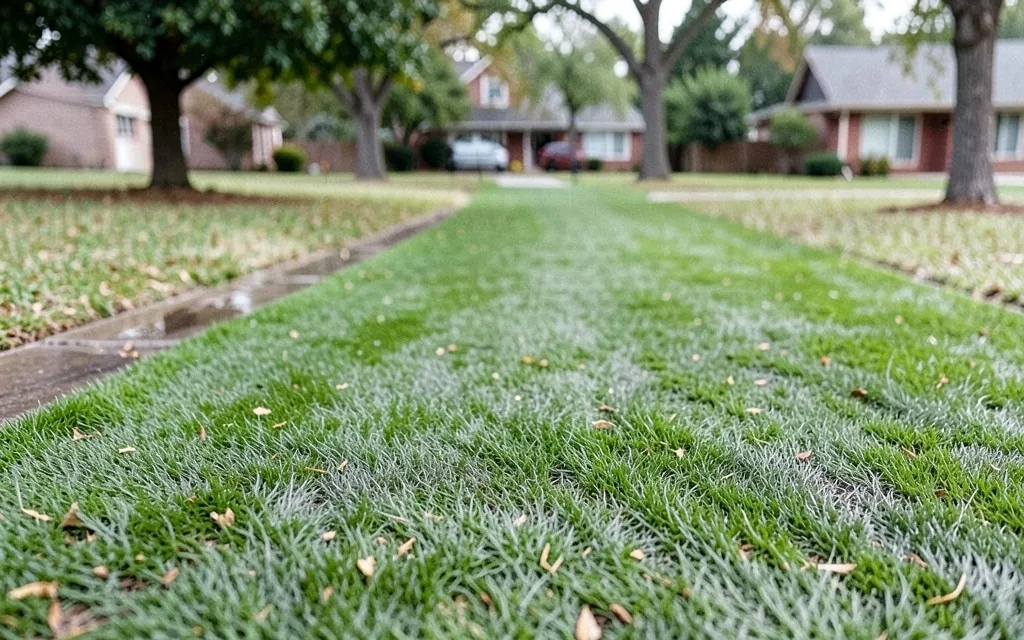
Turf swale carrying water away from a house
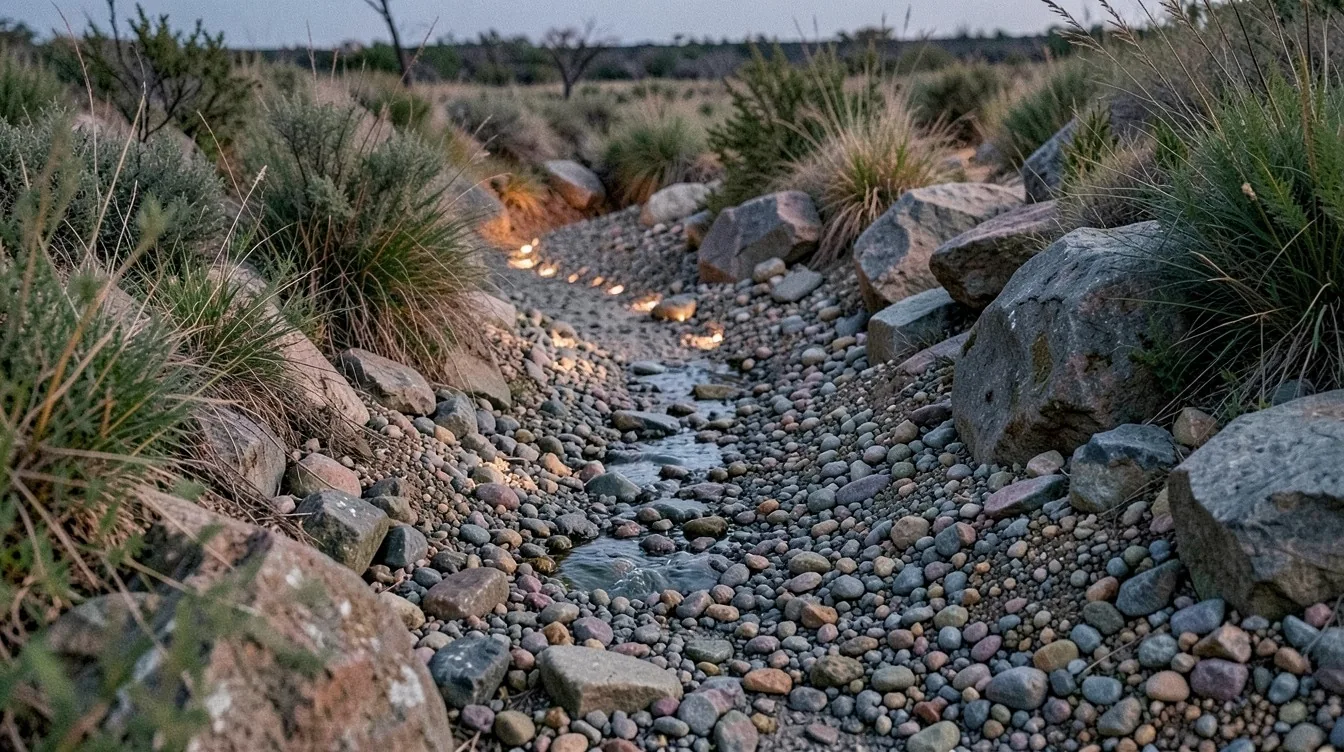
Dry creek bed of river rock at dusk
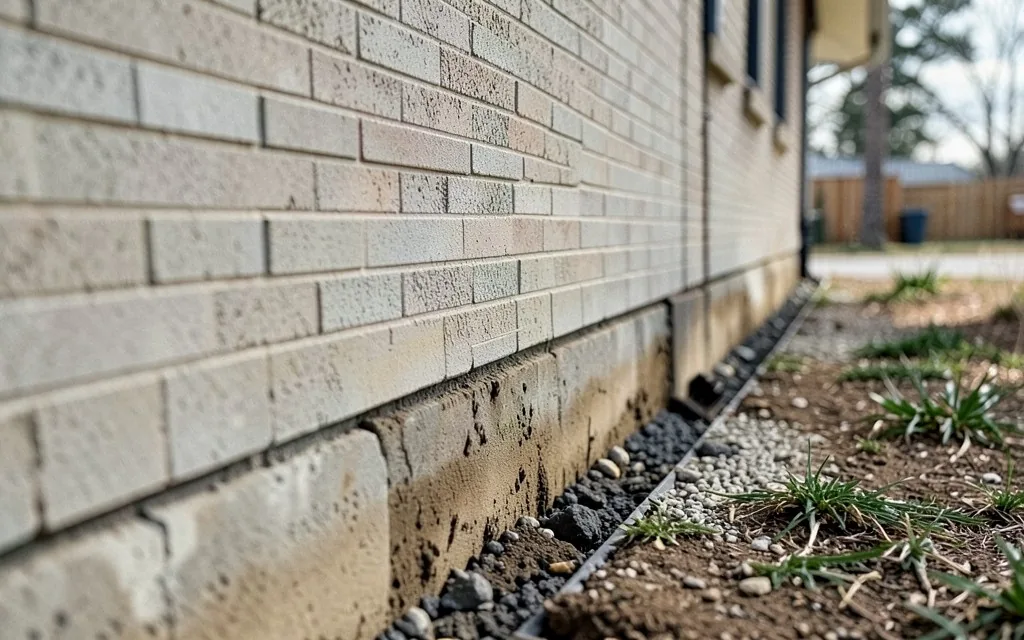
Perimeter drainage trench along a foundation
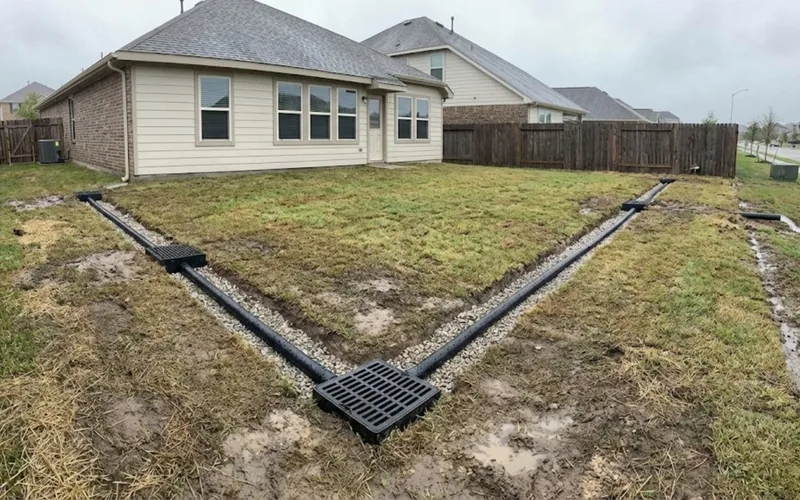
Backyard system: French drain and catch basins
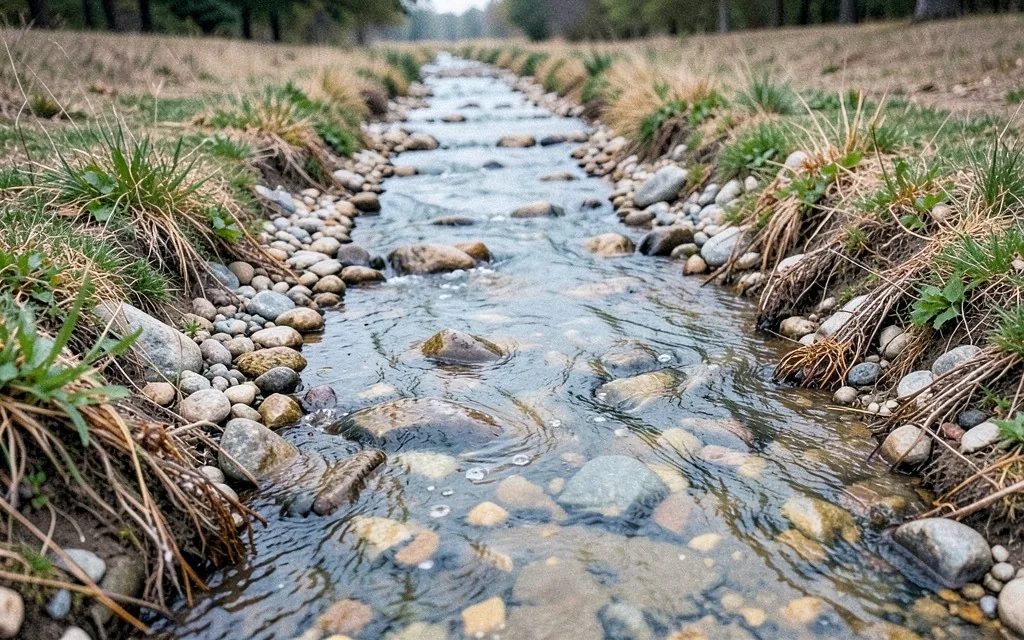
Dry creek bed carrying stormwater between planted margins
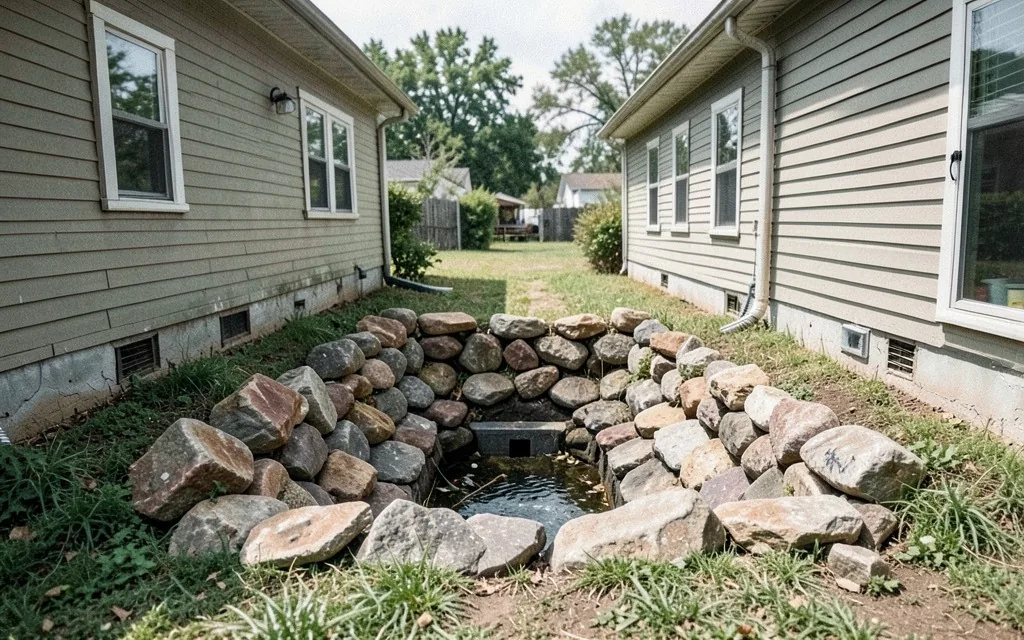
Rock trench and basin between two houses
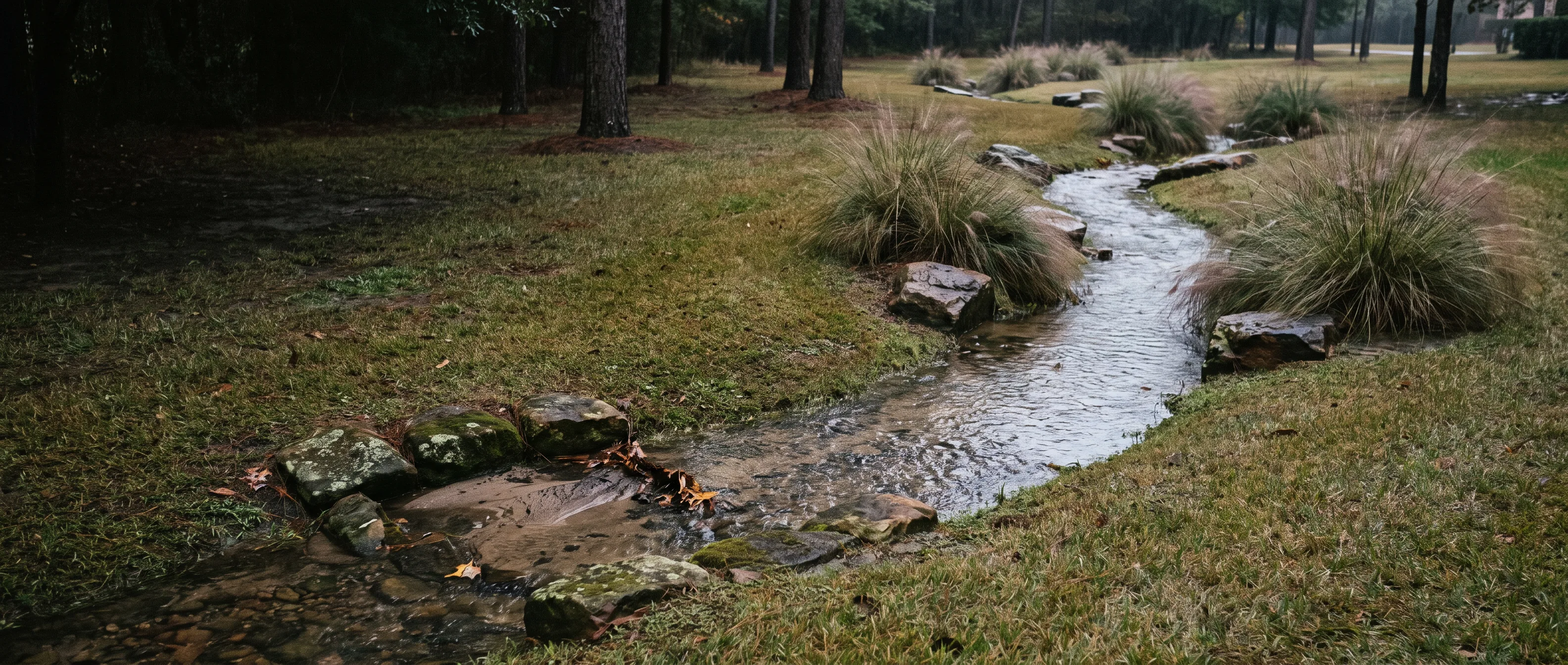
Graded lawn and dry creek bed carrying water after rain
Questions
Questions
How much does a French drain cost in The Woodlands?
a linear foot for the run itself. A single wet corner or downspout job lands a typical yard system and perimeter or foundation drainage. Written after the fall is shot.
Will a French drain fix a soggy lawn?
If water is moving through the clay, yes. If it is sitting on the surface because the ground falls toward the house, regrading at is the right fix and we will say so.
Where does the water go?
To the lowest legal point the run can reach at one percent fall: the street, a storm inlet, a swale, or a dry well sized to the run where nothing lower exists. That is decided before the price.
How deep is the trench?
Usually 18 to 24 inches, deeper where the fall demands it. Irrigation lines, gas and cable are located first so the trench misses them.
How long does a French drain last?
Decades, if the gravel is wrapped so clay cannot silt it and the pipe can be jetted from a cleanout. Unwrapped gravel and slotted corrugated pipe are the runs we replace after two or three years.
Have the fall shot before anyone quotes pipe
Pictures of the property help us prepare. The written price is given after we walk the property. Call (936) 206-7627 to schedule a visit.