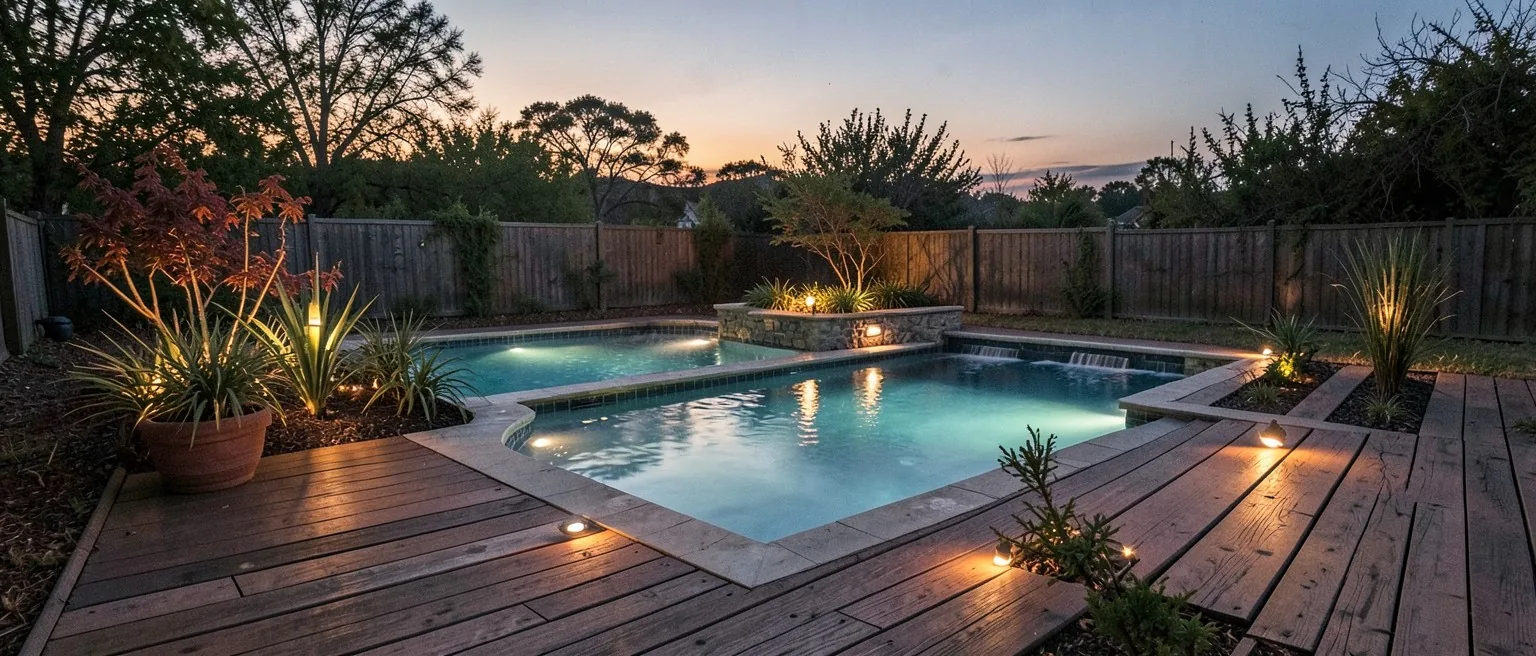

Pool Installation and Poolscapes in The Woodlands, TX
Gunite pools, decking, planting and lighting designed as one project across The Woodlands, Spring and Conroe — engineered for Beaumont clay, not dropped onto it.
On Montgomery County's Beaumont clay the soil moves several inches between a wet spring and an August drought, and that movement is what cracks decks, shears plumbing and tilts coping. Pool installation here needs a structural design that accounts for shrink-swell — piers or a thickened shell where the geotechnical report calls for it, flexible plumbing connections, and decking on its own properly prepared base rather than poured tight against the shell.
Below: what a pool actually costs here, how long the build really takes, gunite versus fiberglass on expansive soil, and why the landscape around the pool should be designed before the pool is dug rather than after.
What we build
What does pool installation actually include?
A pool is one element of an outdoor room, not a standalone excavation. These are the pieces, and they are designed together.
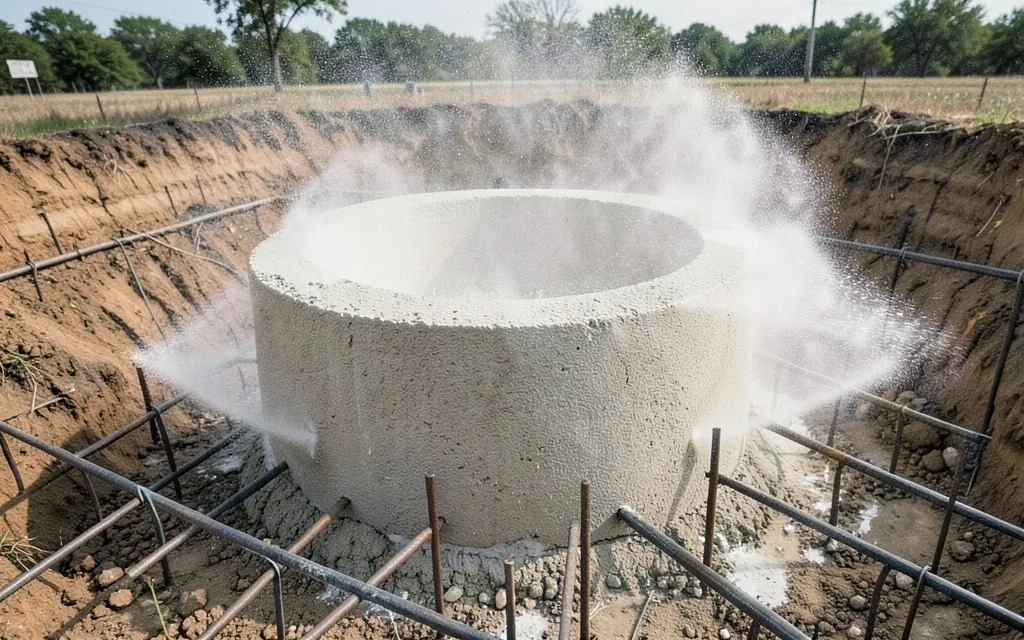
Gunite pool construction
Steel-reinforced shell sprayed in place, formed to any shape and finished in plaster, quartz or pebble. The only construction type we recommend on expansive clay, because the structure can be engineered to the soil.
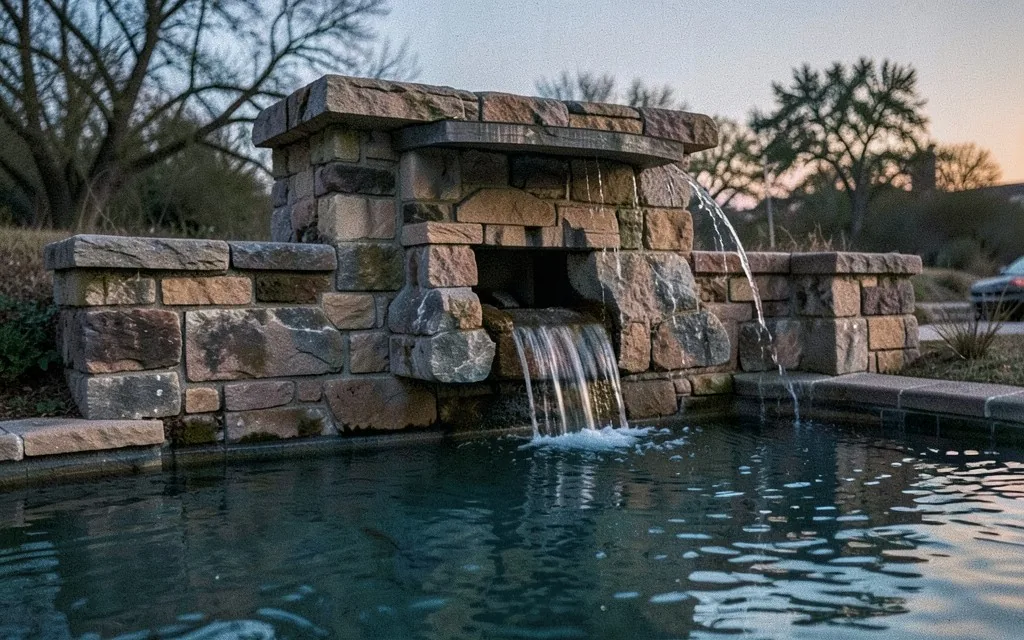
Spas and spillovers
Raised spa integrated with the pool structure, sharing equipment, with a spillover edge that runs as a water feature when the spa is not in use.
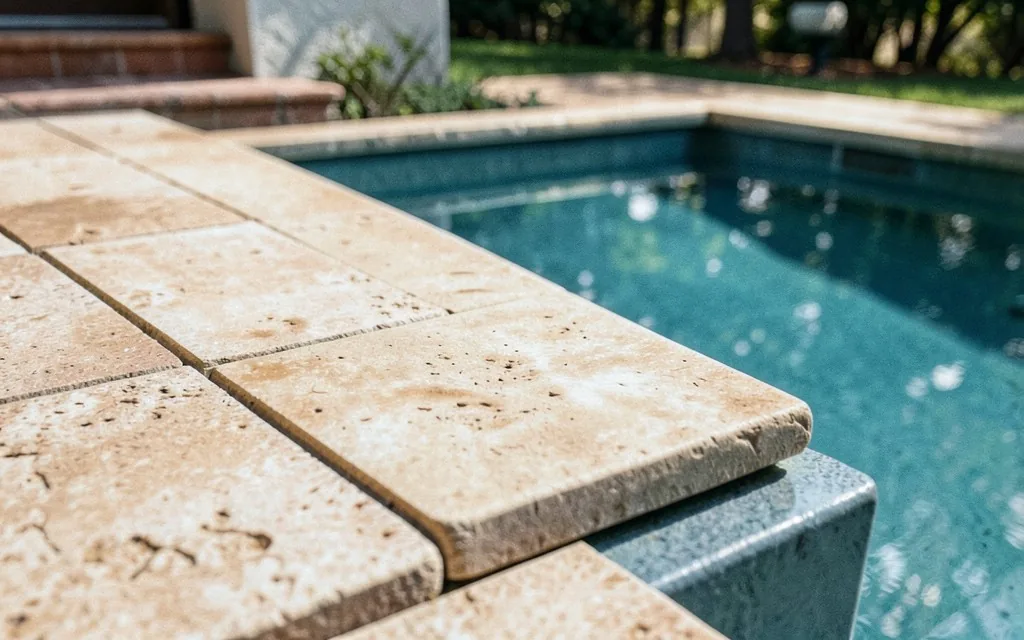
Pool decking and coping
Travertine, shellstone or broom-finished concrete on a properly prepared base, with expansion joints placed where the clay will actually move rather than on a default grid.
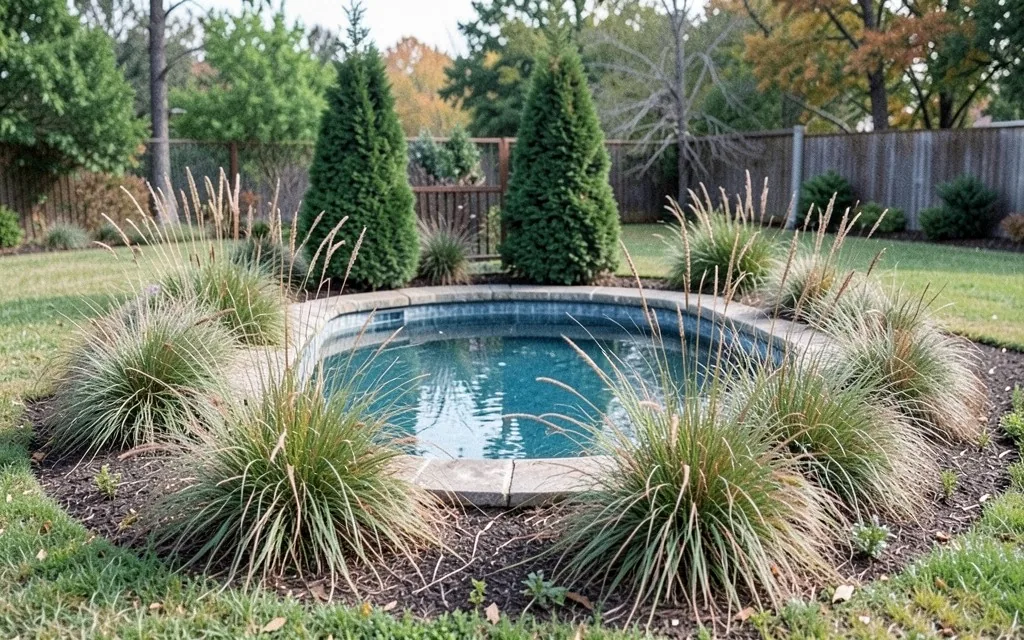
Poolscape planting
Zone 9a planting that suits a pool surround — low litter, no invasive roots near the shell, structure that reads in winter when the pool is covered and you are still looking at it.
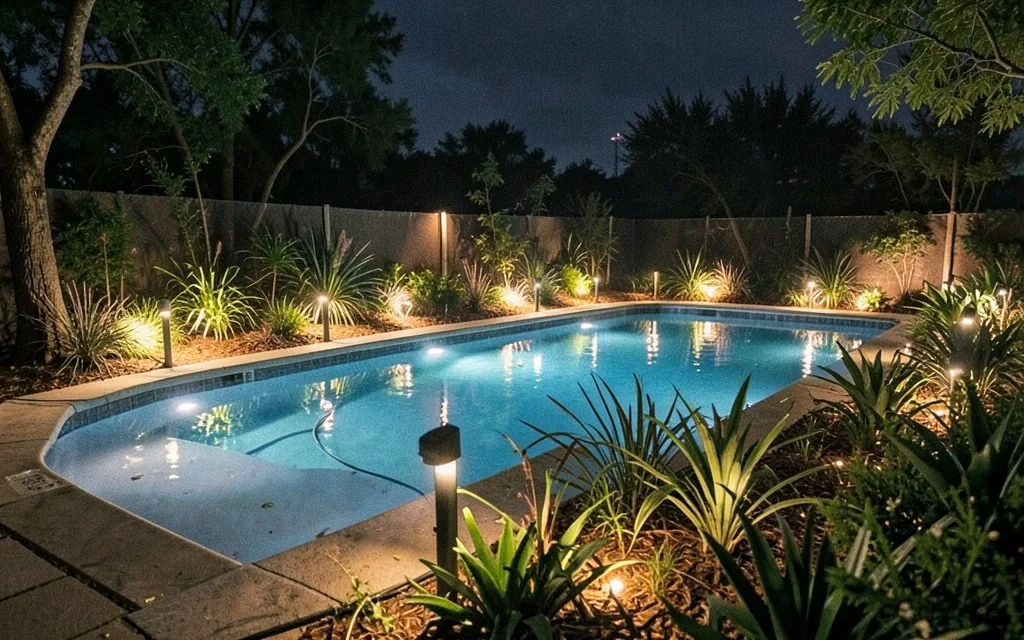
Pool lighting
Submerged color-temperature-matched fixtures plus low-voltage lighting through the surrounding landscape, so the whole space works after dark rather than a bright box in a dark yard.
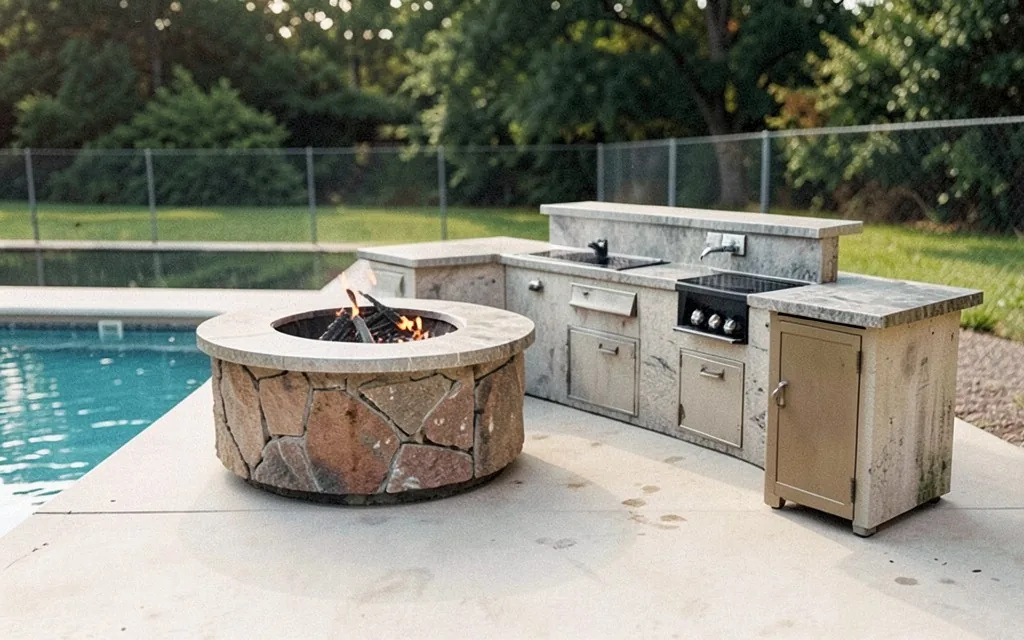
Outdoor kitchens and fire
Kitchen, fire feature and shade structure positioned in the same drawing as the pool, so the utility runs are trenched once instead of the deck being cut open next year.
Local conditions
What goes wrong with pools on Texas clay?
Four failures, all of them soil-driven, all traceable to installation shortcuts and all expensive to correct after the fact.
The deck cracks within two years
CauseDecking poured on unprepared clay, or poured tight against the pool shell. The clay swells and shrinks, the deck has nowhere to go, and it cracks — usually radiating from the corners.
FixDeck built on its own compacted base with proper subgrade preparation, isolated from the shell by an expansion joint, and jointed on a layout that reflects the actual slab geometry.
Plumbing shears underground
CauseRigid PVC run straight from the shell through moving soil. Differential movement between the shell and the surrounding ground snaps the line, and the leak shows up as an unexplained water loss.
FixFlexible connections at the shell penetrations, lines bedded in sand rather than raw clay, and pressure testing before backfill so a failure is found while it is still cheap.
Coping lifts and the tile line cracks
CauseCoping bedded on fill that was never compacted, or a bond beam that was not designed for the soil movement it would see.
FixCompaction verified in lifts, bond beam detailed to the geotechnical recommendation, and coping bedded on a stable base rather than on whatever was pushed back into the trench.
Drainage sends water at the house
CauseA large impermeable deck installed with no thought about where its runoff goes. On a flat clay lot that water sits against the slab and against the pool shell.
FixDeck falls designed to a defined discharge point, with area drains and a French drain where the grade cannot do it alone. Planned in the drawing, not diagnosed after the first storm.
Specification
Which materials matter most when the clay underneath is moving?
Six of them, starting with the subgrade nobody sees: the gunite shell, travertine coping, shellstone, the interior finish, expansion jointing and the base beneath the deck. Each carries its own decision about how it meets this soil and this climate.
Gunite shell
Sprayed over steel, so both the shape and the structure can be designed. On expansive clay that matters: the reinforcement and shell thickness can be specified to the geotechnical report rather than being fixed by a factory mold.
Travertine coping and decking
Stays notably cooler underfoot than concrete in August, which is the single most-appreciated decision on a Texas pool deck. Needs sealing and a stable base; it is unforgiving of movement, so the base work matters more than the stone.
Shellstone and limestone
Pale, cool and locally at home. Softer than travertine, so it wears more visibly at high-traffic entry points, which some clients like and some do not.
Plaster, quartz and pebble finishes
Plaster is the entry finish and needs replacing soonest. Quartz lasts longer and holds color. Pebble is the most durable and the most textured underfoot — worth deciding by feel, not by brochure.
Expansion and control jointing
Placed to the slab geometry and to where the clay will move, not on a default grid. Joints are where a deck is allowed to crack; without them it cracks where it chooses.
Subgrade preparation
The part of a pool installation nobody sees and the part that decides whether the deck is intact in five years. Compacted in lifts and verified during installation, with select fill where the geotechnical report calls for it.
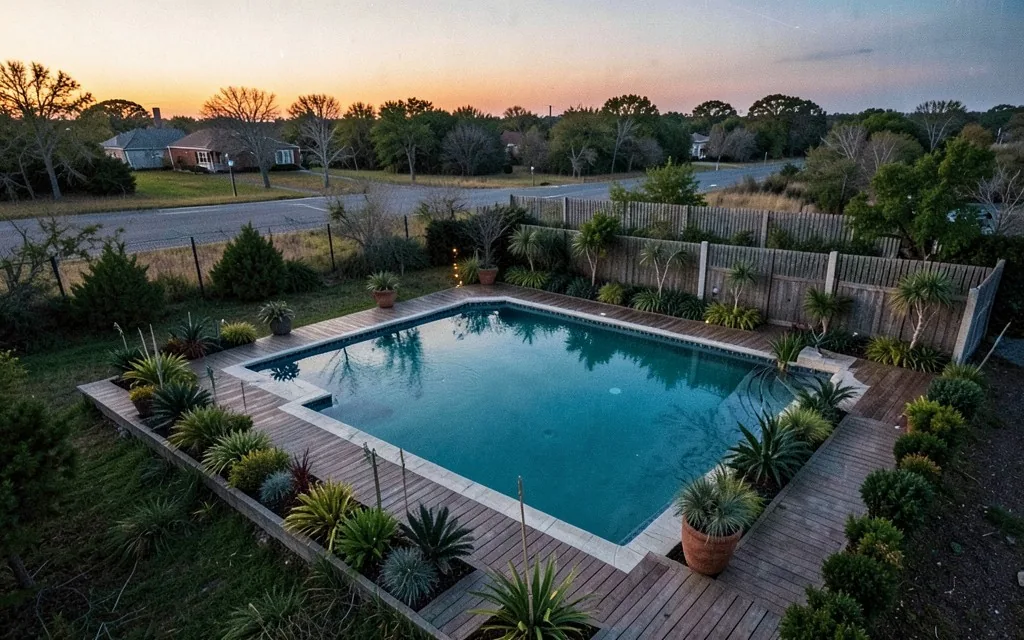
How it runs
Why does sequence matter more than any single trade on a pool build?
Because a pool touches survey, engineering, permitting, several trades and the landscape, and getting the order right is most of the job. Design, engineer, build, then plant.
- 01
Site visit and survey
Grade, drainage, access, existing trees, setbacks and utilities. Access constraints in particular decide the equipment and therefore a real part of the budget.
- 02
Design and drawings
Pool, deck, planting, lighting and any kitchen or fire feature drawn as one plan, to scale, so you see it before anything is dug.
- 03
Engineering and permits
Geotechnical input where required, structural design to the soil report, and permitting — including Woodlands DSC and ARC submissions where the property is covenanted.
- 04
Excavation and shell
Dig, steel, plumbing rough-in and gunite. The shell then cures before anything is built on or against it.
- 05
Decking, coping and tile
Base preparation, coping, tile line and deck, with the expansion joint between deck and shell detailed rather than assumed.
- 06
Landscape, lighting and start-up
Planting, low-voltage lighting, equipment start-up, water balancing and a handover walkthrough covering the equipment and the first season of care.
What it costs
What does pool installation cost in The Woodlands?
Ranges for Montgomery County, covering the pool and its immediate surround. Soil conditions and access move these more than pool size alone.
Typical overall range $50,000 – $150,000
Covers most residential gunite projects here including decking and basic surround. Where a project lands within it is decided mostly by deck area, materials and site access.
Pool and essential decking $50,000 – $70,000
A well-built gunite pool with functional decking, standard equipment and a simple surround. Structurally engineered to the soil — this band is not a compromise on the parts that fail.
Full poolscape $70,000 – $150,000
Spa, spillover, extensive travertine or stone decking, integrated lighting, planted surround and often a kitchen or fire feature designed in the same drawing.
Rates reviewed 2026-09-03. Every project is priced in writing after a site visit; these bands are what recent work has landed in, not a quote.
Recent work
Recent pool projects
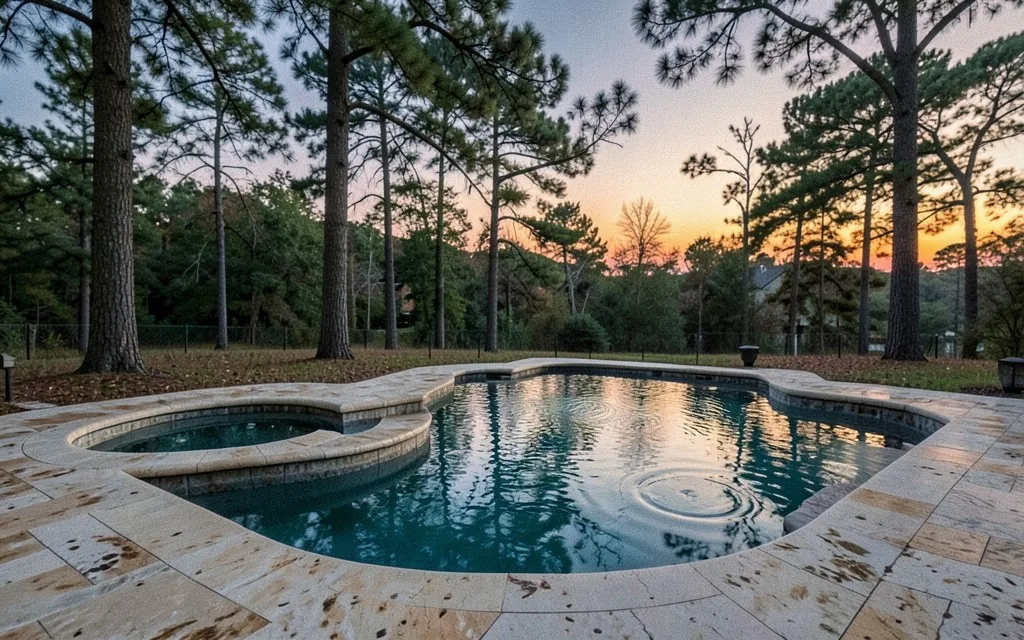
The Woodlands
Gunite pool and raised spa on a wooded lot, travertine deck jointed to the slab geometry, pines retained.
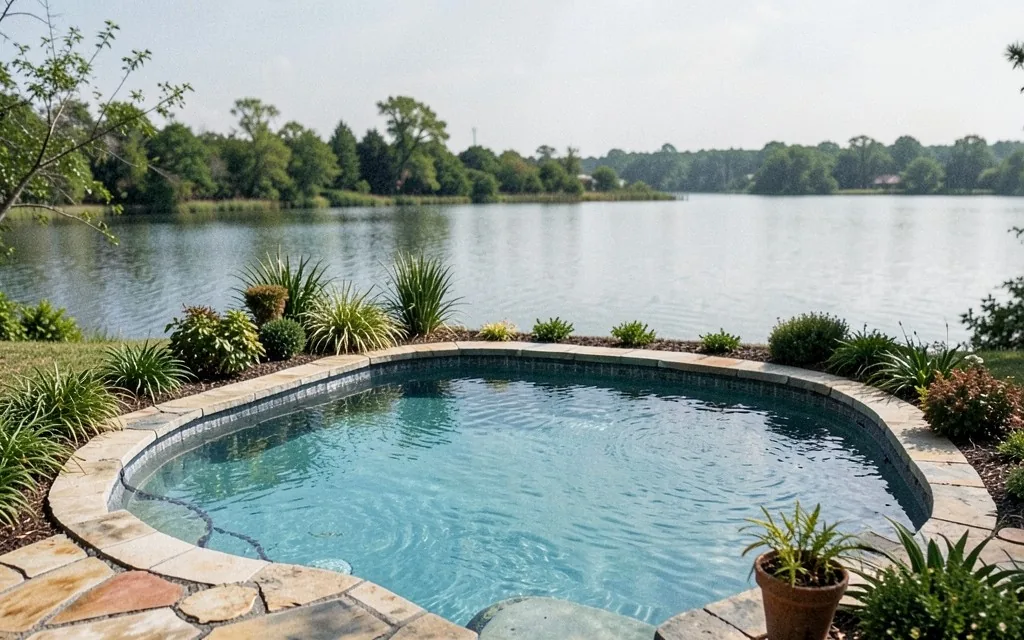
Conroe
Lakeside build with shellstone decking, a planted surround for privacy, and deck falls routed to a defined discharge.
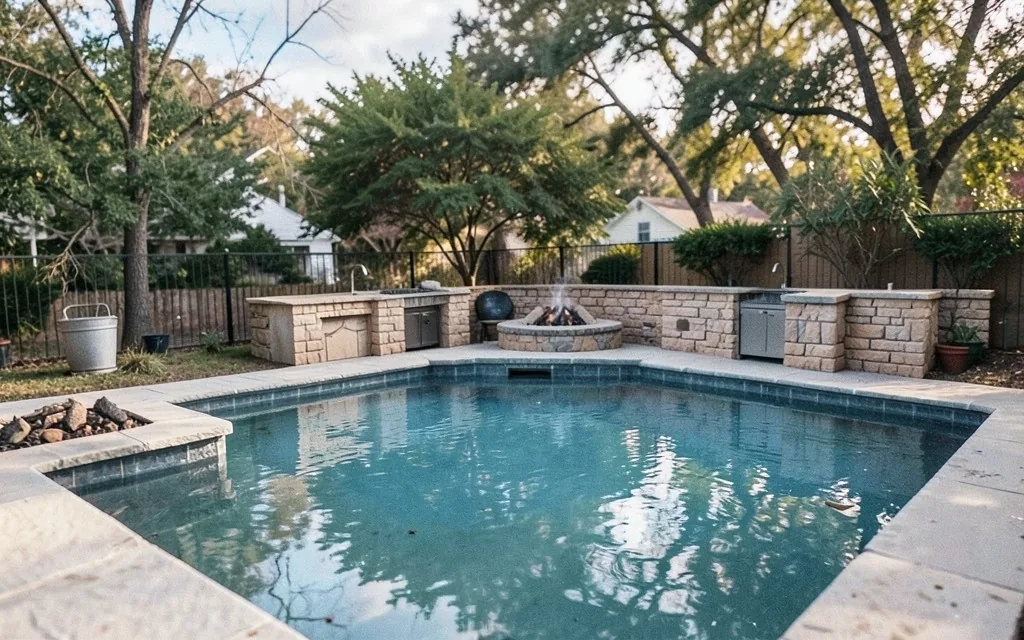
Magnolia
Pool, kitchen and fire feature drawn together so utilities were trenched once and the deck never reopened.
Why homeowners choose us
Why our pool builds hold up on this soil
- 01
The soil comes first
Every installation is structured to the geotechnical report, not to a standard detail. On Beaumont clay that is the difference between a pool and a repair bill.
- 02
Landscape designed with the pool
Planting, lighting and hardscape drawn in the same plan, so the finished space reads as one room instead of a pool with things added around it.
- 03
Drainage designed, not discovered
Deck falls and discharge points are on the drawing before excavation. A large impermeable deck on flat clay is a drainage decision whether you make it or not.
- 04
You see the drawing first
The whole design rendered before anything is dug, which is when changes are still free.
- 05
Utilities trenched once
Kitchen, fire and lighting runs installed during the build rather than cut into finished decking a year later.
- 06
Family-run accountability
Boone and Rhonda are on the projects. The people who designed it are the people you call afterwards.
Questions
Pool installation — frequently asked
How much does a pool cost in The Woodlands?
Most residential gunite projects here run $50,000 to $150,000 including decking and surround. A well-built pool with essential decking sits around $50,000–$70,000; a full poolscape with spa, extensive stone decking, integrated lighting and planting runs $70,000–$150,000. Deck area and site access typically move the number more than the pool itself does.
How long does pool installation take?
Plan on eight to sixteen weeks from breaking ground, with design, engineering and permitting adding four to eight weeks before that. The shell goes in quickly; the time sits in cure periods, decking, inspections and weather. On covenanted properties in The Woodlands, DSC and ARC review is a real scheduling item and should be started early rather than treated as a formality.
Gunite or fiberglass — which is better here?
Gunite, on this soil. A fiberglass shell is a fixed factory unit dropped into an excavation; its structure cannot be adapted to a geotechnical report. Gunite is sprayed over steel on site, so reinforcement and shell thickness can be specified for the shrink-swell the clay will actually apply. Fiberglass is faster and smooth underfoot, and on stable sandy ground it is a reasonable choice — Montgomery County is not that ground.
How do you handle Texas clay soil for pools?
Beaumont clay swells when wet and shrinks in drought, and that cycle is what breaks pool projects. We work from a geotechnical report, design the shell and bond beam to it, use flexible plumbing connections at every shell penetration, build the deck on its own compacted base isolated from the shell by an expansion joint, and place joints where movement will occur. The pool shell itself rarely fails; the deck, coping and plumbing around it are what fail when the soil is ignored.
Do I need a permit for a pool?
Yes. Montgomery County and the municipalities within it require permitting and inspections for pool construction, and covenanted communities add their own architectural review. In The Woodlands that means a DSC submission and ARC approval before work starts, with a specific drawing format. We handle the submissions as part of the project; the timeline for approvals is outside our control, which is why we start them early.
Can you build around existing trees?
Often, and it is usually worth doing — mature pines and oaks are why a Woodlands lot looks the way it does. It requires the excavation and the deck edge to respect the critical root zone, and sometimes root pruning under an arborist plan. What we will not do is promise a tree survives when the design puts a shell through its root plate; in that case the honest options are moving the pool or removing the tree.
What ongoing maintenance does a pool need?
Weekly water testing and chemical balancing, skimmer and pump baskets emptied, brushing the walls and waterline, and filter cleaning on a schedule set by the filter type. In Montgomery County, pollen in spring and heat in August are the two loads on the system. Plaster finishes need attention soonest; quartz and pebble last considerably longer. We hand over with a walkthrough covering the equipment and the first season.
Should the landscape be designed before the pool is built?
Yes, and this is the most common regret we hear. Planting, lighting, drainage and any kitchen or fire feature all involve trenching, grading and structure that is far cheaper to install during the build than to retrofit into finished decking. Designing the whole plan first also gets the pool positioned for the view from inside the house, which is where you will look at it most.
What is included in a pool installation quote?
Excavation, steel, gunite, plumbing, decking, coping, the surrounding landscape and lighting, plus the engineering and ARC or DSC submissions the installation needs to get permitted. What is not automatically included is equipment beyond the standard package or a spa unless one is specified — we itemize the installation line by line so you can see exactly which of those is driving the number before you commit to anything.
Can you add a spa to an existing pool?
Sometimes, and it depends on the existing structure and equipment. A raised spa tied into an existing shell needs the bond beam and plumbing to accommodate it, and the equipment pad usually needs upgrading to run both. It is always more expensive than building both together. We will assess and give you a straight answer rather than quote something that requires the pool to be partly rebuilt.
What about drainage around the pool?
A pool deck is a large impermeable surface added to a flat clay lot, so it changes where water goes whether that is planned or not. We design deck falls to a defined discharge point and add area drains or a French drain where the grade cannot do it alone. Without that, runoff sits against the house slab and against the pool shell — which is the same soil-moisture problem that causes the cracking in the first place.
Should I drain the pool before a hurricane?
No, and it is the most common mistake we are asked about. An empty or part-empty shell can lift out of saturated ground once the water table rises, because the hydrostatic pressure the pool water normally balances has nowhere to go. Leave it full, or close to it, shut down the equipment, and let the surface take the extra rain. The landscape around the pool matters more than the pool here anyway: grading and drainage decide whether the deck sheds a storm or holds it against the coping.
Where we work
How far will you travel to build a pool?
Across Montgomery County and North Houston — The Woodlands, Spring, Conroe, Magnolia, Tomball, Willis and Montgomery. Soil conditions vary across the county, which is why the geotechnical step is never skipped.
Often specified alongside: hardscaping and paving, outdoor kitchens and fire pits, landscape lighting, water features, landscape design, French drains and drainage.