
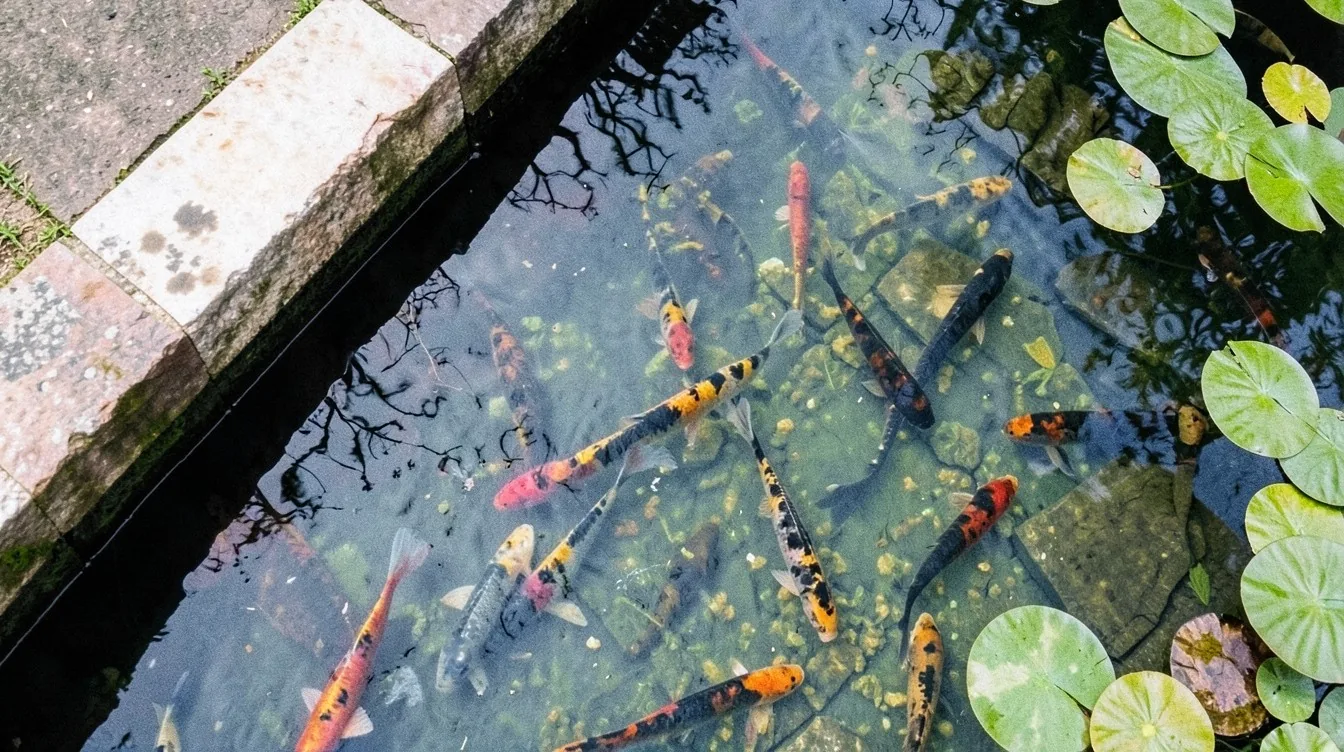
Ponds and koi
A pond built deep enough and filtered hard enough to keep fish alive
Koi ponds, ecosystem ponds and pondless features across The Woodlands, Spring and Conroe — sized for Texas heat, filtered for real fish loads, and detailed so the liner is never visible.
A koi pond in Montgomery County needs to be at least three feet deep, and four is better. Depth is what keeps the water temperature stable through a 100-degree August and stops the whole volume heating to a level koi cannot tolerate. It also needs filtration sized for the fish load rather than the water volume, aeration that runs continuously, and shade over part of the surface. Most failed ponds here are simply too shallow.
Below: what ponds cost at each scale, how much maintenance one actually takes, how koi handle a Texas summer, and the difference between an ecosystem pond and an ornamental one.
What we build
What we build
Four kinds of water, and the fish load is what decides which one you want.
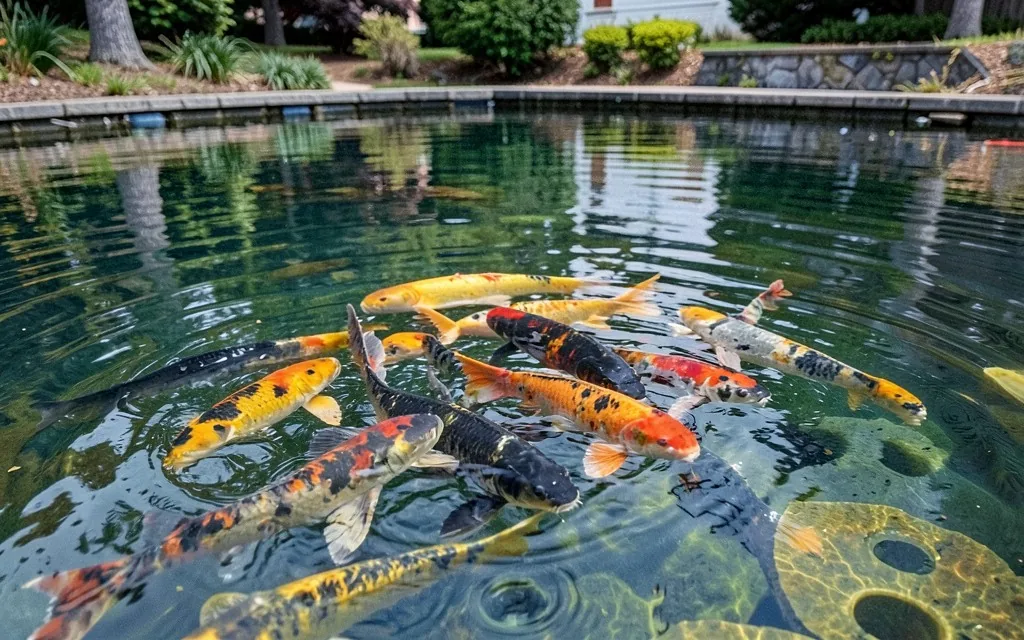
Koi ponds
Built for the fish first: three to four feet deep, filtration sized to the stocking level, continuous aeration, bottom drain and a skimmer. Everything visible is designed around what the koi need.
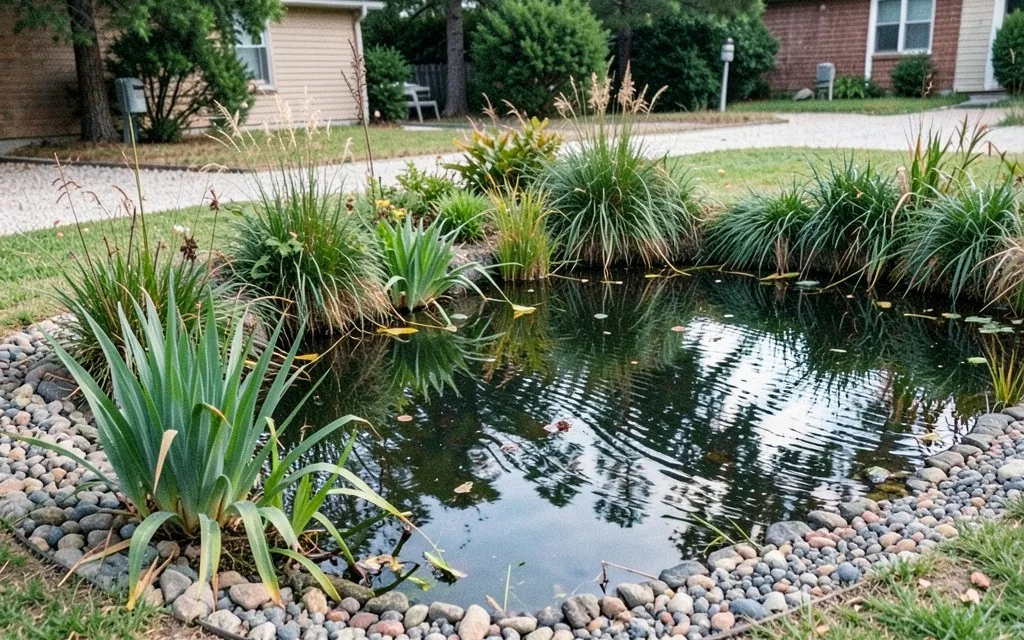
Ecosystem ponds
Plants, gravel, bacteria and circulation doing most of the filtration. Lower maintenance, lower fish capacity, and a more naturalistic look that suits a wooded lot.
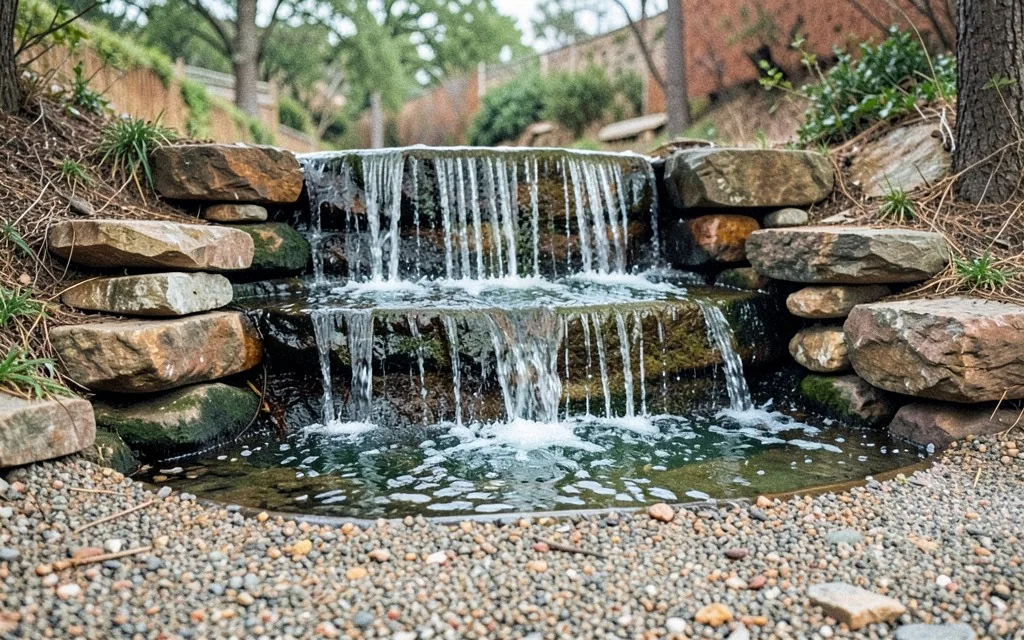
Pondless water features
A waterfall or stream running into a hidden reservoir with no open water. Sound and movement without depth — the usual choice where small children are a concern.
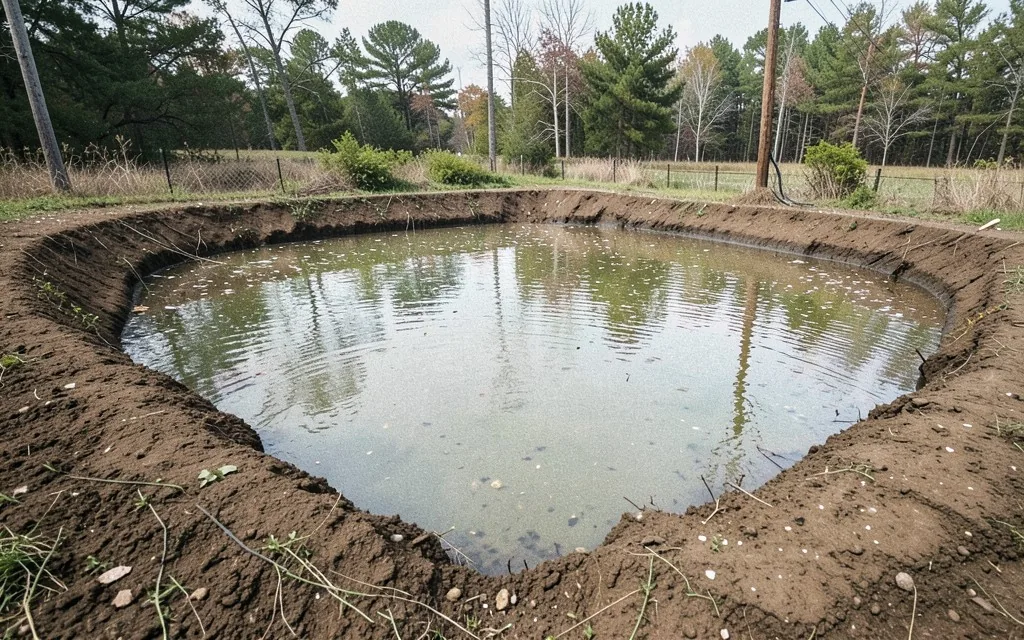
Pond renovation
Existing ponds rebuilt: deepened, refiltered, releaked and re-edged. Most of the ponds we are called to are structurally sound and simply too shallow and under-filtered.
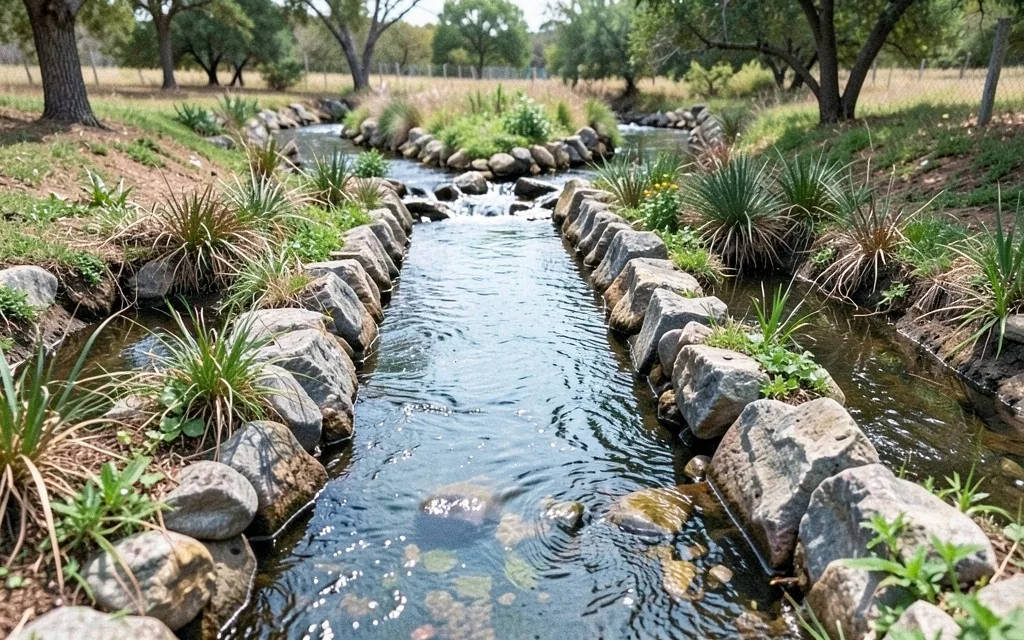
Streams and connected water
A stream running between a pond and a waterfall, which adds oxygenation as well as sound. Grade and rock placement do the work; the pump is the smaller half of it.
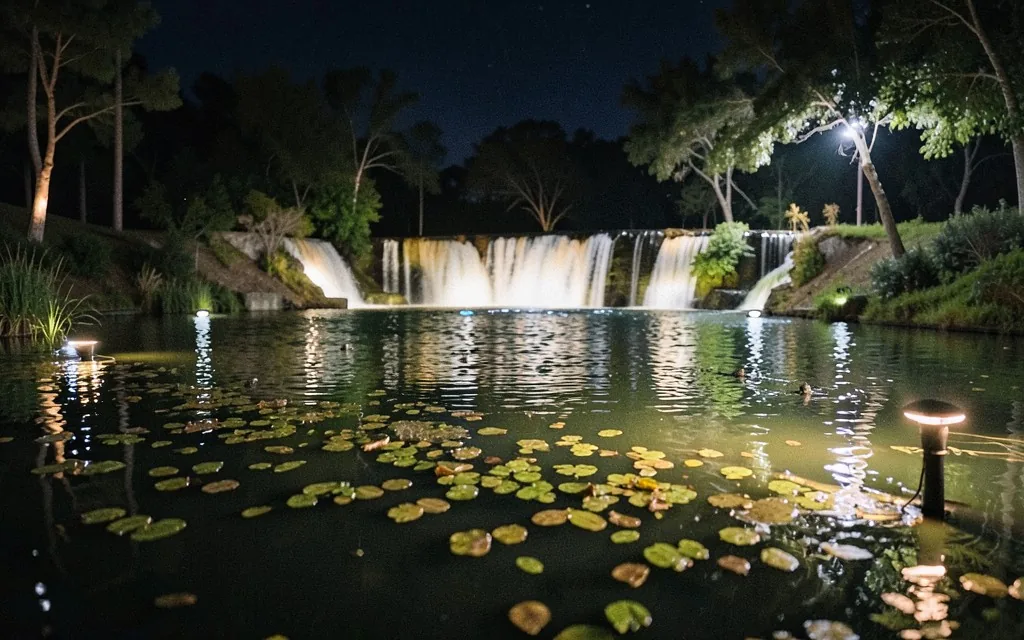
Pond lighting
Submerged and adjacent fixtures so the water reads after dark. Warm colour temperature and low levels — over-lit water looks like a swimming pool.
Local conditions
Why do koi ponds fail in Texas?
Four causes. The first one accounts for most of them.
Too shallow for the heat
CauseA pond dug two feet deep. In a Montgomery County August the whole volume heats through, dissolved oxygen collapses, and koi suffer or die. Shallow water also grows algae far faster.
FixThree feet minimum for koi, four preferred, with the deepest zone shaded for part of the day. Depth is thermal mass, and thermal mass is what makes a pond survivable here.
Filtration sized to the water, not the fish
CauseA filter rated for the pond volume with no allowance for stocking. Koi are heavy waste producers; the ammonia load outruns the biofilter and the water clouds within weeks.
FixMechanical and biological filtration sized to the intended adult fish load, with a bottom drain and skimmer feeding it so solids leave the pond instead of settling in it.
The liner shows at the edge
CauseEdge stone placed on top of the liner rather than the liner concealed behind and beneath it. Water level drops an inch in summer and a black rubber band appears around the whole pond.
FixEdges detailed so the liner turns up behind the stone and is buried, with the waterline sitting against rock at every point across the seasonal range.
String algae takes over every spring
CauseNutrient load from over-feeding and decaying leaf litter, combined with full sun on shallow water. The pond turns green in March and stays that way until the fish are invisible.
FixShade over part of the surface, marginal and floating planting competing for the same nutrients, a skimmer that actually removes leaf litter before it sinks, and honest feeding levels. Chemical treatment addresses the symptom and never the cause.
No aeration or backup
CauseCirculation relying entirely on the main pump. Gulf storms take power out here, and a stocked pond can lose its oxygen within hours on a hot still night.
FixDedicated aeration separate from the main pump, and battery or generator backup on stocked ponds. It is a small cost against the value of mature koi.
Specification
What decides the build
Six decisions, made in this order.
Depth
Three feet minimum for koi, four preferred, with the deep zone away from the shallow shelf. Depth buys thermal stability, predator protection and oxygen — everything else is easier once it is right.
Filtration and circulation
Mechanical for solids, biological for ammonia, sized to the fish load. Full turnover roughly once an hour on a koi pond, with a bottom drain and skimmer feeding the system.
Liner and structure
Heavy EPDM over underlayment on shaped, compacted subgrade, or concrete where the design calls for formal edges. Beaumont clay moves, so the shaping matters as much as the membrane.
Edge detailing
The part that makes a pond look built rather than installed. Stone set so the waterline meets rock across the full seasonal range and no liner is ever visible.
Shade and planting
Marginal planting, water lilies and overhead shade over part of the surface. It cools the water, cuts algae, and gives koi somewhere to be — herons are a genuine problem here.
Predator management
Depth, overhangs and planting cover designed in. A pond with no deep refuge is a bird table, and mature koi are expensive to restock.
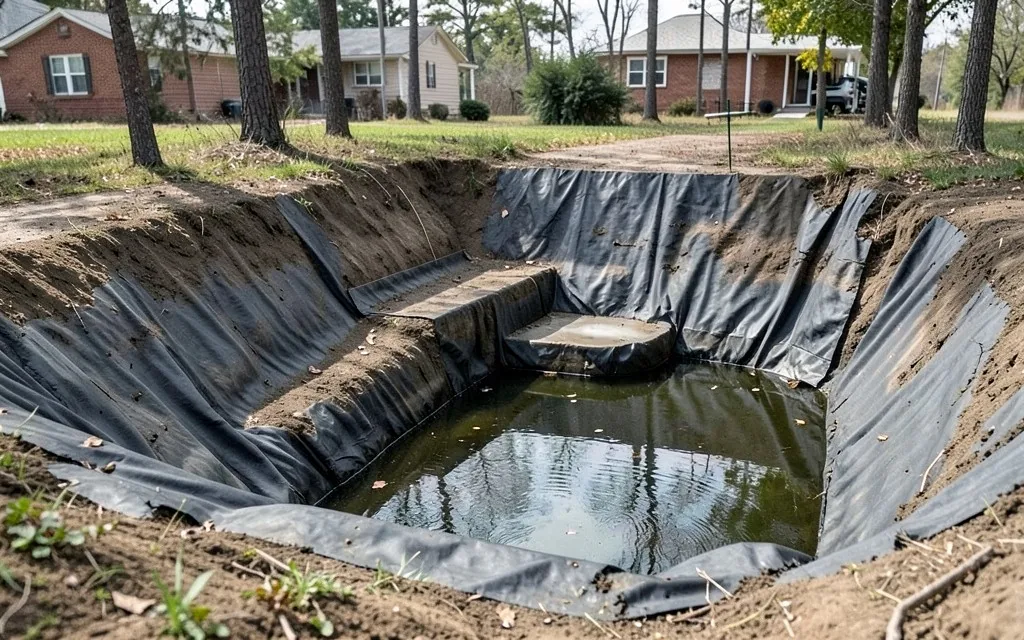
How it runs
Site, excavate, plumb, plant
Excavation is a day. The filtration design and the edge detailing are what the price reflects.
- 01
Site and intent
Where it will be seen from, how much sun it gets, whether you want fish, and how many. Fish load drives the filtration and therefore most of the budget.
- 02
Design and drawings
Shape, depth zones, waterfall and stream grades, edge treatment, planting and lighting drawn and rendered before excavation.
- 03
Excavate and shape
Deep zone, shelves and stream grades cut and compacted, with the subgrade shaped so the liner is supported everywhere rather than bridging voids.
- 04
Liner, plumbing and filtration
Underlayment and liner laid, bottom drain and skimmer plumbed, pump and filter set and the whole system pressure-checked before rock goes in.
- 05
Rock and edge detailing
Boulders and edge stone set so the liner disappears and the waterfall sounds right. This is slow work and it is what separates the results.
- 06
Fill, cycle and stock
Filled, dechlorinated and the biofilter cycled before any fish go in. Stocking a pond that has not cycled is the fastest way to lose the fish you just bought.
What it costs
What does a koi pond cost in The Woodlands?
Ranges for Montgomery County. Filtration capacity and rock volume move these more than surface area does.
Small pond or pondless feature $3,000 – $15,000
Pondless waterfalls and small ornamental ponds with light or no fish load. The entry point for water on a property.
Mid-size ecosystem pond $6,000 – $10,000
A planted ecosystem pond with modest fish capacity, gravel bed and biological filtration doing most of the work.
Koi pond, properly filtered $12,000 – $20,000
Three to four feet deep with bottom drain, skimmer, sized mechanical and biological filtration and dedicated aeration.
Large koi pond with stream $20,000 – $35,000
Larger volume with a connected stream and waterfall, extensive rock work, lighting and planting.
Estate water feature $30,000 – $50,000+
Multiple connected water bodies, substantial boulder work and integrated lighting across an estate scheme.
Recent work
Recent pond work
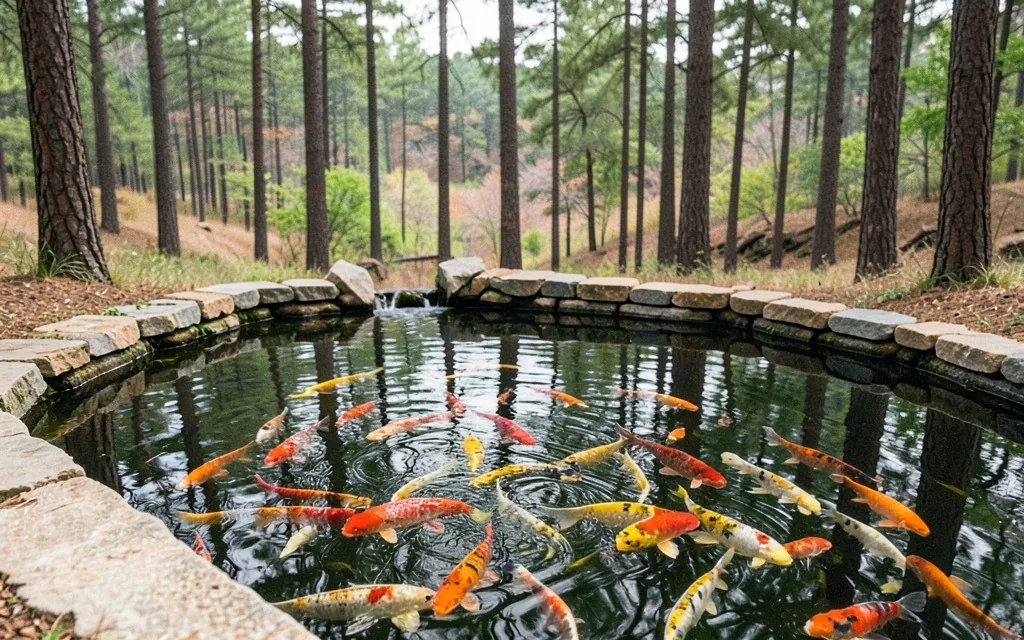
The Woodlands
Four-foot koi pond with a connected stream, bottom drain and filtration sized for a stocked adult load.
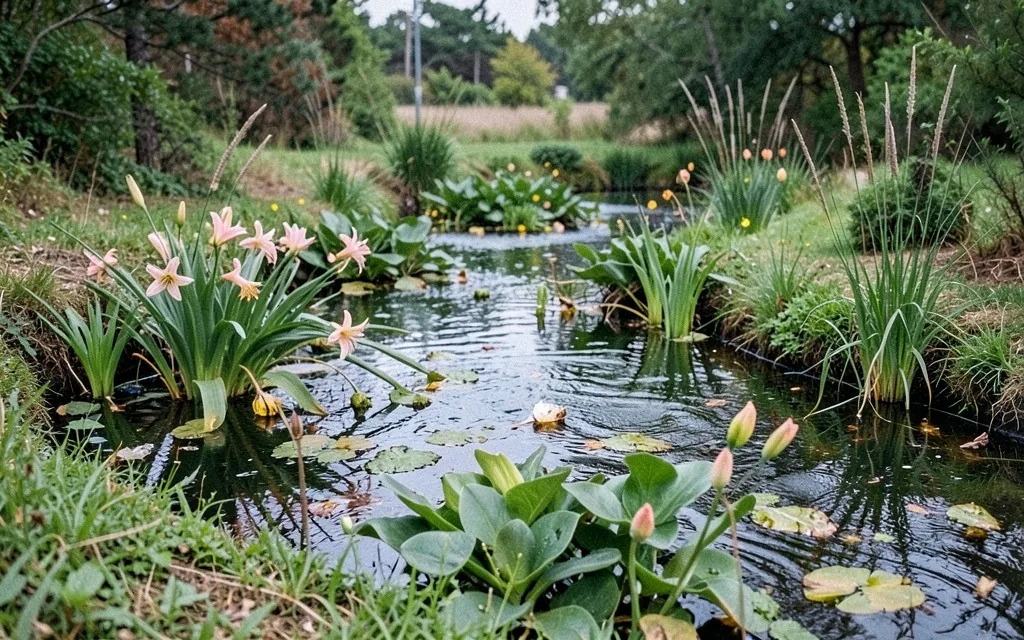
Conroe
Ecosystem pond on a wooded lot, planted margins doing most of the filtration and a shaded deep zone.
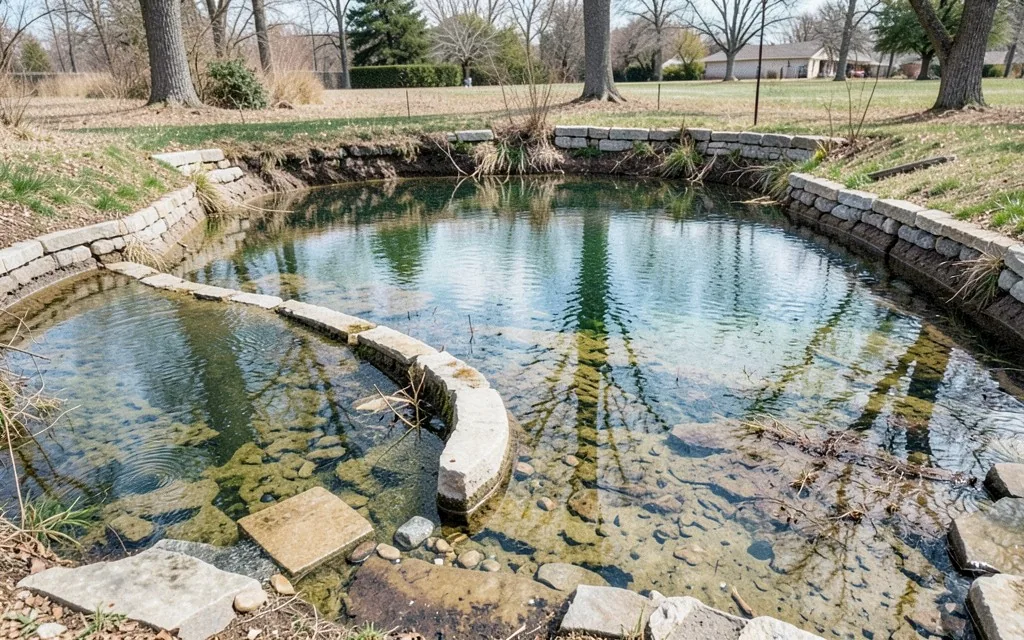
Magnolia
A failing two-foot pond deepened to four, refiltered and re-edged so the liner is no longer visible.
Why homeowners choose us
What we do differently
- 01
Depth is not negotiable
Three feet minimum for koi, four preferred. Every shallow pond we are called to renovate was cheaper to build and more expensive to own.
- 02
Filtration sized to the fish
Rated against the adult stocking level, not the water volume. Ammonia load is what clouds a pond, and it comes from the fish.
- 03
The liner never shows
Edges detailed so the waterline meets rock across the full seasonal range. It is slow work and it is the visible difference.
- 04
Aeration is separate
Dedicated aeration independent of the main pump, with backup on stocked ponds. Gulf storms take power out here.
- 05
Cycled before stocking
The biofilter is established before fish arrive. Stocking early is the commonest and most avoidable loss.
- 06
Predators designed for
Deep refuge, overhangs and planting cover. Herons find every unprotected pond in Montgomery County eventually.
Questions
Ponds and koi — frequently asked
How much does a koi pond cost in The Woodlands?
A properly filtered koi pond runs $12,000 to $20,000, and a larger one with a connected stream $20,000 to $35,000. Small ponds and pondless features start around $3,000 to $15,000, mid-size ecosystem ponds are $6,000 to $10,000, and estate schemes with multiple water bodies run $30,000 to $50,000 and up. Filtration capacity and rock volume move the price more than surface area does.
How deep should a koi pond be in Texas?
Three feet minimum, and four is better. Depth is thermal mass: a shallow pond heats right through in a 100-degree August, dissolved oxygen collapses and koi suffer. Depth also gives fish refuge from herons, which take koi from shallow water routinely here. Shallow ponds are cheaper to dig and are the single most common reason a Montgomery County koi pond fails.
How much maintenance does a koi pond require?
Weekly: check the skimmer basket, top up for evaporation, and observe the fish — behaviour is the earliest warning of a water-quality problem. Monthly: test water chemistry, rinse mechanical filter media, trim plants. Annually: a partial clean-out, usually early spring, and a pump and aeration service. It is a real commitment, comparable to a swimming pool, and worth being honest about before building one.
Can koi survive Texas summers?
Yes, in a pond built for it. They need depth for stable temperature, continuous aeration because warm water holds less oxygen, filtration sized to their waste load, and shade over part of the surface. Koi handle our winters without difficulty. It is August that kills them, and always in ponds that are too shallow, under-aerated or over-stocked — usually all three.
What is the difference between a koi pond and an ecosystem pond?
A koi pond is engineered around the fish: greater depth, bottom drain, skimmer and heavy mechanical and biological filtration, usually with minimal gravel because it traps waste. An ecosystem pond uses plants, gravel and bacteria to do most of the filtering, looks more naturalistic, and carries a much smaller fish load. Neither is better; they answer different questions, and the number of fish you want decides which one you are building.
How many koi can I keep?
Fewer than most people expect. A common working guide is around 250 gallons per adult koi, since they reach 18 to 24 inches or more and produce a great deal of waste. Over-stocking is the fastest route to poor water quality, and it cannot be filtered around indefinitely. We size the filtration to the adult load you actually want, which is a conversation worth having before excavation rather than after.
Will a pond attract mosquitoes?
A properly built one does not. Mosquitoes breed in still water, and a pond with continuous circulation, a skimmer and surface movement from a waterfall gives them nowhere to lay. Fish eat larvae as well. The ponds that breed mosquitoes are the neglected ones where the pump has failed — which is also when everything else starts to go wrong, so it is a useful signal.
What happens to the pond in winter?
Very little here, which is one of the advantages of this climate. Koi slow down and stop feeding below about 50 degrees, so feeding stops rather than tapers. Circulation usually keeps running. Our winters rarely trouble a pond of adequate depth; the harder season is summer, and the design decisions that get you through August are the ones that matter.
Can you fix an existing pond?
Frequently, and it is often the better value. Most ponds we are called to are structurally sound but too shallow, under-filtered and badly edged — all three are fixable. We deepen the main zone, add or resize filtration, install a bottom drain and skimmer where there is none, and re-detail the edges so the liner disappears. Renovation typically costs well under a rebuild.
Do ponds need a permit or HOA approval?
A garden pond generally does not need county permitting, but covenanted communities often review water features. In The Woodlands that means a Development Standards Committee submission and ARC approval before work begins. We check your covenants and prepare the submission as part of the project, because a pond built without approval can be required to come out — an expensive way to learn the rule.
How deep does a koi pond need to be in Texas?
Three feet minimum, and four is better. Depth here is about summer heat rather than winter freeze. A shallow pond in Montgomery County can swing ten degrees in a single day, which stresses fish and crashes dissolved oxygen exactly when they need it most. A deeper volume holds temperature steady and gives koi a cool layer to retreat into in August.
Where we work
Pond building across North Houston
We build and renovate ponds across Montgomery County and into North Houston — The Woodlands, Spring, Conroe, Magnolia, Tomball, Willis and Montgomery. Summer heat and heron pressure are the two constants here, and both are design problems.
Often specified alongside: water features and waterfalls, landscape lighting, hardscaping and stone, landscape design, drainage.
Start here
Decide the fish load before the shape
We visit within 48 hours, look at sun, grade and sightlines, and size the depth and filtration to the pond you actually want to keep.