
Landscaping Company in The Woodlands, TX: Landscape Design
Design-build landscaping across every Woodlands village — Alden Bridge to Carlton Woods — with DSC-format submissions, tree protection, and planting chosen for deep pine shade.
Landscaping in The Woodlands, TX comes down to three things that set a village lot apart from a flat Houston lot: deep shade from mature loblolly pines, protected trees whose root plates constrain where you can excavate, and Development Standards Committee review before work begins. A design that ignores any of them gets rejected, fails within two seasons, or kills a tree the covenants required you to keep. Basic front-yard work runs $5,000 to $10,000 here; most whole-property landscaping designs land at $15,000 to $40,000.
Below: what each scope costs in The Woodlands, how DSC and ARC review actually works, which plants hold up under a pine canopy, and how trees are protected during construction.
What we build
What do we build under a Woodlands canopy?
The full design-build range, delivered as one project so nothing gets trenched open afterwards.
The Woodlands landscaping design
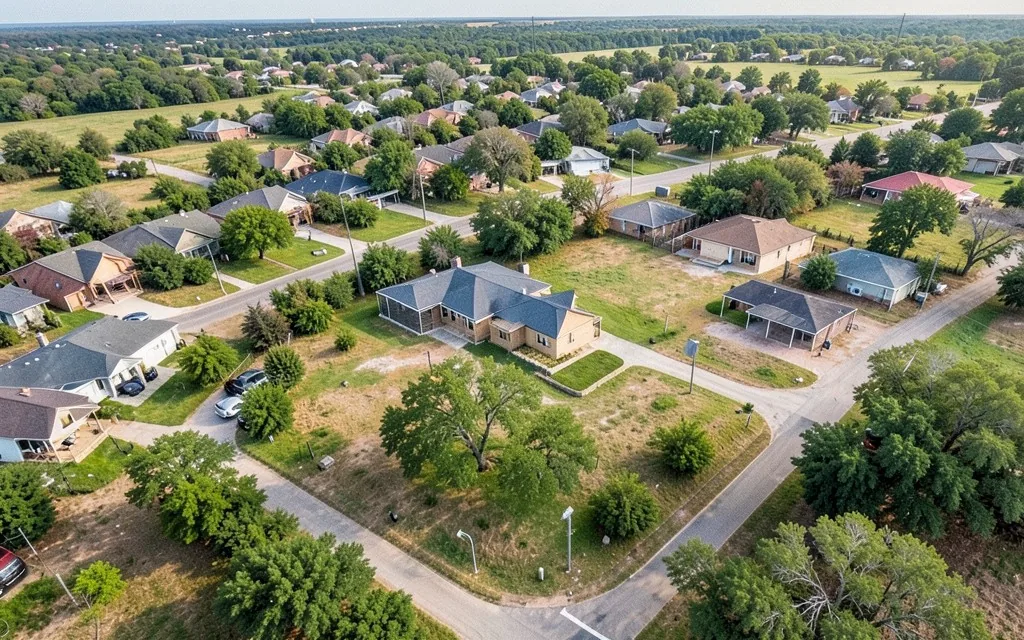
Surveyed and drawn to scale, in the drawing format the DSC expects. Design is included where we install.
Hardscape and patios
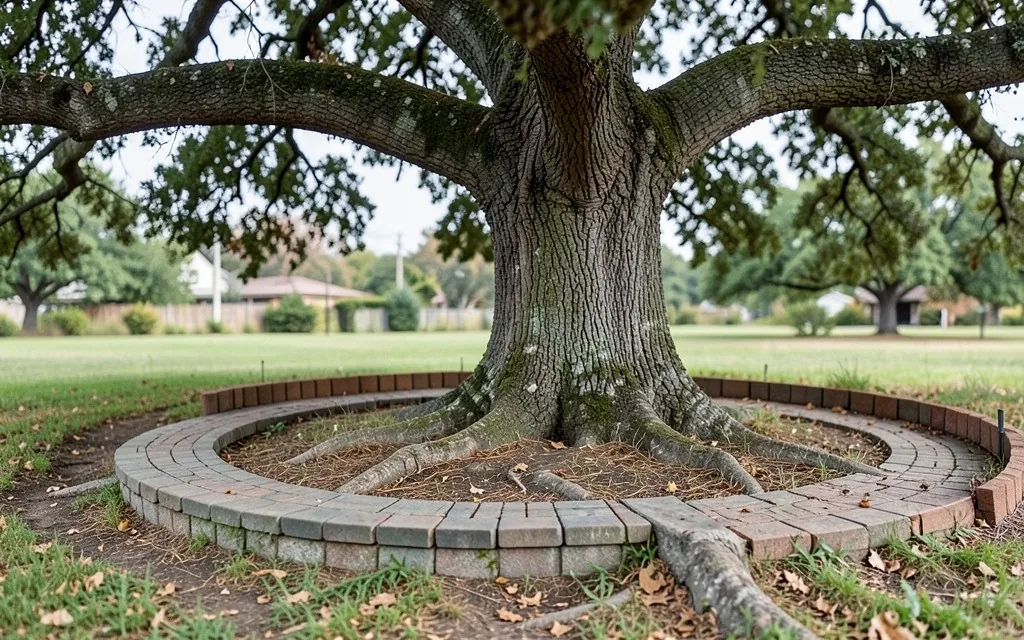
Terraces, walkways and seat walls on properly prepared bases, with edges routed clear of protected root plates rather than cut through them.
Outdoor kitchens and fire
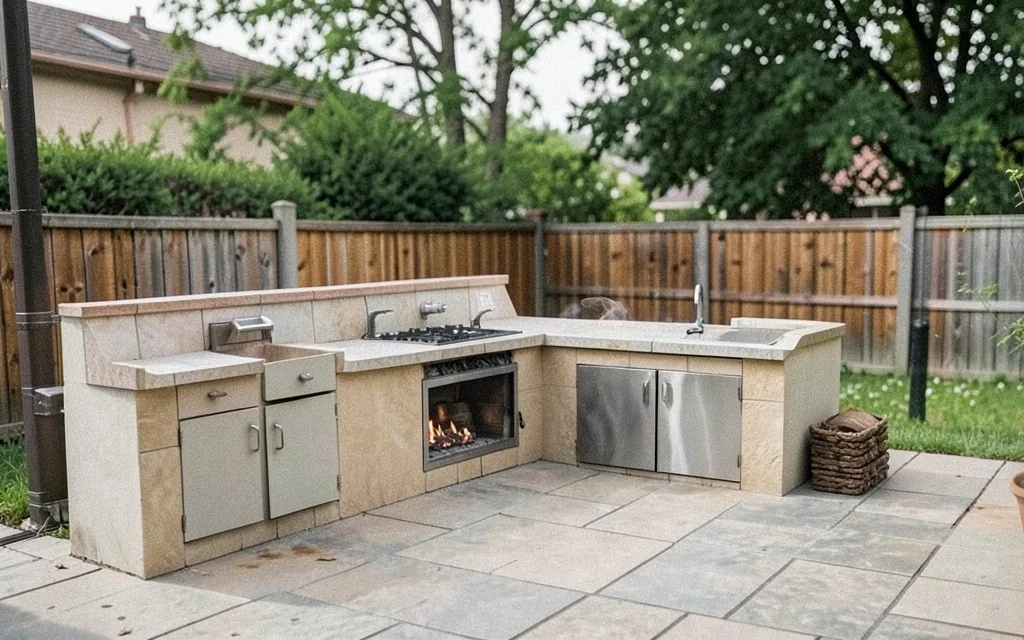
Kitchens, fire features and shade structures sited in the same drawing as the terrace, with gas and power trenched during the build.
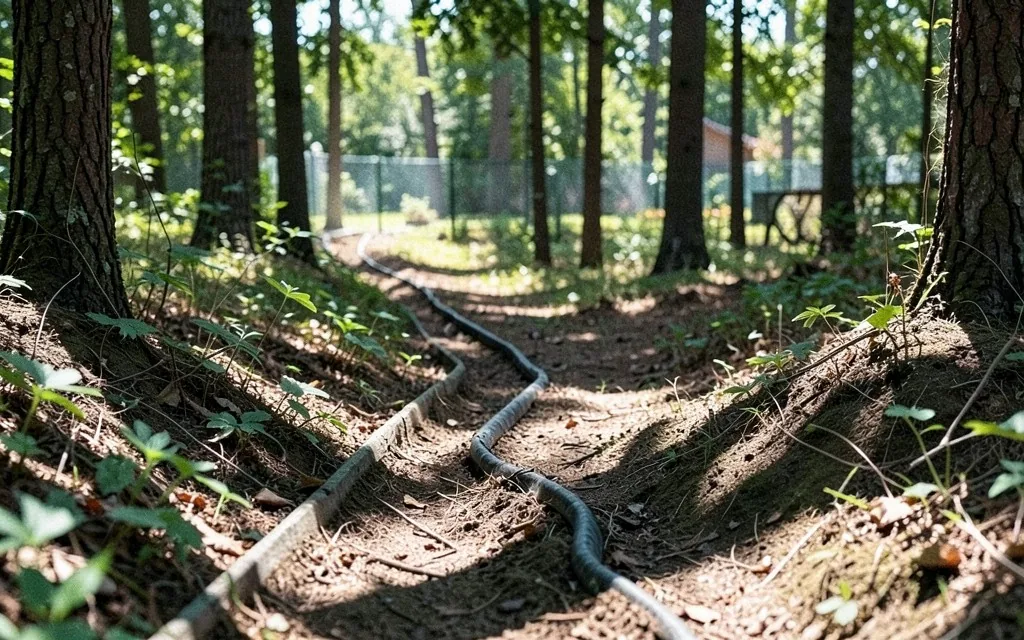
Drainage for landscaping in The Woodlands
French drains, catch basins and regrading to a defined discharge point. On a village lot the discharge is often the constraint, not the collection.
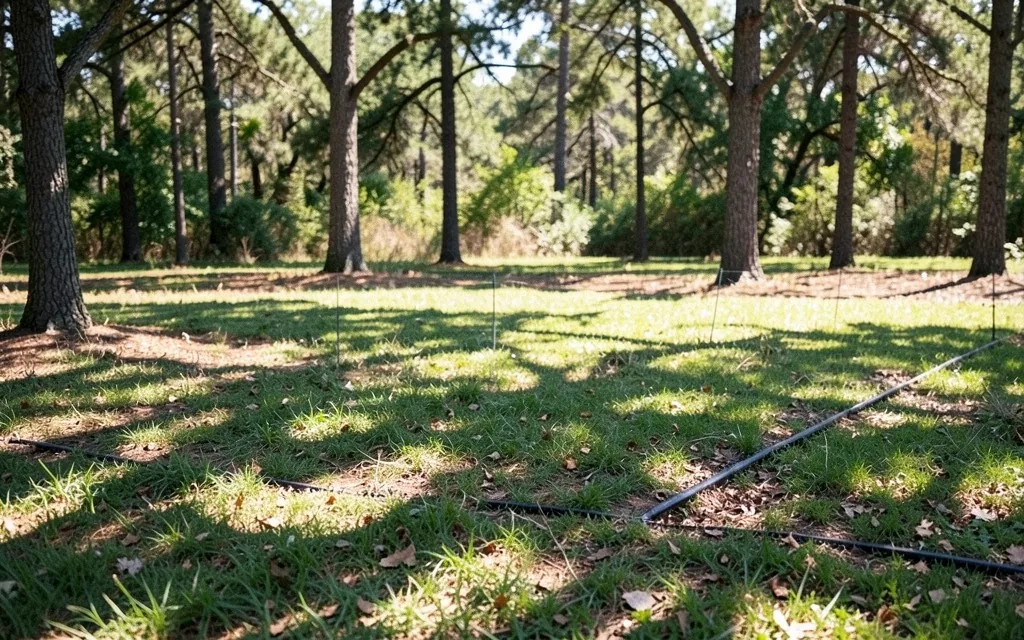
Irrigation
Spray for turf and drip in the beds, zoned so shade and sun areas are not watered on the same schedule — the commonest fault we find here.
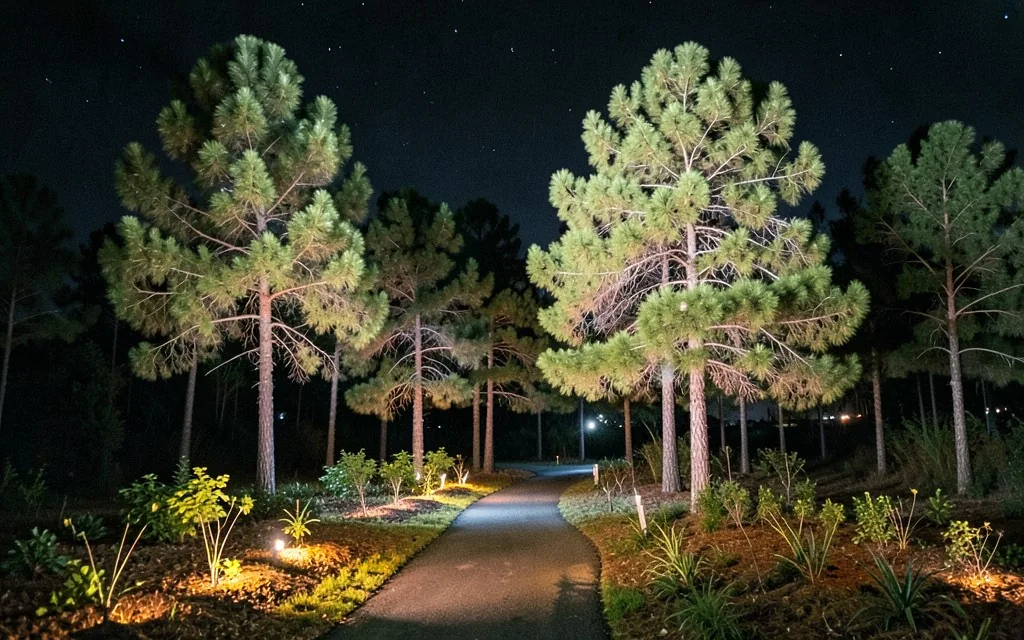
Landscape lighting
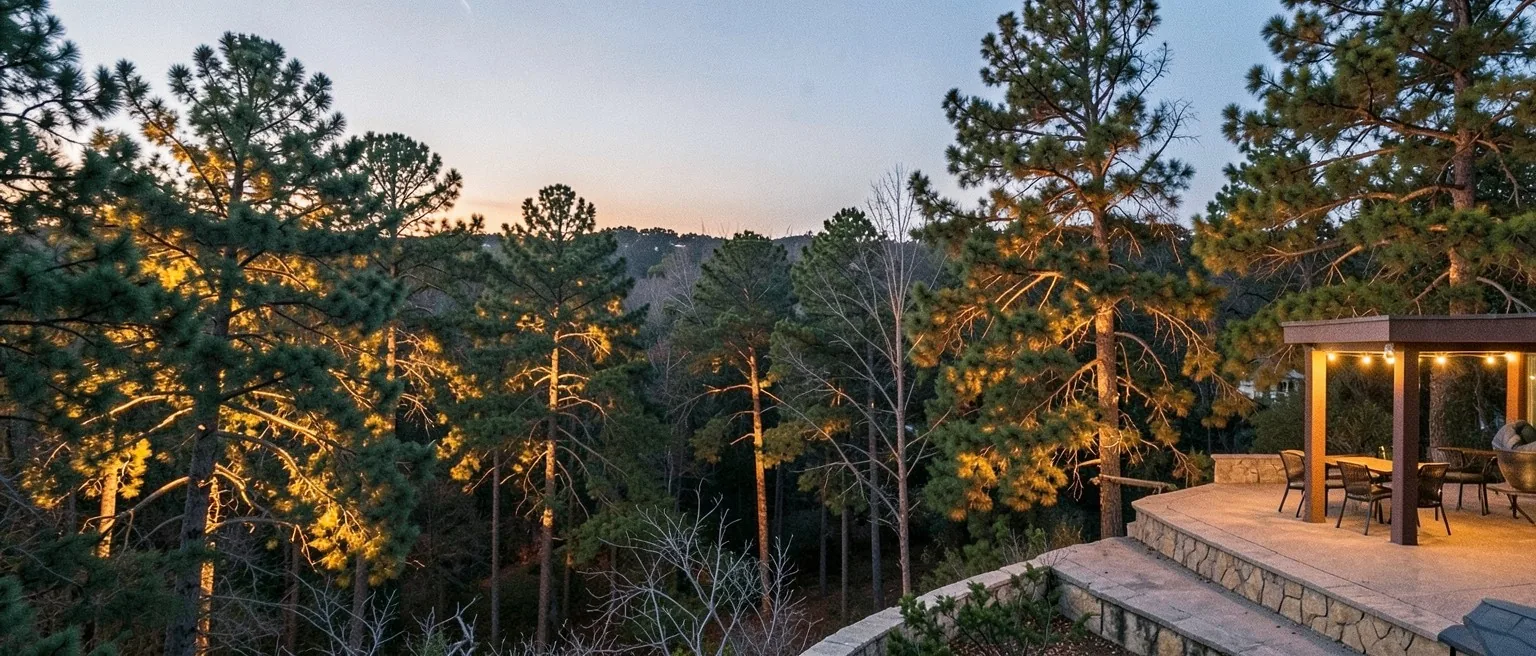
Low-voltage uplighting into the pines and warm path lighting. The tree canopy is the best asset most Woodlands properties have after dark.
Local conditions
What goes wrong on a Woodlands property?
Four failures specific to this community, and all four are avoidable at the design stage.
Turf that will not hold under the canopy
CauseBermuda or an under-lit St. Augustine lawn put down beneath dense pine. Below roughly four hours of filtered sun no warm-season turf survives, so the same patch is resodded year after year.
FixLight measured across the lawn before the grass is chosen. Where the hours genuinely are not there, the honest answer is canopy thinning or a shade planting design with groundcover and mulch instead of grass.
A protected tree dies eighteen months later
CauseExcavation, trenching or grade change inside the critical root zone. Damage is invisible at handover; the tree declines through the following year and the loss is permanent.
FixCritical root zones mapped and fenced before work starts, hardscape edges routed around them, and hand-digging or air-spading where a service run has no alternative route.
The DSC submission is rejected
CauseA design drawn and quoted before anyone read the village covenants, then submitted in the wrong format. It comes back for revision and the project slips a planting season.
FixYour village's covenants are the first document we open, the drawings go out in DSC format, and the committee's review time is inside the project calendar from the start.
Water routed onto the greenbelt or a neighbor
CauseDrainage designed to get water off the patio without deciding where it ends up. Village lots are tight and greenbelt-adjacent, so a discharge point is not always available.
FixThe legal discharge identified before anything is specified — street, easement or a properly sized dry well. On a landlocked lot the dry well is the design, not an afterthought.
Villages
Which Woodlands villages do we work in?
Covenants and character differ between villages, and so does what gets approved.
Alden Bridge and Cochran’s Crossing
Established family lots with mature canopy and heavy pine litter. Shade planting, drainage and lighting are the recurring three, and turf under the canopy is the recurring argument.
Carlton Woods
Estate properties where designs routinely run six figures. Longer design phases, specimen planting, site-wide lighting and phased construction across seasons.
Sterling Ridge and Creekside Park
Newer construction with builder grading that frequently falls the wrong way. Regrading and drainage before planting is the usual first phase here.
Grogan’s Mill and Panther Creek
The oldest villages, with the biggest trees and the tightest root-zone constraints. Hardscape edges get routed around root plates rather than through them.
Indian Springs, College Park and Research Forest
A mix of established and newer lots. Drainage and irrigation zoning are the two things most commonly wrong on the properties we inherit.
East Shore and Woodlands Hills
Waterside and newer-development lots with their own covenant detail. Submission format and approval timing are checked per property, not assumed.
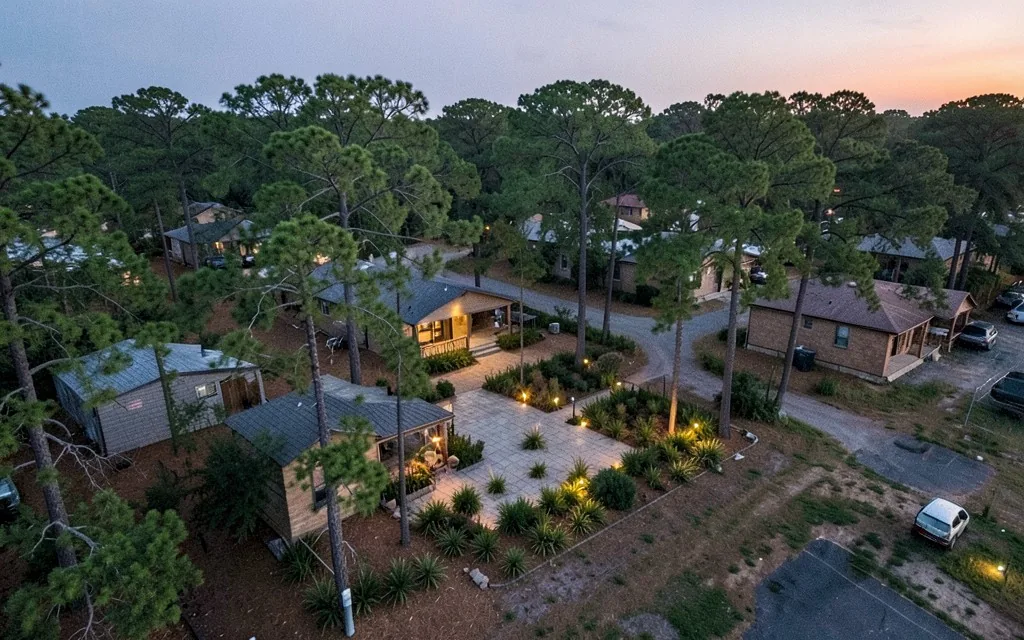
How it runs
How do we consult, design and build in The Woodlands?
On a covenanted lot the approval step is a scheduling item with a real duration. We plan around it rather than discovering it.
- 01
Free on-site consultation
We walk the property, look at shade, grade, drainage and which trees are protected, and talk about scope and budget honestly.
- 02
Design and drawings
Concept and rendered design from the viewpoints you actually use — the patio door, the kitchen window, the approach from the street.
- 03
DSC submission
Drawings produced in the required format for your village and submitted for review, with the approval window built into the program.
- 04
Protect the trees
Critical root zones fenced, access routes matted and hand-digging planned wherever a run has to pass close to a protected specimen.
- 05
Grade, drain and build
Levels and drainage first, then hardscape, sleeves and conduit, irrigation, planting and lighting in the order that avoids reopening finished surfaces.
- 06
Hand over and follow up
Controller programmed for shade and sun zones separately, establishment watering explained, and a follow-up visit while issues are still easy to fix.
What it costs
What does The Woodlands landscaping cost?
2026 ranges for Woodlands properties. Tree protection and DSC review affect the schedule more than the price; slope and access affect the price.
Basic landscape installation $5,000 – $10,000
Street-facing work on a village lot: new beds and shrubs chosen for the shade, seasonal color, mulch, and the existing irrigation re-zoned. One to two weeks.
Mid-range with hardscaping $15,000 – $40,000
Paver patio or walkway, new planting, irrigation, lighting and drainage where needed, including scaled design. Three to four weeks.
Complete outdoor living transformation $50,000 – $150,000
Outdoor kitchen, fire feature, extensive hardscape, water features, full lighting and comprehensive planting.
Carlton Woods and estate designs $150,000 – $500,000+
Full property transformation with specimen planting, substantial hardscape and site-wide lighting, usually built in phases.
Rates reviewed 2026-09-03. Every project is priced in writing after a site visit; these bands are what recent work has landed in, not a quote.
Recent work
Recent Woodlands projects
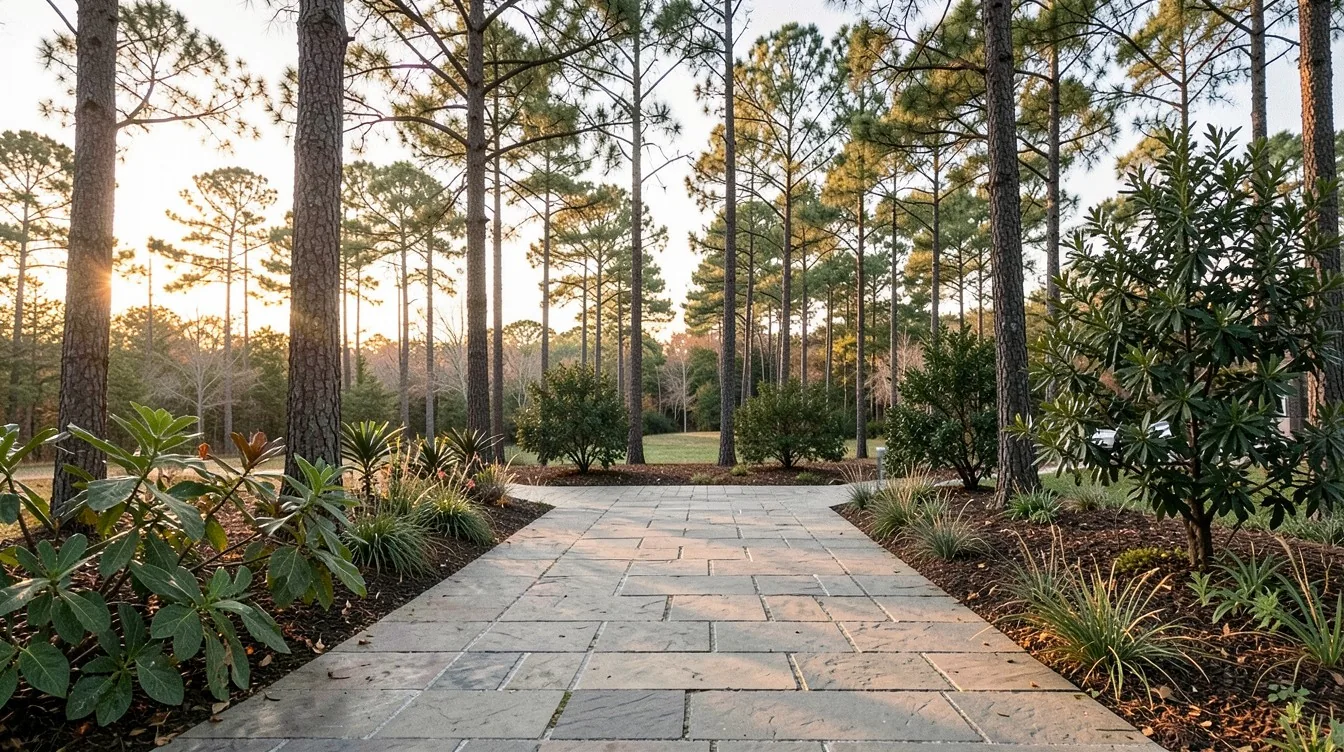
Carlton Woods
Estate master plan built in two phases, with three protected pines fenced and retained throughout construction.
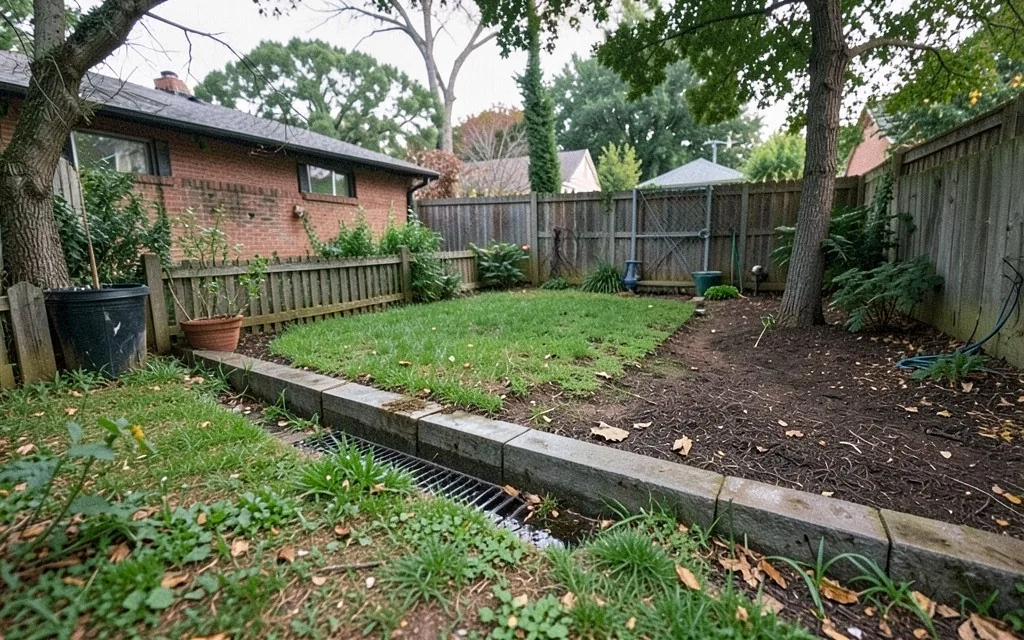
Sterling Ridge
Builder grading falling towards the slab corrected first, then hardscape and planting on the corrected levels.
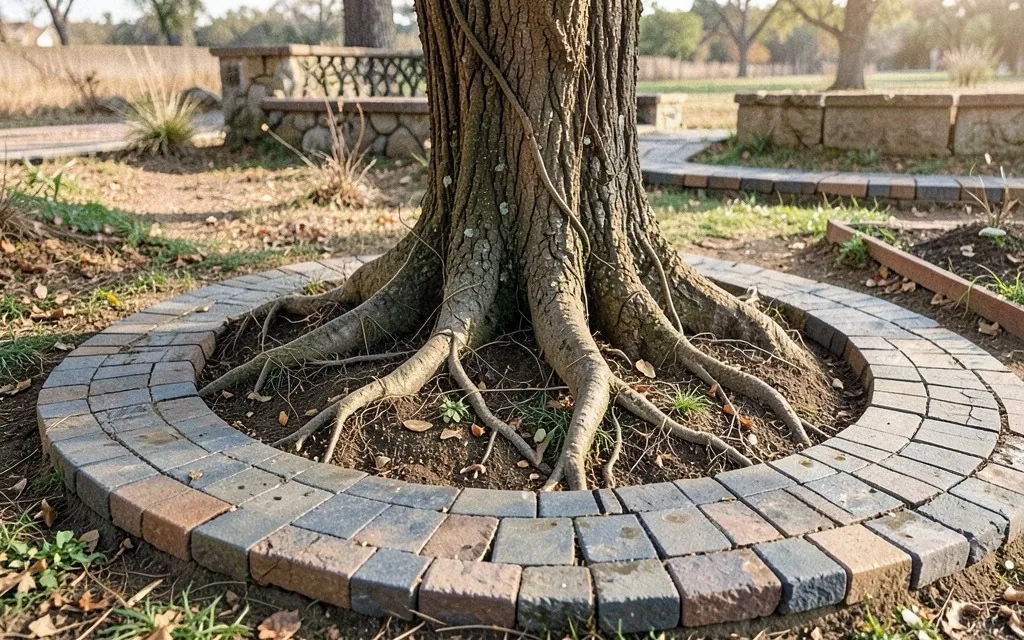
Grogan’s Mill
Terrace edge routed around a protected oak root plate rather than through it — ARC approved first submission.
Why homeowners choose us
Why do Woodlands homeowners choose a DSC-experienced landscaper?
- 01
DSC format from the start
Covenants read for your village before designing, and the submission produced in the format the committee expects.
- 02
Trees protected properly
Critical root zones mapped and fenced, hardscape routed around them, hand-digging where a run has no alternative.
- 03
Shade planting that holds
Light measured, not guessed. We will tell you when a lawn under that canopy is not going to survive.
- 04
Drainage designed first
The discharge point identified before anything is specified — the real constraint on a tight village lot.
- 05
One contractor, one DSC submission
Design, hardscape, drainage, irrigation, planting and lighting under one team, so the covenant review package reflects the whole project rather than pieces from different trades.
- 06
Warranty on request
On the work we install, so the standard of the base preparation and the installation is our problem, not yours.
From Google
What clients say about the work
Every review below was left on Google, shown with the reviewer’s own name and photograph. Read them all on the Google profile.

I was in a tight situation for getting something done before I closed on my home. Boone was able to fit me in next day and did an incredible job on the space for the quote he gave me.
Read full review

Such a Brilliant team to work with! I had some trouble knowing what exactly I needed for certain spaces etc and the team were extremely helpful in advising plant choice as well as executing the work very swiftly!
Read full review

Boone's vision for our front landscaping was awesome. His design included an enjoyable water feature, a rock bed for water to flow from the gutter, trees in the perfect places, small flowering plants that the butterflies love (we see many), a beautiful area fo…
Read full review
Reviews sourced from Google · last checked 2026-08-25
Questions
Landscaping in The Woodlands — frequently asked
How much does landscaping cost in The Woodlands TX?
It varies by scope. Basic landscape design and installation for front yard improvements runs $5,000 to $10,000. Mid-range projects with paver patios and hardscaping are $15,000 to $40,000. Complete outdoor living transformations with outdoor kitchens and extensive features range from $50,000 to $150,000. Carlton Woods and luxury estate projects can exceed $150,000 to $500,000. A written estimate follows the site visit at no charge.
Do you handle DSC approvals for The Woodlands villages?
Yes, as part of the project. We read the covenants for your specific village before designing, produce the drawings in the format the Development Standards Committee requires, and submit for review. The approval window is built into the schedule rather than discovered halfway through. Approval on the first pass is what protects the planting calendar; a returned submission can push the whole build into the wrong season.
What is the DSC in The Woodlands?
The Development Standards Committee reviews exterior changes to properties in The Woodlands against the community covenants, and approval is required before work starts. Submissions have a defined drawing format and a review period. Individual villages carry their own detail on top of the community-wide standards, which is why we check your village specifically rather than working from a general rule.
What plants work best for The Woodlands shaded lots?
Under a mature pine and oak canopy the reliable performers are shade-tolerant: azaleas, camellias, cast iron plant, holly fern, aucuba and dwarf yaupon holly, with Japanese maple and understorey trees for structure. For turf, only St. Augustine has real shade tolerance and it still needs roughly four hours of filtered sun. Where the canopy is denser than that, groundcover and mulch beds outperform any attempt at grass.
How do you protect trees during landscaping in The Woodlands?
The critical root zone is mapped and fenced before any equipment arrives, and it stays fenced. Hardscape edges are routed around root plates rather than cut through them, access routes are matted so the soil is not compacted, and where a service run genuinely has to pass close to a protected tree we hand-dig or air-spade rather than trench. Most tree loss after landscaping is root damage that was invisible on handover day.
Which Woodlands villages do you serve?
All of them — Alden Bridge, Cochran’s Crossing, Creekside Park, Grogan’s Mill, Indian Springs, Panther Creek, Sterling Ridge, College Park, Research Forest, Carlton Woods, East Shore and Woodlands Hills. Covenant detail and character differ between villages, and so does what gets approved, so the design starts from your village rather than a Woodlands-wide assumption.
How long does a landscaping project take in The Woodlands?
Design takes three to six weeks, and DSC review adds a further period that is outside our control — start it early. Construction depends on scope: basic front yard work is one to two weeks, a mid-range design with hardscape and irrigation three to four weeks, and a full transformation six to twelve weeks or more. Saturated ground stops grading and hardscape entirely, so wet spells extend everything.
Do you install outdoor kitchens in The Woodlands?
Yes, and on a village lot the DSC submission is usually the pacing item, not the build. Gas, water, power and drainage runs go in while the ground is open, which costs a fraction of cutting them into finished paving later. Anything covered or attached to the house needs review, so appliance positions get decided early — they set both the counter run and what goes in the submission drawing.
What drainage solutions work for Woodlands properties?
French drains, catch basins, channel drains at thresholds and regrading, chosen by whether the water is sitting on the surface or held in the soil. The harder question on a village lot is where the water can legally go — lots are tight and greenbelt-adjacent, and you cannot discharge onto a neighbor. Where no outlet exists, a properly sized dry well is the design rather than a fallback.
Can you work with my existing landscaping?
Frequently, and it is often better value than starting again. Mature planting, established trees and sound hardscape are assets worth designing around, and a design that keeps them looks settled from day one rather than in five years. What we will not do is build new work on top of a drainage or grading problem — if that is the underlying issue, it has to be fixed first regardless of what stays.
Do you offer landscape lighting in The Woodlands?
Yes, and the canopy makes it worth doing here more than almost anywhere. Low-voltage uplighting into mature pines, warm path lighting and discreet terrace lighting transform how a property reads after dark. Conduit goes in during construction rather than being cut into finished paving afterwards, so it is far cheaper as part of a project than as a retrofit.
Is Boone’s Landscaping a licensed, insured Woodlands landscaping contractor?
Yes. Workmanship is on us: when our installation is the cause of a failure, we come back and fix it. Weather, damage and neglect are outside that, and a maintenance plan can be priced to cover the establishment year if you want the protection. The specific terms are printed in the quote so there is nothing to interpret later. Documentation is provided as part of the quote rather than on request. For DSC submissions the committee will generally want contractor details as part of the package, so having it in order is a practical requirement here rather than just a reassurance.
Does The Woodlands restrict what you can plant?
Yes. Most villages sit under a residential development standards committee that reviews visible exterior changes, and tree removal is controlled separately because the canopy is a covenant rather than a preference. Beds, planting and lighting usually pass without difficulty. Removing or heavily reducing a protected tree does not, and submitting before work starts avoids a stop order mid-project.
What landscaping services does Boone’s Landscaping offer in The Woodlands?
Every village, one landscaping company. As landscape contractor we handle landscape design, hardscaping and low-voltage landscape lighting under the canopy; as landscapers we handle lawn care, mowing, sod installation, mulch, flower beds, tree service, and irrigation system and sprinkler system work zoned for shade. Residential landscaping in The Woodlands passes or fails the shade test, and curb appeal that reads from the street is designed with that in mind. Estimates are free, we are licensed and insured, and the documentation is packaged for DSC review.
Where we work
Do we serve your Woodlands village?
The Woodlands is our core service area, and we work throughout Montgomery County and into North Houston. Pine shade, protected trees and covenant review are the three constants on a village lot. We cover Woodlands zip codes 77380, 77381, 77382, 77384, 77385 and 77389; our shop at 100 Bentwater Dr #105, Montgomery, TX 77356 serves the whole community.
Often specified alongside: landscape design, hardscaping and patios, French drains and drainage, landscape lighting, outdoor kitchens and fire pits, tree pruning and trimming.