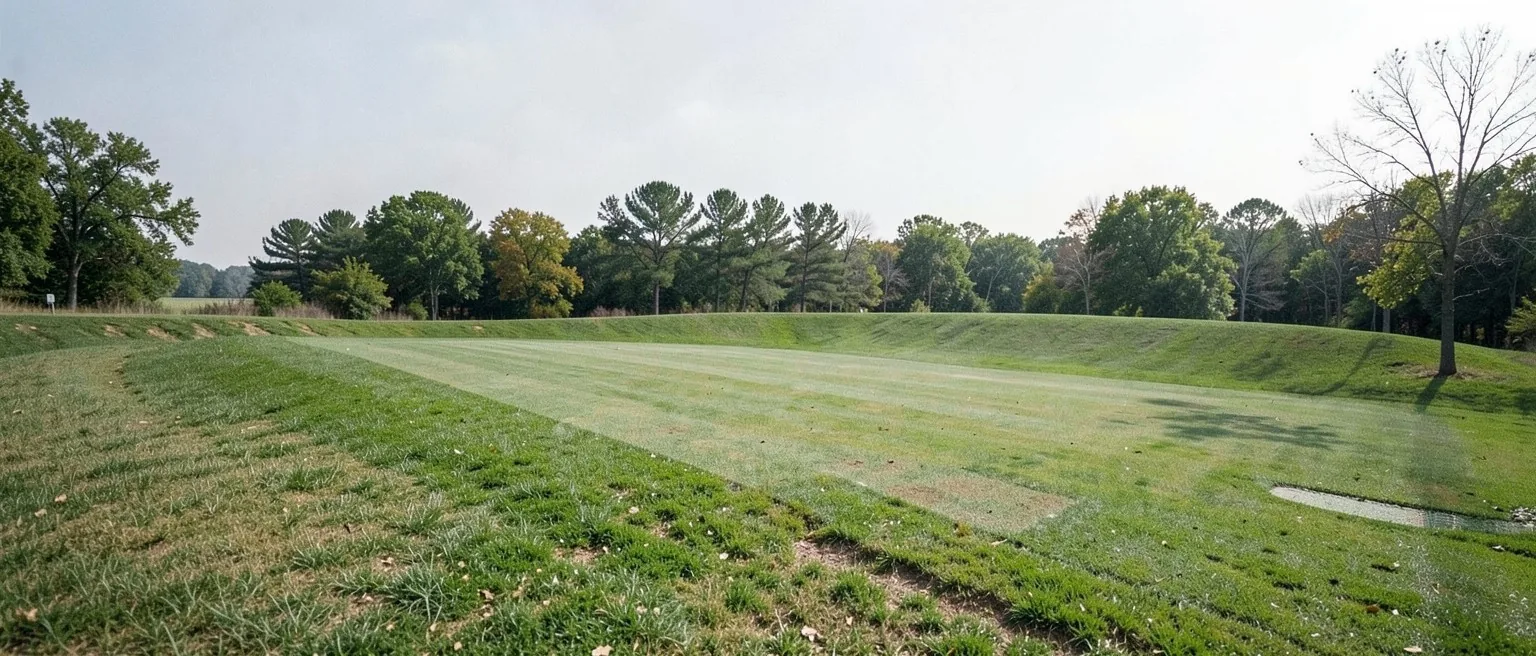

Land Clearing and Dirt Work in Conroe and Tomball, TX
Grading, leveling, site preparation and fill across The Woodlands, Spring and Conroe — surveyed to real levels, compacted in lifts, and shaped to send water where it should go.
Grading is the difference between a landscape that survives a wet spring and one that fails. On flat Beaumont clay a property needs a one to two percent fall away from the foundation, delivered to somewhere water can actually go. Land clearing and leveling smooth a surface; grading establishes that slope deliberately. Most yards that hold water need grading, and people ask for leveling.
Below: what dirt work costs by the hour and by the project, how to tell whether your yard needs grading, what fill we use and why, when clearing is the first step, and when a permit is involved.
What we build
What separates a leveling job from a full regrade?
Six different jobs, from clearing a lot to finishing the slope — and they all start the same way: measuring the existing levels rather than looking at them.
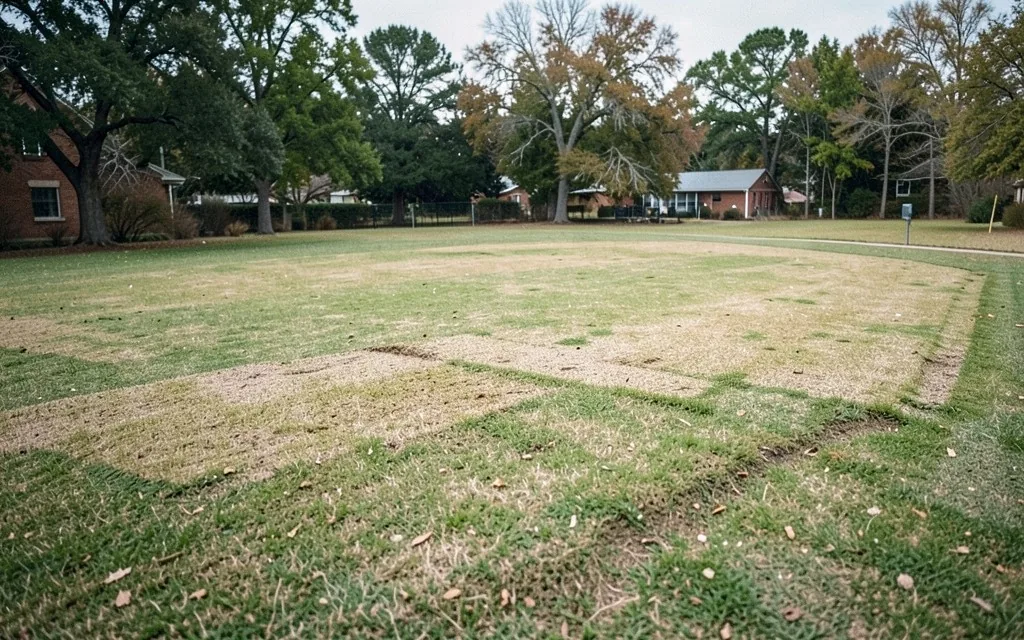
Yard leveling
Smoothing dips, ruts, settled trenches and low spots so the surface is even. Fixes the mowing and the tripping hazards; on its own it does not fix drainage.
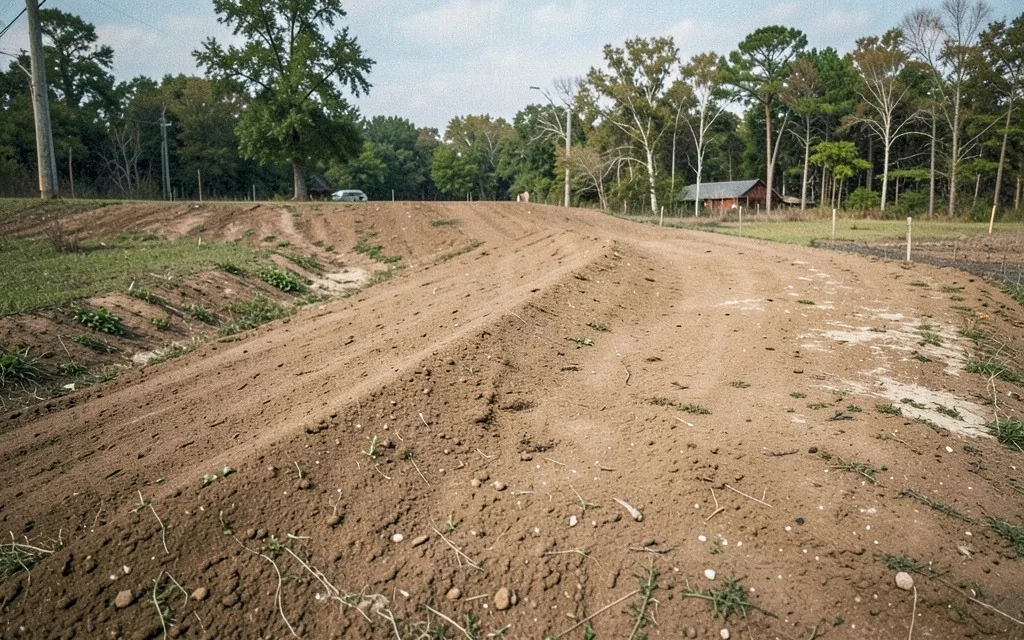
Drainage regrading
Reshaping the property to establish fall away from the house to a defined discharge point. Permanent, invisible, and often cheaper than installing drains.
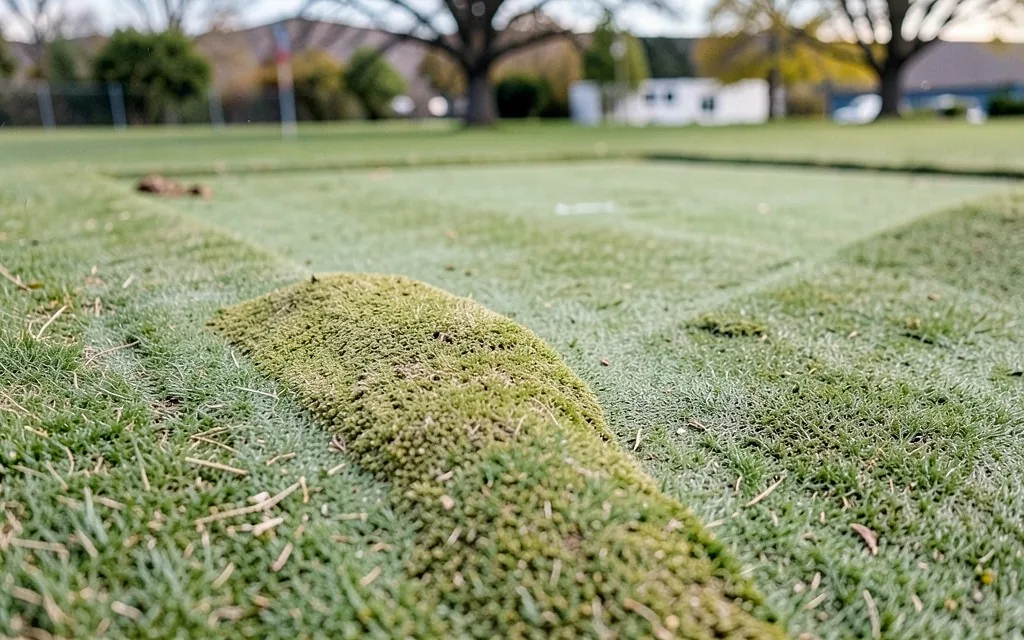
Lawn preparation
Compaction broken, topsoil brought to depth, grade set and the surface raked and rolled ready for sod or seed.
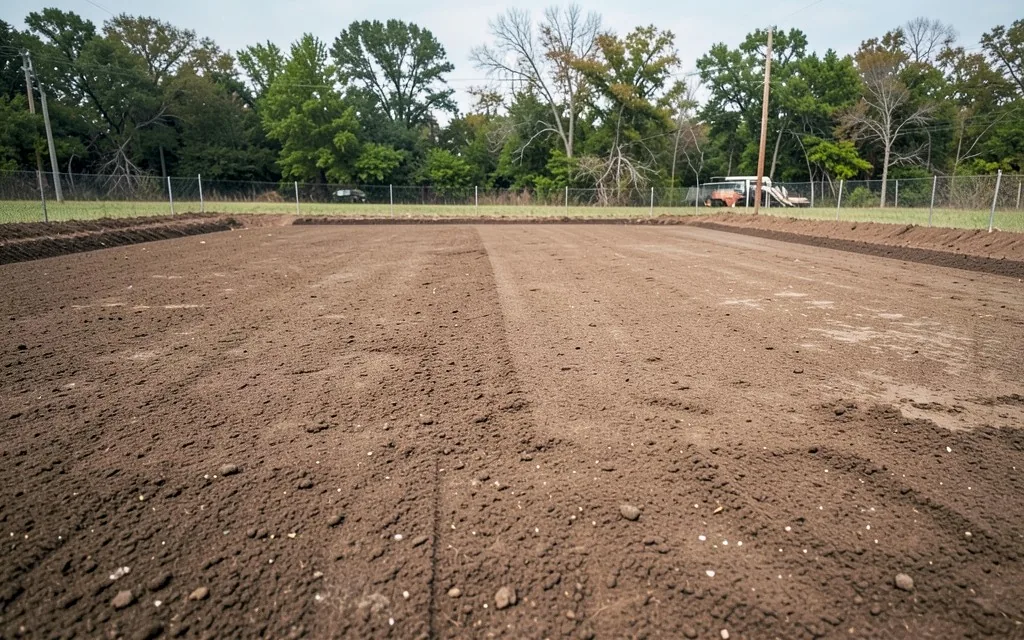
Fill and topsoil
Fill dirt for building up low areas and structural work, screened topsoil for anything that has to grow. They are different products and using fill where topsoil belongs is a common false economy.
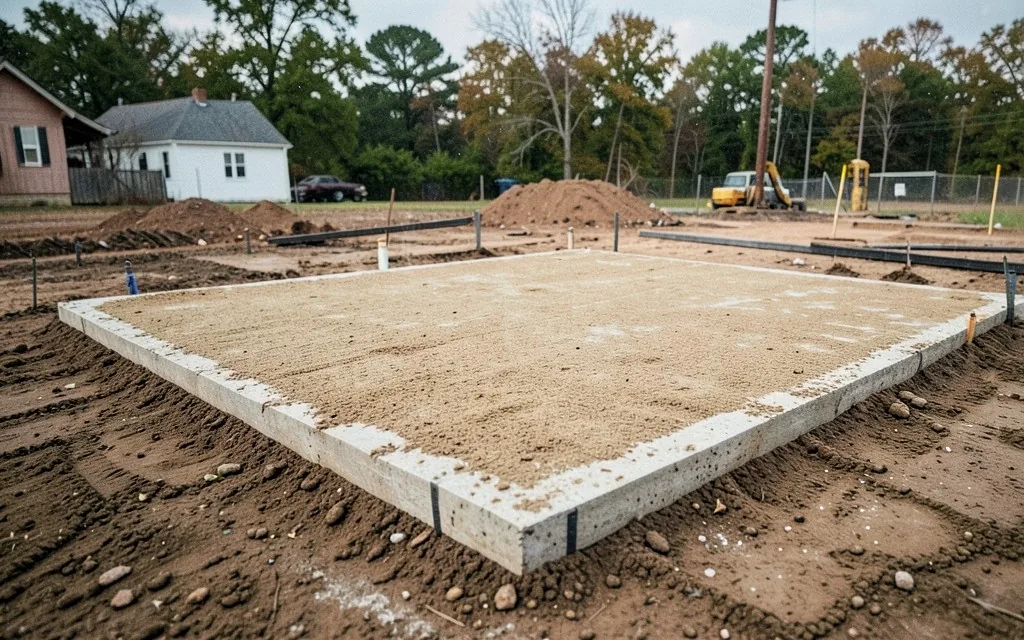
Construction site preparation
Clearing, cutting, filling, compaction and pad preparation for a build, an addition, a shop or an outbuilding, to the levels the plan requires.
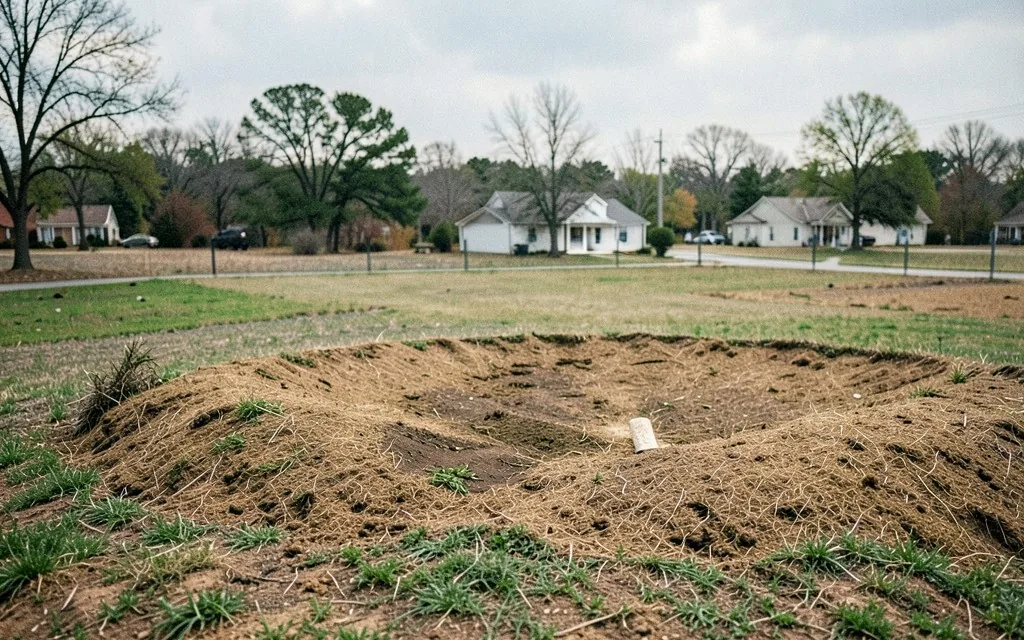
Land clearing
Brush, scrub and stumps cleared and the ground shaped afterwards. Clearing without regrading leaves a lot that is open and still unusable.
Local conditions
How do I know if my yard needs grading?
Five signs, and the first one is the one that costs the most to ignore.
Water stands against the house
CauseThe grade falls towards the foundation rather than away from it — extremely common on Montgomery County lots, from builder grading or from settlement over the following years.
FixLevels surveyed and the grade rebuilt to a one to two percent fall away from the slab, with the water delivered somewhere it can go. This is the highest-value dirt work there is.
Puddles that last for days
CauseLow spots in a lot with no fall, on soil that absorbs almost nothing. Beaumont clay does not drain vertically, so anything that collects stays collected.
FixLow spots filled and the whole area shaped to shed water toward a discharge point. Filling a dip without establishing fall just moves the puddle a few feet.
Lawn thin in the same places every year
CauseUsually compaction rather than the grass. Construction equipment or years of traffic compress clay to a state roots cannot enter and water cannot infiltrate.
FixThe compacted layer ripped, organic matter incorporated and the grade reset before resodding. Laying new turf over compacted clay reproduces the same dead patch.
New turf or beds keep failing in one area
CauseFill used where topsoil belonged. Structural fill is deliberately low in organic content, so anything planted into it struggles no matter how well it is watered or fed, and the area stands out within a season.
FixScreened topsoil at real depth over anything that has to grow, with fill reserved for building up load-bearing areas and pads. Where fill has already been used, the topsoil layer is brought up to depth rather than dusted over it.
Trenches and ruts reappearing
CauseBackfill placed loose in one lift rather than compacted in layers. It looks level at handover and settles into visible lines over the following months.
FixBackfill compacted in six to eight inch lifts and finished slightly proud so it settles to level. Existing settled trenches filled the same way rather than topped up annually.
Specification
What determines whether shaped ground stays where you put it?
Six things: fill dirt versus topsoil, select fill and base, compaction in lifts, slope specification, and access and haul. Get any one wrong and the finished ground moves or sinks within a season.
Fill dirt
Clean structural fill for building up low areas and pads. It is not growing medium — it has little organic content by design, which is exactly what makes it stable under load.
Screened topsoil
For anything that has to support planting or turf. Screened to remove debris and rock, and spread to a real depth rather than dusted over fill to make it look right.
Select fill and base
Where a pad or a structure is going in, the specification follows the plan or the geotechnical report rather than whatever is cheapest to deliver.
Compaction in lifts
Six to eight inch layers, each compacted before the next. Filling a two-foot hole in one pass produces ground that looks finished and settles for two years.
Slope specification
One to two percent away from structures is the working target. Steeper sheds fast but erodes and is hard to mow; flatter does not move water on this soil.
Access and haul
Gate widths, overhead clearance and the route in decide the equipment, and equipment decides the hourly rate. Haul-off of spoil is a separate real cost worth quoting explicitly.
How it runs
Why do the survey and the compaction matter more than the equipment?
Because cheap work skips exactly those two steps, on a clearing job or a straight regrade alike, and both failures show up within a year. Everything else is sequence.
- 01
Survey existing levels
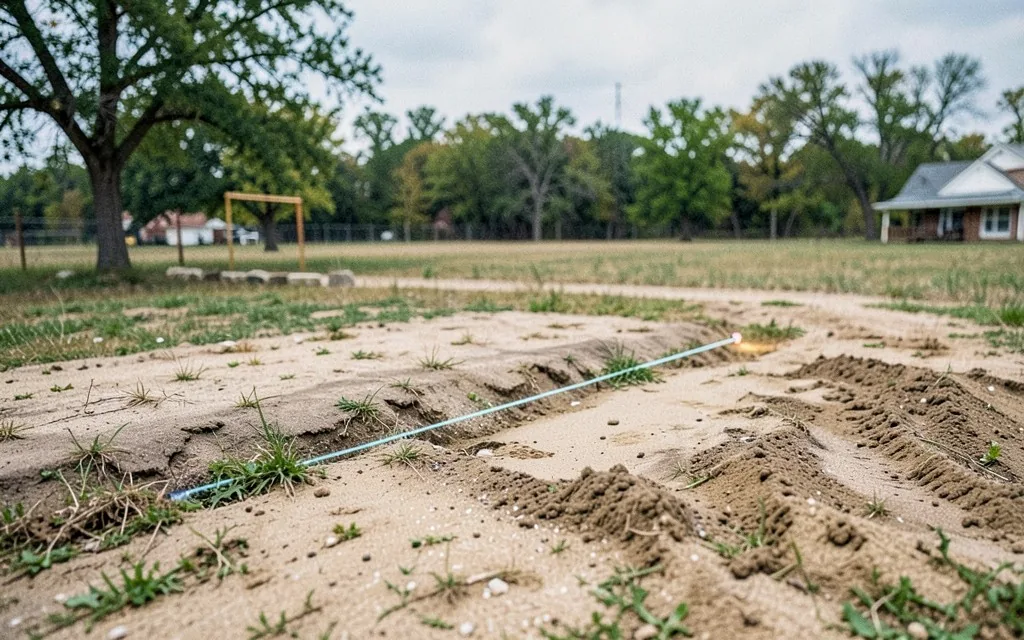
Actual elevations taken across the property with a laser. On ground this flat, judging fall by eye is how grading gets done backwards.
- 02
Establish the discharge
Where the water will go once the grade sends it there — street, ditch, swale or a sized dry well. The grade is designed to reach it.
- 03
Locate services
Irrigation, gas, electric, septic and lighting cable marked before any machine moves. Grading equipment removes shallow utilities instantly.
- 04
Cut, fill and shape
Material moved to establish the design grade, using site material where suitable and imported fill where it is not.
- 05
Compact in lifts
Fill compacted in six to eight inch layers so the finished ground carries load and does not settle into hollows over the following seasons.
- 06
Finish and verify
Final grade checked against the design with the laser, surface raked, and the fall confirmed with water where it matters.
What it costs
What does dirt work cost in The Woodlands?
Hourly for open-ended work, by project where the scope is defined — including clearing, which is quoted with the tree work it pairs with. Final pricing depends on site conditions, access and haul distance.
Equipment and operator $75 – $150 / hr
Machine and operator on site. The right basis for exploratory or open-ended work where the scope is not yet fixed.
Small yard leveling $500 – $1,500
Smoothing dips, ruts and settled trenches across a residential lawn.
Drainage regrading $1,000 – $4,000
Reshaping to establish fall away from the house to a defined discharge point.
Lawn preparation before sod $0.50 – $1.00 / sq ft
Compaction broken, topsoil to depth, grade set, surface raked and rolled ready to lay.
Fill dirt and topsoil $25 – $65 / cubic yd
Fill dirt $25 to $50 delivered and spread; screened topsoil $35 to $65 delivered and spread.
Construction site preparation $2,500 – $10,000+
Clearing, cut and fill, compaction and pad preparation to the levels a build requires.
Rates reviewed 2026-09-03. Every project is priced in writing after a site visit; these bands are what recent work has landed in, not a quote.
Recent work
Which Montgomery County properties have we regraded or cleared recently?
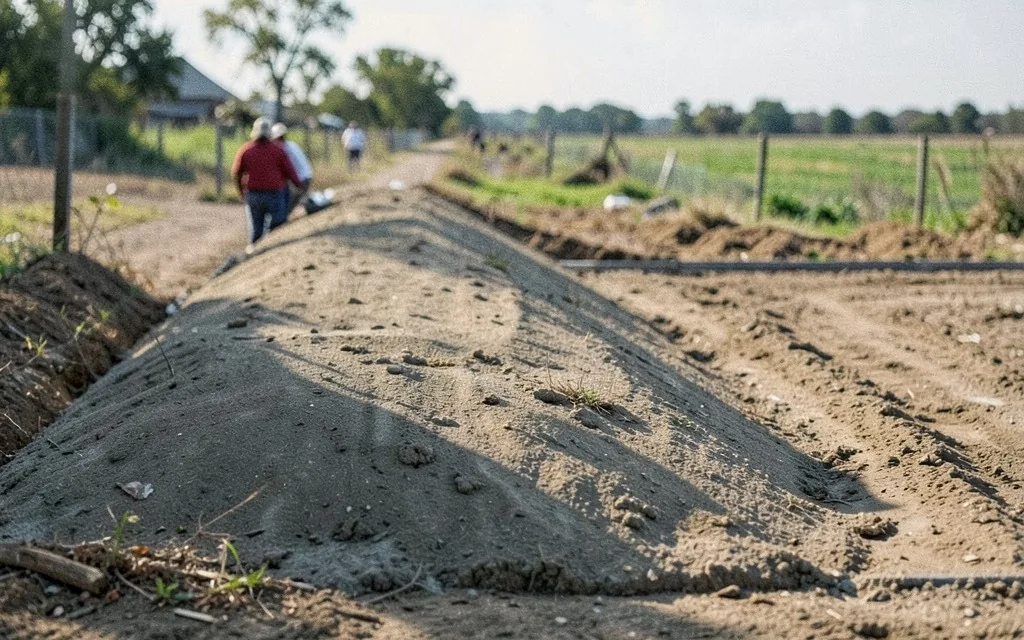
The Woodlands
A lot grading back towards the house rebuilt to a two percent fall, water routed to a street discharge.
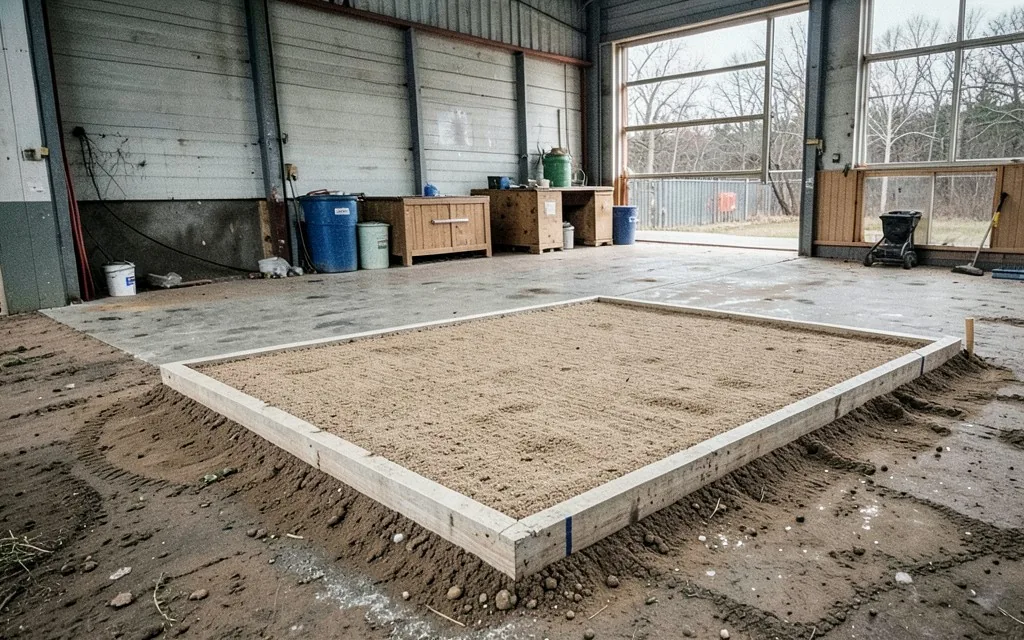
Conroe
Pad preparation for a workshop build — cut, imported select fill and compaction in lifts to the plan level.
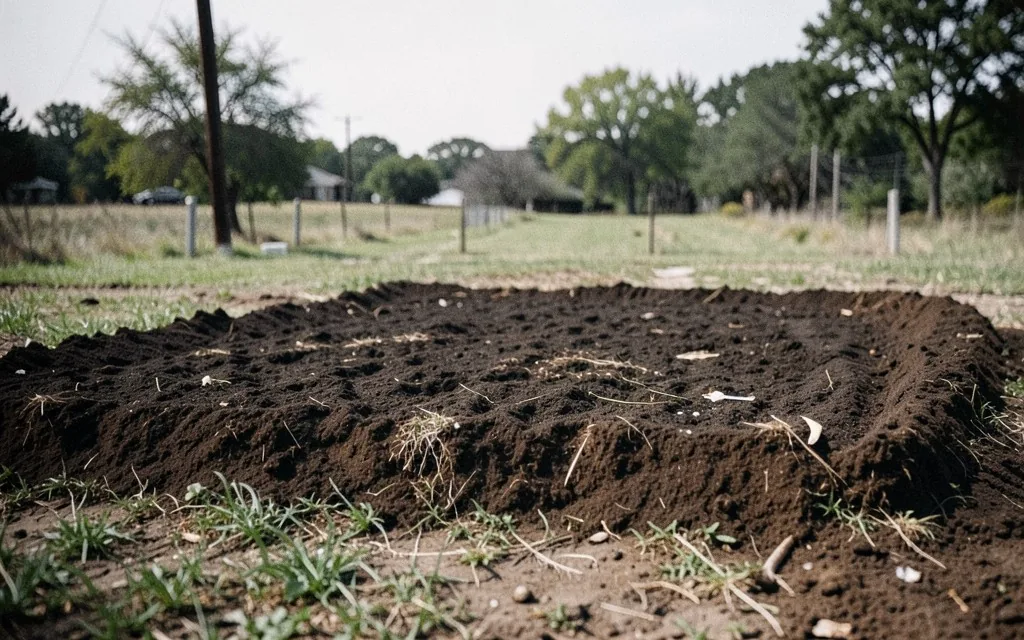
Magnolia
Builder-compacted lot ripped, topsoil brought to depth and the grade set before sodding.
Why homeowners choose us
Why the ground we shape stays put
- 01
Levels are measured
A laser survey before anything moves. On ground this flat, judging fall by eye produces grading that runs the wrong way.
- 02
The discharge point comes first
A grade that sheds water into a corner with no outlet has moved the problem, not fixed it.
- 03
Compacted in lifts
Six to eight inch layers, each compacted. It is slower and it is why the ground is still level in two years.
- 04
Fill and topsoil are different
Structural fill where load matters, screened topsoil where things have to grow. We do not use one to save money on the other.
- 05
Services located first
Irrigation, gas, electric, septic and lighting marked before a machine moves. Grading equipment finds shallow utilities instantly.
- 06
Ground protected
Mats and route planning to keep tracked equipment off finished turf and paving during clearing and grading alike. Rutting a lawn to grade another part of it is not progress.
Questions
Dirt work — frequently asked
How much does dirt work cost in The Woodlands?
Equipment and operator run $50 to $200 per hour depending on the machine, with most residential work at $75 to $150. By project: simple yard leveling is $500 to $1,500, drainage regrading $1,000 to $4,000, and full site preparation for construction $2,500 to $10,000 and up. Fill dirt is $25 to $50 per cubic yard delivered and spread, topsoil $35 to $65. We provide free on-site estimates.
What is the difference between grading and leveling?
Leveling smooths an uneven surface — filling dips, ruts and settled trenches so the ground is flat and mows properly. Grading establishes a deliberate slope, normally one to two percent away from the house, so water runs where you want it. Most people ask for leveling when what their yard actually needs is grading. A perfectly level yard on clay holds water everywhere instead of in one place.
How do I know if my yard needs grading?
Water standing against the foundation after rain, puddles that last for days, a lawn that is thin in the same places every year, or trenches and low spots that keep reappearing. The clearest test is to watch where water goes during a heavy storm. If it moves towards the house, or sits without moving at all, the grade is the problem and no amount of drainage hardware substitutes for fixing it.
How long does dirt work take?
Most residential projects are one to three days. Simple leveling is often a single day; a full regrade with imported fill and compaction takes two to three. Site preparation for construction runs longer and depends on how much material has to move. Wet ground stops everything — saturated Beaumont clay cannot be compacted properly, and working it wet damages the structure of the soil.
What type of fill dirt do you use?
It depends on the job. Clean structural fill for building up low areas, pads and anything carrying load — it has little organic content by design, which is what makes it stable. Screened topsoil for anything that has to grow: lawns, beds and planting areas. Where a build or a geotechnical report specifies select fill, we source to that specification. Using fill where topsoil belongs is a false economy that shows up the first season.
Do I need a permit for grading?
Minor residential leveling and lawn preparation generally does not require permitting. Significant grading that changes drainage patterns, work in a floodplain, and site preparation for construction usually do — Montgomery County and the municipalities within it have their own thresholds. Covenanted communities including The Woodlands may require review for visible changes. We check before starting, because grading that has to be reversed is the most expensive kind.
Will grading damage my lawn or irrigation?
Grading disturbs the surface by definition, and the area worked will need resodding or seeding afterwards — that should be in the quote rather than a surprise. Irrigation is the real risk: lines run at exactly the depth a grader works, so we locate and mark the system before starting and cap or relocate what is in the way. Discovering the lines with a blade is expensive and entirely avoidable.
Why does a yard end up sloping toward the house in the first place?
Usually one of three things: the builder graded to a rough finish rather than a surveyed fall and it was never corrected, settlement over several years pulled the soil near the foundation down faster than the rest of the lot, or a later addition — a patio, a bed, a driveway extension — was built without checking what it did to the existing fall. We start with a laser survey rather than guessing which of the three it is, because the fix is different depending on the cause: a full regrade, a targeted fill-and-shape at the problem section, or correcting whatever was added last.
How much fill dirt will I need?
More than most people estimate, because volume grows quickly with area. As a rough guide, covering 1,000 square feet to a depth of three inches takes about nine cubic yards. We measure the area and the depth required during the site visit and quote the actual volume rather than a guess — and we allow for compaction, since loose material loses noticeable volume once it is properly compacted in lifts.
Do you handle land clearing as well?
Yes, and the two usually belong together. Clearing brush, scrub and stumps opens the lot; grading afterwards is what makes it usable. Clearing without regrading leaves you with an open area that still holds water and still cannot be built on or planted. We price them as one job where both are needed, which is also cheaper than mobilizing equipment twice.
How much fall does a yard actually need to drain?
Two percent away from the structure is the working minimum, which is about a quarter-inch drop per foot. Less than that and Beaumont clay holds water against the slab long enough to matter. More than five percent starts to scour in heavy rain and needs stabilizing. Getting that band right is most of what grading is for, and it is set before anything is built on top.
Does grading replace the need for French drains?
Sometimes, and it is worth checking before paying for both. A lot with room to shed water at the surface often needs only a correct grade — drains are hardware for the cases where grading alone cannot reach a discharge point, such as a landlocked low corner or a slab surrounded on every side by higher ground. We survey first and recommend a drain only where the levels genuinely require one, not as an automatic add-on to every regrade.
Where we work
Dirt work across North Houston
We clear, grade and prepare sites across Montgomery County and into North Houston — The Woodlands, Spring, Conroe, Magnolia, Tomball, Willis and Montgomery. Flat lots and Beaumont clay are the local conditions, and both make the survey step non-optional.
Often specified alongside: lawn drainage, French drains, sod installation, hardscaping and paving, stump grinding.