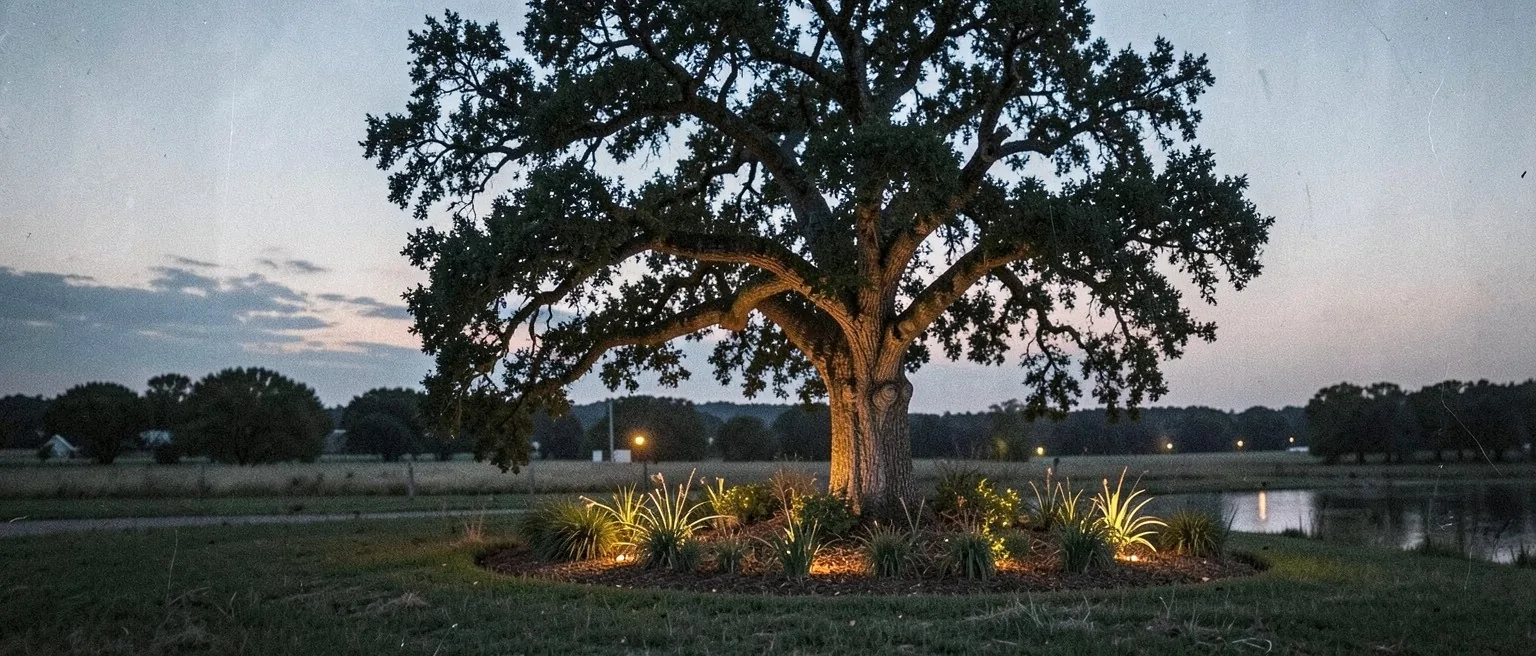

Tomball, TX Landscaping and Lawn Care
Design-build landscaping across Tomball — heritage lots in Old Town with eighty-year-old trees, and brand-new ground in Northpointe, Creekside Park and Woodson's Reserve.
Landscaping in Tomball, TX is almost always one of two kinds of project, and the right approach is close to opposite in each. Heritage lots around Old Town have decades-old canopy, settled ground and root systems that dictate where anything can be dug. New master-planned lots have no canopy at all, ground compacted hard by construction, and a review board with an opinion about the street elevation. Most Tomball homeowners invest $12,000 to $35,000 for comprehensive landscaping work.
Below: what each scope costs here, how construction is kept off tree roots, what a builder lot needs before it can grow anything, and how the review boards here operate.
What we build
What do we build on an Old Town or new-build Tomball lot?
The same disciplines, applied very differently depending on which kind of lot you have.
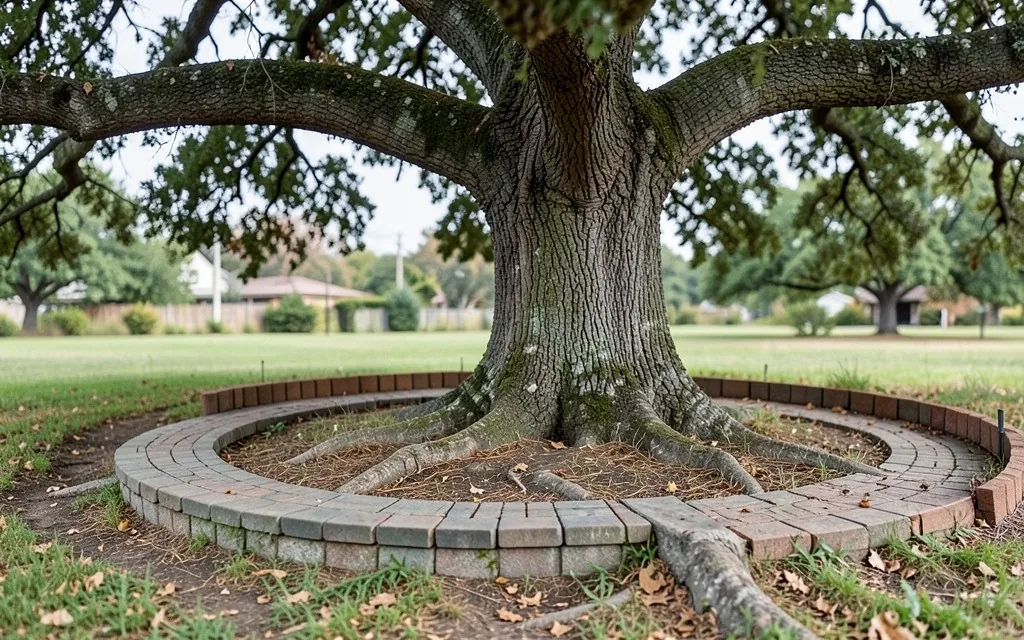
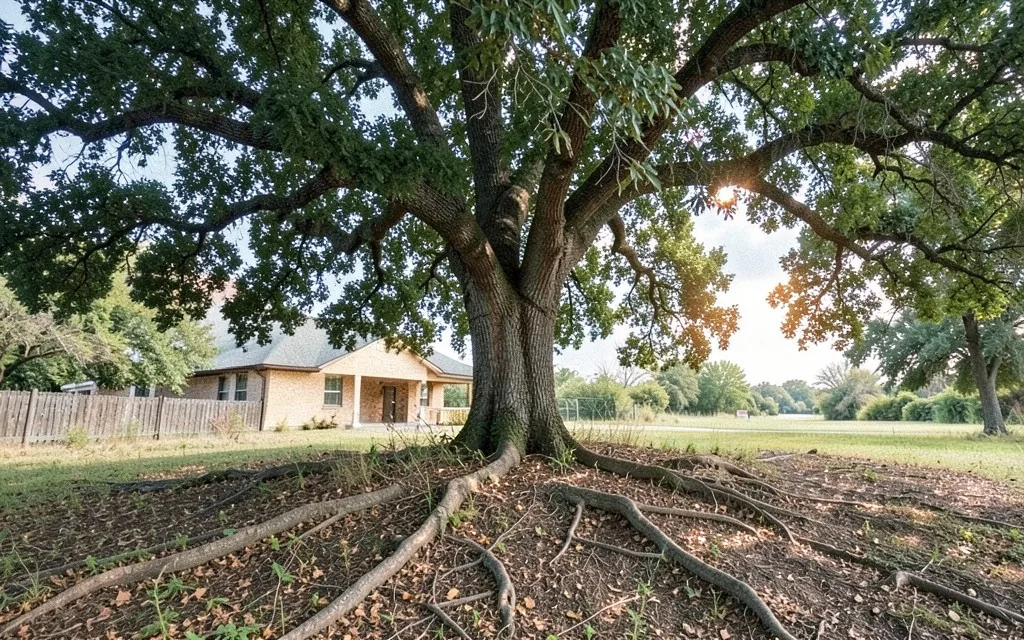
Tomball landscaping for heritage trees
Terraces and beds built around eighty-year-old canopy — root zones fenced, edges routed clear, hand-digging where a service run has no alternative.
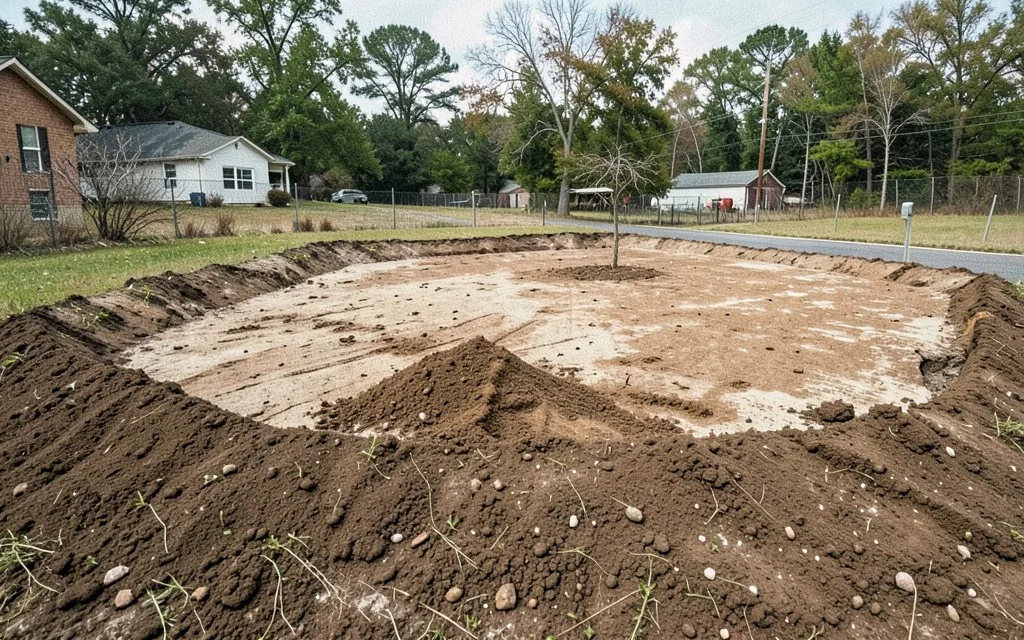
Builder-lot rehabilitation
Ripping the compacted layer, importing topsoil to depth and setting a workable grade. New ground in Tomball is construction spoil until somebody fixes it.
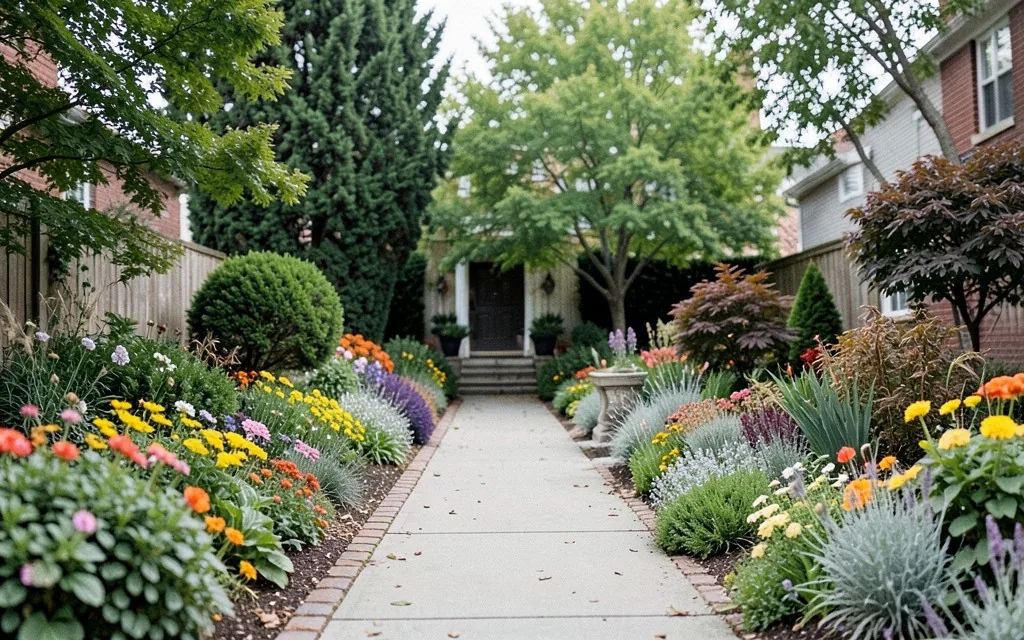
Street-elevation landscaping for Tomball review boards
The front yard the review board actually looks at — arrival sequence, structure that reads from the road, and seasonal color that holds through the year.
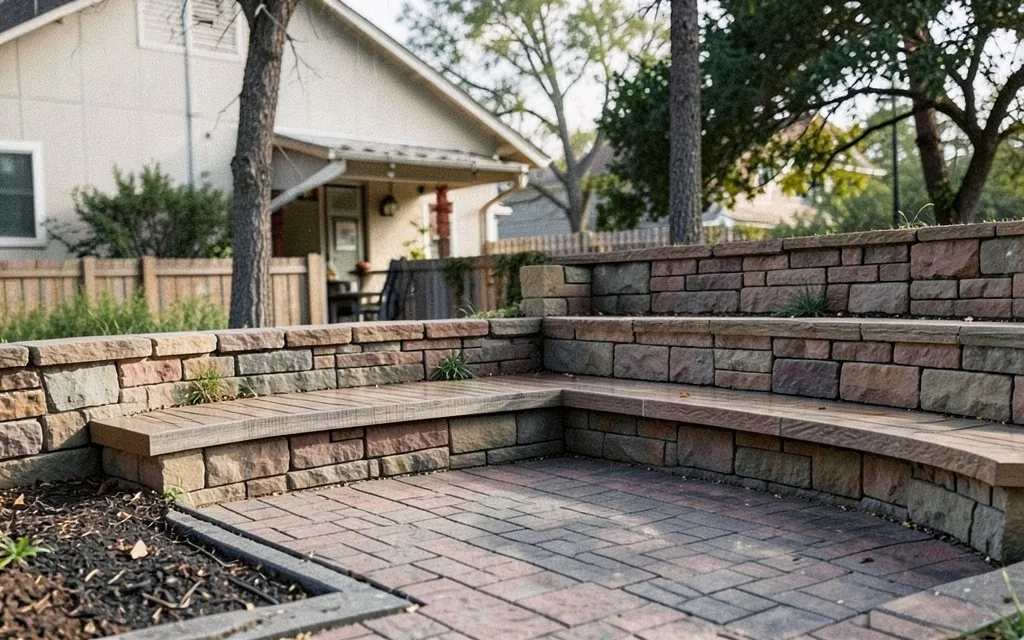
Hardscape and outdoor rooms
Terraces, walkways and seat walls sized to the lot. A small backyard gets more from one well-proportioned room than from three competing features.
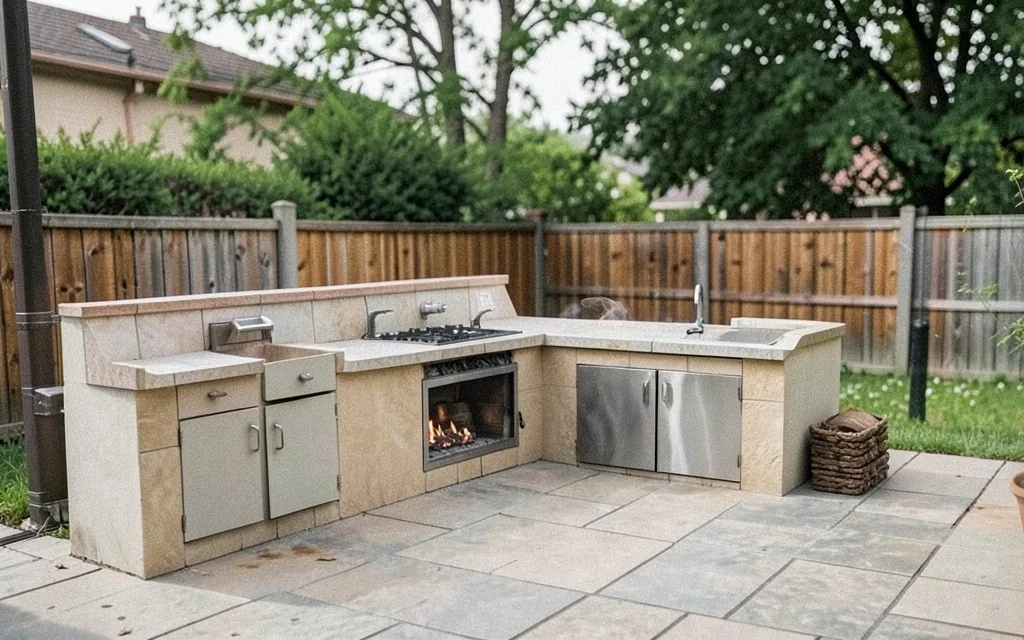
Outdoor kitchens and fire
Kitchens and fire features built into the terrace, with gas, water and power run while the ground is open rather than cut in a year later.
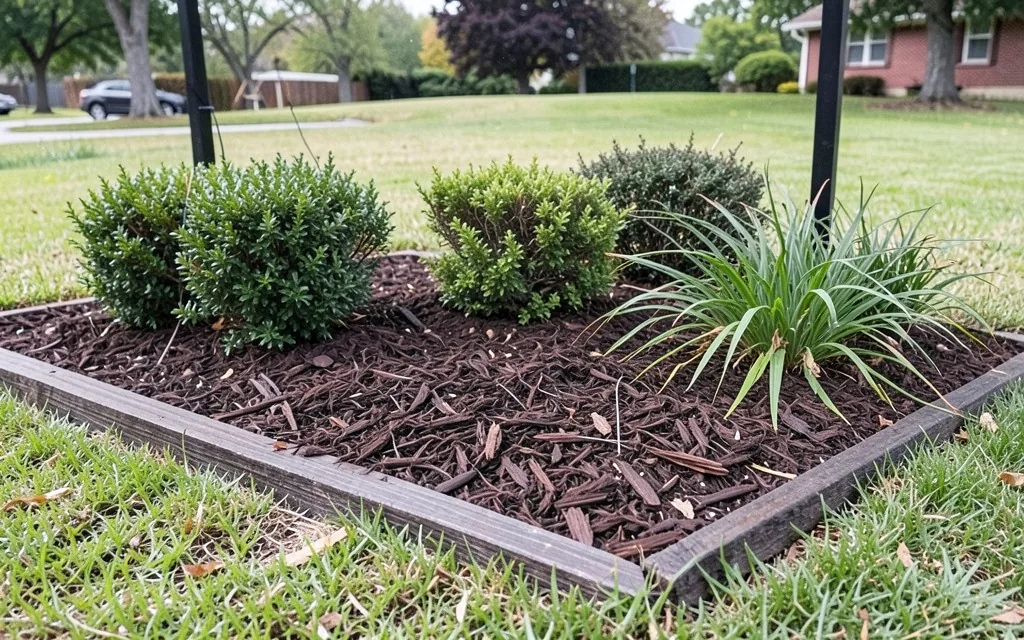
Establishment and aftercare
Seasonal pruning, mulch refresh twice yearly, bed maintenance, irrigation adjustment and a fertilization program suited to this climate.
Local conditions
What goes wrong on a Tomball property?
Five failures, split fairly evenly between the two kinds of lot.
A heritage tree dies eighteen months later
CauseTrenching, excavation or a grade change inside the critical root zone during construction. Nothing looks wrong at handover; the tree thins through the following year and there is no recovering it.
FixRoot zones mapped and fenced before machinery arrives, hardscape edges routed around them, access matted so soil is never compacted, and hand-digging wherever a run must pass close.
Nothing grows on the new-build lot
CauseBeds and turf installed straight onto ground that construction traffic compressed into something closer to a road base than soil. Roots cannot get down, so everything sulks regardless of feeding.
FixThe compacted layer ripped, topsoil brought to real depth and organic matter incorporated before a single plant goes in. This is the whole job on a new Tomball lot, and it is invisible when finished.
The front yard fails the review board
CauseA design that treats the backyard as the whole project, with the street elevation left as an afterthought. Review boards here look hardest at what is visible from the road, and that is where rejections come from.
FixCommunity standards read for your neighborhood before designing, the street elevation resolved first, and the submission produced in the required format with review time in the program.
A small backyard feels smaller after the work
CauseSeveral competing features crammed into a compact lot — a patio, a fire pit, a bed run and a lawn all fighting for the same forty feet, with no circulation between them.
FixOne well-proportioned outdoor room rather than three small ones, with the circulation designed and the lawn sized to what is actually walked on. Restraint reads as space.
Inherited irrigation nobody has looked at
CauseA builder-installed system zoned by area rather than conditions, with arcs knocked out by mowing. One side of the house stays soggy, the other burns off every July.
FixZones reset by light and plant type, drip in the beds and spray only on turf, arcs re-adjusted and the controller reprogrammed for the season rather than left on its installation default.
Neighborhoods
Do we work in your Tomball neighborhood?
Tomball spans a historic center and a ring of recent master-planned development, and the work differs completely.
Old Town Tomball
Historic properties with decades-old canopy and settled ground. Sympathetic hardscape, shade planting and construction that respects root plates — the tree usually predates the house.
Northpointe
Established master-planned community with an active review board. The street elevation gets the most scrutiny, so it gets designed first.
Creekside Park
Newer construction where the ground is compacted and the lots have no mature canopy yet. Rehabilitating the soil and establishing structure planting is the first phase.
Woodson’s Reserve
Newer prestige development on wooded lots. Tree protection during construction sits alongside establishing the designed areas around it.
Lakewood Forest and Spring Creek Oaks
Larger established lots with substantial canopy. Shade planting, hardscape replacement and working around mature root systems.
Rosehill and Willow Creek
A mix of acreage and larger residential lots. Drive work and entry planting more often form part of the scope here than they do in town.
How it runs
How do we read a Tomball lot before designing it?
Which kind of Tomball property you have determines the whole sequence. That gets established on the first visit.
- 01
Free on-site consultation
Tree cover and root spread, soil condition, how the lot is used, what the street elevation currently says, and what the community requires.
- 02
Design and drawings
Concept and rendered design, with the street elevation resolved first on any lot where a review board will see it.
- 03
Submit for review
Drawings prepared in the format your community requires, with the review window built into the program rather than discovered mid-project.
- 04
Protect or rehabilitate
On a heritage lot, root zones fenced and access matted. On a new lot, the compacted layer ripped and topsoil brought to depth. Opposite work, same stage.
- 05
Build around what stays
Hardscape, sleeves and conduit, irrigation, planting, turf and lighting, sequenced around the fenced root zones or the freshly rehabilitated soil so nothing finished has to be reopened.
- 06
Establish and maintain
Controller programmed by zone, aftercare explained, and ongoing maintenance available on a route with a dedicated crew if you want it.
What it costs
What does Tomball landscaping cost?
Ranges for Tomball. On a heritage lot, tree protection adds time; on a new lot, soil rehabilitation adds cost before anything visible happens.
Basic Tomball landscape work from $5,000
The front elevation: bed lines redrawn, shrubs and seasonal color installed, mulch, and the irrigation adjusted to the new planting.
Comprehensive landscaping $12,000 – $35,000
The band most Tomball homeowners land in — design, planting, hardscape, irrigation and soil work delivered as one project.
Larger and premium designs $85,000+
Extensive hardscape, outdoor kitchens, water features and full lighting on larger lots, usually built in phases.
Rates reviewed 2026-09-03. Every project is priced in writing after a site visit; these bands are what recent work has landed in, not a quote.
Recent work
Typical Tomball projects
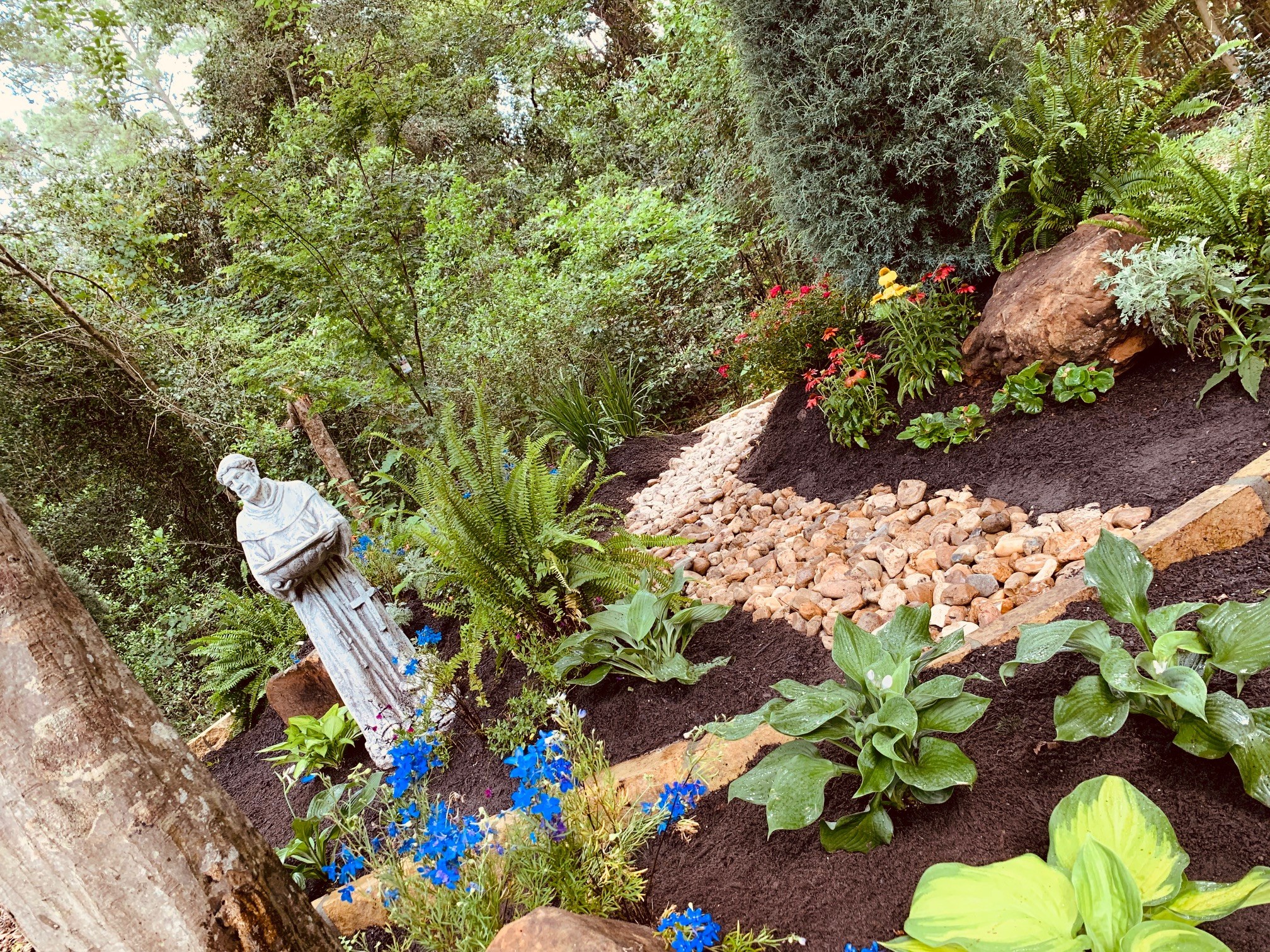
Old Town Tomball
Heritage lot with the terrace routed clear of a mature oak root plate and shade planting established beneath it.
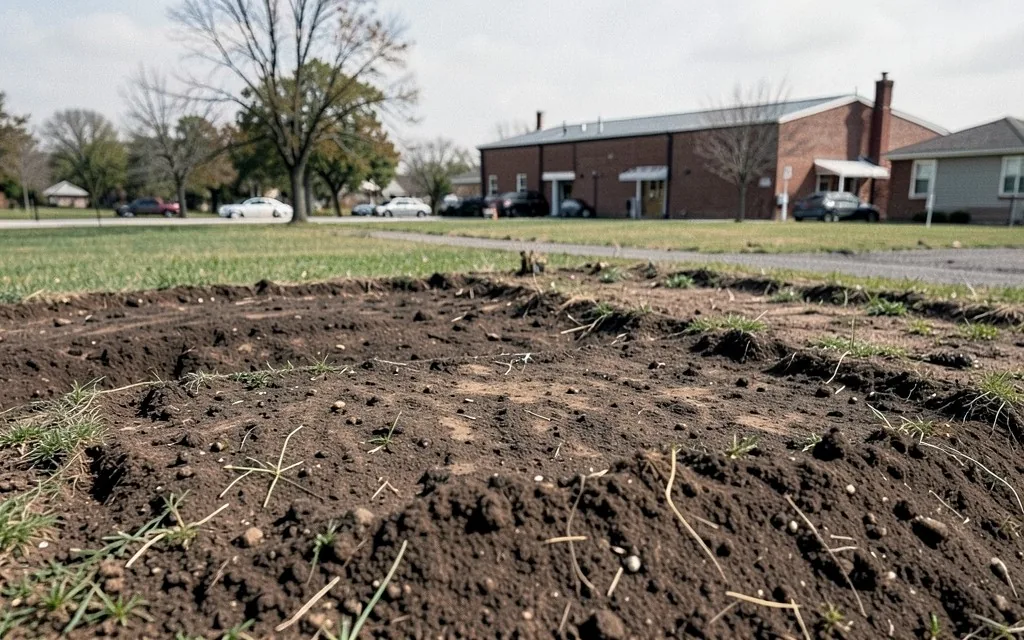
Creekside Park
New construction where the compacted layer was ripped and topsoil brought to depth before a single plant was installed.
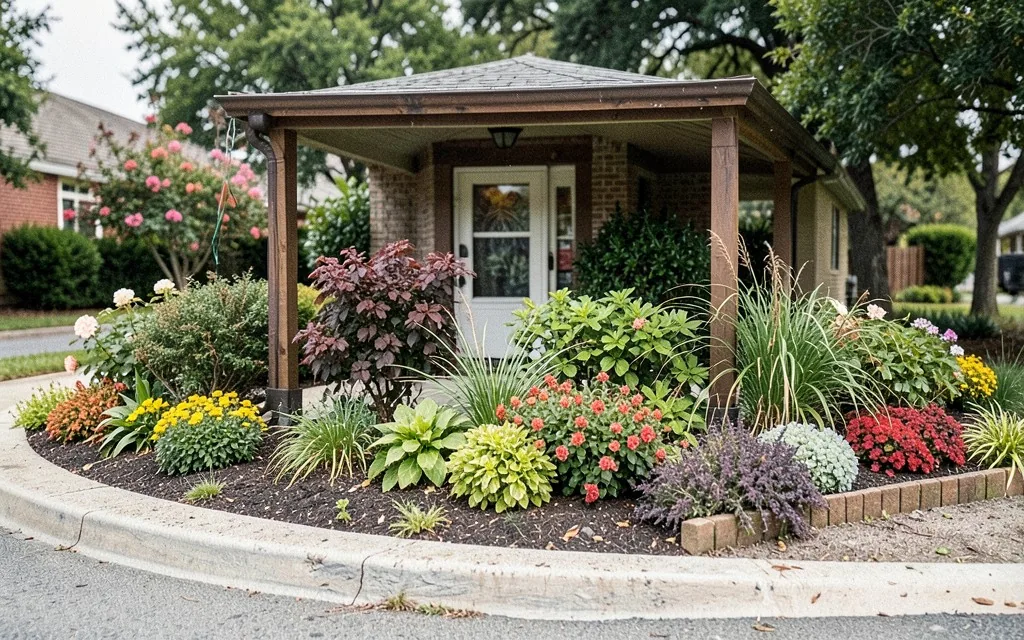
Northpointe
Front yard designed around the street elevation and approved by the review board on first submission.
Why homeowners choose us
Why do Tomball homeowners choose Boone's?
- 01
We read the lot first
Heritage canopy and new-build compaction need opposite work. Getting that wrong wastes the whole first phase.
- 02
Trees survive the construction
Root zones fenced, edges routed, access matted. Most tree loss after landscaping is damage that was invisible on handover day.
- 03
Soil rehabilitated before planting
On a new lot, ripping compaction and importing topsoil is the entire difference between a landscape and a disappointment.
- 04
The street elevation gets designed first
It is what the review board looks at hardest, and it is where rejections come from.
- 05
Restraint on a compact lot
One well-proportioned outdoor room beats three competing features. Small yards are made larger by editing, not filling.
- 06
Aftercare available
Seasonal pruning, twice-yearly mulch refresh, bed work and irrigation adjustment on a route with a dedicated crew.
From Google
What clients say about the work
Every review below was left on Google, shown with the reviewer’s own name and photograph. Read them all on the Google profile.

I'm so impressed with Boone's landscaping! Boone has such a great eye for design and detail, and it shows in all of his work.
Read full review

I have seen several of Boones Landscapes that He has done and they are a work of art! He has great vision and imagination!! I highly recommend Boones Landscaping!!!

They did an amazing job on my back yard. The grass looks amazing and professionally done definitely would recommend them. And use them for future work.
Reviews sourced from Google · last checked 2026-08-25
Questions
Landscaping in Tomball TX — frequently asked
How much does landscaping cost in Tomball TX?
Basic front yard work starts around $5,000. Most Tomball homeowners invest $12,000 to $35,000 for comprehensive landscaping including design, planting, hardscape and irrigation. Larger and premium designs with extensive hardscape, an outdoor kitchen and full lighting run $85,000 and up. On a new-build lot, expect a meaningful part of the budget to go into soil rehabilitation you will never see.
Do you handle HOA approvals for Tomball neighborhoods?
Yes, as part of the project. Northpointe, Creekside Park, Woodson’s Reserve and the other master-planned communities each have their own review requirements and drawing formats. What is worth knowing locally is that boards here scrutinize the street elevation hardest — it is the part everyone else sees — so we resolve the front of the property first and submit in the format expected.
Can you work around mature trees?
It is a large part of what we do in Old Town and Lakewood Forest, where the tree frequently predates the house. Critical root zones are mapped and fenced before machinery arrives, terrace and bed edges are routed around them, access routes are matted so soil is never compacted, and any service run that must pass close is hand-dug. Most tree loss after landscaping is root damage nobody could see on handover day.
Why will nothing grow on my new Tomball lot?
Almost certainly the soil rather than the plants. Construction traffic compresses clay into something closer to a road base, and roots cannot penetrate it no matter how well the bed is fed or watered. Ripping the compacted layer, bringing topsoil to real depth and incorporating organic matter is the fix, and it has to happen before planting. It is invisible when finished, which is exactly why it gets skipped.
What plants grow best in Tomball TX?
It depends which lot you have. The newer developments are full sun, and that is where live oak, loropetalum, dwarf yaupon holly, Texas sage, gulf muhly, esperanza and lantana earn their place. Old Town and Lakewood Forest sit under established canopy, where holly fern, cast iron plant, camellias and azaleas outperform anything sold as full-sun. The same species list applied to both kinds of property will succeed on one and fail on the other.
How long does a landscaping project take in Tomball TX?
Design takes three to six weeks, plus the review period where a board is involved. How long the build takes depends on the scope and on which Tomball you are in: a few days for front yard work on a new-development lot, two to four weeks for a comprehensive design, and six weeks or more where mature trees, root zones and larger hardscape are in play. A new-build lot adds time at the start for soil rehabilitation, and heritage lots add time for hand-work around roots.
Do you offer landscape maintenance after installation in Tomball?
Yes. Services include seasonal pruning, mulch refresh twice yearly, flower bed maintenance, shrub trimming, irrigation adjustment and a fertilization program designed for this climate. We run routes with dedicated crews so the same team services the property each visit, which matters most in the first year when new planting is establishing and problems are still easy to reverse.
My small backyard feels cramped. What helps?
Usually removing something rather than adding it. Compact lots get crowded when a patio, a fire pit, a bed run and a lawn all compete for the same forty feet with no circulation between them. One well-proportioned outdoor room, a lawn sized to what is actually walked on, and a clear route through generally makes a yard feel considerably larger than the version with more features in it.
Should I have my builder-installed irrigation checked?
It is worth doing, and it is cheap. Builder systems are typically zoned by area rather than by conditions, so a shaded side and an open lawn run on the same schedule and both suffer. Arcs get knocked out of alignment by mowing within the first season. Resetting the zones, matching nozzles and reprogramming the controller usually cuts water use and fixes patches people had assumed were a soil problem.
Do you work in Rosehill and the acreage around Tomball?
Yes. Larger lots on the edges of Tomball bring drive work, entry planting and property-scale drainage into scope more often than an in-town lot would. Access is assessed at the site visit, because on acreage the equipment that can physically reach the work decides both the method and the schedule.
What does a heritage lot cost that a new lot does not?
Time, mostly, and it shows up as labor rather than materials. Fencing root zones, matting access routes so soil is never compacted, and hand-digging service runs that would otherwise take twenty minutes with a trencher all add days to a schedule. It is not glamorous and it is not visible in a photograph of the finished yard. What it buys is a tree that is still there in ten years, which on an Old Town lot is usually worth considerably more than the work built around it.
Is Boone’s Landscaping licensed and insured for Tomball landscaping work?
Yes. The certificate of insurance and licensing details are attached to every Tomball quote as a matter of course, because review boards here ask for contractor details inside the submission and a package without them is returned unread.
How much water do new plantings need to get established?
More than most people expect, and for longer. New shrubs and trees want deep, infrequent watering across the whole first growing season rather than a light daily sprinkle — the aim is to pull roots down into the clay instead of holding them in the top inch, where August heat will find them. Existing irrigation is usually set for turf, which waters at the wrong depth and the wrong frequency for new beds, so we hand-water or run a temporary zone through the first summer. Established natives need very little once they are through it.
Do you provide lawn care and mowing in Tomball?
We do. Tomball lawn care covers weekly or bi-weekly mowing and edging, seasonal fertilization, pre-emergent weed control and turf pest treatment, with the same crew on the same day each week. Old Town lots under mature oaks usually need shade-adjusted mowing heights and lighter feeding; the newer Northpointe and Creekside Park lawns on builder-grade fill respond first to core aeration. We diagnose before we treat, because chinch bug and brown patch need opposite products.
What landscaping services does Boone’s Landscaping offer in Tomball?
Old Town and the new developments need different things, and one landscaping company covers both. The landscape contractor side: landscape design, hardscaping built around root zones, and tree service for heritage canopy. The landscapers' side: lawn care and mowing, sod installation on rehabilitated builder fill, mulch and flower beds, and irrigation system and sprinkler system work. Curb appeal on the street elevation is where residential landscaping in Tomball earns its keep, whichever soil you are on. Free estimate first; licensed and insured throughout.
Where we work
Do we cover your Tomball zip code?
Tomball is a core service area, and we work throughout Northwest Harris County and Montgomery County. A heritage lot and a new-build lot here need close to opposite work, and that is the first thing we establish. We cover Tomball zip codes 77375 and 77377; our shop at 100 Bentwater Dr #105, Montgomery, TX 77356 also reaches Rosehill and the acreage on the edges of town.
Often specified alongside: tree pruning and trimming, grading and soil rehabilitation, landscape design, hardscaping and patios, lawn maintenance, irrigation repair.