

Drip Irrigation in The Woodlands, Spring and Conroe
Drip Irrigation in The Woodlands, Spring and Conroe takes the beds off the lawn sprinklers, because a spray head that suits St. Augustine drowns a bed of Texas sage and wets the foliage that fungus wants. Water at the root, on its own zone, at its own rate. A bed zone; converting a spray zone.
Since 2010 · Own crews · Regulator and filter on every zone · Montgomery County and North Houston
Why beds want drip
Spray heads were designed for grass; the beds got them by accident
Most planting beds in Grogan’s Mill, Gleannloch Farms and Grand Central Park are watered by the same heads as the lawn, on the lawn’s schedule, at the lawn’s rate. A shrub bed on clay does not need an inch a week on its leaves; it needs a slow soak at the root every few days, and a live oak wants water out at the drip line where its feeder roots are, not against the trunk. Drip delivers that through emitters sized to each plant, under the mulch, with almost nothing lost to evaporation or wind.
Water on a property is one system, and irrigation and drainage covers all of it. The turf stays on its sprinkler zones; a bed still on spray is the commonest thing an audit finds; a low-water conversion is drip by definition; and the zones are drawn on the plan bed by bed.
What fails
Why beds drown, dry out and get fungus
The four faults we convert most, and what a drip zone does instead.
Beds on the lawn zone
CauseShrubs watered at turf rates on turf days. Either the bed drowns on clay or the lawn starves, and the foliage is wet every morning.
FixBeds split onto their own drip zone with its own run time.
No regulator, no filter
CauseDrip tubing on full mainline pressure. Emitters blow off, fittings pop, and clay silt clogs what is left within a season.
FixA pressure regulator and a filter at the head of every drip zone, flushed at the end of the run.
One emitter at the trunk
CauseA single dripper against the stem of a tree whose roots are twelve feet out. It waters the mulch.
FixMulti-outlet rings and deep-root bubblers at the drip line, as around the oaks in the photographs above.
Tubing on the surface
CauseLine laid over the mulch. The edger finds it, the sun cooks it, and it walks out of the bed.
FixLine pinned under the mulch, staked at turns, with a flush valve at the end.
The parts
What a drip zone is made of
Four parts between the valve and the plant.
Head assembly
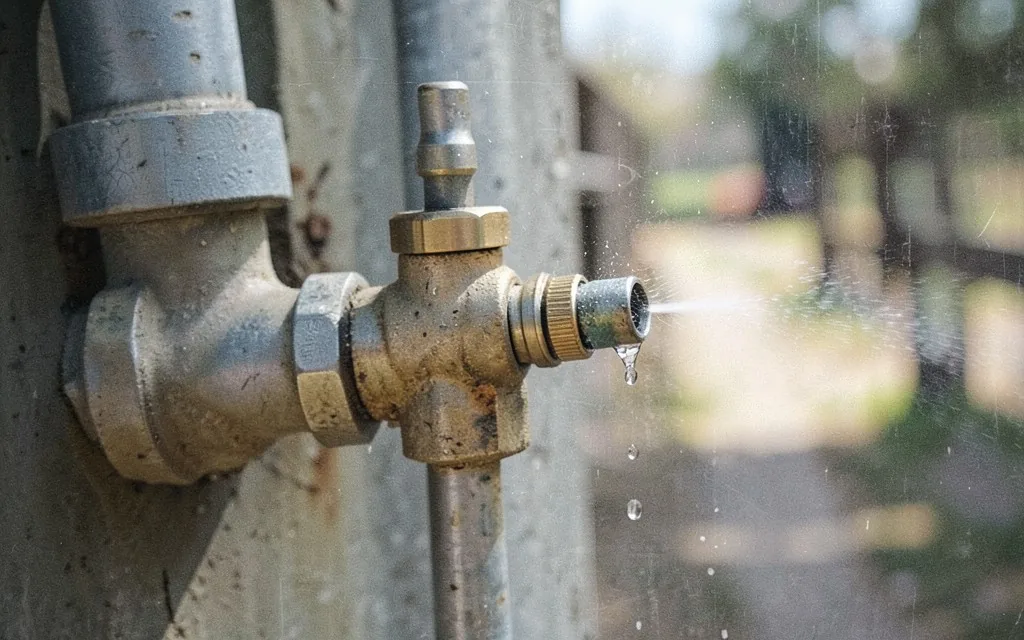
Valve, pressure regulator to about 25 psi, and a filter, so the emitters see the pressure they were designed for and no silt.
Line and emitters
Half-inch supply line, quarter-inch feeds, emitters sized to each plant: 1 gph for perennials, 2 gph for shrubs, rings for trees.
Bubblers and rings
Multi-outlet rings at the drip line of established trees; deep-root bubblers around oaks in lawn.
Controller
Drip on its own program: longer, less frequent cycles than turf, adjusted by season and, where fitted, by a smart controller.
Method
How a bed goes onto drip
The tubing is an afternoon. Sizing the emitters to the plants is the job.
- 01
Map the beds and plants
Each bed listed with its plants, sun and soil; trees measured to the drip line.
- 02
Split the zone
Spray heads capped or converted at the riser, the bed put on its own valve with regulator and filter.
- 03
Run line, place emitters
Supply line under the mulch, emitters at each plant sized to its need, rings around trees.
- 04
Flush and test
Line flushed, every emitter checked running, the flush valve set.
- 05
Program
Its own schedule on the controller, written down and left with you; seasonal changes noted.
Cost
What decides the number
Plant count matters more than bed size.
Landscape bed zones
Perennials, shrubs and ornamentals in a typical bed.
Tree and shrub zone
Rings and bubblers for established trees and large shrubs.
Sprinkler-to-drip conversion
Spray zone capped or converted at the risers, regulator and filter added.
Complete bed system, 2–4 zones
Every bed on the property on drip; vegetable garden zones.
A bed that was on the lawn spray uses about half the water on drip and loses the fungus problem with it.
On site
Recent drip work
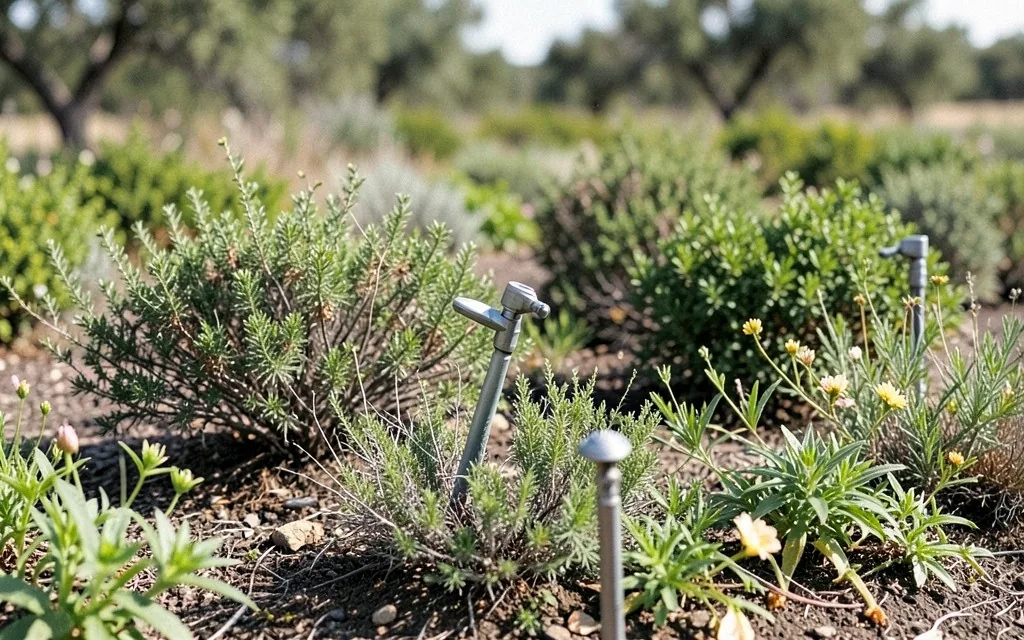
Adjustable emitters serving mixed shrub and perennial planting
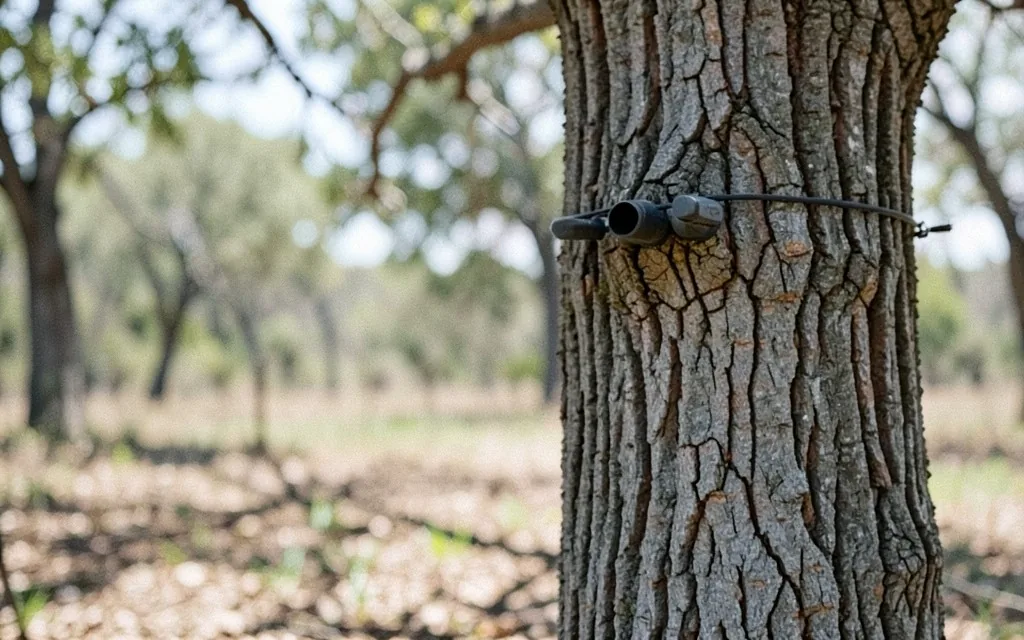
Multi-outlet emitter ring at the drip line of an established tree

Drip tubing along vegetable rows with emitters at plant spacing

Smart controller on a garage wall
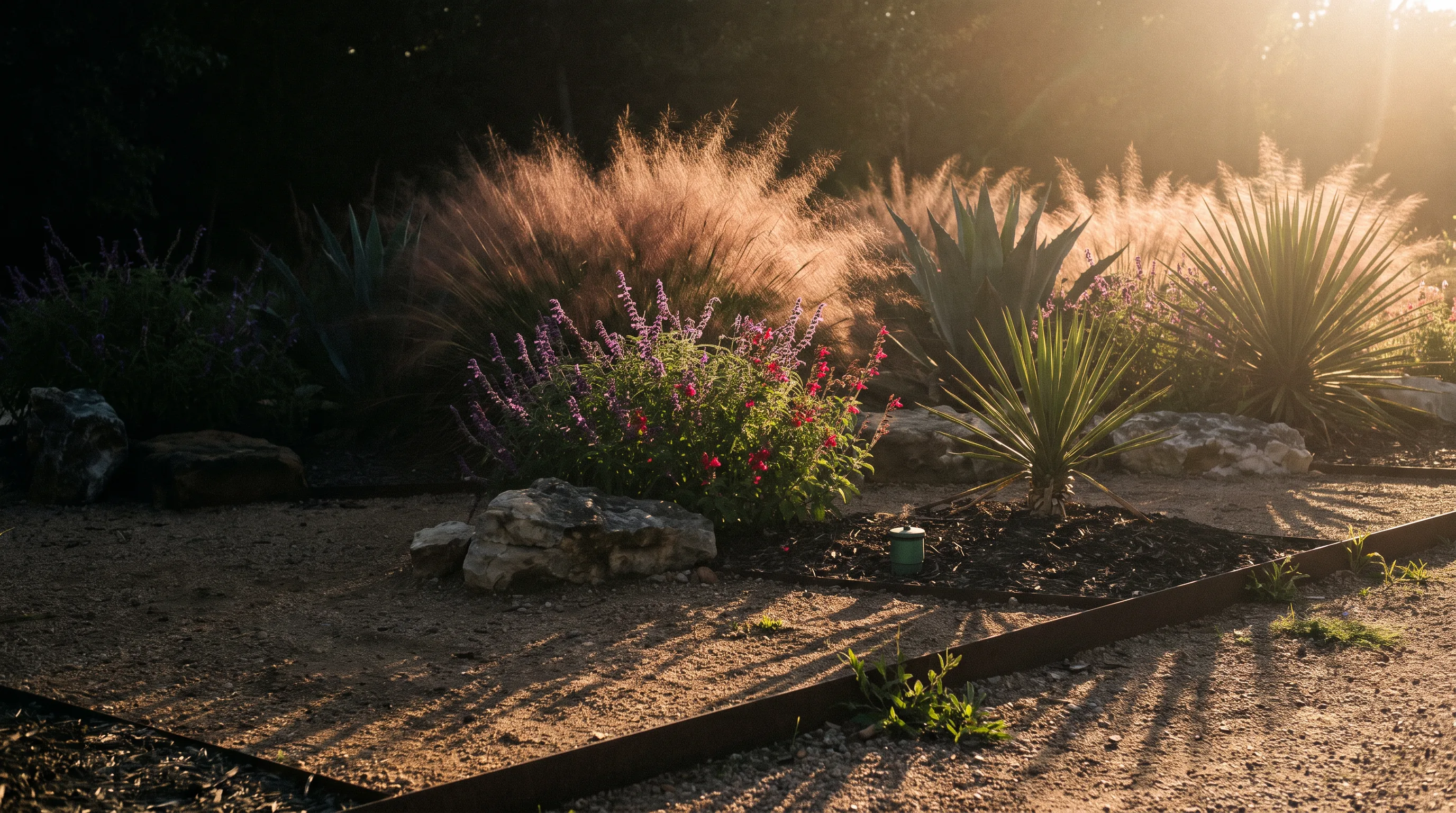
Native planting with muhly on drip beside granite paths
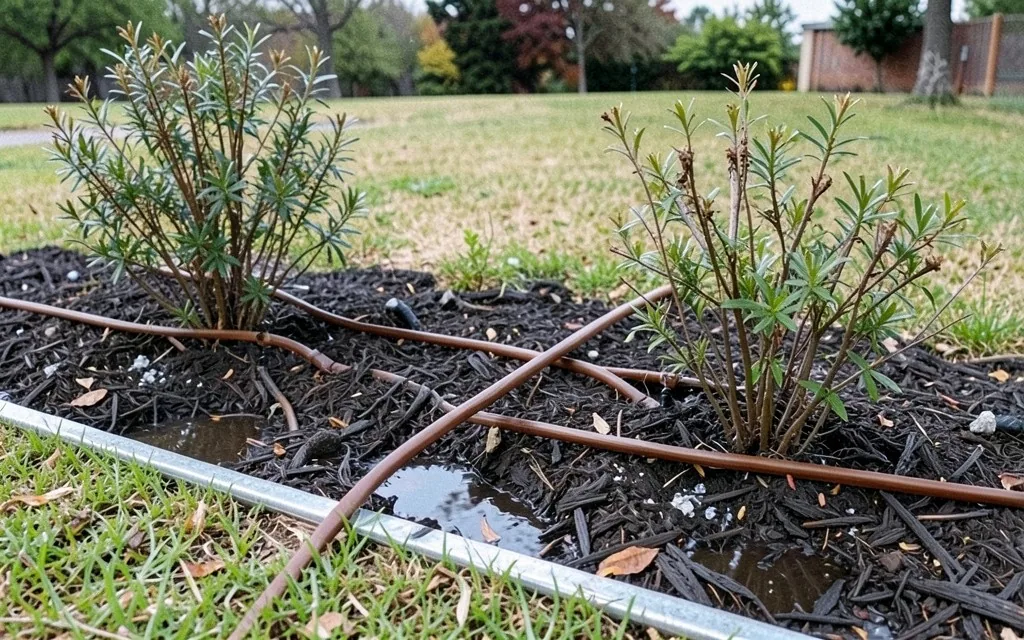
Drip zones running through an established bed
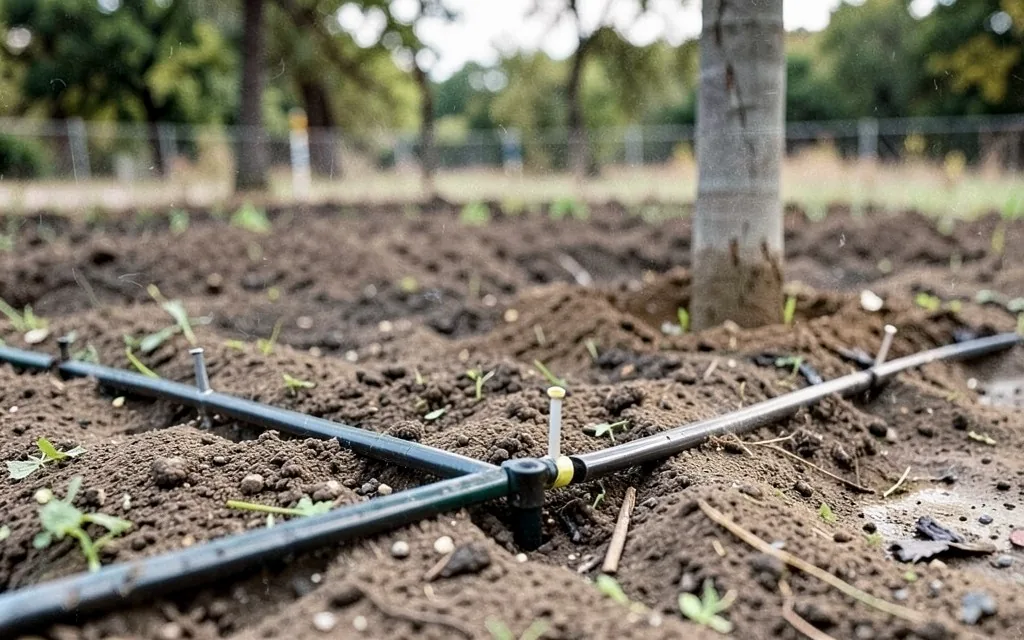
Foundation planting converted from spray to drip
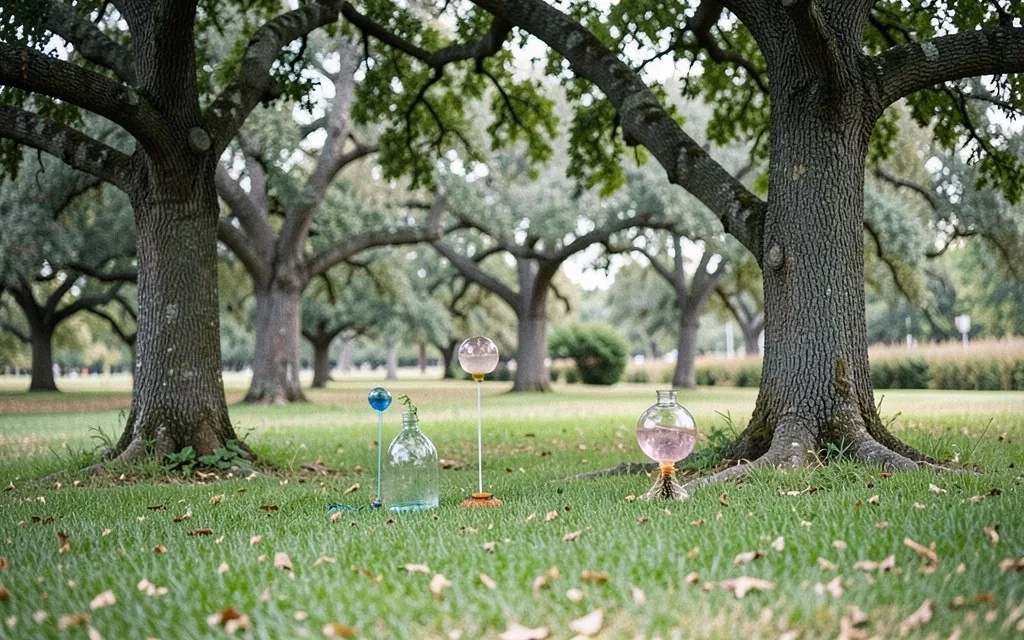
Deep-root bubblers around established oaks in a lawn
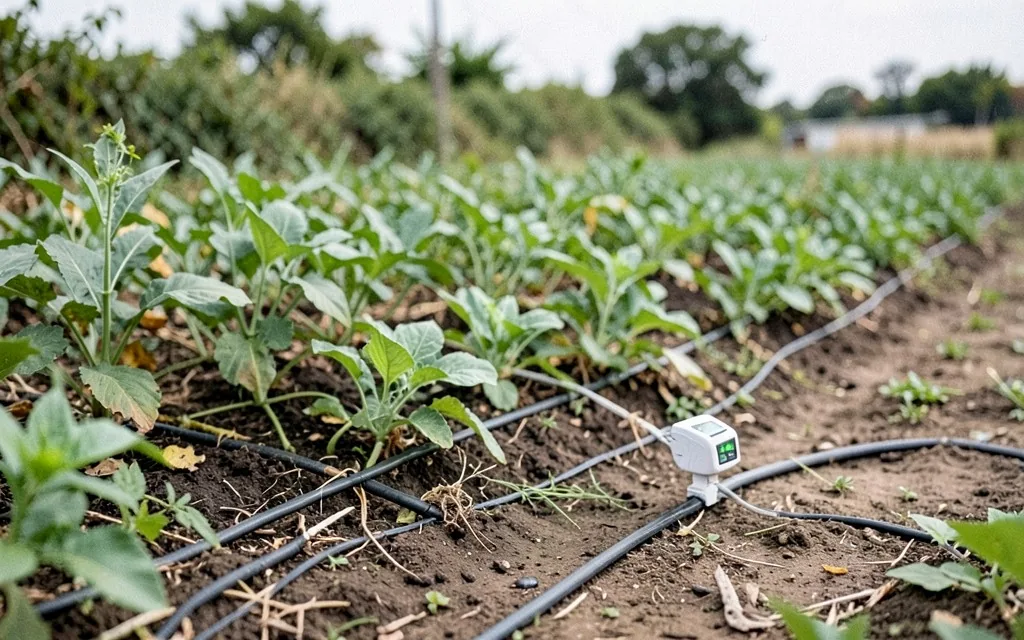
Vegetable garden on row drip with a smart controller
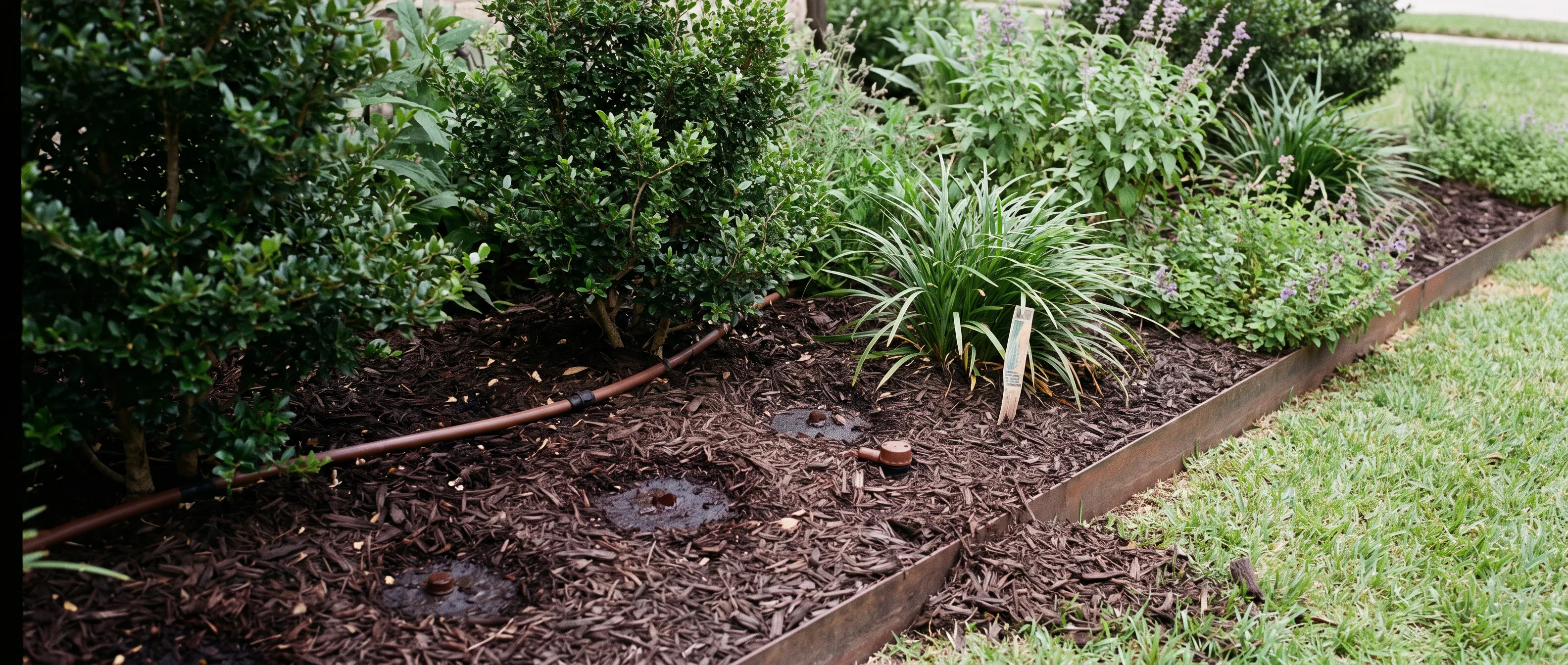
Mature bed on drip under mulch, wide view
Questions
Questions
What does drip irrigation cost in The Woodlands?
A bed zone a tree and shrub zone converting an existing spray zone per zone, and a complete bed system across two to four zones. Vegetable rows.
Can drip and spray share a zone?
No, and it is the commonest fault we find. Drip puts down a fraction of a spray head’s rate, so any run time that suits one starves or drowns the other. Drip gets its own valve, regulator and filter.
How long should a drip zone run?
Longer and less often than turf: typically 30 to 60 minutes two or three times a week in summer on clay, less in spring and fall. Emitters at 1 to 2 gallons an hour make a long cycle a slow soak, not a flood.
How do you water a big live oak?
At the drip line, not the trunk: a multi-outlet ring or deep-root bubblers out where the feeder roots are, run slowly so the water goes down rather than across.
Will the mulch hide it?
Yes. Line is pinned under the mulch and staked at turns; only the emitters and the flush valve are ever visible, and the edger never meets it.
Have the beds taken off the lawn spray
Pictures of the property help us prepare. The written price is given after we walk the property. Call (936) 206-7627 to schedule a visit.