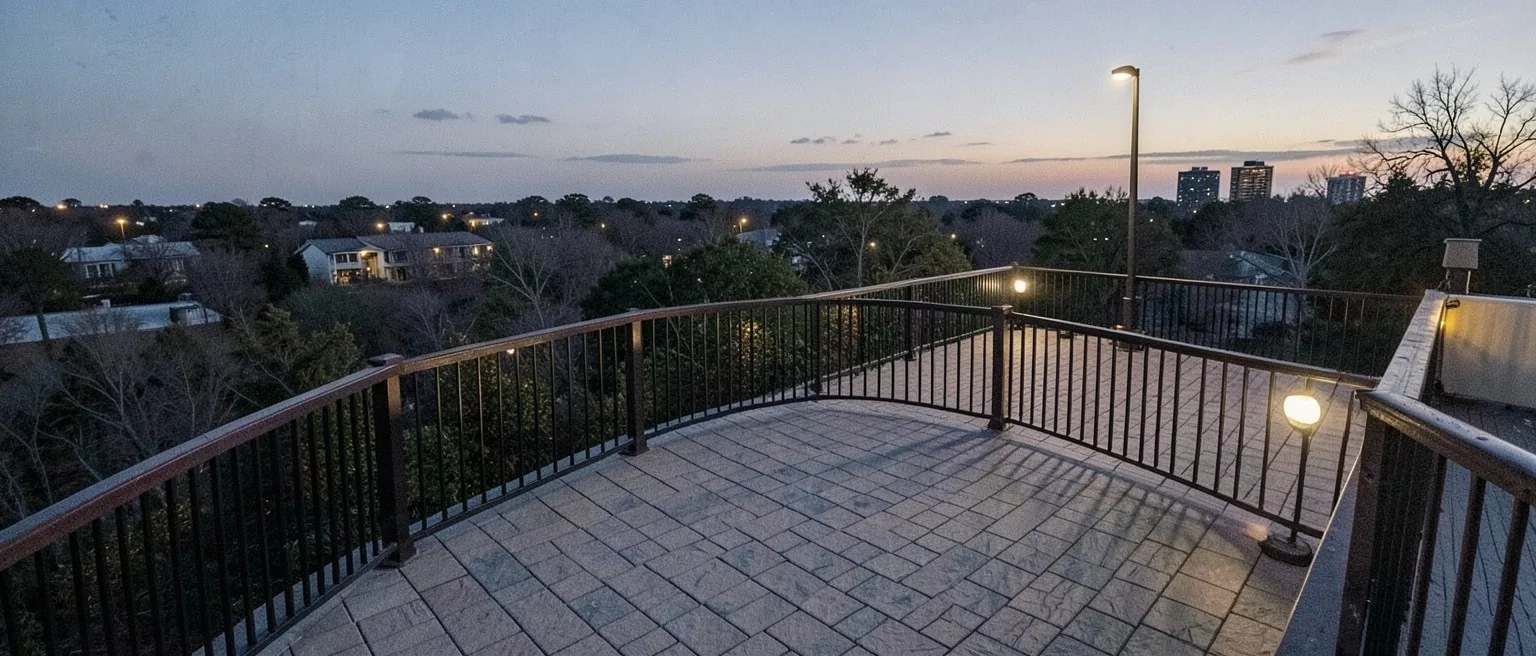

Patio Installation and Deck Builders in The Woodlands, TX
Paver terraces, composite and cedar decks across The Woodlands, Spring and Conroe — set out around furniture and sightlines rather than around whatever the yard allows.
The two decisions that make a patio installation or deck work are size and level. Most are built too small — a dining set needs roughly twelve feet of clear space once chairs are pulled out — and most are built flat when the ground is not. Boone's sets the footprint from the furniture that will stand on it, resolves the level change with steps or terracing rather than fill, and builds on the base specification Beaumont clay actually requires.
Whether that surface should be paved or decked is usually decided by the ground rather than by taste. What follows is how to choose between them, what each is built from, what they cost here, and how long they take.
What we build
Where does a paver terrace belong instead of a raised deck?
A paver terrace belongs where the ground sits close to level with the door; a raised deck belongs where it falls away. Most properties end up with a combination of both, and building them together shares the excavation and the footings.
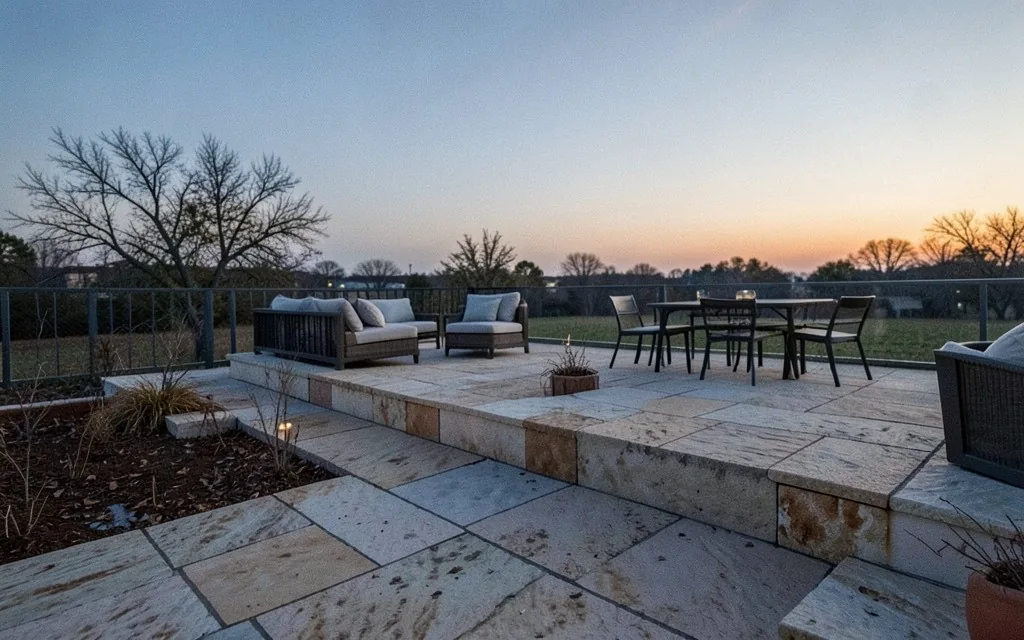
Paver terraces at grade
The default where the ground is close to level with the door. A paver installation on a compacted crushed-concrete base with a proper edge restraint, individually repairable in a way no poured or decked surface is.
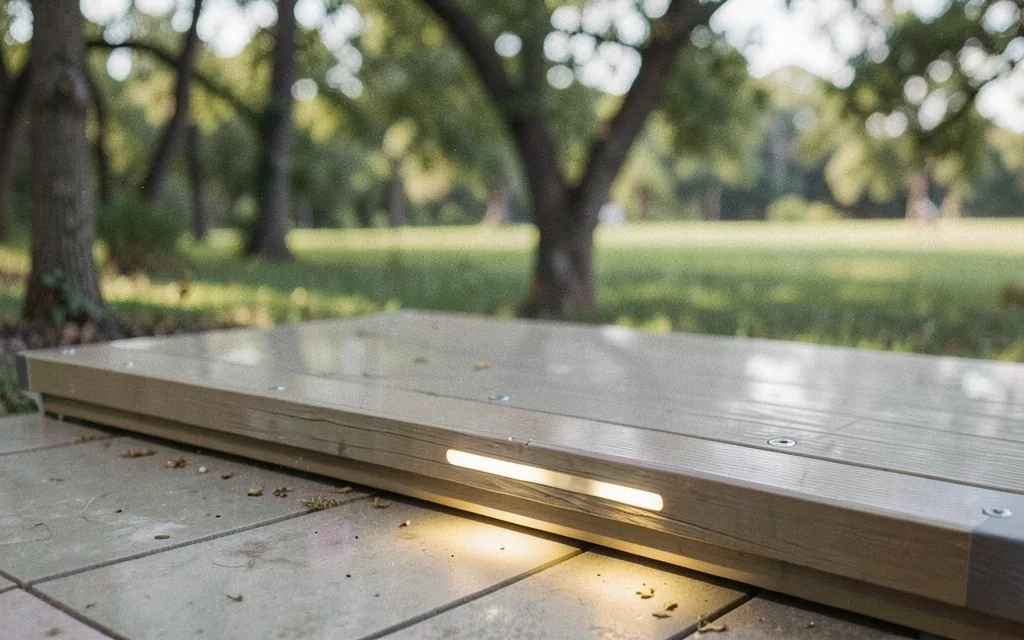
Raised composite decks
Where the ground falls away or the door sits well above grade. Composite boards over a treated or steel frame, with hidden fasteners so there is no screw pattern to look at and nothing to back out over the years.
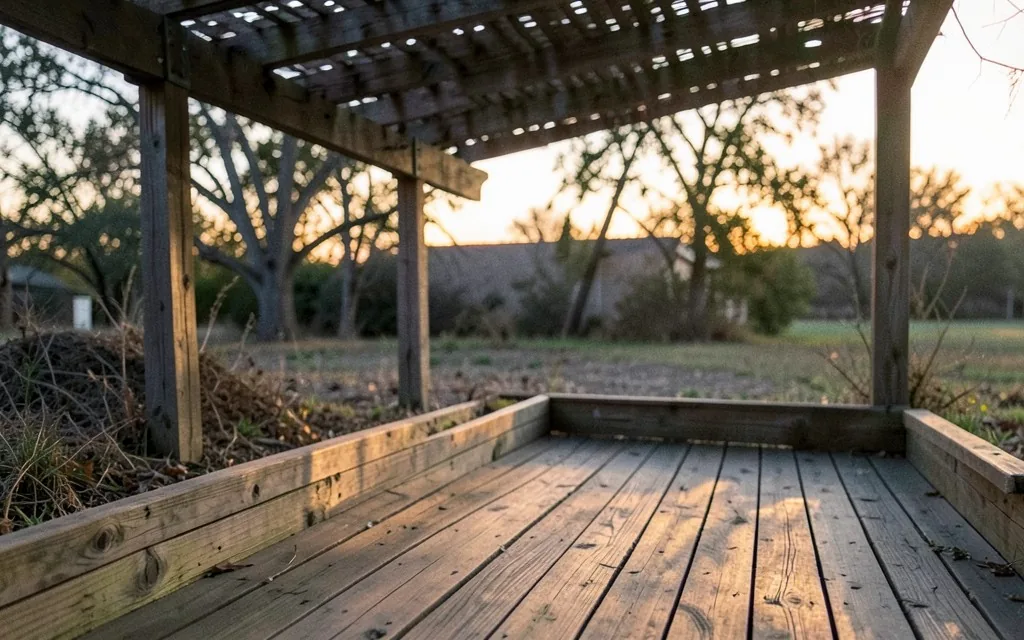
Cedar and hardwood decks
Where the material itself is the point. Cedar moves less than pine and takes the humidity better, but it is a maintenance commitment — it wants cleaning and re-oiling on a cycle, and we say so before you choose it.
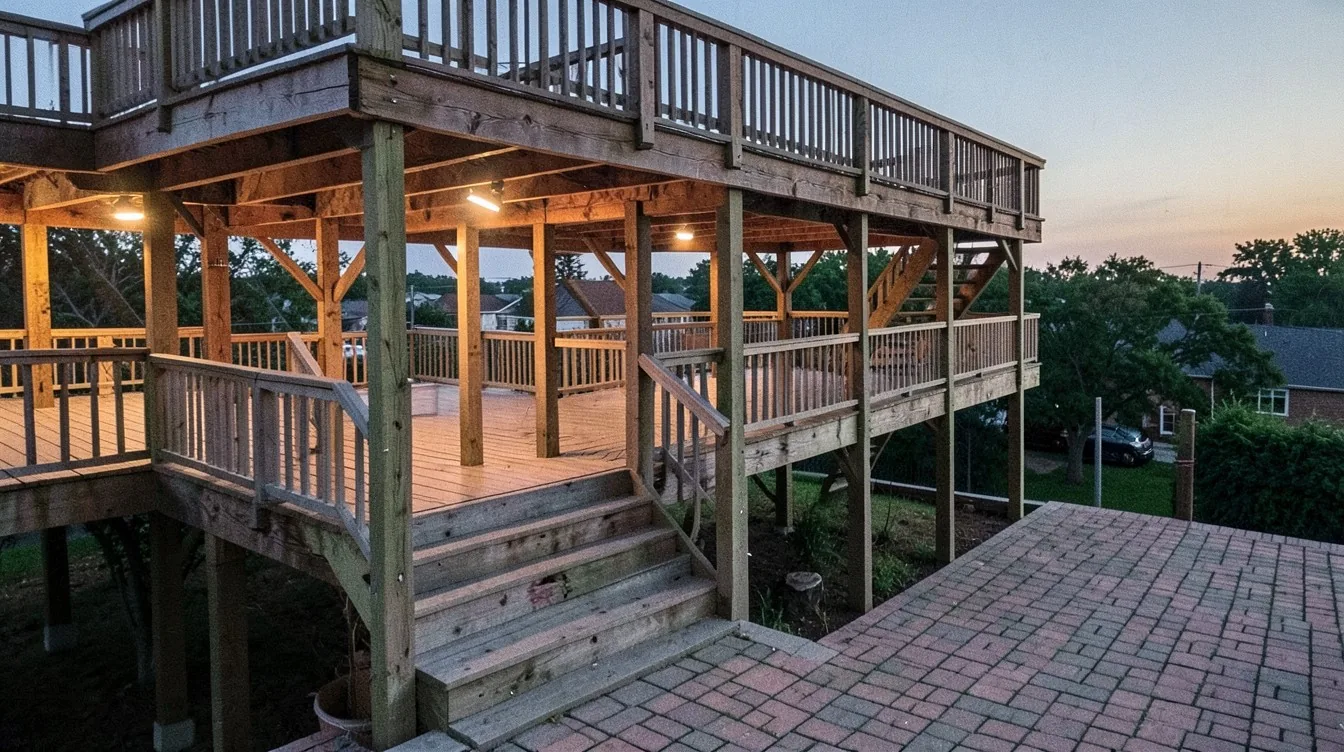
Multi-level terracing
A change in level handled as two or three defined outdoor rooms rather than one awkward slope. Usually cheaper than importing fill to fake a flat yard, and considerably better to be in.
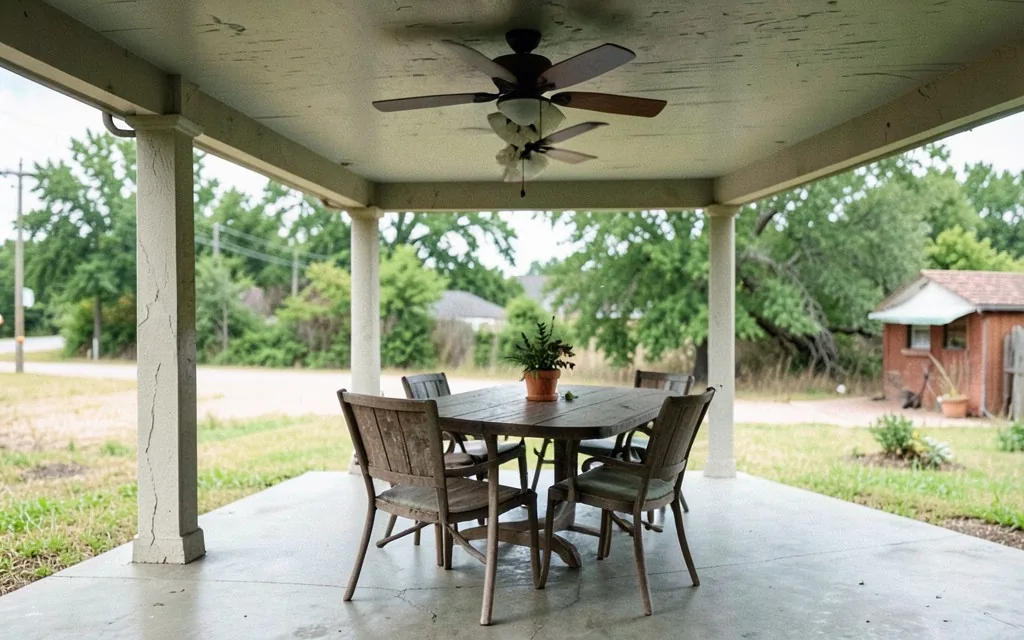
Covered patios and pavilions
Roofed structure over part of the terrace, which in Montgomery County is what makes the space usable in August as well as in October. Wired at build time for fans and lighting.
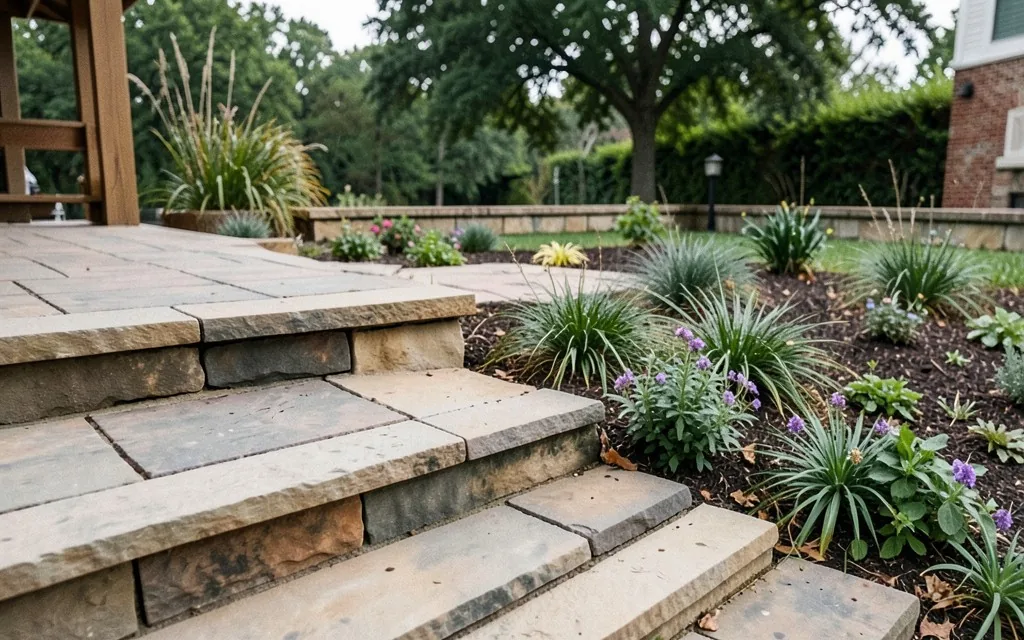
Steps, edges and transitions
Consistent riser heights, generous treads, and a proper transition where paving meets deck or lawn. The detail nobody photographs and everybody notices underfoot.
Local conditions
Why do patios and decks disappoint?
Four reasons, and only one of them is about the material an installation ends up using.
Built too small
CauseA footprint drawn to the drawing rather than to the furniture. A six-seat table needs about twelve feet clear once chairs are pulled back, and most patios are built at ten.
FixWe lay the furniture out on the ground with tape before anything is dug, so the size is decided by standing in it rather than by looking at a plan.
A sand-only base under paving
CauseSand is a bedding layer, not a base. Over Beaumont clay it migrates under load and washes out at the edges, so the field separates and dips within a few years.
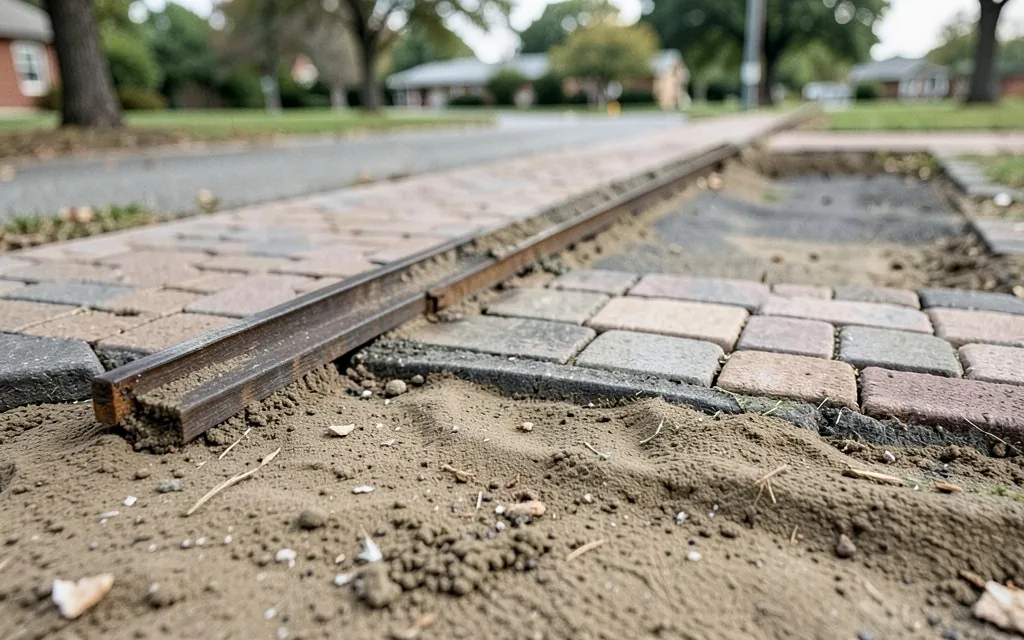
FixSix inches of compacted crushed concrete in lifts, a thin screeded bedding course, and a mechanical edge restraint spiked into the base rather than bedded into soil.
Deck framing set for a dry climate
CauseStandard joist spacing and unprotected framing tops fail early in Gulf humidity. Water sits on the joist under the board and rots it from above, invisibly.
FixTighter joist spacing for composite, joist tape over every framing top, and ground clearance and ventilation designed so the underside can actually dry out.
Level faked with fill
CauseImporting soil to flatten a slope puts uncompacted fill under a surface that then settles unevenly, and often pushes water towards the house in the process.
FixTerrace the change with a wall or steps and keep the fall running away from the slab. Two defined levels beat one settling flat surface every time.
Specification
Should you choose paving or decking?
It depends on the ground and the maintenance you want to take on. Five options below, with the honest case for each, including what it costs to live with afterward.
Concrete pavers
The most cost-effective durable surface at grade, and individually replaceable. Through-body color on the ranges we specify, so a chipped unit does not reveal a pale core. Effectively no maintenance beyond occasional joint sand.
Travertine and natural stone
Cooler underfoot than concrete in August, which is not a small thing here, and the reason it dominates pool surrounds. Costs more in labor than material because irregular stone is slower to fit. Wants sealing on a cycle.
Composite decking
Capped composite over a treated or steel frame with hidden fasteners. No sealing, no splinters, twenty-five-year boards, and it does not silver off like timber. The higher up-front cost is recovered in maintenance you never do.
Cedar
Warmer and more forgiving than composite and genuinely beautiful when kept up. It is a commitment: cleaning and re-oiling on a cycle, or accepting that it will weather to gray. We are clear about that before it is specified.
Poured concrete
Cheapest on day one and the least suited to this soil. Shrink-swell cracks it along a line you cannot control and cannot repair invisibly. We will pour it where it genuinely suits the job, and say so where it does not.
How it runs
What decides the footprint before anything is drawn?
The furniture does. The footprint is set by walking the ground with the table and seating in place, not by scaling a plan.
- 01
Site walk and furniture layout
We mark the footprint on the ground with the actual table and seating positions, and check sightlines and afternoon sun before agreeing anything.
- 02
Scaled design and material selection
The finished space rendered with the real paver, stone or board chosen, so the level changes and the transitions are resolved on screen rather than on site.
- 03
ARC or HOA submission
Permanent hardscape and any raised structure need architectural approval in most Montgomery County communities. We submit in the format the DSC and local ARCs expect.
- 04
Excavation, base or footings
Six inches of compacted crushed concrete for paving, or footings dug below the active clay zone for a deck. This is the installation stage that determines whether it is still level in year ten.
- 05
Laying or framing
Pavers laid off string lines and cut on a wet saw at the perimeter, or a frame set with joist tape and tight spacing, then boards fixed with hidden fasteners.
- 06
Edges, jointing and walkthrough
Edge restraint, polymeric sand and a compaction pass, or fascia and step detailing. We finish with a walkthrough, hand over the care schedule, and put what our workmanship covers down on paper before we leave.
What it costs
What does patio or deck installation cost in The Woodlands?
Installed ranges for Montgomery County. Surface area is the obvious driver; access and level change are the two that surprise people.
Poured concrete patio $15 – $25 / sq ft
Cheapest per square foot and the least suited to shrink-swell clay. Included here because it is a real option on the right site, not because we recommend it as a default.
Concrete paver patio $18 – $30 / sq ft
Installed on a full compacted base with edge restraint and polymeric jointing. The best value durable surface at grade for most properties here.
Natural stone or travertine $25 – $40 / sq ft
Same base specification, more labor. Irregular flagstone and cut travertine coping add fitting time rather than material cost.
Composite decking $30 – $50 / sq ft
Frame, boards, hidden fasteners and fascia. Height above grade drives the frame cost, so a deck a few steps up costs considerably less per foot than one a full story up.
Cedar and hardwood decking $45 – $70 / sq ft
Material and labor both higher, plus an ongoing maintenance cycle. Specified where the look of real timber is genuinely the point.
Typical project range $7,200 – $20,000
Most single patio or deck projects in Montgomery County land inside this band once base, edges, steps and reinstatement are counted.
Rates reviewed 2026-09-03. Every project is priced in writing after a site visit; these bands are what recent work has landed in, not a quote.
Recent work
Recent decks and patios
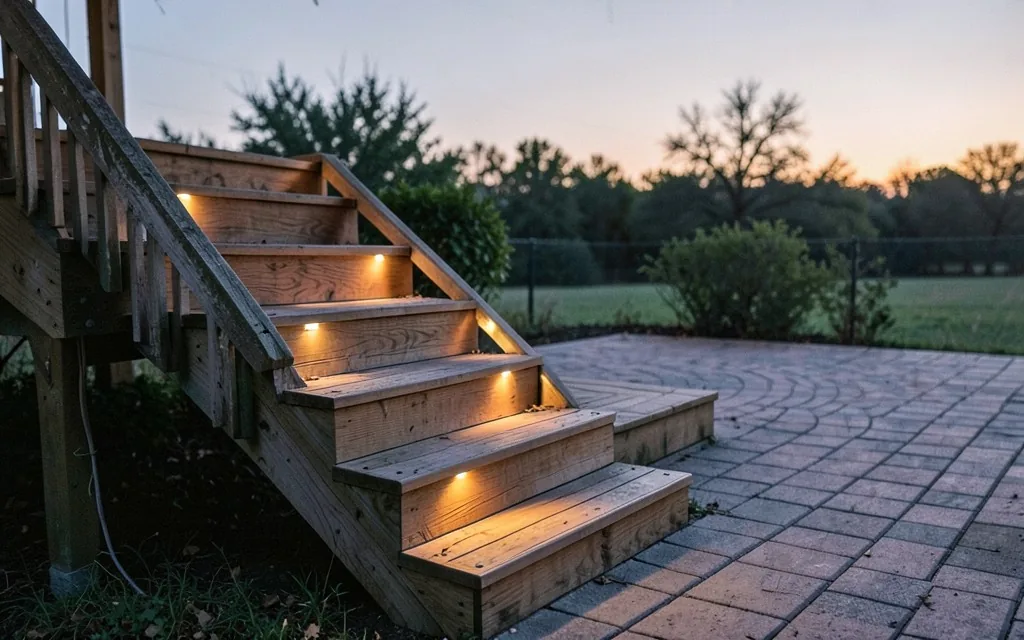
The Woodlands
A multi-level composite deck stepping down to a paver terrace, resolving a two-foot fall as two rooms rather than one imported flat plane.
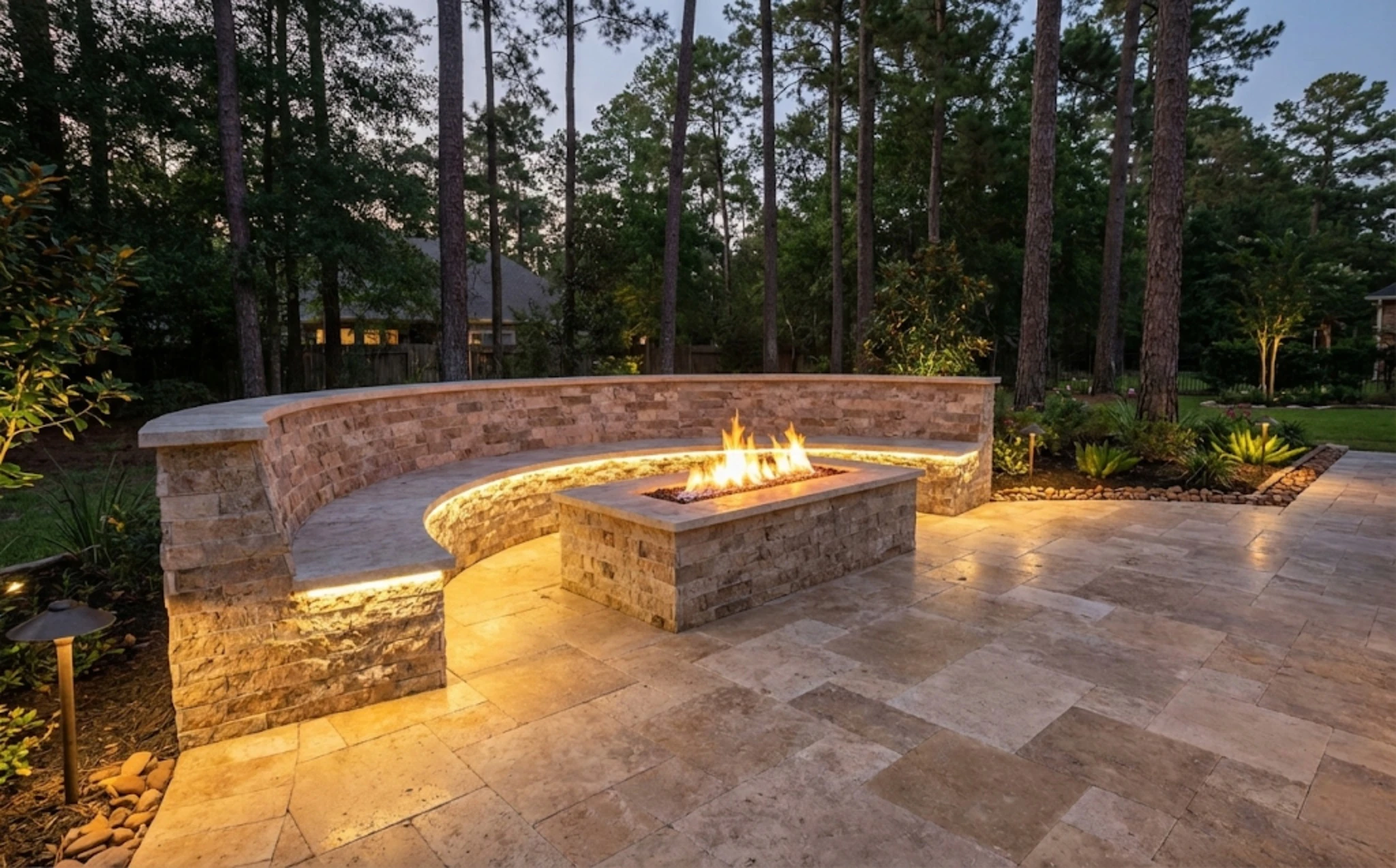
Conroe
Travertine pool deck laid with fall away from the coping, chosen mainly because it stays cool enough for bare feet in August.
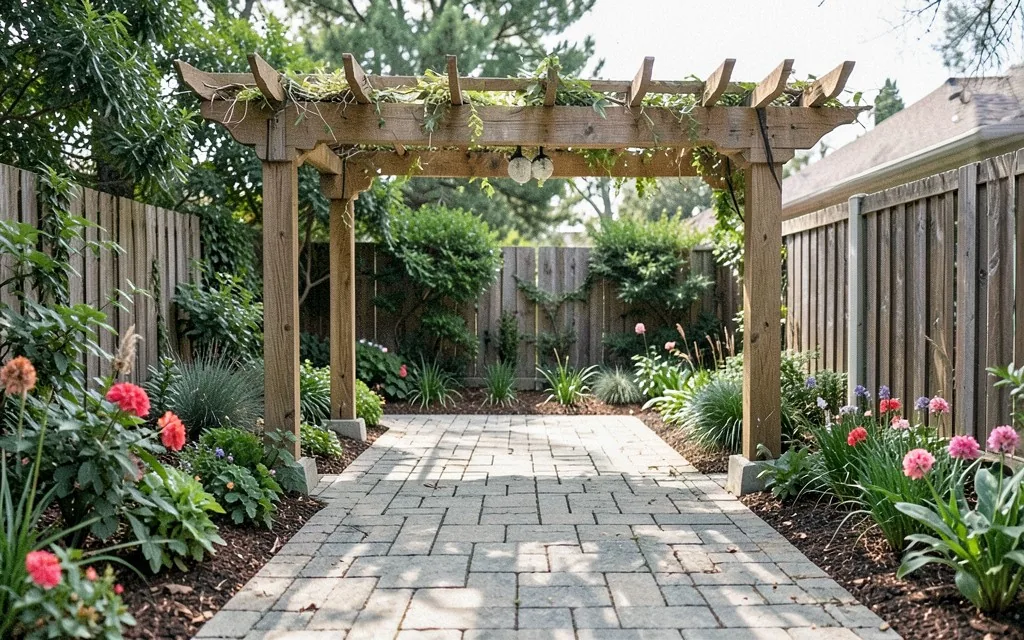
Magnolia
A compact paver terrace on a small lot, sized around the furniture first so the space still worked with six people in it.
Why homeowners choose us
What sets our patios and decks apart
- 01
Sized from the furniture
Marked out on the ground with the real table before anything is dug. It is the cheapest way to avoid the most common regret.
- 02
One standard, whichever surface you pick
Paver installation gets six inches of compacted crushed concrete underneath; deck installation gets footings below the active clay zone and joist tape over every framing top. Neither is the line we cut to compete on price.
- 03
Framing built for humidity
Joist tape, tighter spacing and real ventilation under the boards, because decks here rot from the top of the joist down.
- 04
Level changes terraced, not filled
Steps and walls instead of imported fill, which settles unevenly and often pushes water back towards the house.
- 05
Honest material advice
We will tell you cedar is a commitment and that concrete cracks on this soil. You should hear that before you choose, not after.
- 06
Workmanship guarantee
A settled paver field or a deck fastening that failed because of how we installed it gets fixed at our cost. Board and paver movement from drought, storm or ordinary weather is not covered — we quote a maintenance plan for that separately, in writing, before the installation begins.
Questions
Decks and patios in Montgomery County — frequently asked
How much does a patio cost in The Woodlands?
Poured concrete runs $15–$25 per square foot, concrete pavers $18–$30, and natural stone or travertine $25–$40. Decking is higher: composite is $30–$50 per square foot and cedar or hardwood $45–$70. Most single projects land between $7,200 and $20,000 once the base, edges, steps and reinstatement are included. Access and level change move the number more than area alone.
Is a wood deck or composite better here?
Composite, for most people in this climate. Gulf humidity and direct sun are hard on timber, and a cedar deck needs cleaning and re-oiling on a cycle to stay looking the way it did at handover. Composite costs more up front, has no maintenance beyond washing, and does not splinter or silver. Cedar is the right answer when the material itself is what you want, and we will build it — but you should choose it knowing the commitment.
How long does patio installation take?
A straightforward paver patio is three to seven working days on site. A deck is typically one to two weeks depending on height and framing complexity, and a multi-level project combining both runs two to four weeks. Design and ARC approval happen first and add two to six weeks depending on the committee calendar.
Do I need a permit for a patio or deck?
A patio at grade usually does not need a building permit, but a raised deck generally does, and almost everything needs ARC or HOA approval in Montgomery County communities. We prepare the architectural submission with dimensioned drawings and material specifications and handle the permitted work, because committees and inspectors both reject on missing detail more often than on design.
How big should a patio be?
Larger than most people first draw. A six-seat dining set needs roughly twelve by twelve feet of clear space once chairs are pulled back, and a separate lounge zone needs about the same again. If you want both on one terrace you are looking at 24 feet in one dimension. We mark it out on the ground so you can stand in it before committing.
Can you build over an existing concrete patio?
Sometimes, and it can save the demolition cost. An overlay of thin pavers or a floating deck frame over sound concrete works well. What we will not do is overlay a slab that is already cracked and moving, because the movement comes straight through — in that case removing it is the cheaper answer over ten years.
What maintenance does each surface need?
Pavers want joint sand topped up every few years and an occasional wash. Natural stone and travertine want sealing on a cycle. Composite decking needs washing and nothing else. Cedar needs cleaning and re-oiling annually or biannually to hold its color. Poured concrete needs crack repair, which is the maintenance nobody budgets for.
Will a patio damage my trees?
It can if it is laid straight over a root plate. Mature loblolly pines are why people buy on these lots, and excavating six inches across their surface roots will eventually cost the tree. We survey root zones first and design around them — stepping a terrace, floating a section, or moving the footprint — rather than cutting roots to hold a line on a drawing.
Can a patio be built on a slope?
Yes, and terracing is usually better than flattening. Two or three defined levels connected by steps read as separate outdoor rooms and cost less than importing and compacting enough fill to fake one flat plane. Fill also settles and often redirects water towards the house, which is a problem you do not want to have bought.
What does your patio and deck installation warranty actually cover?
On paving it covers settlement, joint failure, edge movement and drainage performance — anything that traces back to how the base and installation were done. On a deck it covers the frame, the fixings and the board installation itself. What it does not cover is storm damage, drought and ordinary weathering, which we price as a separate maintenance plan if you want one, written into the estimate up front rather than argued about later. Boards and pavers also carry their own manufacturer warranties, which we register for you at handover.
Where we work
How far from Montgomery County will you build a patio or deck?
Across North Houston into Harris and Walker County, with Montgomery County as the core service area. Access for a machine and materials is the first thing we assess, because on a tight lot it changes the cost more than the design does.
Often specified alongside: hardscaping, retaining walls, stairs and walkways, outdoor kitchens and fire pits, landscape lighting, pool surrounds.