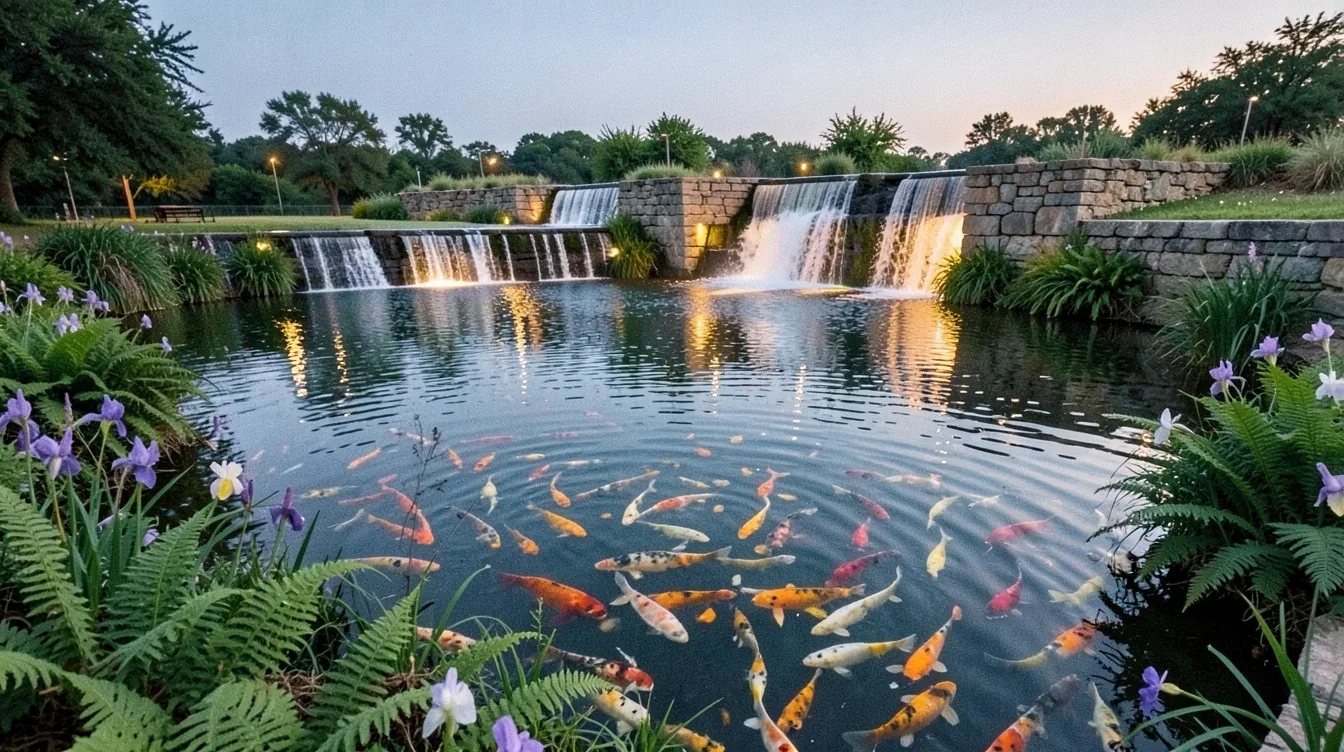

Water Features in The Woodlands, TX: Ponds and Fountains
Ponds, streams, cascades and formal fountains across Montgomery County — filtration sized to the volume, liners detailed properly, and the pump doing less work than you would expect.
A water feature stays clear because of biology and volume, not because of chemicals or a bigger pump. The filtration has to be sized to the actual water volume and the fish load, the liner has to be detailed so the edge never shows, and the circulation has to turn the whole body of water over rather than stirring one end of it. Boone's designs to those three numbers first and chooses the rock afterwards.
That is why two ponds of the same size can behave completely differently. What follows is what we build, how the specification is set, what it costs in Montgomery County, and what it actually takes to look after.
What we build
Which kind of water feature actually suits your yard?
They differ far more in maintenance than in cost. Choosing between them is really a decision about how much attention you want to give it.
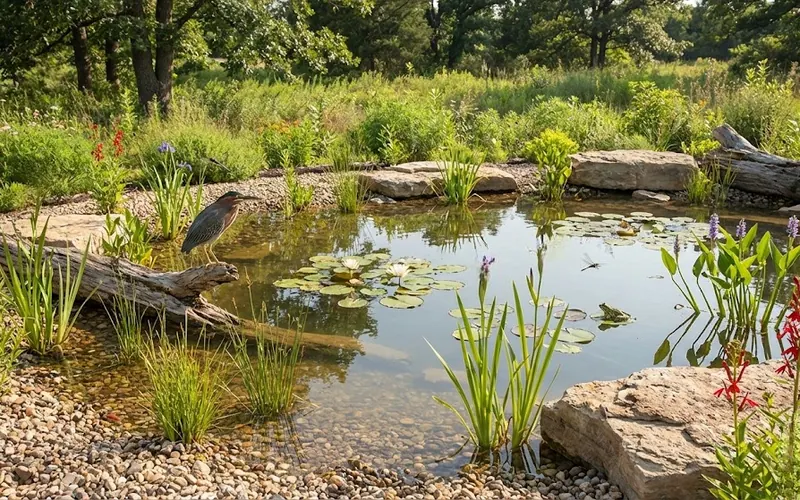
Koi ponds
A stocked pond is a closed ecosystem and needs to be built as one: adequate depth for the fish to overwinter and escape summer heat, generous biological filtration, and shade from the afternoon sun. The most rewarding of all water features to own and the most demanding to specify.
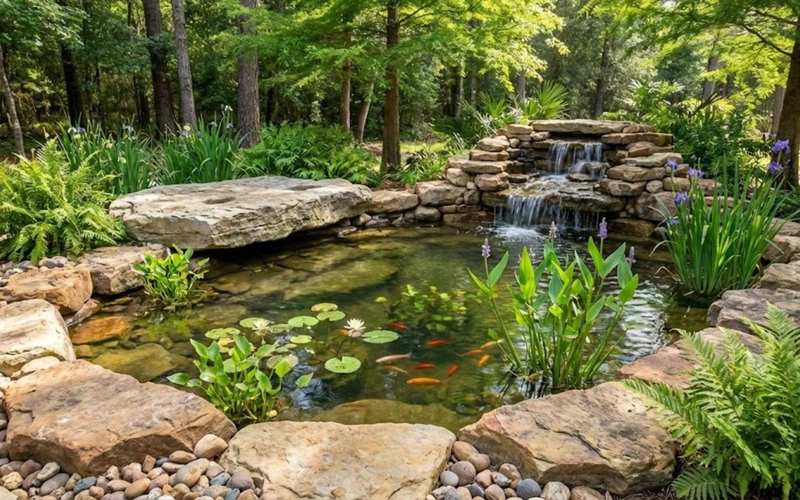
Waterfalls and cascades
Sited so the sound reaches the seating area rather than the neighbor, and built with the weir set level so the sheet does not break into a trickle at one end. Rock placement is the visible craft; the concealed liner detail is the part that decides whether it looks natural.
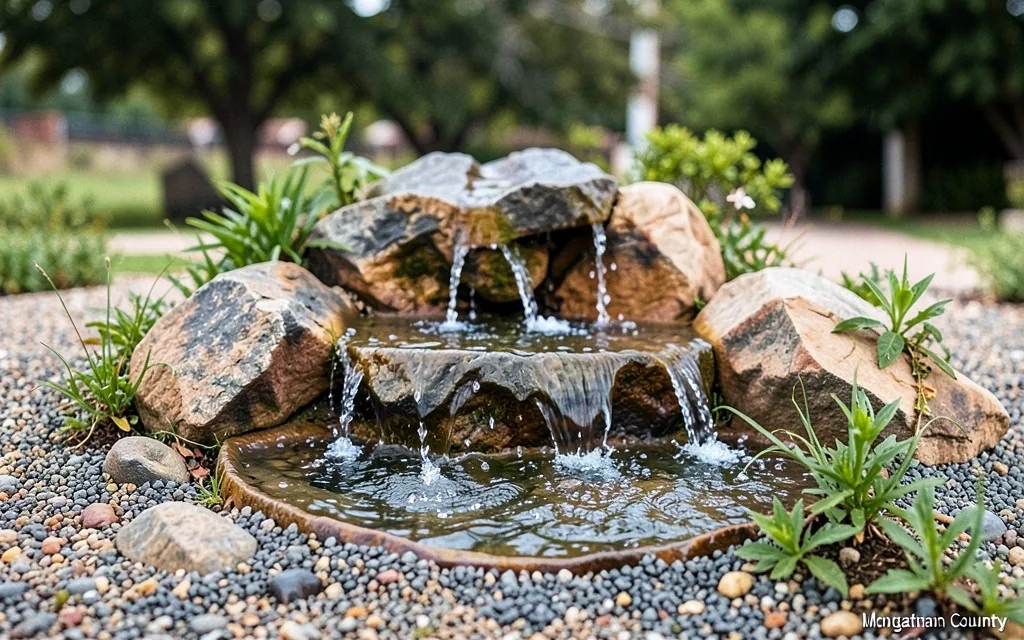
Pondless water features
A waterfall or bubbling stone with the reservoir buried in gravel beneath it. No standing water, no fish, no netting — the lowest-maintenance way to have moving water and the sensible choice with young children.
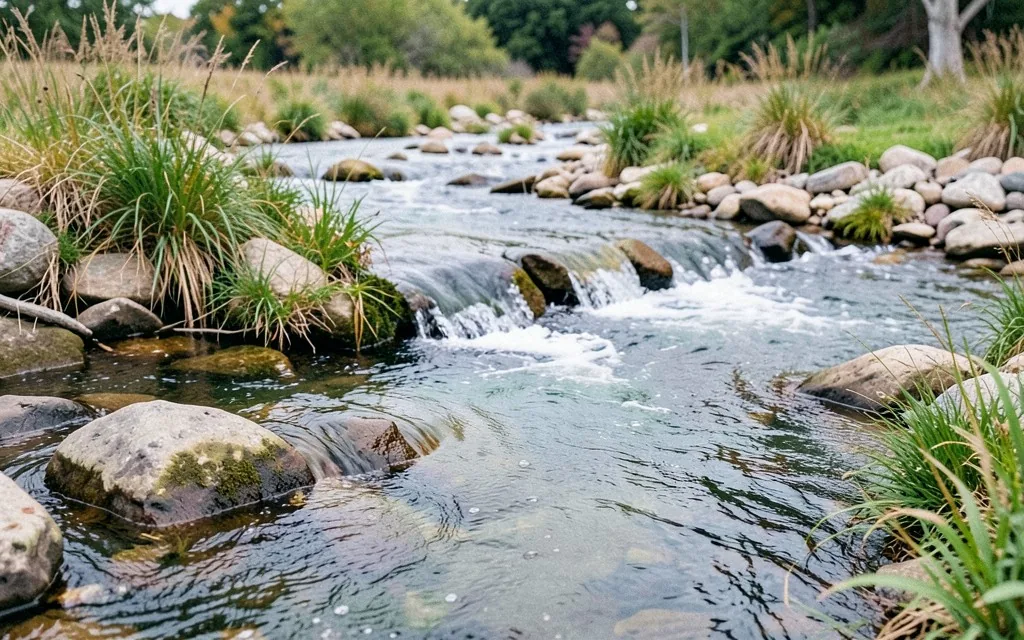
Streams and dry creek beds
A recirculating stream reads as landscape rather than as an object, and a dry creek bed does the same job visually while actually carrying stormwater. On a wet site the second is often the better answer.
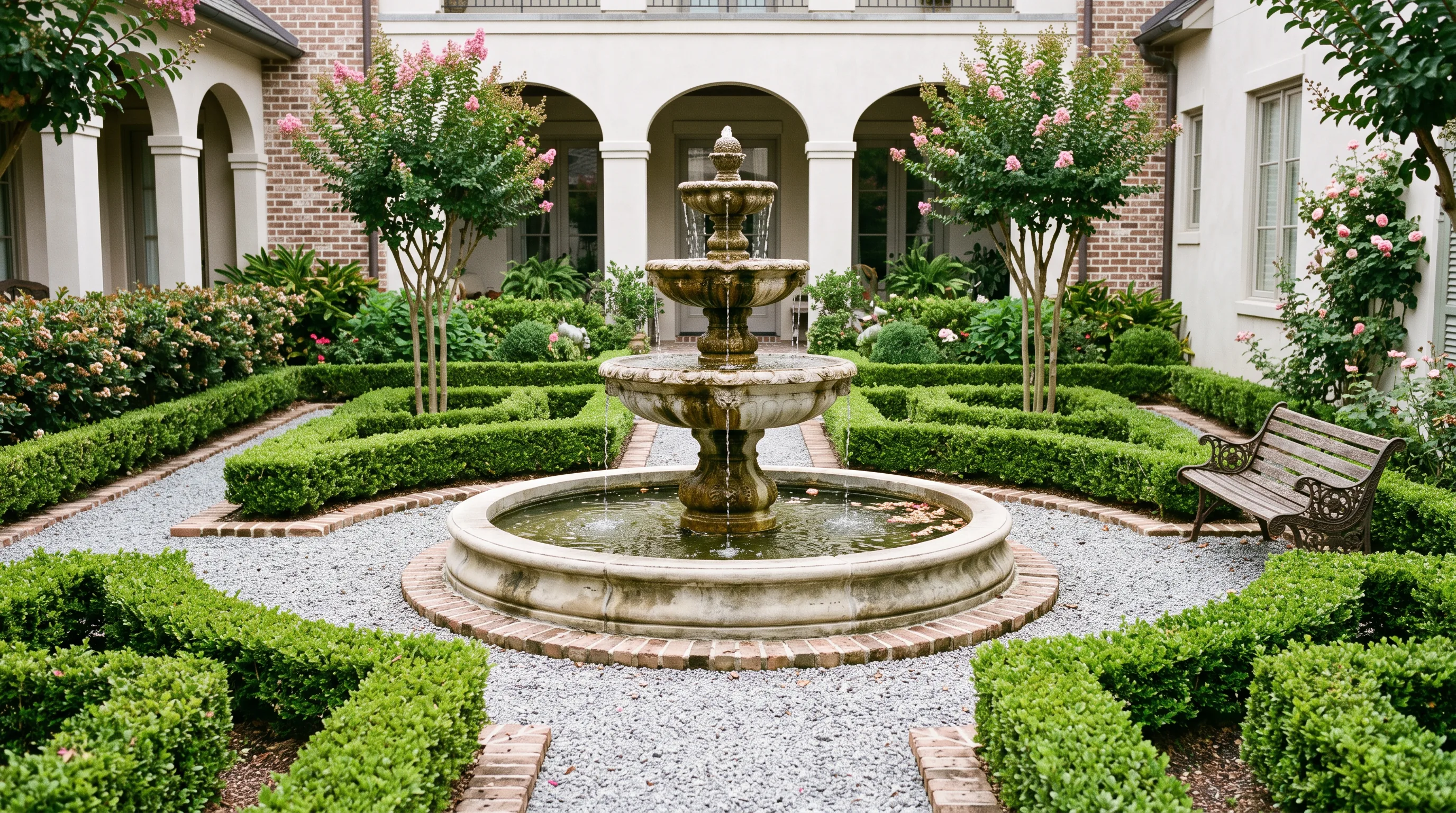
Formal fountains
Tiered stone or contemporary basins for courtyards and entrances, where the geometry is the point. Simpler hydraulically than a pond, and the maintenance is water treatment rather than ecosystem management.
Local conditions
Why does the water turn green?
Four causes, and only one of them is about how much sun the feature gets.
Filtration sized to the pump, not the pond
CauseA filter chosen to match a pump rather than the water volume and fish load. It moves plenty of water and processes very little of it, so nitrate climbs and algae follows.
FixWe size biological filtration to volume and stocking density first, then choose a pump that turns the whole body over roughly once an hour. The pump ends up smaller and the water stays clearer.
Too little depth for a Texas summer
CauseA shallow pond heats through in August, which drops dissolved oxygen exactly when the fish need it most and gives algae ideal conditions.
FixAdequate depth for a thermal refuge, shade from planting or structure over part of the surface, and aeration that runs through the hottest months.
Nutrient running in from the yard
CauseLawn fertilizer and bed runoff entering the pond is direct algae feed. The feature is downhill of the problem and nothing in the water treatment can outpace it.
FixGrade the surrounds so runoff goes around the feature rather than into it, and plant marginals that take nutrient out of the water column as a working part of the system.
A liner edge that shows
CauseLiner brought up behind a single line of rock, which sun degrades and water eventually finds. It is the most common reason a pond looks built rather than found.
FixLiner carried well above water level, mechanically held, and concealed with a proper stone return and planting pocket so nothing synthetic is visible from any angle.
Specification
What does the specification actually turn on?
Four decisions made at design stage decide how these water features behave for the next twenty years.
Liner and underlayment
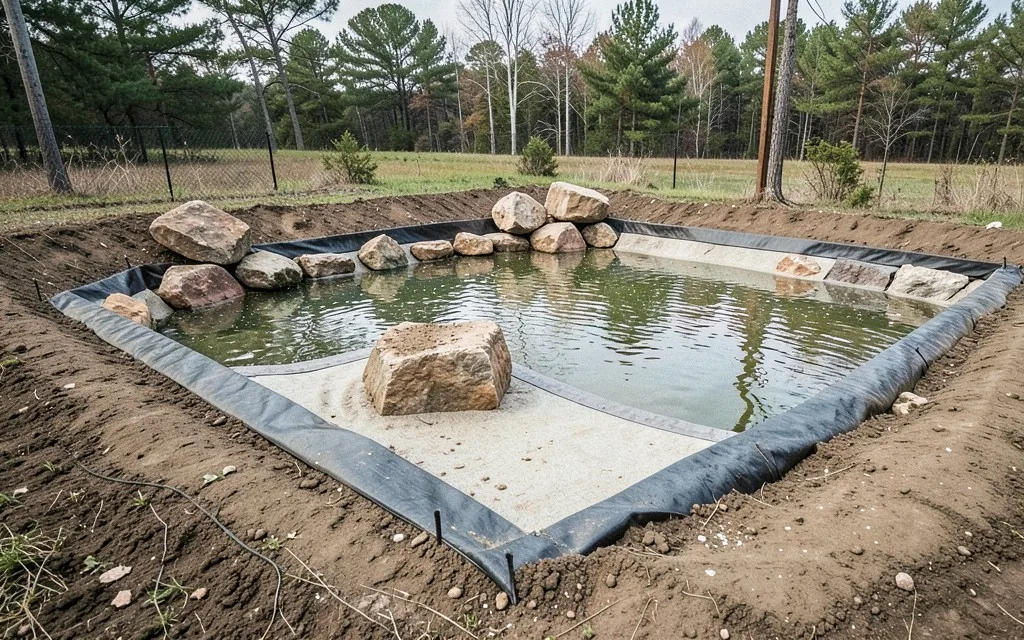
45-mil EPDM over a heavy underlayment, in as few pieces as the shape allows. Seams are the failure point, so the design minimizes them rather than the installation patching them. Boulders always sit on protected liner, never directly on it.
Biological filtration
A skimmer to take surface debris out before it sinks, and a biofalls or bead filter carrying enough media surface area for the stocking level. This is the component people under-buy and then spend years compensating for chemically.
Pumps and circulation
External or submersible depending on access and noise tolerance, sized to turn the volume over about once an hour. Correctly sized, a pond pump is one of the cheaper things on the property to run continuously.
Stone and planting
Native boulders set two-thirds buried so they read as landform rather than decoration, and marginal planting that both conceals the edge and pulls nutrient out of the water. The planting is functional, not just cosmetic.
How it runs
How a pond gets built
Excavation is a day. The design decisions taken before it are what you live with.
- 01
Siting and sound
Where it will be seen from, where it will be heard from, and how far the power run is. The best water features are chosen for where they will be heard as much as where they will be seen — a waterfall reaching the terrace is worth more than one seen from the far fence.
- 02
Volume, stocking and filtration sizing
We set the water volume, decide the fish load, and size the biology to that. Everything mechanical follows from these numbers rather than the other way round.
- 03
Scaled design and rock selection
The finished feature is rendered before we dig, with the boulder character and planting chosen, so the result is not a surprise once the machine has left.
- 04
Excavation, liner and plumbing
Shelves cut for marginals and depth cut for the fish, underlayment and liner set in minimal pieces, plumbing run and pressure-tested before a single rock goes on.
- 05
Rock placement and edge concealment
Boulders set two-thirds buried, liner carried high and hidden with a proper return. This stage is slow on purpose — it is the whole difference between natural and installed.
- 06
Fill, cycle and handover
Fill, dechlorinate, run the system and let the biology establish before stocking. You get a maintenance schedule, a seasonal calendar, and the workmanship terms set down in writing before the first fish goes in.
What it costs
What does a water feature cost in The Woodlands?
Installed ranges for Montgomery County. Water features vary more than most work because access for a machine and boulders changes the number substantially.
Bubbling rock or small fountain $2,000 – $5,000
A pondless bubbler or a self-contained fountain with a buried reservoir, pump and basic lighting. The simplest of our water features to own — moving water and sound with essentially no ongoing maintenance.
Pondless waterfall $3,500 – $8,000
A built waterfall and stream disappearing into a gravel reservoir. Reads like a pond, needs none of the ecosystem management, and is the usual answer among these water features where there are young children.
Koi pond with waterfall $10,000 – $20,000
A stocked pond with proper depth, skimmer and biological filtration, boulder edging, marginal planting and underwater lighting. The band is driven by size and by how much rock has to be craned in.
Large feature or pond system $25,000 – $50,000
Multiple linked basins, long streams, formal fountain work or a pond integrated into a pool surround. At this level the water feature is designed with the hardscape as one project.
Rates reviewed 2026-09-03. Every project is priced in writing after a site visit; these bands are what recent work has landed in, not a quote.
Recent work
Recent pond and fountain projects
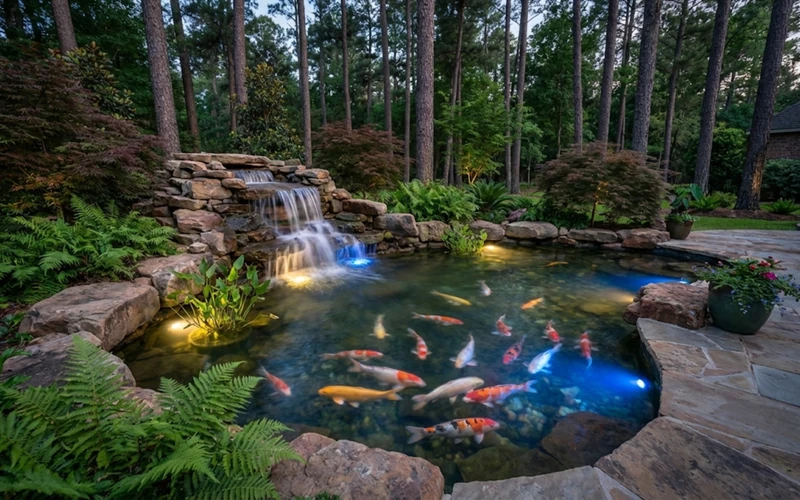
Gleannloch Farms, Spring
Koi pond with a two-tier waterfall, planted margins and underwater lighting, sited so the sound carries to the covered terrace.
The Woodlands
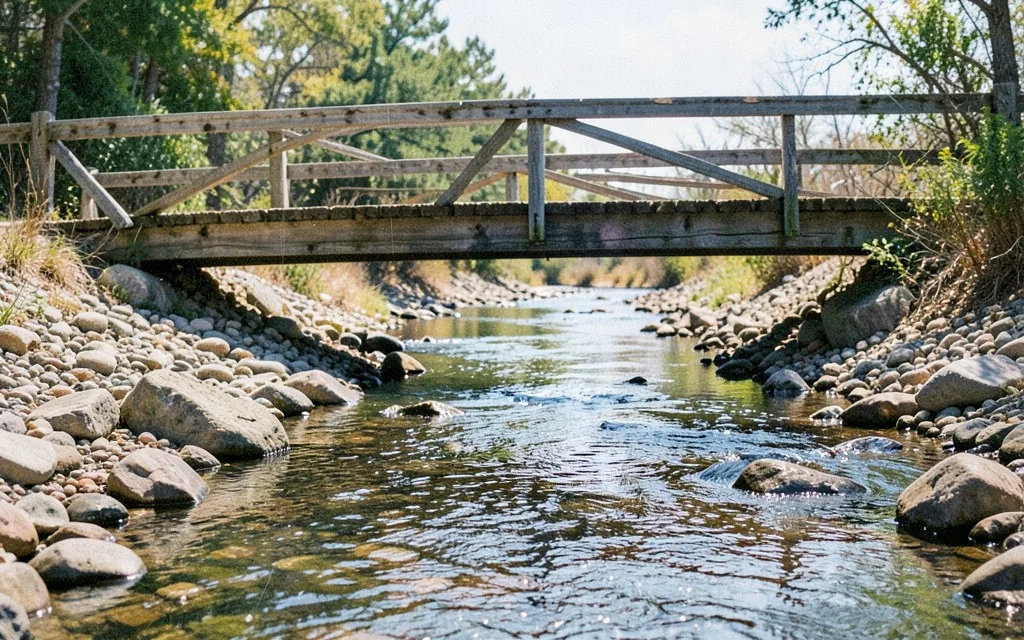
A recirculating stream and timber bridge threaded through existing woodland planting, with the reservoir concealed under a gravel bed.
Montgomery
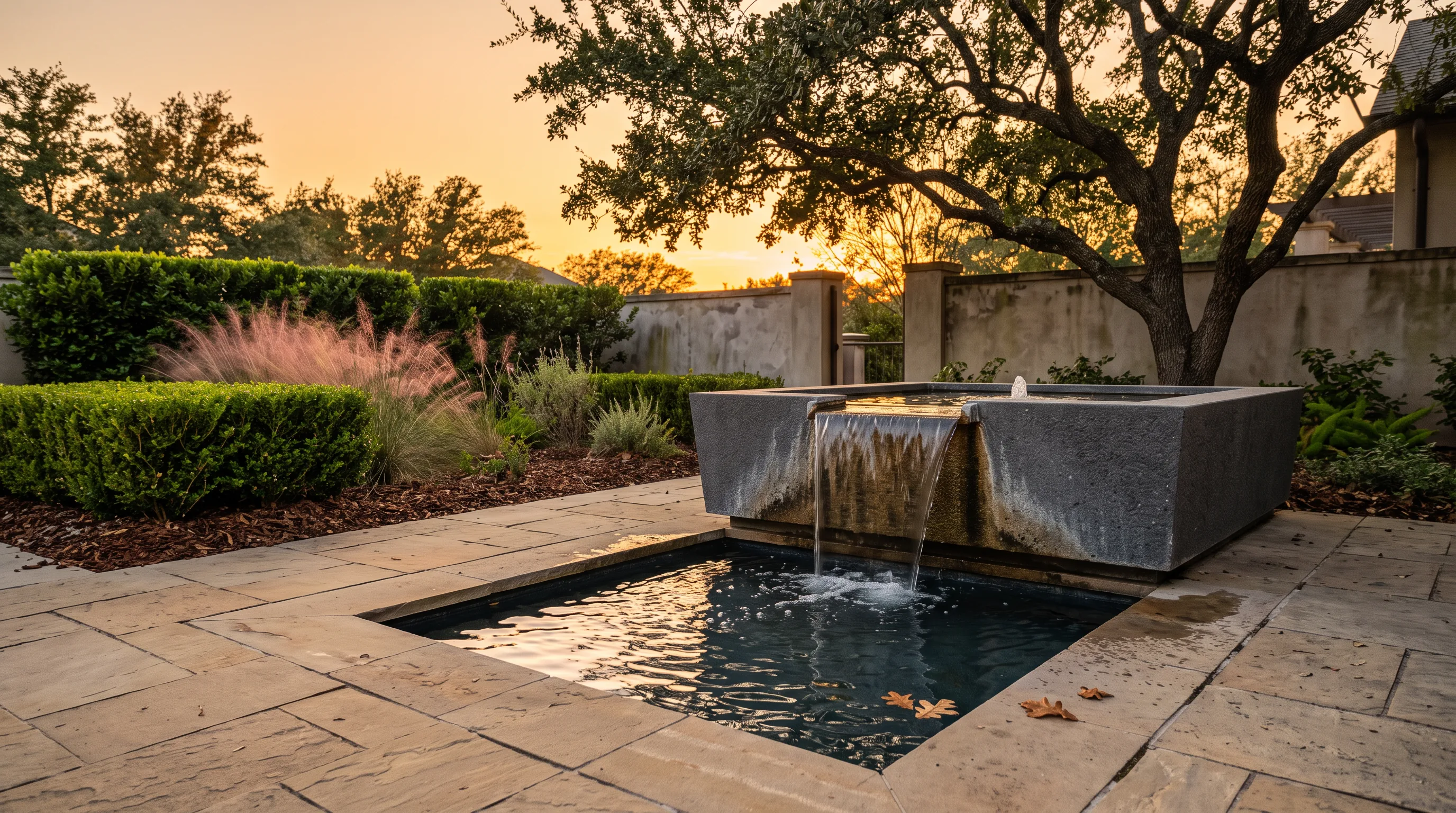
A formal tiered fountain as the center of an entry courtyard, plumbed with an autofill and a treatment loop rather than a biological system.
Why homeowners choose us
Why does specification beat decoration?
- 01
Sized to volume, not to catalog
Filtration and circulation are calculated from the actual water volume and fish load on every one of our water features. It is the reason our ponds run clear on smaller pumps.
- 02
No visible liner, from any angle
Liner carried high and concealed behind a proper stone return. The single detail that separates natural-looking water features from installed-looking ones.
- 03
Built for a Texas summer
Depth for a thermal refuge, shade over part of the surface, and aeration through the hottest months — designed for August, not for the day it is handed over.
- 04
Runoff kept out
Surrounds graded so fertilizer and bed runoff go around the feature. You cannot treat your way out of a nutrient supply running into the water.
- 05
Our own crews
Excavation, liner, plumbing, stone and planting are all ours on every one of our water features, so nothing waits on another trade and nothing is anyone else’s problem afterwards.
- 06
A guarantee that covers the build, not the weather
If our liner work, plumbing or filtration sizing is the reason a feature fails, we put it right. A hard freeze, storm debris, or a pump left unplugged over a winter away are not workmanship issues, and we will tell you plainly which one you are looking at. In writing either way — against one year on labor from most local contractors.
Questions
Water features in Montgomery County — frequently asked
How much does a water feature cost in The Woodlands?
A bubbling rock or small fountain runs $2,000–$5,000, a pondless waterfall $3,500–$8,000, and a stocked koi pond with a waterfall and lighting typically $10,000–$20,000. Larger linked systems and formal fountain work sit at $25,000–$50,000. Access matters more here than on most jobs: if boulders have to be carried by hand rather than placed by machine, labor rises sharply.
How much maintenance does a water feature need?
A pondless feature needs the reservoir topped up and the pump checked, and that is close to all of it. A stocked koi pond needs the skimmer emptied weekly, filter media rinsed monthly in season, marginals cut back in fall and a proper clean-out each spring — about an hour a week through summer. We hand over a seasonal schedule and offer maintenance if you would rather not.
Do water features attract mosquitoes?
Moving water does not, and that is the important distinction. Mosquitoes breed in still water, so a feature with adequate circulation and any fish stock is actively hostile to larvae — fish eat them. The mosquito risk on a property is far more likely to be a saucer under a pot or a blocked gutter than a running pond.
Can a pond survive a Texas summer?
Yes, if it is designed for one. That means enough depth for the fish to find cooler water, shade over part of the surface from planting or structure, and aeration running through the hottest months to hold dissolved oxygen up as temperature rises. A shallow, fully exposed pond struggles here, which is a design failure rather than a climate one.
What happens to a pond in a hard freeze?
Montgomery County sees the low 20s once or twice a decade, which a properly built pond handles. Depth gives the fish a refuge, and keeping a small area of surface open with a de-icer or by keeping a waterfall running lets gas exchange continue. What you should not do is break ice by hitting it, which concusses fish.
Do I need a permit or HOA approval?
A water feature rarely needs a building permit, but the electrical supply to it does need to be correctly installed and protected, and most Montgomery County communities require ARC approval for a permanent feature. We prepare the submission in the format the DSC and local committees expect.
Can you fix or rebuild an existing pond?
Frequently, and it is usually a filtration and edge problem rather than a liner problem. We assess the volume, the existing biology and the edge detail, then tell you honestly whether it is worth upgrading the system or whether the shape and depth mean it will always fight you. Older water features built before filtration was sized to the fish load are the ones we see this on most.
How long does it take to build a water feature?
A bubbling rock is one to two days. A pondless waterfall is three to five. A koi pond with a waterfall usually runs one to two weeks on site, plus a cycling period before the pond is stocked — the biology needs time to establish and rushing that is how new ponds go green.
How much does a water feature add to the water bill?
Less than people expect. A recirculating feature only consumes what it loses to evaporation and splash, which in a Texas summer is real but modest — usually comparable to topping up a small pool. The pump is the larger running cost, and a correctly sized pump on a well-designed system draws far less than an oversized one fighting poor hydraulics.
Can a water feature be added near a pool?
Frequently, and it is one of the better combinations here — a rock waterfall spilling towards a pool surround gives you sound and movement without a separate body of water to manage. The two systems stay hydraulically separate, because pool chemistry and pond biology are incompatible. What they share is the hardscape, so designing them together is considerably cheaper than adding one later.
What does your water feature maintenance service include?
A seasonal visit schedule built around what the feature actually is: skimmer clean-outs and filter media rinses through the growing season, marginal planting cut back in fall, and a full clean-out each spring before the pond wakes back up. For a pondless feature it is closer to a check and a top-off. We hand every client a written schedule at handover whether or not they take the service, so you know what the feature needs even if you choose to do it yourself.
Where we work
How far from Montgomery will you build a water feature?
Core service area is Montgomery County, and we build every kind of water feature across North Houston into Harris and Walker County. Access for a machine is the first thing we check on a site visit, because it changes the cost more than the design does.
Often specified alongside: ponds, waterfalls and fountains, hardscaping, landscape lighting, pool surrounds.