
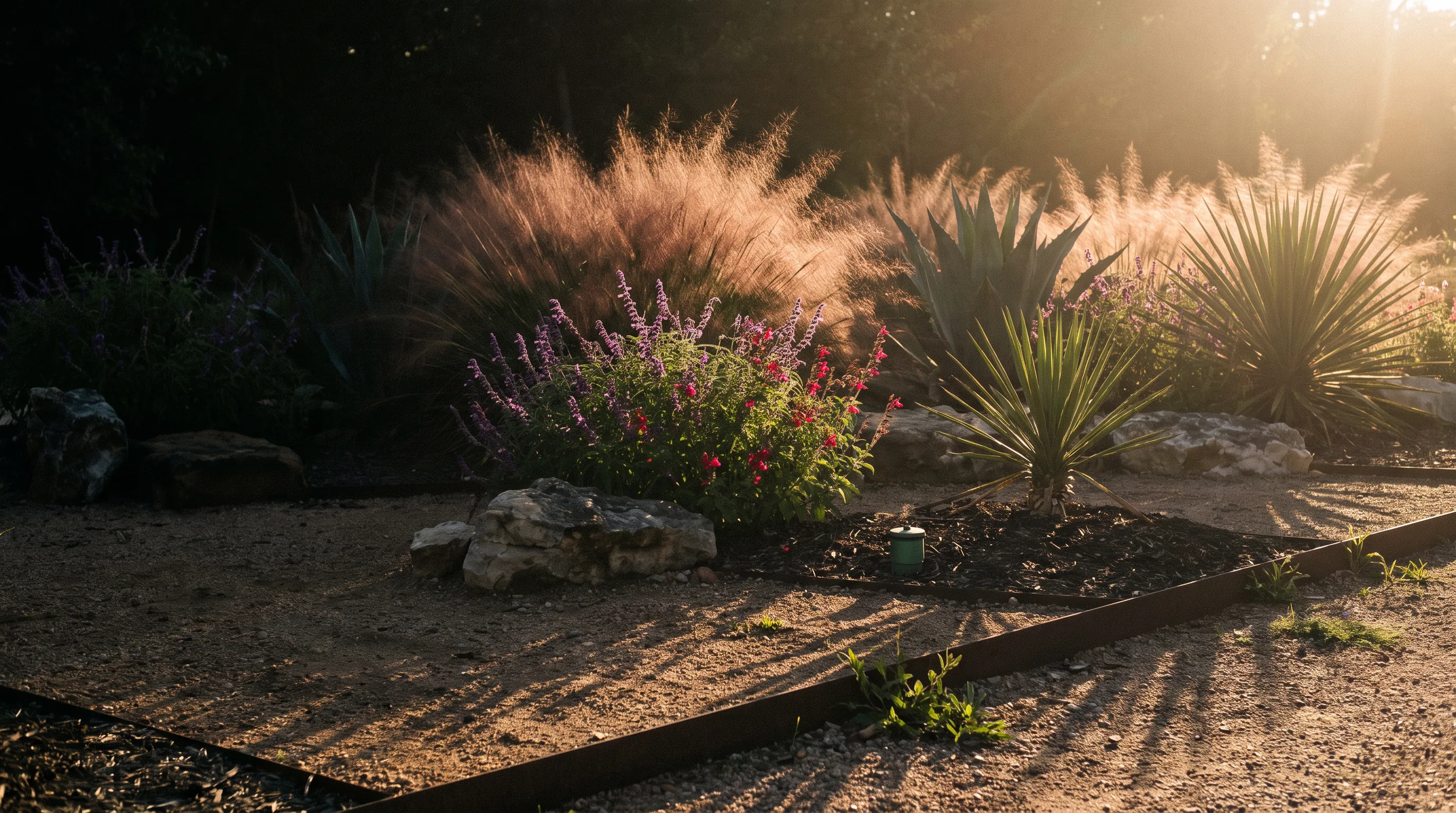
Xeriscaping
Low-water planting that still looks planted
Native and adapted schemes for The Woodlands, Spring and Conroe that cut irrigation by half or more — designed as gardens, not gravel, and documented for the utility rebate.
Xeriscaping is a design method, not a look: soil improvement, zoned planting, efficient irrigation and mulch, so the landscape needs far less supplemental water. In Montgomery County a well-built scheme cuts irrigation use 50 to 75 percent, saving $500 to $1,500 a year, and many local utilities pay turf-conversion rebates of $0.50 to $2.00 per square foot removed, commonly totalling $1,000 to $2,000 or more.
Below: what it costs per square foot here, how the rebates actually work, what happens to resale value, and why the rocks-and-cactus assumption is wrong for this climate.
What we build
What we build
The same principles at different scales. All of them start with soil, not with plant choice.
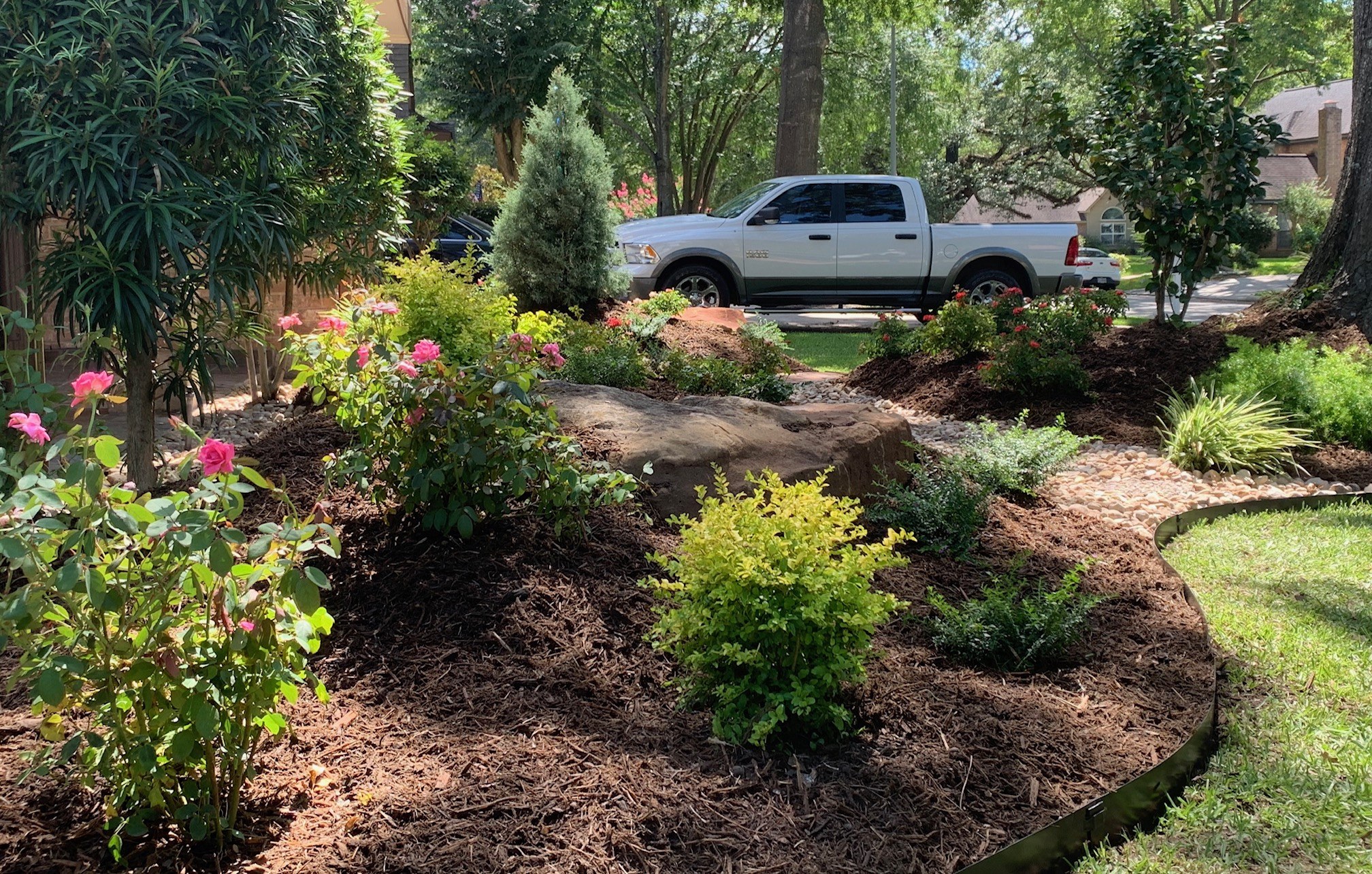
Front yard turf conversion
The commonest project and the one that earns the biggest rebate. Lawn removed, soil improved, layered native planting and defined paths — usually 500 to 1,000 square feet.
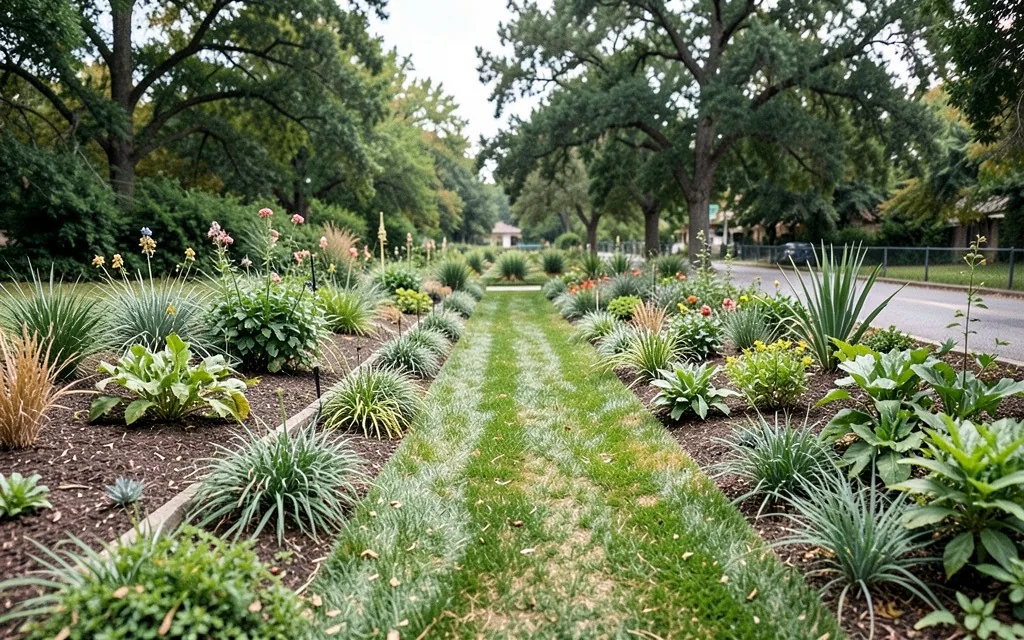
Full property xeriscape
Whole-site conversion with planting zoned by water need, drip throughout and a hydro-zoned controller. The scale at which the water savings become obvious on the bill.
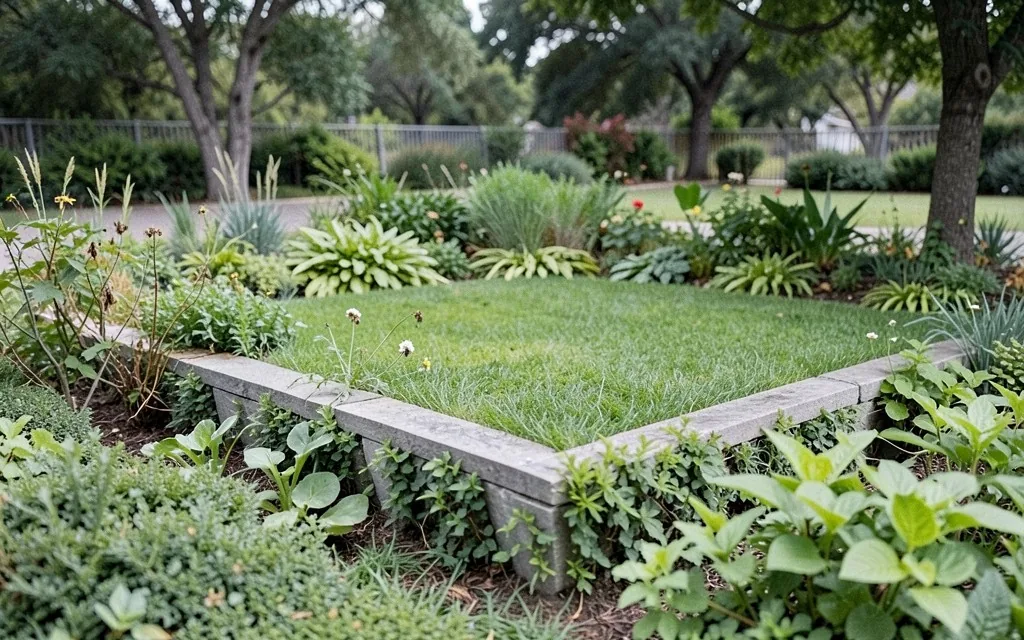
Hybrid schemes
A reduced lawn kept where children or dogs actually use it, with everything else converted. Most families end up here, and it still earns rebate on the area removed.
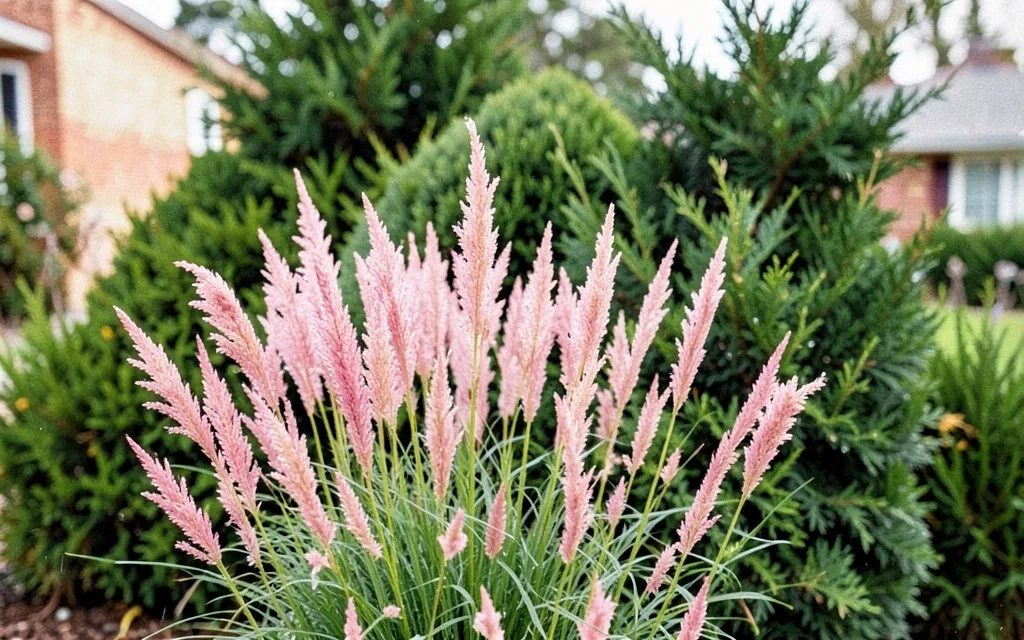
Native and adapted planting
Muhly and gulf muhly, Texas sage, salvias, yaupon, agave and flowering perennials layered for structure and season. Colour and movement, not a rock field.
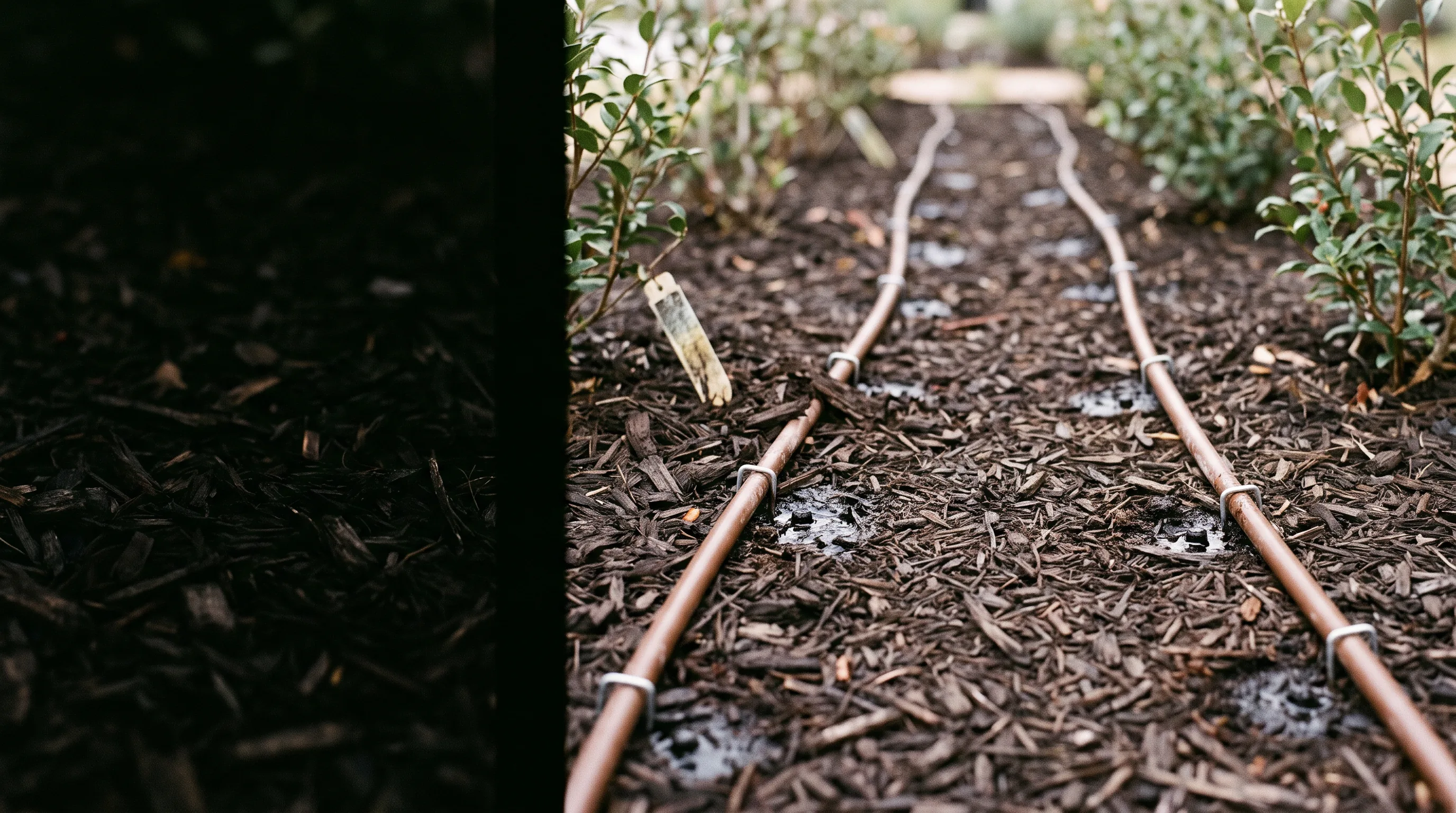
Drip irrigation conversion
Spray zones converted to drip, which delivers water at the root and loses almost nothing to evaporation. The single largest efficiency gain available on an existing system.
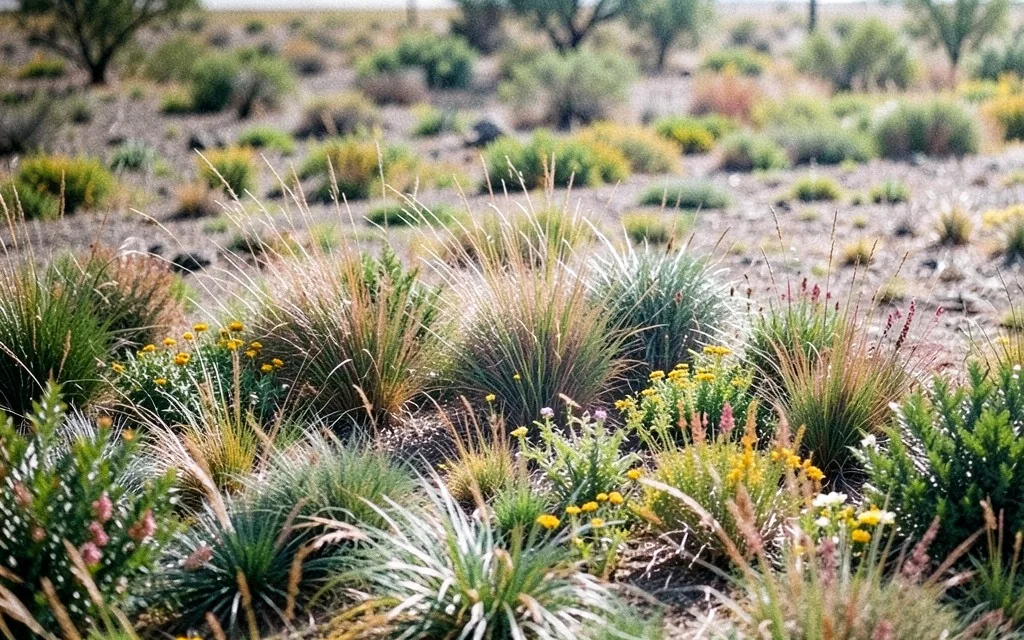
Commercial and HOA conversions
Median strips, entry beds and common areas converted to low-water planting. Rebates scale with area, so these are often the fastest to pay back.
Local conditions
Why do xeriscapes end up looking bare?
Four mistakes. Every one of them is a design decision, not a plant failure.
Gravel instead of planting
CauseThe lawn removed and replaced mostly with rock. It saves water and looks like a car park, radiates heat back at the house, and grows weeds in the gaps within two seasons.
FixPlanting density planned to close up in two to three years, with gravel and decomposed granite used for paths and negative space rather than as the main surface.
Soil never improved
CauseDrought-tolerant plants installed straight into compacted Beaumont clay. Their roots cannot get down, so they never become drought tolerant and die in the first dry August.
FixCompost incorporated and the compacted layer broken before planting. Drought tolerance is a root-depth property, and root depth is a soil property.
No structure in winter
CauseA scheme built entirely from summer perennials and deciduous grasses. It is beautiful in October and empty from January to April, which is when people decide they hate it.
FixEvergreen structure planted first — yaupon, dwarf yaupon, agave, sage — then the seasonal layer added around it, so the bones read all year.
Weeds take over in year two
CauseBeds planted too sparsely and mulched too thinly, so bare soil sits open between plants for three years. Every bare inch in Montgomery County grows something you did not plant, and by the second summer the weeding is worse than the mowing was.
FixPlanting spaced to close up within two to three seasons, three inches of hardwood mulch across every bed, and a maintenance plan for the establishment period that keeps the beds clean until the planting does it for you.
Irrigation left on the old schedule
CauseA low-water scheme still watered like a lawn. The plants stay shallow-rooted, the savings never appear on the bill, and half of them rot in a wet spring.
FixDrip conversion, hydro-zoning by water need, and the controller reprogrammed with an establishment schedule that tapers deliberately over the first year.
Specification
What goes into a low-water scheme
Seven principles, and the first three matter more than the plant list.
Soil improvement
Compost incorporated and compaction broken. This is what lets roots go deep enough to survive a Texas August without irrigation, and no plant selection substitutes for it.
Hydro-zoning
Plants grouped by water need so each zone can be watered correctly. Mixing a thirsty plant into a dry zone forces you to over-water the whole zone to keep it alive.
Efficient irrigation
Drip at the root, on a controller with a rain sensor. Spray heads lose a large share to evaporation in summer here, which is why conversion pays back quickly.
Mulch depth
Three inches of hardwood mulch on every bed. It suppresses weeds, moderates soil temperature and cuts evaporation — the cheapest water saving available.
Native and adapted plants
Species that evolved for this heat and rainfall pattern. Adapted non-natives are included where they perform; nativism for its own sake is not the point, performance is.
Limited practical turf
Grass kept only where it is walked on, sized to actual use. A small well-placed lawn panel is a design element; an unused expanse of it is just irrigation demand.
Maintenance planning
Low-water is not no-maintenance in the first two years. Establishment watering, weeding until the planting closes, and a hard cut-back schedule for the grasses.
Rainwater capture
Where the roof and the grade allow it, downspouts routed to a rain garden or a cistern rather than to the street. Fifty inches of annual rainfall on an average roof is a substantial amount of free irrigation to be throwing away.
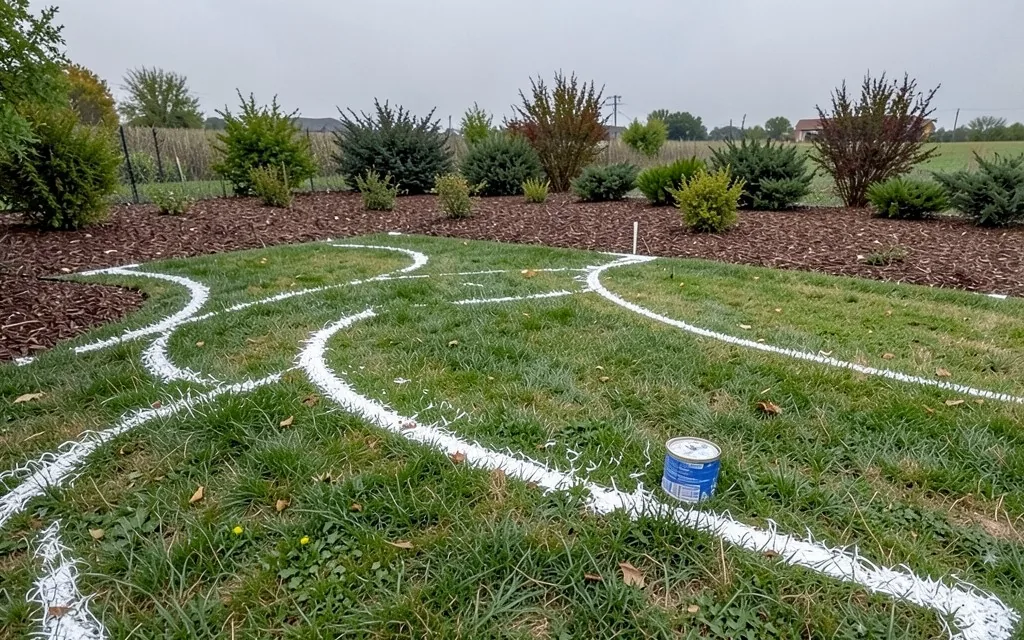
How it runs
Assess, design, rebate, convert
The rebate paperwork is part of the job. Done in the wrong order, it does not pay out.
- 01
Site and water audit
Sun, soil, existing irrigation and current usage reviewed, plus the turf area available to convert. This sets both the design and the rebate figure.
- 02
Rebate check
Your utility programme identified and its rules read before design. Most require pre-approval and before-photographs, so this happens first, not last.
- 03
Design and drawings
The scheme drawn and rendered, with planting zoned by water need and structure planted for winter as well as summer.
- 04
Turf removal and soil work
Grass removed, compaction broken, compost incorporated. The unglamorous half of the project and the half that decides it.
- 05
Irrigation and planting
Drip installed and zoned, planting laid out and planted at spacing that closes up, then mulched to three inches.
- 06
Documentation and handover
After-photographs, measured areas and receipts assembled for your rebate claim, with an establishment watering schedule that tapers across the first year.
What it costs
What does xeriscaping cost in The Woodlands?
Ranges for Montgomery County. Rebates and water savings offset a real part of this — see the FAQ for how the claims work.
Typical installed rate $8 – $20 / sq ft
Depends on design complexity, plant sizes and how much hardscape or path is involved. Soil work is included; it is not the place to economise.
Front yard conversion $5,000 – $15,000
A typical 500 to 1,000 square foot conversion including turf removal, soil improvement, drip, planting and mulch.
Full property xeriscape $15,000 – $50,000+
Whole-site conversion with hydro-zoned irrigation, extensive planting and paths. Larger rebates apply at this scale.
Rebates and annual savings $1,000 – $2,000+ rebate
Turf-conversion rebates typically run $0.50 to $2.00 per square foot removed, and water savings of $500 to $1,500 a year follow on top.
Recent work
Recent conversions
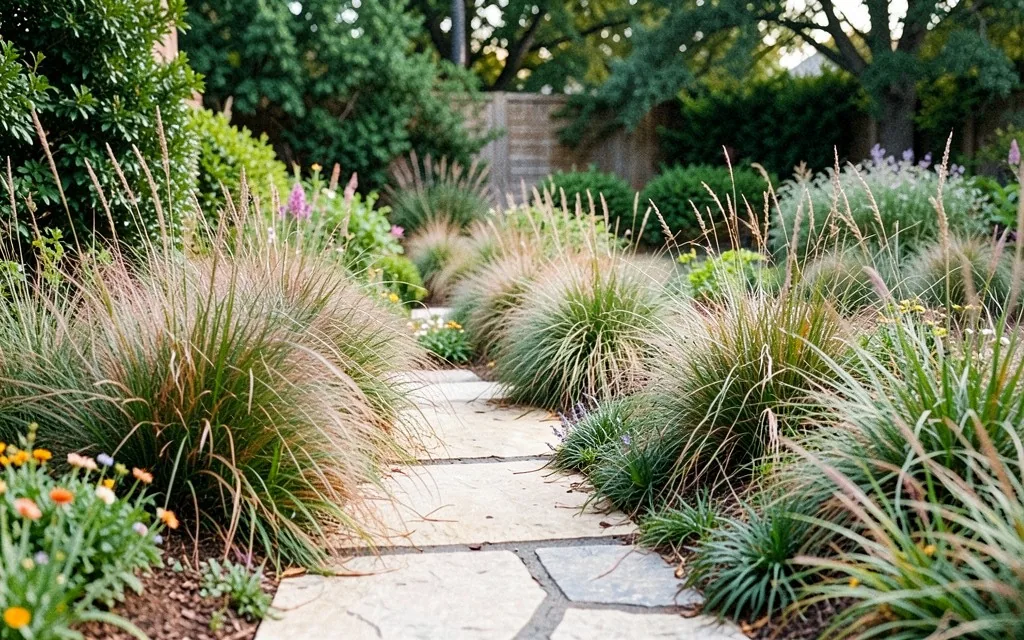
The Woodlands
Front garden converted to native grasses, flowering perennials and decomposed granite paths — around 70% less irrigation.
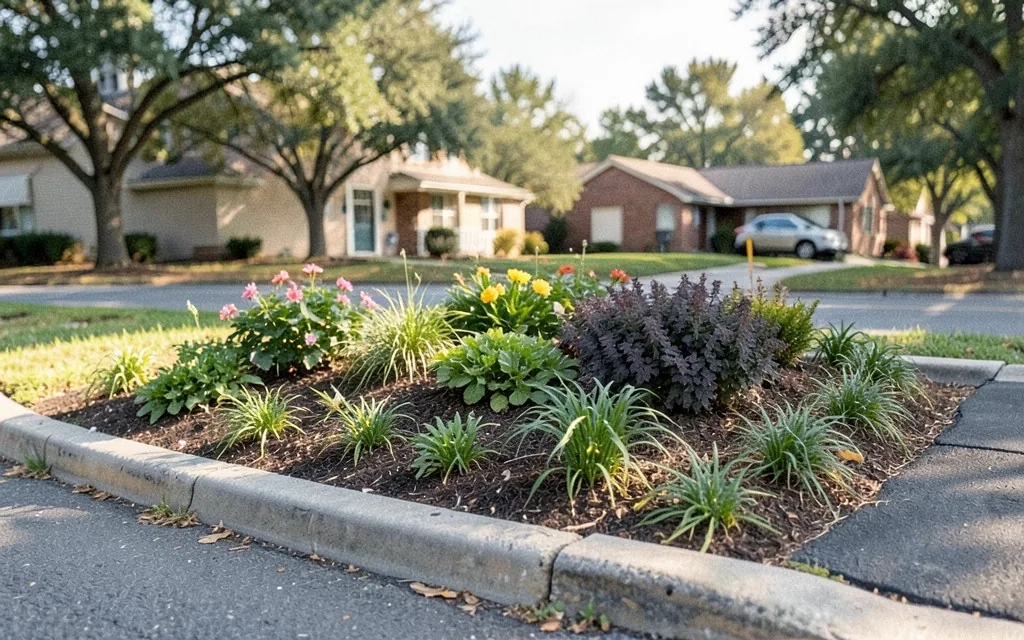
Spring
Curb-appeal conversion replacing a struggling front lawn, rebate documented and claimed at roughly $800.
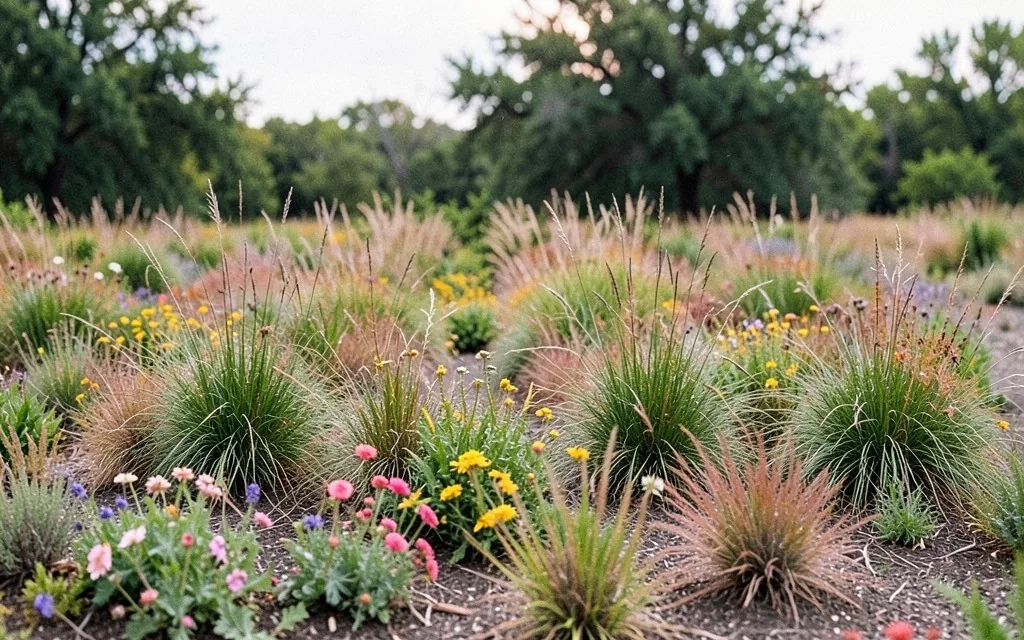
Conroe
Commercial park converted to low-maintenance planting with seasonal colour beds and hydro-zoned drip.
Why homeowners choose us
What we do differently
- 01
Soil before plants
Compaction broken and compost incorporated. Drought tolerance comes from root depth, and root depth comes from the soil work.
- 02
Designed as a garden
Layered planting with evergreen structure and seasonal colour. If it reads as gravel with plants in it, the design failed.
- 03
Rebate handled in the right order
Programme rules read and pre-approval sought before work starts, with before-and-after documentation assembled for the claim.
- 04
Hydro-zoned irrigation
Drip zoned by water need and the controller reprogrammed, so the savings actually show up on the bill.
- 05
Winter is designed for
Structure planted first. A scheme that only works from May to October is half a scheme.
- 06
Establishment is explained
A tapering watering schedule for the first year, written down, because year one is when low-water schemes are won or lost.
Questions
Xeriscaping — frequently asked
How much does xeriscaping cost in The Woodlands?
Typically $8 to $20 per square foot depending on design complexity and plant selection. A front yard conversion of 500 to 1,000 square feet runs $5,000 to $15,000; a full property is $15,000 to $50,000 and up. Many local utilities offer turf-conversion rebates of $1,000 or more, and annual water savings of $500 to $1,500 offset the investment further.
Does xeriscaping mean just rocks and cactus?
No — that is a Southwest desert aesthetic, and it suits our climate poorly. Montgomery County gets around 50 inches of rain a year; the problem is that it arrives unevenly. A xeriscape here is a densely planted garden of natives and adapted species — muhly grasses, salvias, Texas sage, yaupon, flowering perennials — with gravel used for paths, not as the main surface. Done properly it has more colour and movement than the lawn it replaced.
How much water can xeriscaping save?
A well-designed conversion reduces irrigation use by 50 to 75 percent. Since irrigation typically accounts for 50 to 70 percent of a summer water bill here, that translates to $500 to $1,500 a year for most households. The savings depend on the design being followed through — drip irrigation, hydro-zoning and a controller actually reprogrammed for the new planting, not left on the old lawn schedule.
Will xeriscaping hurt my home resale value?
A well-designed one does not, and increasingly it helps — buyers in Montgomery County are alert to water costs and to how much weekend maintenance a property demands. What does hurt value is a bare gravel yard with sparse planting, which reads as neglect rather than design. The distinction is planting density and structure, which is exactly where the design work goes.
What rebates are available for turf conversion?
Several local utilities run turf-conversion rebate programmes, typically paying $0.50 to $2.00 per square foot of turf removed, commonly capping around $1,000 to $2,000 or more. Rules vary by provider and most require pre-approval and before-photographs, so the claim has to be started before the lawn comes out. We identify your programme, check the rules first, and assemble the documentation for the claim.
Is xeriscaping low maintenance?
Lower, not zero, and not immediately. Expect real attention for the first two years: establishment watering on a tapering schedule, and weeding until the planting closes up. After that the maintenance is genuinely light — roughly 90 percent less mowing, one hard cut-back of the grasses in late winter, mulch topped up annually, and occasional editing. The trade is front-loaded effort for years of easy upkeep.
Can I keep some lawn?
Yes, and most families should. A hybrid scheme keeps a right-sized lawn panel where children or dogs actually play and converts everything else. You still earn rebate on the area removed, you still get most of the water saving, and a small well-kept lawn framed by planting usually looks better than a large one. The waste is irrigating turf nobody walks on.
What plants do you use in a Montgomery County xeriscape?
Natives and proven adapted species — gulf muhly and other ornamental grasses for movement, Texas sage and yaupon for evergreen structure, salvias and native perennials for flowering, agave and yucca for form. Structure goes in first so the beds read in January; the seasonal layer is built around it. The exact list follows the sun, shade and drainage of your specific beds rather than a standard palette.
Does it work on clay soil?
It works well, but only if the soil is dealt with. Beaumont clay is dense and compacts hard, and drought-tolerant plants dropped into it never develop the deep roots that make them drought tolerant — so they die in their first real August. We break the compacted layer and incorporate compost across the whole bed area before planting. That step is a substantial part of the cost and it is the one that cannot be skipped.
How long before it looks established?
Two to three growing seasons for the planting to close up, which is why spacing and density are design decisions rather than budget decisions. Year one looks deliberately sparse if the plan is right — planting too close for instant effect means thinning or losses later. Grasses fill fastest and carry the first season; the structural evergreens set the frame from day one.
Does xeriscaping mean gravel and cactus?
No, and that misreading is why people resist it. Xeriscaping is planting matched to the water a site actually receives, which in Montgomery County supports muhly grass, salvia, yaupon, agave and a long flowering season. Done properly it reads as a fuller garden than the turf it replaced, not a barer one, and it stops needing supplemental water once established.
Where we work
Xeriscaping across North Houston
We design and install low-water landscapes across Montgomery County and North Houston — The Woodlands, Spring, Conroe, Magnolia, Tomball, Willis and Montgomery. Rebate programmes differ by utility, so we check yours before the design is finalised.
Often specified alongside: landscape design, drip irrigation, irrigation installation, hardscaping and paths, lawn drainage.
Start here
Find out what your lawn is costing you
We visit within 48 hours, audit the irrigation and the turf area, check which rebate programme applies, and show you the conversion drawn before the lawn comes out.