
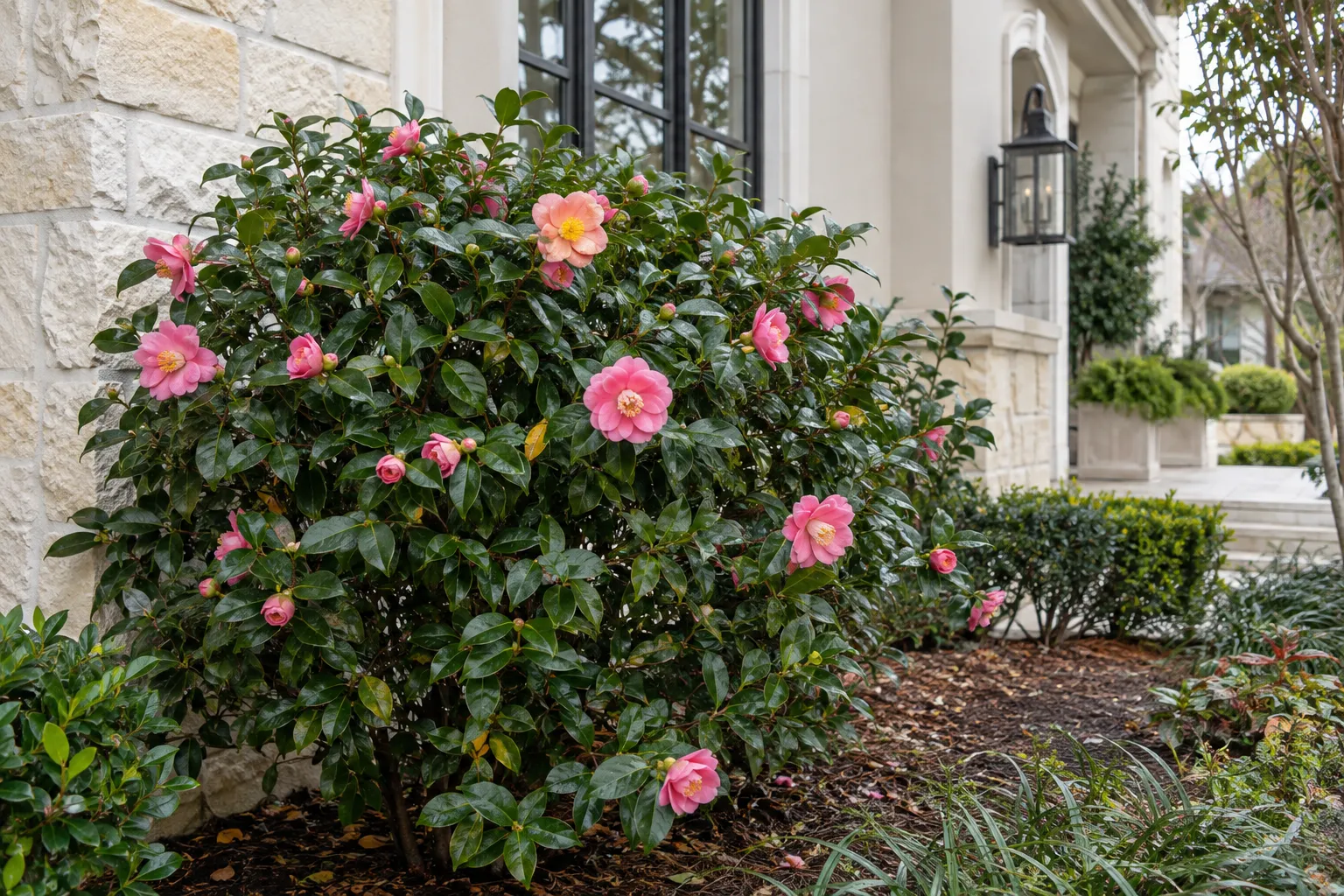
Camellia Japonica Care, Pruning & Planting in Conroe & Houston
Camellia japonica is a long-lived flowering evergreen whose success depends on the bed as much as the cultivar.
Family-owned since 2010 · Own crews · Licensed & insured · Free written estimates
Camellia Japonica planting and care requirements
It establishes slowly and benefits from shelter. The flower season, mature width and nearby root competition should be understood before choosing a position solely for its appearance from the house.
For camellia japonica work in Houston, Conroe, Katy or Spring, send Boone’s the address, a few photos of the area and what you want done. Boone’s is based in Montgomery, TX.
Services
What Boone’s handles for Camellia Japonica. Each is priced after we walk the property.
Camellia Japonica Planting
Camellia japonica planting should use a shaded or partly shaded position with protection from drying winds. The root ball should not be buried to fit a formal bed line. Allow a broad receiving area and consider competition from nearby trees, especially while this slow-establishing shrub settles in.
Camellia Japonica Nutrition & Fertilization
Camellia japonica fertilization should follow soil and growth assessment. Yellow leaves may reflect insufficient acidity rather than an uncomplicated lack of fertilizer. Check root moisture and soil pH before deciding on nutrition inputs; an underperforming flower display can also result from exposure or watering problems.
Camellia Japonica Soil Assessment & Soil Replacement
Camellia japonica soil should be acidic, organically enriched and well drained. Test the receiving area before changing it. A deep pocket of amendment is not a substitute for correct planting depth or for addressing compaction and water movement beyond the original root ball.
Camellia Japonica Sourcing
Camellia japonica sourcing should identify the cultivar and its expected flowering season. Flowers differ in color, size and timing, so an unnamed camellia is not an equivalent substitution. Compare the actual branching and nursery health before ordering a specimen intended to flower beside an entrance or window.
Camellia Japonica Transplanting
Camellia japonica transplanting needs particular attention to establishment because the species can be slow to settle. Assess the retained root ball, exposure at the new position and dependable watering access. Moving a mature flowering shrub should not be presented as equivalent to placing a small nursery container.
Camellia Japonica Irrigation Installation
Camellia japonica irrigation needs consistency without saturation. The species reference links late-summer drought with reduced flowering in the following season. Use moisture observations to adjust the system and check the root ball beneath mulch; poor bloom is not always a reason for a different fertilizer.
Camellia Japonica Root Drainage
Camellia japonica root drainage should be investigated when buds drop or leaves yellow. Both excessive and inadequate water can contribute to problems. Watch how the bed behaves after rain and irrigation before installing more emitters or assuming a drain alone will resolve the symptom.
Camellia Japonica Aftercare & Maintenance
Camellia japonica aftercare should record bloom timing, bud retention and moisture conditions through late summer. Slow establishment requires patience rather than repeated relocation. Maintain access for inspection and keep added mulch clear of the stem so the original planting depth remains visible.
Camellia Japonica Pruning
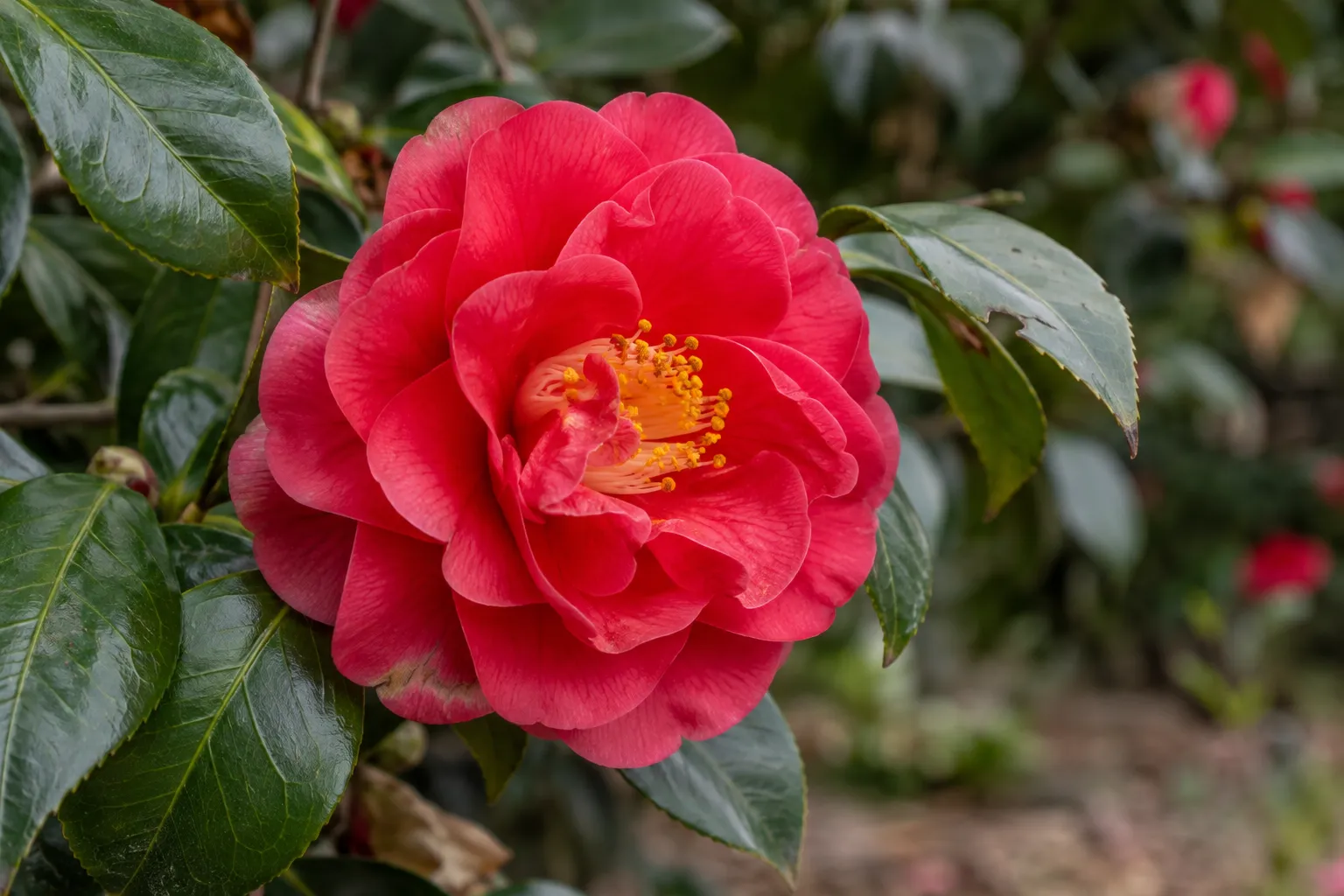
Camellia japonica pruning should normally follow flowering, with limited removal of damaged, unproductive or disproportionately long shoots. Flowers form on older growth, so late pruning can sacrifice the next display. Confirm the cultivar's actual bloom cycle rather than applying the same calendar used for summer-flowering shrubs.
Camellia Japonica Health Assessment
Camellia japonica health assessment should connect symptoms with their timing. Bud drop may relate to water imbalance, while yellow foliage can involve soil reaction. Inspect roots, leaf surfaces and the whole canopy before naming a disease; the correct response depends on the cause, not just the appearance of one leaf.
Talk to Boone’s about Camellia Japonica
Own crews, licensed and insured, working Conroe, Houston and Montgomery County since 2010.
How it works
How a Camellia Japonica project starts
- 01
Call or send photos
Call (936) 206-7627 or use the form with the address and a few photos of the area.
- 02
We walk the property
We look at the site, the light, the soil and the access before anything is priced.
- 03
Written estimate
You get a detailed estimate in writing at no cost, and the work is done by our own crews.
Common questions about Camellia Japonica
Can it be pruned like a hedge whenever it gets large?
Frequent shearing can conflict with flowering. Agree on the intended mature form and use pruning timed to the cultivar’s flowering cycle. Selecting a plant that fits the bed is preferable to repeatedly removing its flower-bearing growth.
When should a japonica be shaped without losing flowers?
Shape it after its flowering period rather than repeatedly shearing during bud development. The next display depends on retained flower-bearing growth. Identify the cultivar's bloom season before scheduling a visit, since one calendar date does not fit every camellia.
Why are flower buds falling before they open?
Some bud drop is natural, but moisture stress and unsuitable exposure can contribute. Check whether the root ball is repeatedly drying or staying saturated. Do not assume bud loss proves a fertilizer shortage or replace the plant without examining its bed.
Can japonica be planted in the strongest afternoon sun?
A protected, partly shaded position is generally a better starting point in a hot landscape. Assess reflected heat from walls and paving as well as sunlight. Moving the bed edge a short distance can change exposure without changing the whole design.
Related plants and projects
Sasanqua Camellia
Sasanqua camellia offers an autumn-to-winter flower display, distinct from many japonica selections.
Satsuki Azalea
Satsuki azalea is a selection group, so the cultivar must be identified before size and flowering promises are made.
Tea Olive
Fragrant tea olive is an evergreen shrub chosen for scent, not edible olives.
Tree Planting
Tree planting should match the actual tree to a place where it can develop.
Tree Health Assessment
A tree health assessment investigates symptoms before choosing treatment.
Get a free estimate for Camellia Japonica
Call (936) 206-7627 or send the address and a few photos through the form. We walk the property and put the price in writing at no cost.