
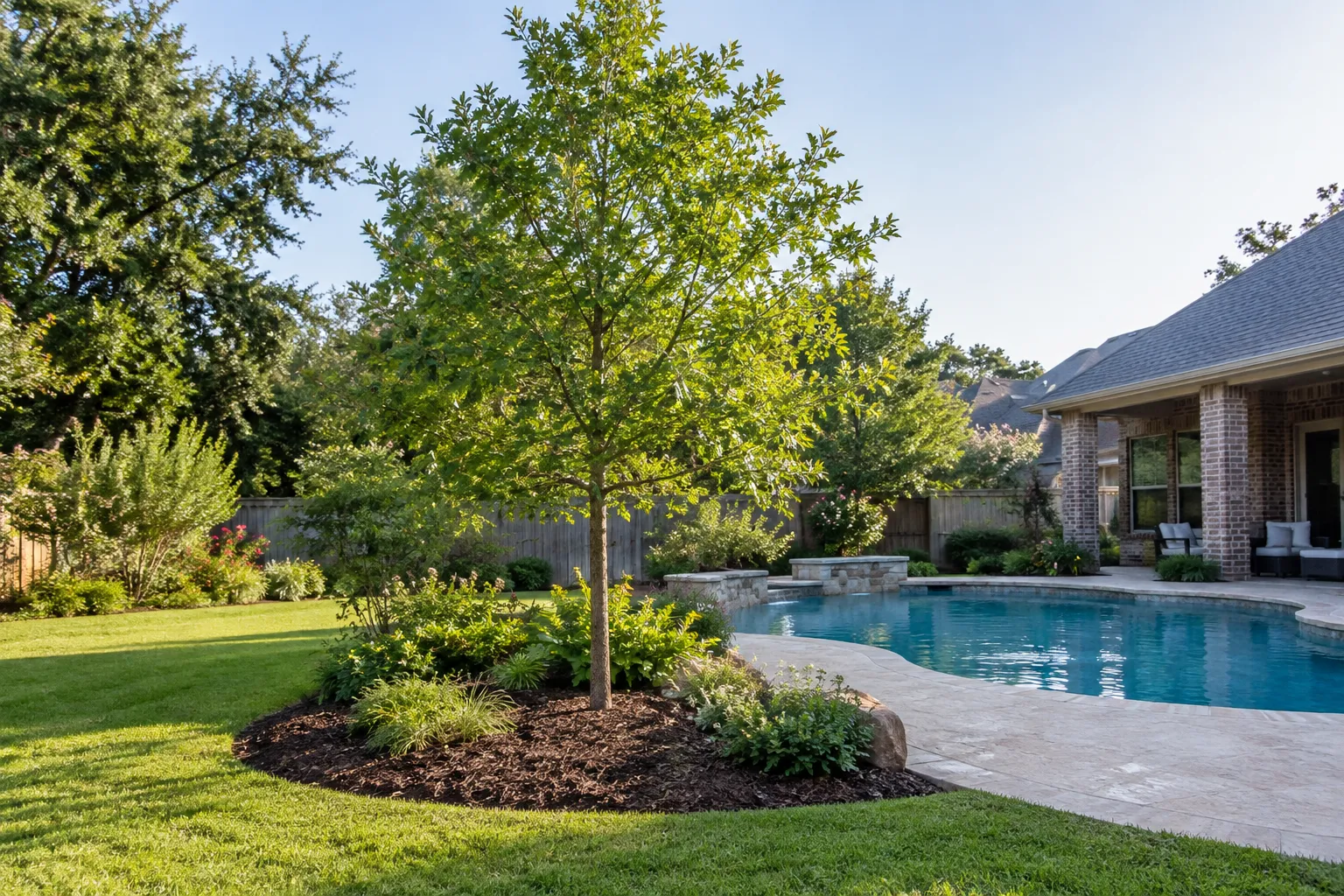
Tree Planting Services & Installation in Conroe & Houston
Tree planting should match the actual tree to a place where it can develop.
Family-owned since 2010 · Own crews · Licensed & insured · Free written estimates
Tree Planting & Specimen Tree Installation requirements
The species, cultivar and root condition matter before the hole is dug. A good proposal connects sourcing and installation with the establishment care that follows, instead of treating the first watering as a complete long-term plan.
For tree planting & specimen tree installation inquiries in Houston and Conroe, send the address, photographs and the work you need. Confirm availability and the site-specific scope with Boone’s before ordering.
Services
What Boone’s handles for tree planting. Each is priced after we walk the property.
Tree selection and mature dimensions
Choose the tree for its future canopy and roots, not only its nursery height. Compare light, moisture and available space with the identified species or cultivar. A smaller suitable selection can be a better decision than planning repeated heavy pruning to contain a tree that naturally needs much more room.
Set the tree's main purpose before selecting stock: broad shade, seasonal interest or a narrow screen. These roles are not interchangeable. A clear brief helps evaluate a nursery substitution without simply buying the largest available specimen.
Nursery stock and root inspection
Inspect the actual plant and locate its root flare. Container volume and trunk diameter alone do not establish quality. Review circling or damaged roots and the condition of the root ball before installation; important problems should not be concealed simply to keep a scheduled delivery moving.
Agree how unacceptable deliveries will be handled before dispatch. The actual cultivar, form and root condition must be checked, not only the invoice. A defined acceptance step prevents transport pressure deciding which tree ultimately enters the garden.
Planting depth and receiving ground
Set the tree from its root structure and the assessed site, rather than assuming the top of the nursery soil is the correct depth. Review surrounding compaction and drainage. The ISA planting reference supplies general principles, but individual species and stock conditions may require further assessment.
Coordinate any adjacent paving still to be built with the tree's finished level. Correct initial placement should not later be buried by another construction stage. Keep the receiving position visible on the property plan.
Tree delivery and installation access
Plan a route that protects the crown, roots and retained landscape. A specimen selected for a narrow backyard must actually be deliverable without losing the structure being purchased. Resolve access and receiving preparation before dispatch rather than discovering at the gate that the approved tree cannot fit.
Reserve a protected holding location if the sequence is interrupted and identify who may delay dispatch. Bringing the specimen to a site whose planting position remains occupied by machinery does not advance a successful installation.
Establishment watering and mulch
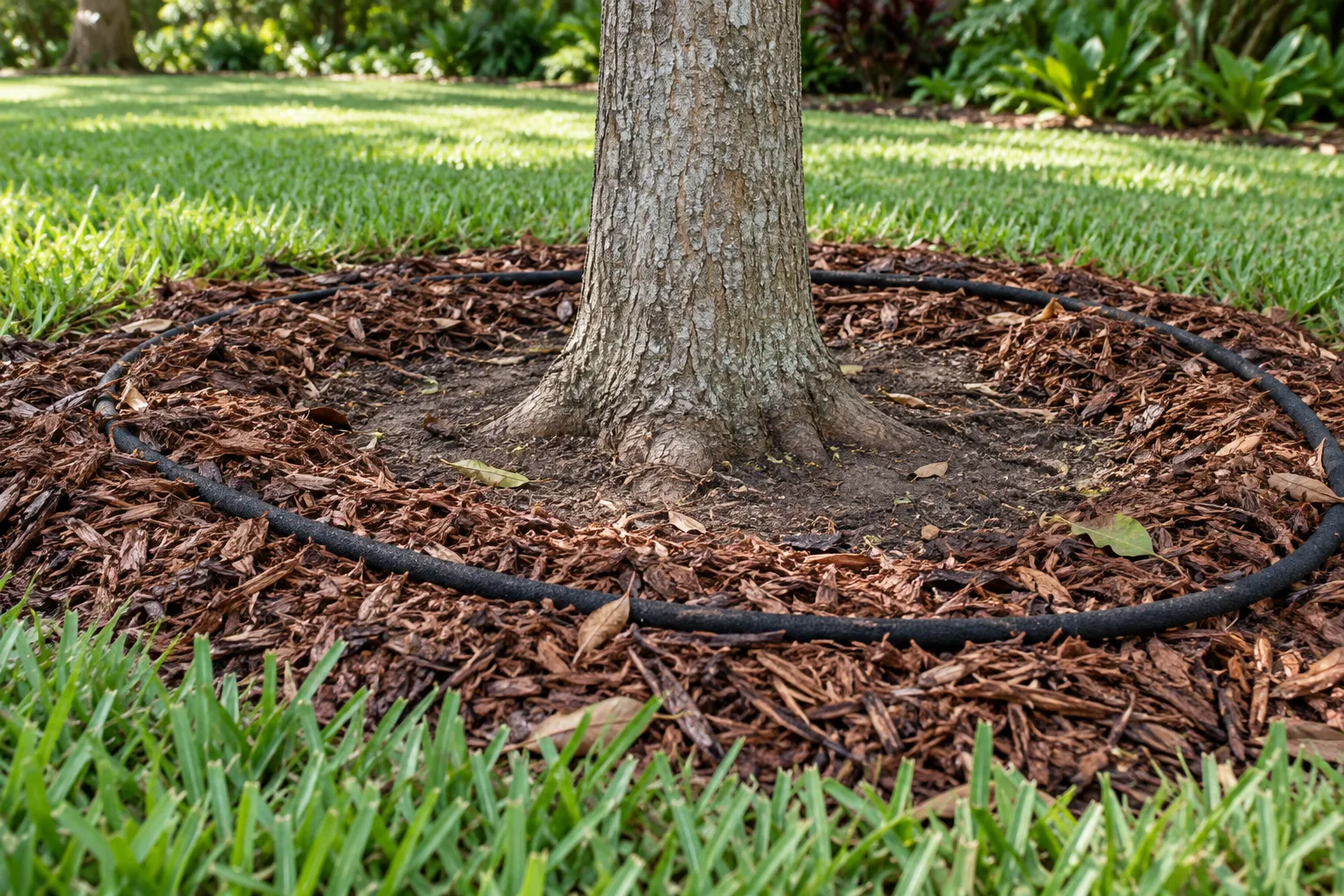
Check moisture in the original root ball and surrounding ground after planting. A wet lawn is not proof that the tree receives enough water. Keep mulch away from the trunk and adjust establishment care to weather and root development instead of promising a universal gallons-per-week schedule.
Choose who checks the tree while the household is away and demonstrate the watering arrangement to that person. Establishment needs observation; a programmed controller or supplied hose is not a substitute for assigned care.
Planting review and offered scope
Record the actual species, location and care responsibilities at handover. Confirm any supports and when they should be reviewed. Check stock availability before delivery, identify who will monitor moisture and keep access available for follow-up adjustments during establishment.
Take a completion photograph showing the stem base and record any supports and review instructions. Future maintenance then has a reference for changes caused by added mulch, settling or alterations to the surrounding garden.
Talk to Boone’s about tree planting
Own crews, licensed and insured, working Conroe, Houston and Montgomery County since 2010.
How it works
How a tree planting project starts
- 01
Call or send photos
Call (936) 206-7627 or use the form with the address and a few photos of the area.
- 02
We walk the property
We look at the site, the light, the soil and the access before anything is priced.
- 03
Written estimate
You get a detailed estimate in writing at no cost, and the work is done by our own crews.
Questions about tree planting & specimen tree installation
Is fall always the only acceptable planting season?
No. Cooler dormant periods often reduce stress for suitable trees, while container stock and species with different growth habits may allow other timing. The actual plant, weather and irrigation capacity matter. Avoid a universal date that ignores the condition of the receiving site.
Should a newly planted tree be fertilized automatically?
Not as a substitute for correct depth, water and healthy roots. Determine whether nutrition is actually needed and use suitable guidance. Establishment problems caused by saturation, root injury or an exposed root ball are not solved by routinely adding more fertilizer.
Does every new tree need permanent staking?
No. Evaluate stability, exposure and the actual stock. Any support should be selected and checked so it does not injure the trunk or restrict normal development. Agree when it will be inspected and removed rather than leaving ties indefinitely.
What should a tree-planting quotation include?
Identify the tree and size, sourcing, delivery, access preparation, installation, site restoration and establishment responsibilities. State whether any drainage correction or irrigation work is separate. Comparing only container size and delivery price can miss the work that determines the tree's starting conditions.
Related plants and projects
Tree Transplanting
Tree transplanting starts with whether the tree is a reasonable candidate for relocation.
Tree Health Assessment
A tree health assessment investigates symptoms before choosing treatment.
Deep Root Fertilization
Deep root fertilization is an application method to evaluate after a nutritional need has been established.
Estate Landscape Master Planning
An estate landscape master plan should resolve how the whole property works before individual features are ordered.
Large Property Grading
Large-property grading should begin with measured elevations and a clear purpose.
Get a free estimate for tree planting
Call (936) 206-7627 or send the address and a few photos through the form. We walk the property and put the price in writing at no cost.