
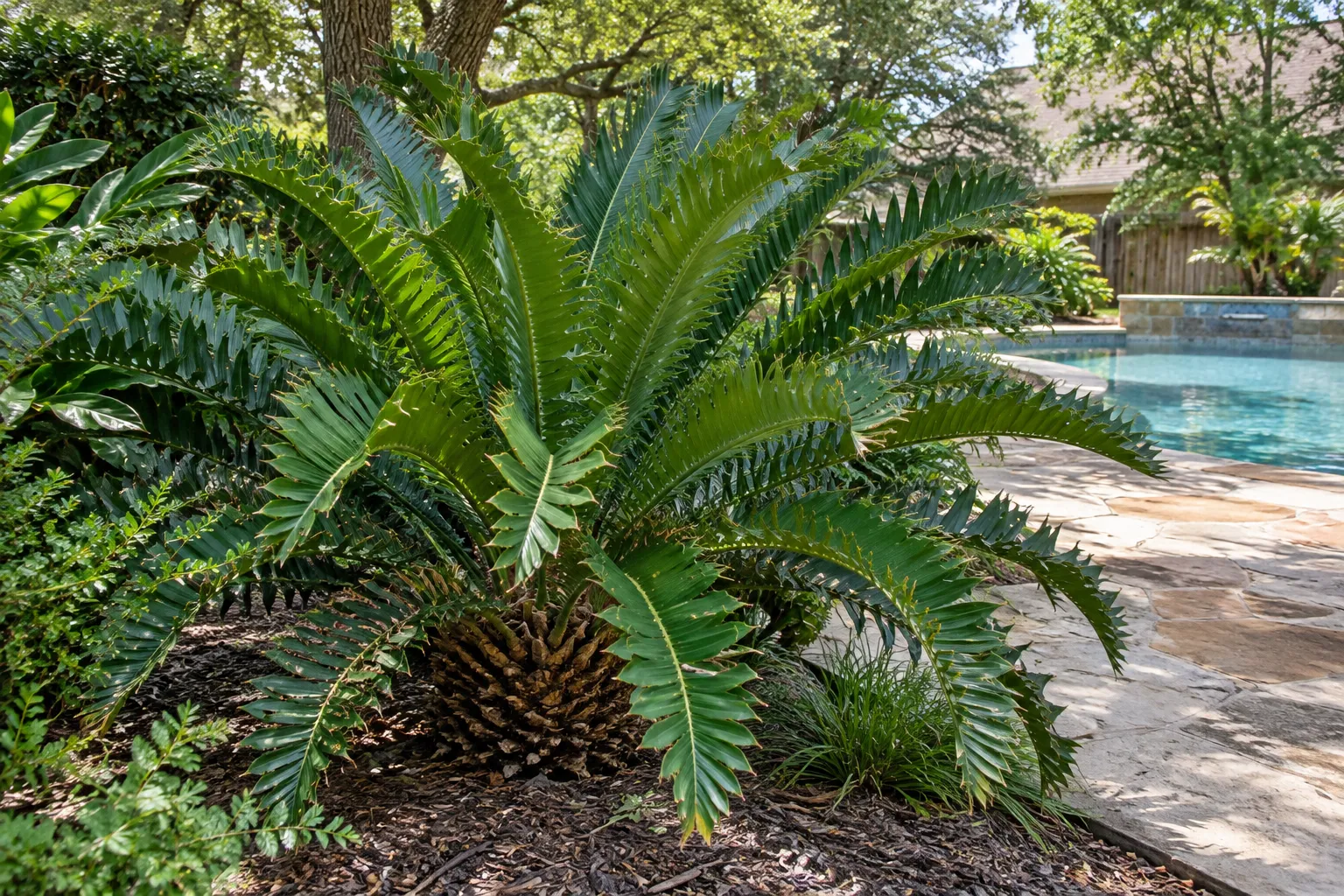
Encephalartos Cycad Planting & Care in Conroe & Houston
A collector cycad needs a species-specific setting, room for its crown and a workable cold-protection plan.
Family-owned since 2010 · Own crews · Licensed & insured · Free written estimates
Encephalartos Cycad planting and care requirements
Encephalartos includes collector cycads with different requirements. The planting decision is made by species: E. ferox, E. altensteinii and E. natalensis are useful examples, not interchangeable prescriptions. Plan the specimen, root environment and achievable winter protection together.
For encephalartos cycad work in Houston, Conroe, Katy or Spring, send Boone’s the address, a few photos of the area and what you want done. Boone’s is based in Montgomery, TX.
Services
What Boone’s handles for Encephalartos Cycad. Each is priced after we walk the property.
Encephalartos Cycad Planting
Encephalartos planting starts with a named species. E. ferox favors partial shade, while E. altensteinii can take sun or light shade. Reserve space for stiff leaves and the mature crown. A protected container is a different installation from a permanent bed; choose the arrangement before buying the specimen.
Encephalartos Cycad Nutrition & Fertilization
Encephalartos fertilization must follow the species and active growth. SANBI describes early-summer feeding for E. altensteinii, not a monthly program for the whole genus. Check root condition and the product guidance before supplying nutrients; slow growth or a delayed flush alone does not establish deficiency.
Encephalartos Cycad Soil Assessment & Soil Replacement
Encephalartos soil work should provide a draining root environment appropriate to the identified plant. SANBI describes well-drained media for E. altensteinii and E. natalensis. Inspect the nursery root package and receiving bed before replacement; a collector specimen does not automatically require a rich, permanently wet planting pocket.
Encephalartos Cycad Sourcing
Encephalartos sourcing should identify the individual species, nursery provenance and actual specimen. Compare trunk size, leaf spread and condition in photographs before committing to transport. Obtain any documentation applicable to the proposed movement through the supplier; the plant's value or rarity is not evidence of lawful origin or suitability.
Select the actual plant before arranging its final setting. The mature spread, leaf stiffness and trunk form affect both visual placement and safe access for the person who will maintain it.
Encephalartos Cycad Irrigation Installation
Encephalartos irrigation cannot use one setting for all species. E. ferox is described as needing ample water; E. natalensis receives moderate moisture. Place an inspectable watering point at the root area, then assess drying in the actual medium rather than directing high-pressure spray against leaves and stems.
Encephalartos Cycad Root Drainage
Encephalartos root drainage should address both the medium and its outlet. E. altensteinii and E. natalensis need drainage even though regular moisture supports growth. Check for water trapped inside decorative containers or against edging; a freely draining top layer does not prove the lower root package can release excess water.
Encephalartos Cycad Aftercare & Maintenance
Encephalartos aftercare should follow the confirmed species and keep useful foliage. For E. natalensis, SANBI describes removing old dead leaves. Inspect the new flush without automatically cutting every older green leaf; record changes in water, exposure and handling so maintenance responds to the plant rather than a cosmetic timetable.
Encephalartos Cycad Freeze Protection
Encephalartos freeze protection is part of selecting the specimen, not an afterthought. E. ferox and E. altensteinii are not choices for unprotected severe frost. E. natalensis varies in cold response, and young plants need protection. Arrange realistic shelter before installation instead of assigning one survival temperature to the genus.
Encephalartos Cycad Health Assessment
Encephalartos health assessment separates normal slow development from progressing injury. Inspect the stem, leaf bases, root moisture and the latest flush, and record recent cold or handling. Species references help interpret conditions but do not identify a disease from a photograph; targeted testing is preferable to an unsupported treatment package.
Talk to Boone’s about Encephalartos Cycad
Own crews, licensed and insured, working Conroe, Houston and Montgomery County since 2010.
How it works
How a Encephalartos Cycad project starts
- 01
Call or send photos
Call (936) 206-7627 or use the form with the address and a few photos of the area.
- 02
We walk the property
We look at the site, the light, the soil and the access before anything is priced.
- 03
Written estimate
You get a detailed estimate in writing at no cost, and the work is done by our own crews.
Common questions about Encephalartos Cycad
Can one care sheet cover all Encephalartos specimens?
No. The genus contains different species and growth habits. A useful plan identifies the plant first, then addresses its actual light, moisture, temperature protection and maintenance needs.
Do E. ferox and E. altensteinii need the same position?
No. SANBI describes E. ferox as preferring partial shade and ample water, while E. altensteinii tolerates sun or light shade with a draining medium. Identify the proposed specimen before choosing a bed or borrowing another cycad's irrigation settings.
Should old leaves be removed to encourage a fresh flush?
Remove dead material selectively and preserve useful foliage unless a species-specific operation calls for more. E. natalensis guidance supports removing old dead leaves. A cosmetic reset of every green leaf is not a general maintenance instruction for the genus.
What makes a collector-cycad order sufficiently specific?
Use the species name, individual photographs, dimensions and nursery provenance. Describe the actual planting or container arrangement and any transport requirements. A price and the word Encephalartos are not enough to compare two high-value specimens or approve a substitution.
Related plants and projects
Windmill Palm
Windmill palm offers a fan-shaped crown and a fibrous trunk, with greater cold tolerance than many tropical palms.
Pindo Palm
Pindo palm is recognized by arching, often blue-gray fronds and seasonal fruit.
Texas Sabal Palm
Texas sabal palm should be identified as Sabal mexicana rather than treated as interchangeable with every sabal offered by a nursery.
Tree Planting
Tree planting should match the actual tree to a place where it can develop.
Tree Health Assessment
A tree health assessment investigates symptoms before choosing treatment.
Get a free estimate for Encephalartos Cycad
Call (936) 206-7627 or send the address and a few photos through the form. We walk the property and put the price in writing at no cost.