
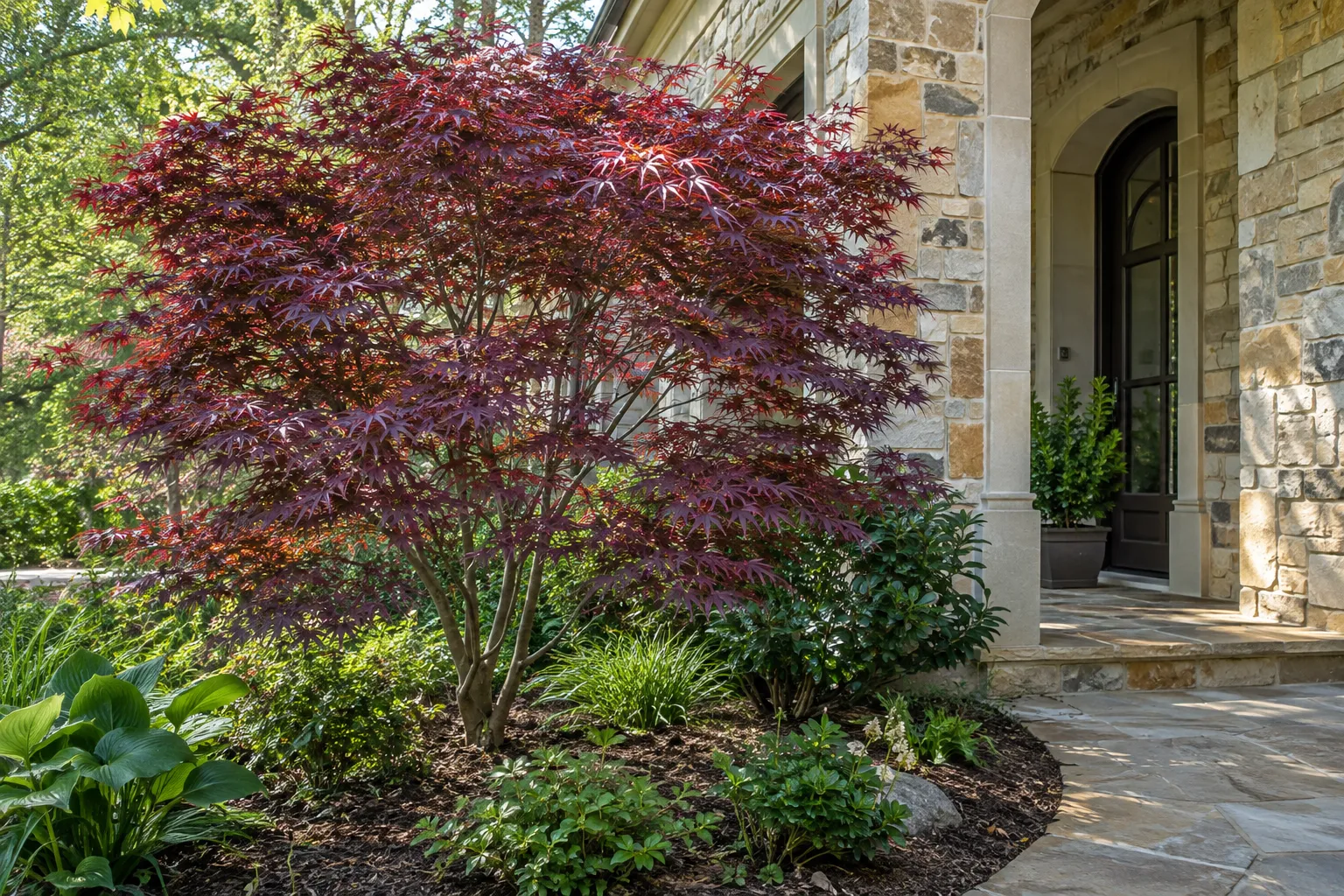
Japanese Maple Care, Pruning & Planting in Conroe & Houston
Japanese maple is a focal tree for a sheltered position, not a substitute for a large shade canopy.
Family-owned since 2010 · Own crews · Licensed & insured · Free written estimates
Japanese Maple planting and care requirements
Its cultivar determines the outline, leaf color and eventual width. Start with the view you want to frame, then check whether the light and root conditions will support that tree through summer.
For Japanese maple work in Houston, Conroe, Katy or Spring, send Boone’s the address, a few photos of the area and what you want done. Boone’s is based in Montgomery, TX.
Services
What Boone’s handles for Japanese Maple. Each is priced after we walk the property.
Japanese Maple Planting
Japanese maple planting works best where filtered light and protection from drying winds are available. Afternoon heat reflected from paving deserves particular attention. Set the tree by its root flare, not the top of an overfilled nursery pot, and leave enough room for the selected cultivar's spreading branches.
Japanese Maple Nutrition & Fertilization
Japanese maple fertilization should answer a demonstrated need, not attempt to cure every brown leaf. Scorch can follow heat, drought or wind exposure. Check those conditions and soil results before choosing nutrition inputs; adding fertilizer cannot compensate for a poorly positioned tree or a root ball that repeatedly dries out.
Japanese Maple Soil Assessment & Soil Replacement
Japanese maple soil needs moisture without stagnant saturation. Examine texture, compaction and the surrounding ground before specifying soil replacement. A pocket of improved material alone does not establish where water can escape. The planting depth and the broader root environment matter more than a standard bagged-soil recipe.
Japanese Maple Sourcing
For Japanese maple sourcing, request the cultivar name and photographs of the individual crown. An upright red-leaved selection and a cascading green selection do different jobs. Confirm the graft, root-ball size and transport protection rather than buying by container volume or a photograph of a mature example.
Japanese Maple Irrigation Installation
Irrigation installation for Japanese maple should wet the root ball and developing root area without relying on overspray from a lawn zone. Place accessible emitters where their output can be checked. Adjust watering from actual moisture observations; a shaded specimen beside paving will not necessarily dry at the same rate as nearby grass.
Japanese Maple Root Drainage
Japanese maple root drainage starts with observing the proposed bed after rain. Repeated ponding is a reason to reconsider the position or resolve the site's water movement before delivery. Do not place gravel in the bottom of a closed clay hole and treat that as a drainage outlet.
Japanese Maple Aftercare & Maintenance
Japanese maple aftercare should compare leaf condition with soil moisture and exposure. Record which side scorches and whether the root ball dries faster than the surrounding bed. Keep mulch away from the stem and revisit emitter positions as roots establish. A change in seasonal color is not automatically a decline in health.
Japanese Maple Transplanting
Japanese maple transplanting is different from placing a container-grown tree. An established specimen may lose substantial roots during excavation. Have size, condition, access and the receiving location assessed before agreeing to move it; preserving the layered crown is not a reason to accept a damaged or inadequately supported root ball.
Japanese Maple Pruning
Japanese maple pruning should preserve its layered branches. Remove identified dead, rubbing or poorly placed growth selectively and discuss substantial shaping during dormancy. Do not top the tree or shear it like a hedge. A fine crown needs useful branch choices, not an automatic percentage removed at each visit.
Japanese Maple Freeze Protection
Japanese maple freeze protection concerns tender emerging leaves as well as winter temperatures. The species reference identifies young foliage as frost sensitive. A small tree may be coverable, but a large crown is not easily protected. Plan around exposure and the actual forecast rather than interpreting a hardiness-zone label as protection for new growth.
Japanese Maple Health Assessment
Japanese maple health assessment should separate marginal leaf scorch from a confirmed pest or disease. Inspect wind exposure, irrigation, drainage and the pattern of symptoms before selecting a treatment. Photograph the whole tree and affected leaves; a close-up of one brown edge does not establish the cause.
Talk to Boone’s about Japanese Maple
Own crews, licensed and insured, working Conroe, Houston and Montgomery County since 2010.
How it works
How a Japanese Maple project starts
- 01
Call or send photos
Call (936) 206-7627 or use the form with the address and a few photos of the area.
- 02
We walk the property
We look at the site, the light, the soil and the access before anything is priced.
- 03
Written estimate
You get a detailed estimate in writing at no cost, and the work is done by our own crews.
Common questions about Japanese Maple
Will every Japanese maple stay red all summer?
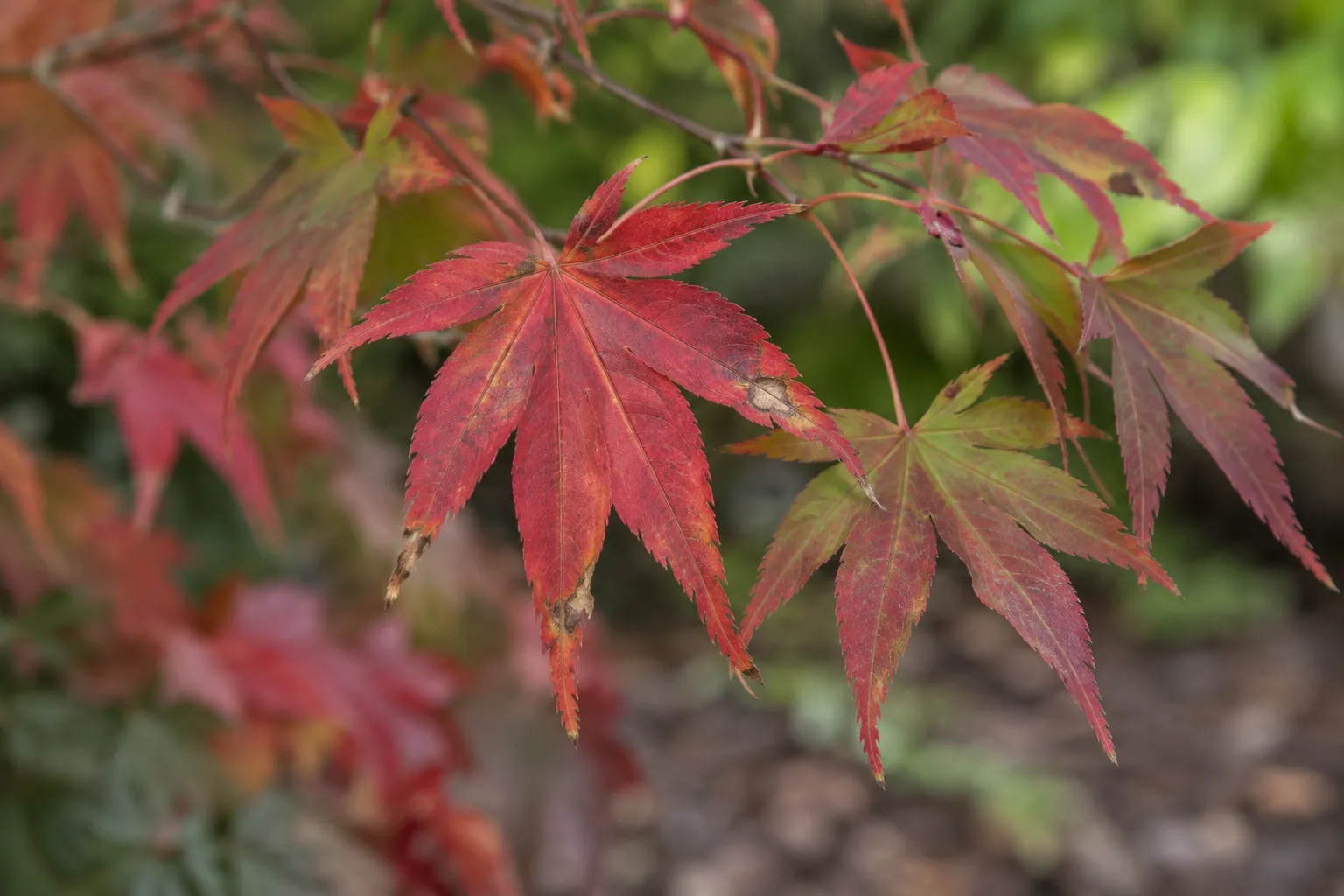
No. Foliage color depends on the cultivar and growing conditions. Green, red and variegated selections are different choices. Select from the actual cultivar description and specimen, not a single photograph taken during spring growth.
Can a Japanese maple be planted beside a hot west-facing wall?
That exposure deserves caution. Reflected heat and drying wind can scorch foliage. A sheltered position with filtered light is a better starting point than trying to compensate for an unsuitable wall with extra fertilizer.
When should a Japanese maple be moved?
Plan an established-tree move for suitable cool conditions and assess roots, access and the receiving bed first. Avoid combining relocation with major crown reduction. Container planting and lifting a long-established specimen are different operations.
What should the initial maple assessment include?
Bring the cultivar label, photographs of the canopy and trunk base, irrigation details and the site after rain. Those observations help separate exposure, root moisture and structural concerns before choosing pruning, feeding or relocation.
Related plants and projects
Bloodgood Japanese Maple
Bloodgood is an upright Japanese maple chosen for a broad crown and dark foliage.
Coral Bark Japanese Maple
Coral bark Japanese maple is selected for the seasonal color of young branches as much as for its leaves.
Laceleaf Japanese Maple
Laceleaf refers to deeply divided foliage, not one cultivar with one final shape.
Tree Planting
Tree planting should match the actual tree to a place where it can develop.
Tree Health Assessment
A tree health assessment investigates symptoms before choosing treatment.
Get a free estimate for Japanese Maple
Call (936) 206-7627 or send the address and a few photos through the form. We walk the property and put the price in writing at no cost.
Sources
- Plant reference: Acer palmatum
- ISA TreesAreGood — tree planting principles
- UNH Extension — when trees and shrubs need fertilizer
- US EPA WaterSense — irrigation management
- LSU AgCenter — moving established trees and shrubs within the landscape
- Texas A&M Plant Disease Handbook — maple symptoms and scorch
- International Society of Arboriculture — Pruning Your Trees