
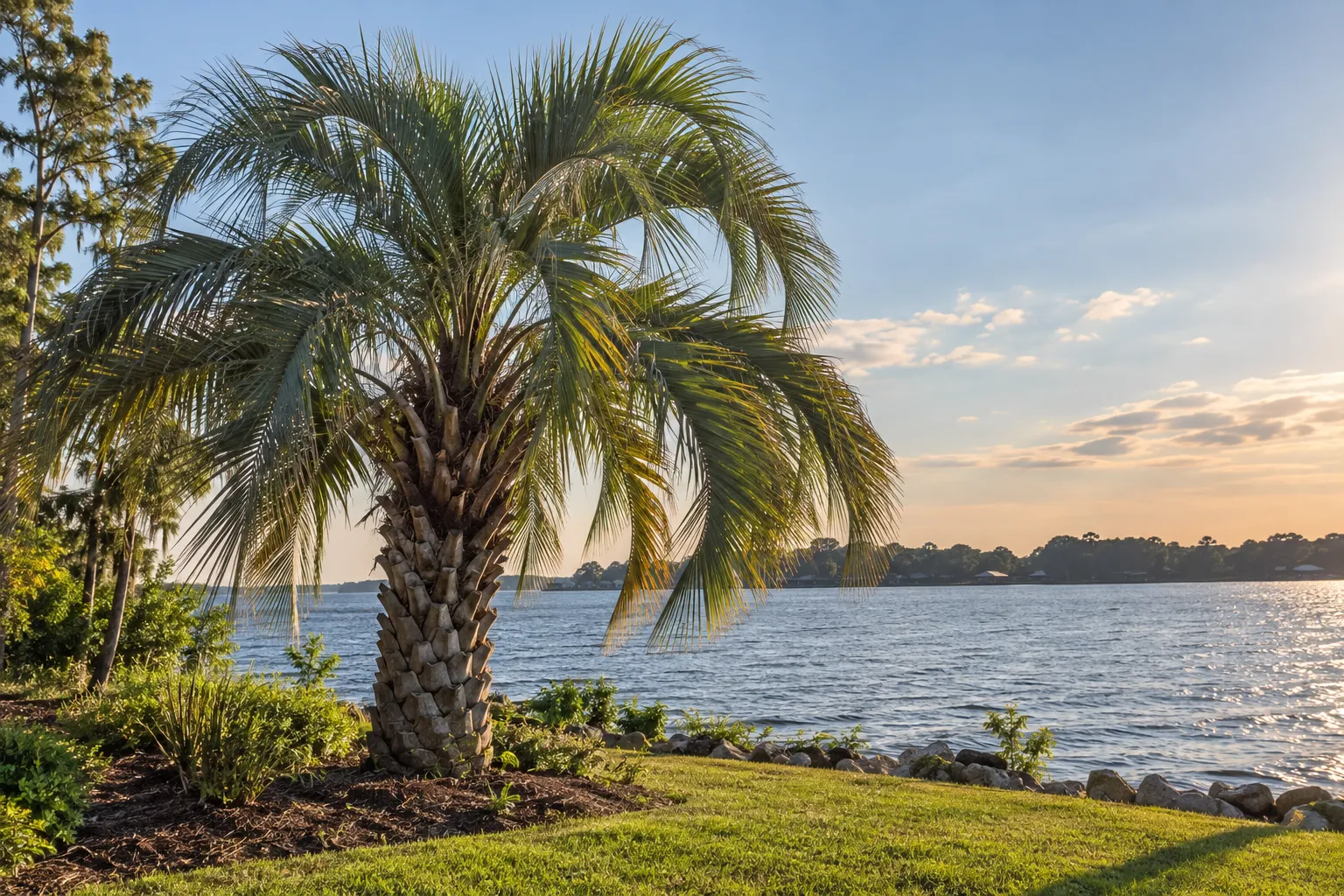
Mule Palm Planting & Care in Conroe & Houston
Mule palm is a hybrid between Butia and Syagrus, not simply another name for queen palm.
Family-owned since 2010 · Own crews · Licensed & insured · Free written estimates
Mule Palm planting and care requirements
It combines a full feather-leaf crown with characteristics that can vary between specimens. Confirm the hybrid and the individual palm before using its reputation for cold tolerance as the main reason to order it.
For mule palm work in Houston, Conroe, Katy or Spring, send Boone’s the address, a few photos of the area and what you want done. Boone’s is based in Montgomery, TX.
Services
What Boone’s handles for Mule Palm. Each is priced after we walk the property.
Mule Palm Planting
Mule palm planting should provide full sun and a well-drained root environment. Leave room for the leafy crown rather than judging the space by trunk width. The University of North Florida profile describes a substantial palm, so a small nursery specimen should not be treated as a permanent patio-scale plant.
Mule Palm Nutrition & Fertilization
Mule palm fertilization should use a palm nutrition assessment, not simply copy the program of either parent. Its hybrid identity does not establish a precise nutrient dose. Compare old and new leaf symptoms with soil and watering conditions before prescribing supplementation for the particular specimen.
Mule Palm Soil Assessment & Soil Replacement
Mule palm soil preparation should provide the well-drained conditions described by the university source. It does not establish a need for an elaborate proprietary blend. Examine compaction and moisture behavior across the receiving area before deciding whether replacement material is justified.
Mule Palm Sourcing
Mule palm sourcing should identify the Butia–Syagrus hybrid and document the supplied stock. The referenced university profile notes variation inherited from the parents. Confirm actual dimensions and condition instead of assuming that every palm sold as mule palm will have the same crown or identical cold response.
Ask for photographs of the individual palm rather than a representative hybrid. Crown fullness and leaf orientation help determine whether the specimen matches the intended focal point and whether delivery access is realistic.
Mule Palm Irrigation Installation
Mule palm irrigation should support the root ball during establishment and respond to observed conditions afterward. The source describes drought tolerance once established and a positive response to irrigation. Those two points support adjustment, not either permanent saturation or immediate withdrawal of supplemental water.
Mule Palm Root Drainage
Mule palm root drainage should be resolved before placing the tree in an enclosed courtyard bed. Trace runoff entering the opening and inspect where excess water leaves. The hybrid's favorable reputation does not make a closed, saturated root pocket an acceptable receiving site.
Mule Palm Transplanting
Mule palm transplanting needs assessment of the actual hybrid specimen and root preparation. Do not assume it should be moved exactly like a queen palm or a pindo. Crown clearance, lifting arrangements and establishment irrigation should be defined before disturbing a mature plant.
Mule Palm Aftercare & Maintenance
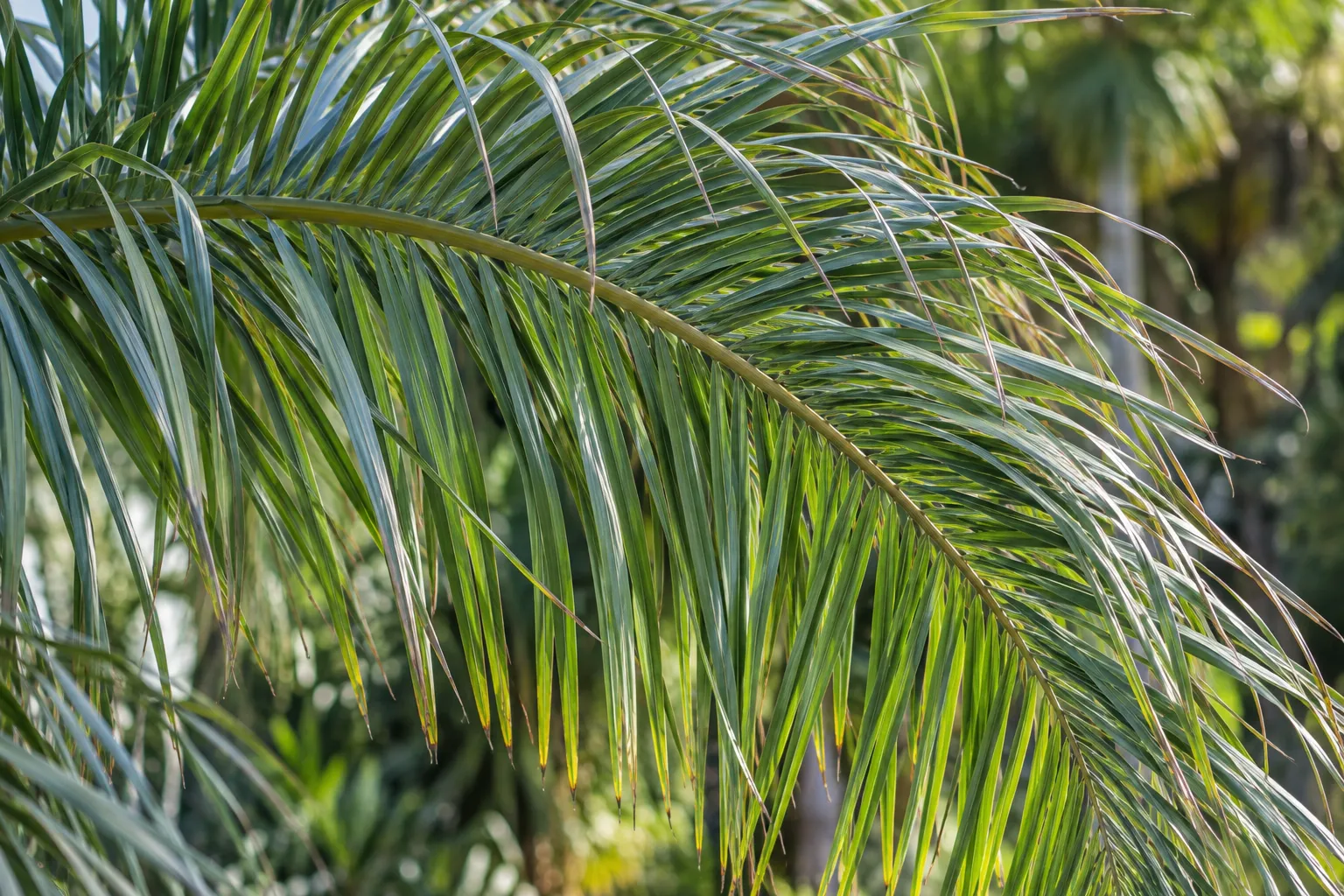
Mule palm aftercare should track the emerging crown and keep healthy fronds in place. Preserve the nursery identity and installation record because hybrid variation affects interpretation. A maintenance visit should check root moisture and physical damage, not merely remove leaves until the outline looks sparse and tidy.
Mule Palm Freeze Protection
Mule palm freeze protection should treat published cold tolerance as context rather than a guarantee. Parentage, condition and exposure can differ between palms. Plan realistic protection for the actual size, then assess surviving green tissue and new growth after an event before making a recovery claim.
Mule Palm Health Assessment
Mule palm health assessment should consider nutrition, watering and cold exposure together. Its hybrid character makes comparison with an unrelated palm photograph unreliable. Document where symptoms begin and how new leaves develop before selecting treatment or concluding that a normal difference in crown form represents decline.
Talk to Boone’s about Mule Palm
Own crews, licensed and insured, working Conroe, Houston and Montgomery County since 2010.
How it works
How a Mule Palm project starts
- 01
Call or send photos
Call (936) 206-7627 or use the form with the address and a few photos of the area.
- 02
We walk the property
We look at the site, the light, the soil and the access before anything is priced.
- 03
Written estimate
You get a detailed estimate in writing at no cost, and the work is done by our own crews.
Common questions about Mule Palm
Are all mule palms identical in shape and hardiness?
No. The hybrid label does not remove variation or site effects. Evaluate the actual specimen and local exposure, and avoid treating a single advertised minimum temperature as a performance warranty.
Is mule palm a naturally occurring single species?
It is an intergeneric hybrid associated with Butia and Syagrus parentage. The hybrid identity explains the name, but does not erase variation. View the actual crown and nursery record rather than accepting any feather-leaved palm as an equivalent.
Can one advertised cold temperature be used as a guarantee?
No. The source describes relative hardiness, not a warranty for a particular garden. Exposure, plant condition and freeze duration matter. A protection plan should remain feasible after the palm becomes too large to move or cover easily.
What maintenance matters most around the fronds?
Preserve healthy green foliage and plan access for removal of dead material when necessary. Crowding the palm beside a building can make maintenance difficult. Its landscape position should support a full crown rather than depend on continual stripping.
Related plants and projects
Windmill Palm
Windmill palm offers a fan-shaped crown and a fibrous trunk, with greater cold tolerance than many tropical palms.
Pindo Palm
Pindo palm is recognized by arching, often blue-gray fronds and seasonal fruit.
Texas Sabal Palm
Texas sabal palm should be identified as Sabal mexicana rather than treated as interchangeable with every sabal offered by a nursery.
Tree Planting
Tree planting should match the actual tree to a place where it can develop.
Tree Health Assessment
A tree health assessment investigates symptoms before choosing treatment.
Get a free estimate for Mule Palm
Call (936) 206-7627 or send the address and a few photos through the form. We walk the property and put the price in writing at no cost.