
Chinese Pistache Planting & Care in Conroe & Houston
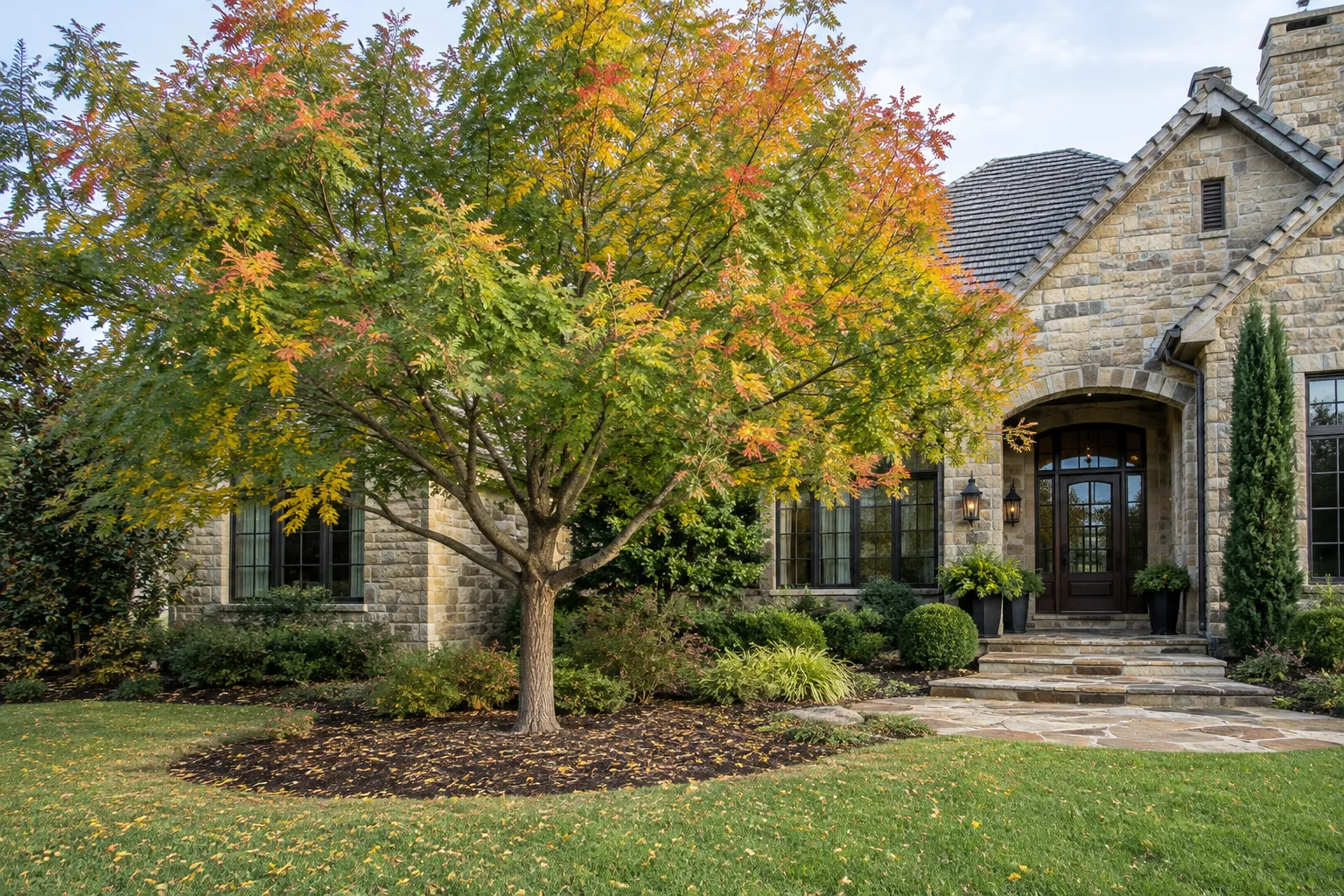
Chinese pistache can provide a rounded shade canopy and seasonal color, but a young tree may look rather awkward.
Family-owned since 2010 · Own crews · Licensed & insured · Free written estimates
Chinese Pistache planting and care requirements
Formative structure deserves attention early. Choose the plant for its mature role, and distinguish a selected male tree from seed-producing material where fruit and volunteer seedlings would be unwanted.
For Chinese pistache work in Houston, Conroe, Katy or Spring, send Boone’s the address, a few photos of the area and what you want done. Boone’s is based in Montgomery, TX.
Services
What Boone’s handles for Chinese Pistache. Each is priced after we walk the property.
Chinese Pistache Planting
Chinese pistache planting should provide full sun and space for the eventual rounded canopy. Its tolerance of heat and drought applies to a properly established tree, not an unwatered nursery root ball. Plan the trunk position in relation to paving and future clearance before installation.
Chinese Pistache Nutrition & Fertilization
Chinese pistache fertilization should follow a need assessment rather than an attempt to make a juvenile tree immediately look mature. Its early form can be irregular. Check structure, moisture and soil findings before increasing nutrients; shaping a sound framework and feeding are different tasks.
Chinese Pistache Transplanting
Chinese pistache transplanting is described favorably in the species profile, but mature relocation still requires individual assessment. Inspect the root-ball dimensions and handling access. Do not interpret nursery transplantability as permission to remove an established tree with whatever roots happen to fit the available equipment.
Chinese Pistache Soil Assessment & Soil Replacement
Chinese pistache soil preparation should reflect its broad adaptability to soil reaction and texture. Wholesale replacement is not automatically justified. Examine compaction, debris and available rooting space first, and keep the planting depth appropriate so a tolerant species is not disadvantaged by installation.
Chinese Pistache Sourcing
Chinese pistache sourcing should specify Pistacia chinensis and whether a named male selection is wanted. Female trees can produce fruit and seedlings, while grafted male material may better suit some paved settings. Confirm the nursery identity instead of assuming every pistache offered has the same fruiting behavior.
Where nearby natural areas are a concern, consider seed production as well as autumn color. The species can spread by seed; a male cultivar helps address fruit objectives but does not replace evaluating local suitability.
Chinese Pistache Irrigation Installation
Chinese pistache irrigation should maintain establishment moisture before the tree is treated as drought tolerant. Check the actual root ball during hot weather and after rain. Adjust the delivery pattern as roots develop, instead of leaving a permanent watering point pressed against the stem.
Chinese Pistache Root Drainage
Chinese pistache root drainage should be assessed alongside any proposed driveway or terrace. A tree suited to urban conditions still needs a workable rooting environment. Identify whether grading will collect water around it before installation rather than attempting to solve a preventable low spot with amendments afterward.
Chinese Pistache Aftercare & Maintenance
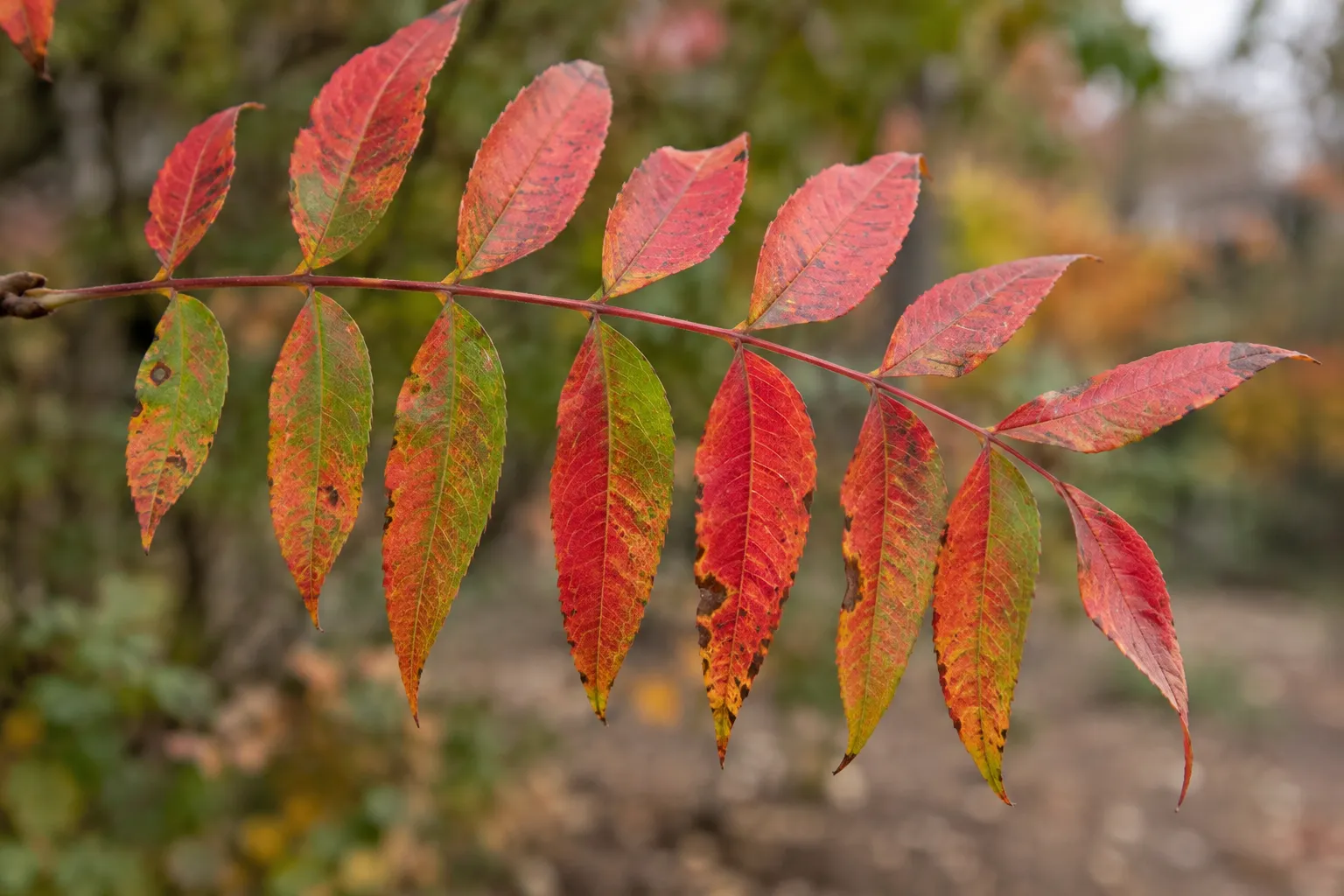
Chinese pistache aftercare should include periodic review of young branch structure and moisture. Its juvenile awkwardness can be normal, while defects need specific attention. Seasonal leaf color and fruiting should be judged against the selected plant, not a photograph of another tree under different conditions.
Chinese Pistache Pruning
Chinese pistache pruning is particularly useful for developing a sound framework while young. The source specifically highlights formative pruning rather than accepting an uneven juvenile crown without review. Choose cuts for structure and future clearance; topping a mature shade tree is not the equivalent of early training.
Chinese Pistache Health Assessment
Chinese pistache health assessment should distinguish normal seasonal color from premature decline. Examine roots, recent construction and water delivery before assuming a nutrient deficiency. Although the species is described as robust, that does not make an individual tree immune to poor installation or physical injury.
Talk to Boone’s about Chinese Pistache
Own crews, licensed and insured, working Conroe, Houston and Montgomery County since 2010.
How it works
How a Chinese Pistache project starts
- 01
Call or send photos
Call (936) 206-7627 or use the form with the address and a few photos of the area.
- 02
We walk the property
We look at the site, the light, the soil and the access before anything is priced.
- 03
Written estimate
You get a detailed estimate in writing at no cost, and the work is done by our own crews.
Common questions about Chinese Pistache
Will this tree produce edible pistachio nuts?
Chinese pistache is an ornamental species and should not be sold as an edible pistachio crop tree. Select it for shade and seasonal character, with any fruiting and maintenance expectations made explicit.
Why does a young Chinese pistache look uneven?
Young trees can have an awkward outline before the crown develops. Training should build a useful framework rather than force instant symmetry through topping. Compare branch structure with the desired mature shade pattern and keep enough space for that future canopy.
Can fruit litter be reduced beside a terrace?
Specify a documented male selection when avoiding fruit is important. Seedling identity and a young tree's appearance are not reliable substitutes for that record. Keep the cultivar information with the order so a change in supplied stock is noticed before planting.
Does drought tolerance remove the need for establishment irrigation?
No. An established tree's tolerance does not describe a recently planted root ball. Inspect moisture where the new roots actually are, then adjust irrigation as they expand. Watering needs can differ from the surrounding lawn even on the same property.
Related plants and projects
Japanese Maple
Japanese maple is a focal tree for a sheltered position, not a substitute for a large shade canopy.
Shantung Maple
Shantung maple offers a rounded deciduous canopy at a more moderate scale than a large oak.
Live Oak
Live oak is a long-term canopy decision.
Tree Planting
Tree planting should match the actual tree to a place where it can develop.
Tree Health Assessment
A tree health assessment investigates symptoms before choosing treatment.
Get a free estimate for Chinese Pistache
Call (936) 206-7627 or send the address and a few photos through the form. We walk the property and put the price in writing at no cost.
Sources
- Plant reference: Pistacia chinensis
- ISA TreesAreGood — tree planting principles
- UNH Extension — when trees and shrubs need fertilizer
- LSU AgCenter — moving established trees and shrubs within the landscape
- US EPA WaterSense — irrigation management
- International Society of Arboriculture — Pruning Your Trees