
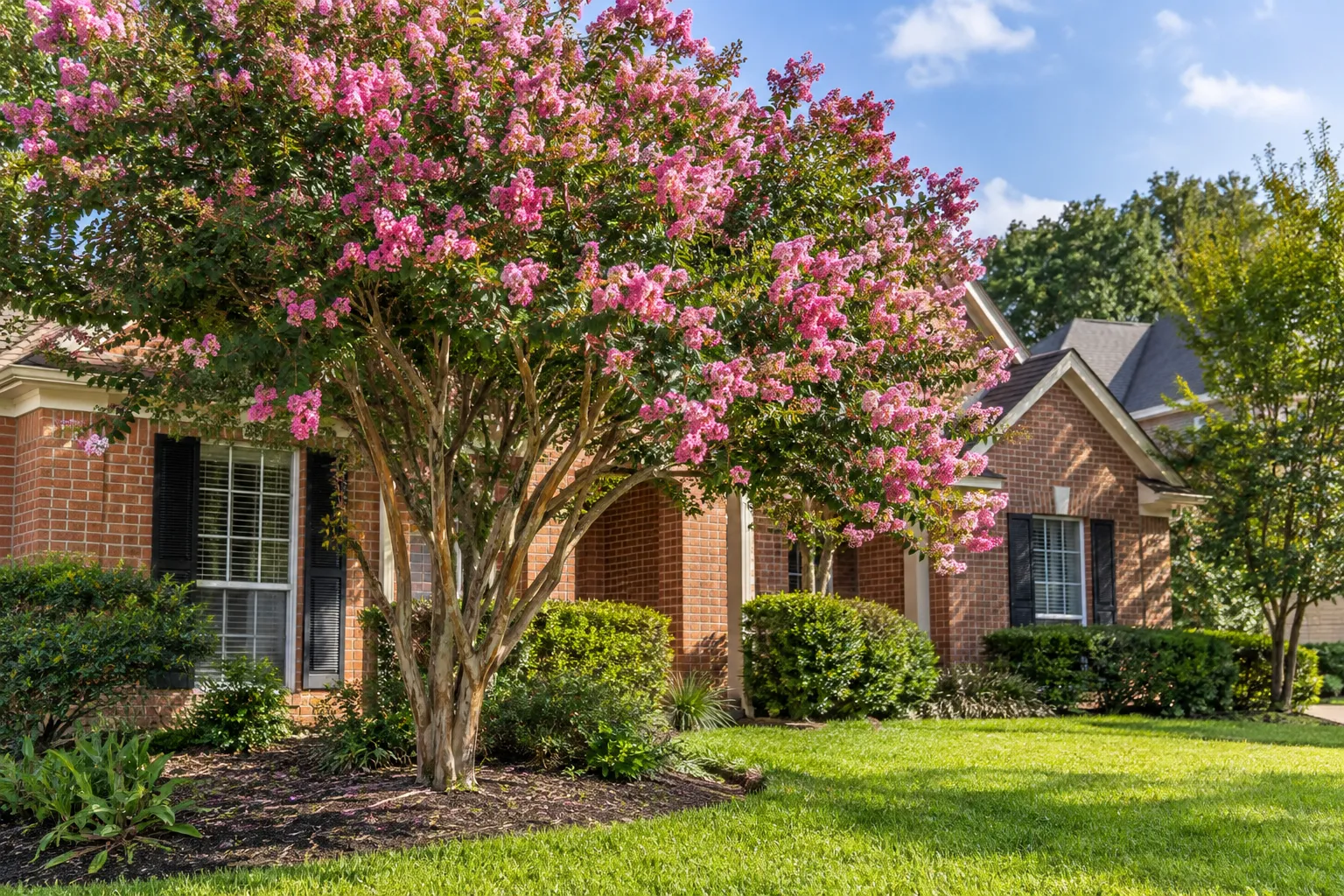
Crepe Myrtle Pruning, Care & Planting in Conroe & Houston
Crepe myrtle and crape myrtle are spellings of the same landscape name.
Family-owned since 2010 · Own crews · Licensed & insured · Free written estimates
Crepe Myrtle planting and care requirements
The cultivar determines whether the plant belongs in a container, a border or a larger tree position. Choose that scale first; an oversized selection should not be made to fit by repeatedly cutting its main branches back to stubs.
For crepe myrtle (crape myrtle) work in Houston, Conroe, Katy or Spring, send Boone’s the address, a few photos of the area and what you want done. Boone’s is based in Montgomery, TX.
Services
What Boone’s handles for Crepe Myrtle. Each is priced after we walk the property.
Crepe Myrtle Planting
Crepe myrtle planting should provide sun and sufficient room for the selected cultivar's mature crown. Flower color alone is not a complete specification. Consider nearby roofs, paving and other plants before installation so the tree can develop without becoming an annual severe-pruning problem.
Crepe Myrtle Nutrition & Fertilization
Crepe myrtle fertilization should follow a need assessment rather than be used to guarantee flowers. Shade and inappropriate pruning can undermine the intended display. Check new growth, soil information and exposure before choosing nutrition inputs, especially when the tree is already growing vigorously.
Crepe Myrtle Transplanting
Crape myrtle transplanting should consider the established root system and the retained trunk framework. Assess access and recovery conditions before moving a mature specimen. Relocation should preserve the selected form rather than requiring heavy canopy destruction simply to get the tree through a narrow opening.
Crepe Myrtle Soil Assessment & Soil Replacement
Crepe myrtle soil preparation should provide a well-drained rooting area. Established trees can tolerate periods of wetness or dryness, but that does not justify poor installation. Inspect compaction and surrounding levels before deciding whether amendment or replacement is necessary at the chosen planting position.
Crepe Myrtle Sourcing
Crape myrtle sourcing should identify the cultivar, eventual size and relevant disease-resistance information supplied for that selection. A small nursery plant may become a large tree. Confirm the actual material rather than accepting a similar-colored substitute whose growth habit changes the design.
Use both common spellings, crepe myrtle and crape myrtle, but retain the cultivar on the purchase record. The spelling does not distinguish size or flower color; the named selection does.
Crepe Myrtle Irrigation Installation
Crape myrtle irrigation should support establishment without assuming that every specimen needs the lawn's runtime indefinitely. Inspect the root ball and surrounding ground separately. A tree in open sun may dry differently from one partly sheltered by paving or nearby planting, so adjust from observations rather than a fixed promise.
Crepe Myrtle Root Drainage
Crepe myrtle root drainage should be checked where a planting bed is enclosed by concrete or edging. Identify whether excess water has a route out. The species' tolerance of occasional wet conditions is not evidence that an indefinitely saturated root pocket will perform well.
Crepe Myrtle Aftercare & Maintenance
Crape myrtle aftercare should distinguish ordinary winter leaf loss and exfoliating bark from abnormal decline. Keep the chosen form visible and monitor new growth. Repeatedly reducing the tree to fit a small space signals a selection problem, not an unavoidable feature of good maintenance.
Inspect the trunk and new shoots during routine visits rather than concentrating only on summer flowers. A photo sequence helps distinguish a spreading problem from old pruning scars or normal bark exfoliation.
Crepe Myrtle Pruning
Crepe myrtle pruning should avoid topping. The source recommends necessary thinning in late winter or early spring before new growth, on which flowers appear. Choose limited cuts for structure and clearance; a row of large stubs is not a requirement for flowering and can erase the tree's natural form.
Crepe Myrtle Health Assessment
Crape myrtle health assessment should compare symptoms with the selected cultivar and seasonal behavior. Inspect affected leaves, bark and branches rather than assuming all dark surfaces or sparse flowers have the same cause. Establish a diagnosis before choosing pest treatment, while checking irrigation and exposure at the same time.
Talk to Boone’s about Crepe Myrtle
Own crews, licensed and insured, working Conroe, Houston and Montgomery County since 2010.
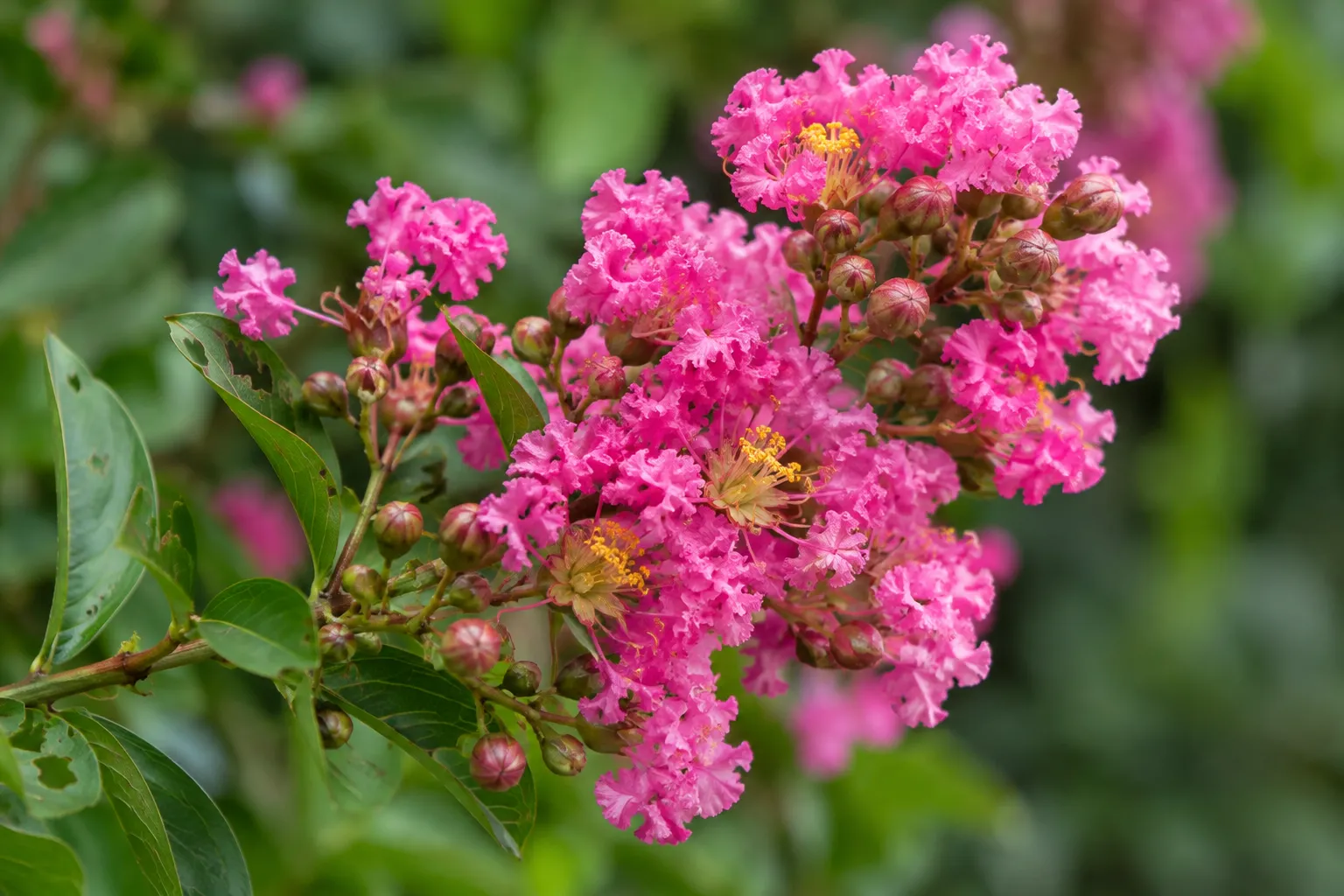
How it works
How a Crepe Myrtle project starts
- 01
Call or send photos
Call (936) 206-7627 or use the form with the address and a few photos of the area.
- 02
We walk the property
We look at the site, the light, the soil and the access before anything is priced.
- 03
Written estimate
You get a detailed estimate in writing at no cost, and the work is done by our own crews.
Common questions about Crepe Myrtle (Crape Myrtle)
Does crape myrtle need hard annual topping to bloom?
No. Normal flowering does not depend on that practice. Match the cultivar to the available space and use selective maintenance appropriate to its structure rather than repeatedly cutting the tree back to stubs.
When is selective crape myrtle pruning usually done?
Where pruning is needed, late winter before new growth is a common starting point. Flowers develop on new growth, but that does not justify annual topping. Remove only the branches needed for structure, health or a defined clearance.
How can the plant be kept from outgrowing its bed?
Choose a cultivar with the right mature dimensions. Crepe myrtle includes shrubs and much larger tree forms. Repeatedly cutting an oversized selection to stubs is not equivalent to installing a naturally smaller plant, and it changes the structure you see all winter.
Why does a well-watered tree have few flowers?
Review light before adding fertilizer. A shaded position may support foliage without the desired bloom display. Also confirm the cultivar and season; compare the tree's whole growing conditions rather than assuming every poor flowering year has the same cause.
Related plants and projects
Camellia Japonica
Camellia japonica is a long-lived flowering evergreen whose success depends on the bed as much as the cultivar.
Sasanqua Camellia
Sasanqua camellia offers an autumn-to-winter flower display, distinct from many japonica selections.
Satsuki Azalea
Satsuki azalea is a selection group, so the cultivar must be identified before size and flowering promises are made.
Tree Planting
Tree planting should match the actual tree to a place where it can develop.
Tree Health Assessment
A tree health assessment investigates symptoms before choosing treatment.
Get a free estimate for Crepe Myrtle
Call (936) 206-7627 or send the address and a few photos through the form. We walk the property and put the price in writing at no cost.