
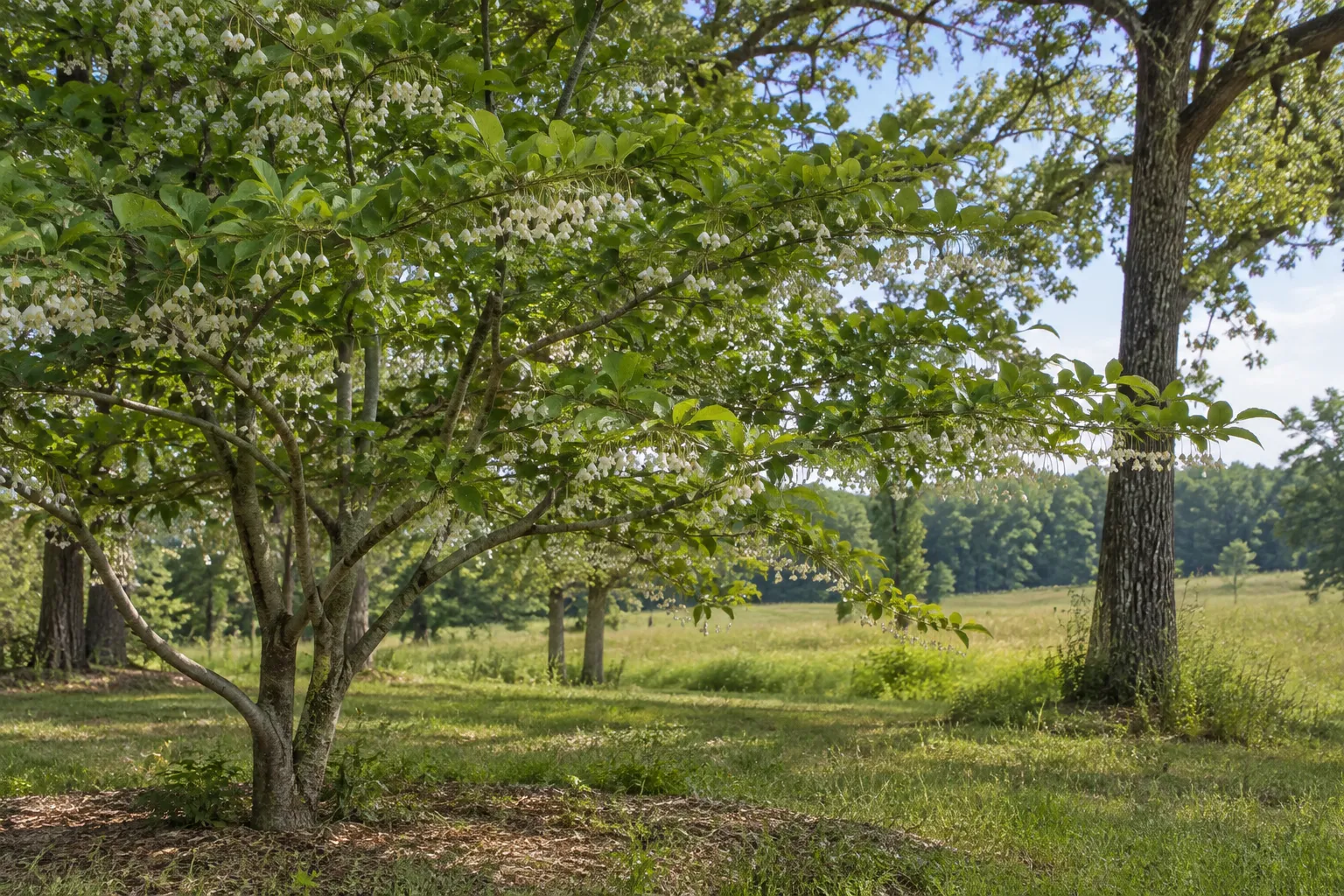
Japanese Snowbell Planting & Care in Conroe & Houston
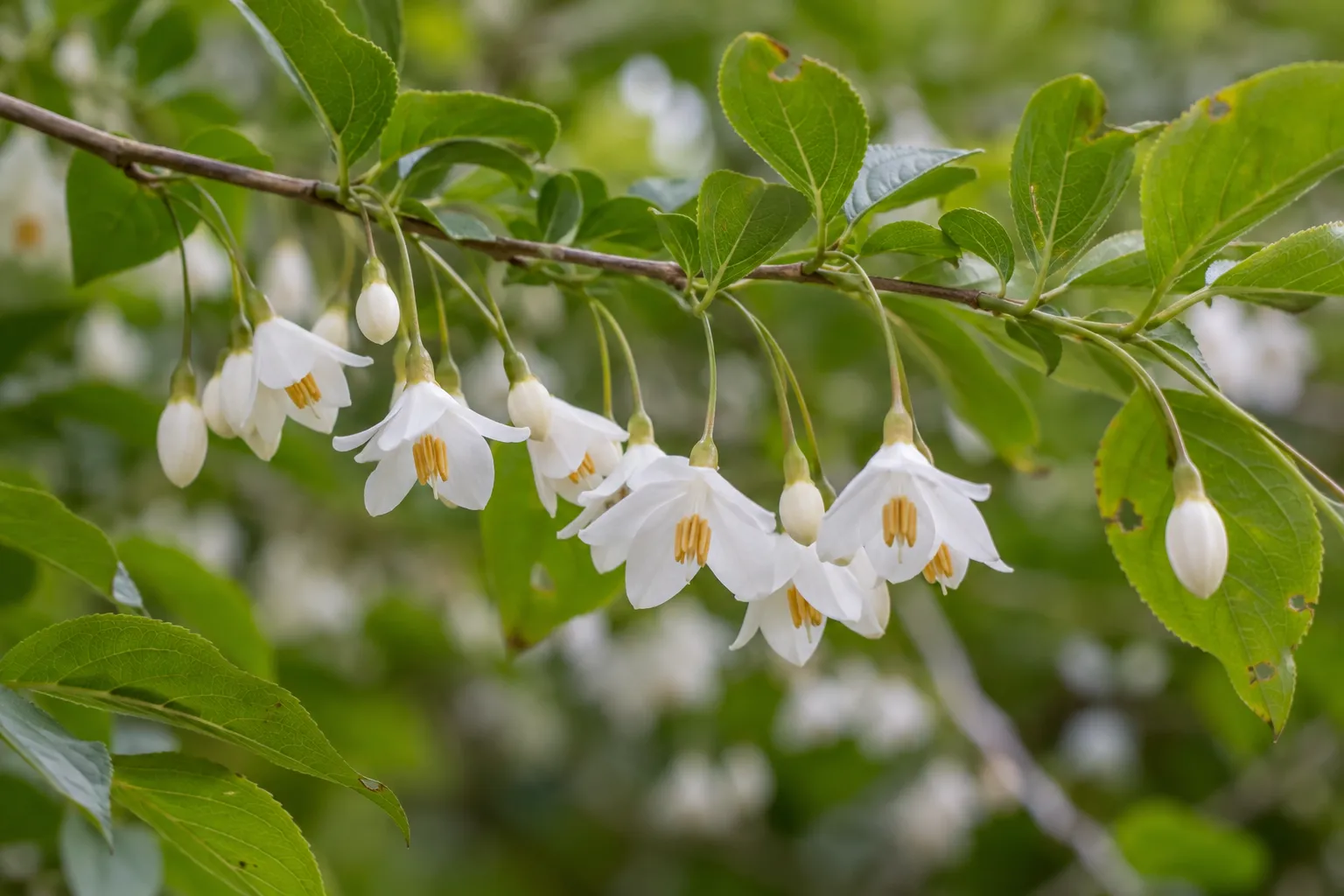
Japanese snowbell offers hanging flowers and a refined branching pattern, but its tolerance of heat and drought is limited.
Family-owned since 2010 · Own crews · Licensed & insured · Free written estimates
Japanese Snowbell planting and care requirements
That constraint should guide the planting discussion. A sheltered position with dependable root moisture is more defensible than promising that the tree will adapt to any sunny Texas courtyard.
For Japanese snowbell work in Houston, Conroe, Katy or Spring, send Boone’s the address, a few photos of the area and what you want done. Boone’s is based in Montgomery, TX.
Services
What Boone’s handles for Japanese Snowbell. Each is priced after we walk the property.
Japanese Snowbell Planting
Japanese snowbell planting should prioritize a sheltered site with suitable moisture and relief from severe exposure. Its relatively compact habit does not remove that requirement. Evaluate the location through the hottest part of the day before selecting a tree chiefly for flowers beside a patio.
Evaluate whether the protected setting remains protected after adjacent landscaping changes. Removing a screening tree or replacing a planted edge with hot paving can turn an initially suitable location into a more stressful one.
Japanese Snowbell Nutrition & Fertilization
Japanese snowbell fertilization should not be used to counter heat or drought stress. The source identifies those environmental limitations directly. Check root moisture, exposure and soil acidity before recommending nutrition; a stronger feed cannot convert an unsuitable receiving site into a suitable one.
Japanese Snowbell Transplanting
Japanese snowbell transplanting requires a receiving location that supports recovery without adding severe heat or dryness. Inspect the existing roots and canopy before moving an established specimen. A relocation made for visual reasons should still improve, or at least preserve, the conditions needed by this tree.
Japanese Snowbell Soil Assessment & Soil Replacement
Japanese snowbell soil should be acidic, moist and well drained. Investigate the complete receiving bed before proposing replacement material. A narrow amended hole in dry compacted ground does not provide the same environment as a broader root zone with dependable moisture and aeration.
Japanese Snowbell Sourcing
Japanese snowbell sourcing should identify Styrax japonicus and any cultivar with a different habit. Confirm specimen dimensions and branch arrangement, and discuss local suitability before ordering. The attractive pendant flowers are not a substitute for a practical plan to maintain moisture through summer.
Japanese Snowbell Irrigation Installation
Japanese snowbell irrigation should prevent the root area from repeatedly drying out. The species reference emphasizes consistent moisture. Design an accessible supply with inspection points and contingency for interruptions, rather than assuming a general lawn cycle will meet the tree's needs in every season.
Japanese Snowbell Root Drainage
Japanese snowbell root drainage must preserve aeration without abandoning its moisture requirement. Examine the difference between a moist soil and stagnant ponding. A site correction should solve the actual imbalance; drying the bed excessively can create another stress for a tree already poorly tolerant of drought.
Japanese Snowbell Aftercare & Maintenance
Japanese snowbell aftercare should give particular attention to summer exposure and moisture consistency. Track leaf condition against irrigation interruptions or hot weather. A tree needing repeated rescue in the same location may require a suitability review rather than a succession of fertilizer or pesticide applications.
Japanese Snowbell Pruning
Japanese snowbell pruning can be carried out in winter for shaping according to the species reference. Retain the low horizontal framework where it contributes to the flower display. Agree the intended clearance before cutting; lifting every lower branch may remove an important part of the tree's character.
Japanese Snowbell Health Assessment
Japanese snowbell health assessment should investigate heat and drought stress before treating symptoms as a disease. Inspect soil moisture, roots and the affected branches together. Where the tree declines repeatedly despite basic care, reconsider the planting site instead of claiming that another input will guarantee recovery.
Talk to Boone’s about Japanese Snowbell
Own crews, licensed and insured, working Conroe, Houston and Montgomery County since 2010.
How it works
How a Japanese Snowbell project starts
- 01
Call or send photos
Call (936) 206-7627 or use the form with the address and a few photos of the area.
- 02
We walk the property
We look at the site, the light, the soil and the access before anything is priced.
- 03
Written estimate
You get a detailed estimate in writing at no cost, and the work is done by our own crews.
Common questions about Japanese Snowbell
Is Japanese snowbell a safe choice for every local property?
No. Heat, drought and the available root environment can limit suitability. A protected site needs assessment, and choosing a better-adapted alternative may be more sensible than committing to a difficult location.
Is Japanese snowbell a low-risk choice for an exposed hot site?
No. Heat and drought sensitivity are important constraints for this species. A sheltered position with consistent moisture is a more appropriate starting point. Declining a difficult location can be better than installing a tree that depends on constant rescue watering.
Where are the hanging flowers easiest to appreciate?
A view from a terrace or path can show the flowers beneath the branches. Keep their eventual clearance in mind without raising the crown unnecessarily. Choose the specimen and location together so people can enjoy the display without brushing against foliage.
Will an automatic lawn zone provide sufficient care?
Not necessarily. The tree's moisture requirements and shaded root area can differ from the grass. Check the root ball and surrounding bed directly; a functioning timer does not prove consistent moisture or rule out a poorly draining planting position.
Related plants and projects
Japanese Maple
Japanese maple is a focal tree for a sheltered position, not a substitute for a large shade canopy.
Shantung Maple
Shantung maple offers a rounded deciduous canopy at a more moderate scale than a large oak.
Live Oak
Live oak is a long-term canopy decision.
Tree Planting
Tree planting should match the actual tree to a place where it can develop.
Tree Health Assessment
A tree health assessment investigates symptoms before choosing treatment.
Get a free estimate for Japanese Snowbell
Call (936) 206-7627 or send the address and a few photos through the form. We walk the property and put the price in writing at no cost.