
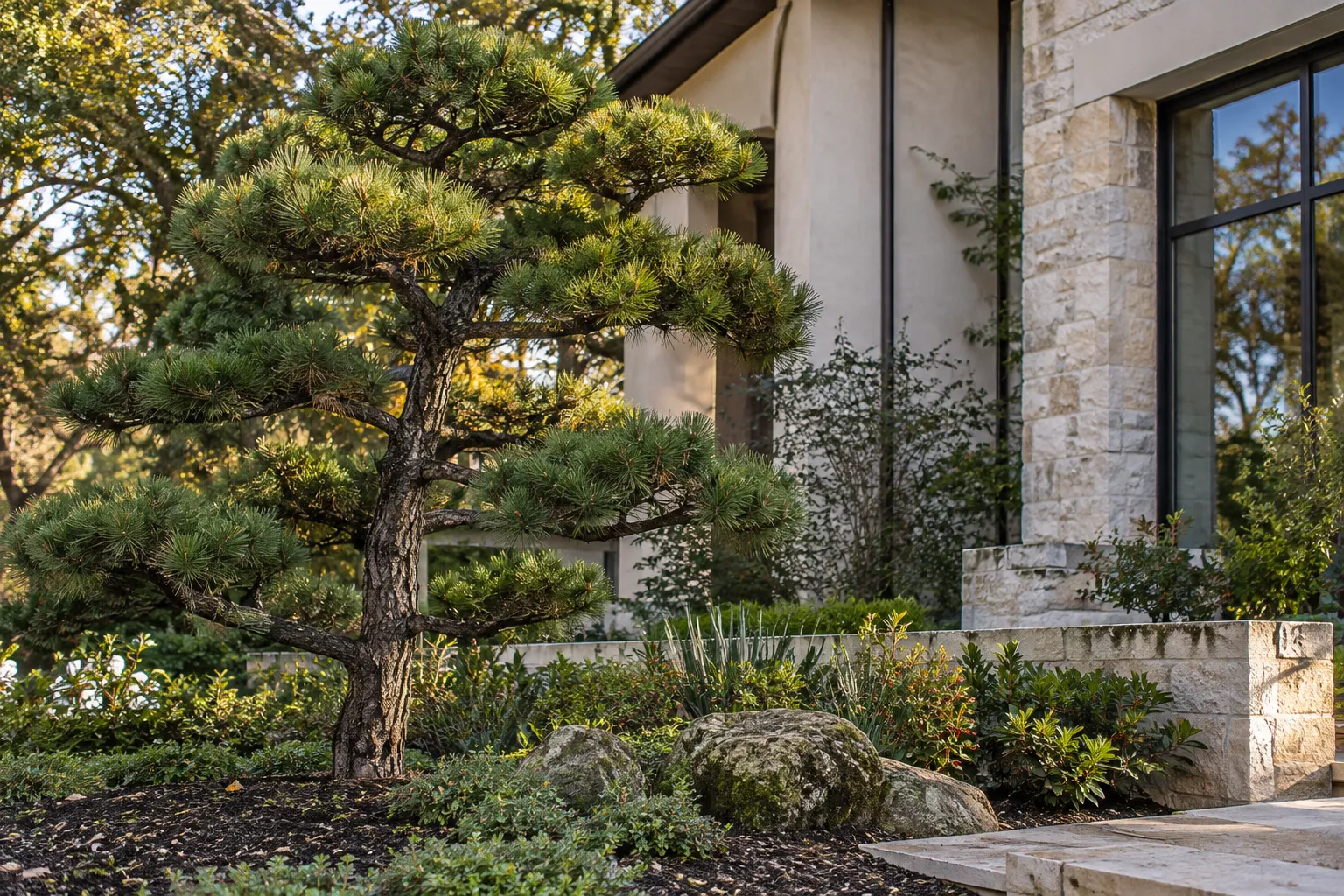
Niwaki Pine Planting & Care in Conroe & Houston
Niwaki describes a trained garden tree, not a botanical species.
Family-owned since 2010 · Own crews · Licensed & insured · Free written estimates
Niwaki Pine planting and care requirements
The pine's identity, existing structure and previous care must be known before a maintenance prescription is written. The aim is to preserve an intentional silhouette without confusing a mature trained specimen with a tree that can be reshaped in one visit.
For niwaki pine work in Houston, Conroe, Katy or Spring, send Boone’s the address, a few photos of the area and what you want done. Boone’s is based in Montgomery, TX.
Services
What Boone’s handles for Niwaki Pine. Each is priced after we walk the property.
Niwaki Pine Planting
Niwaki pine planting begins with the viewing angle, trunk inclination and branch clearances of the actual specimen. Then check the identified pine's light and rooting requirements. A sculptural appearance does not justify burying the base, trapping roots against paving or choosing a location solely because the tree fits today.
Set out the principal view and nearby negative space before choosing the final orientation. The trunk line and branch layers are the feature; crowding them with taller shrubs can hide the work that distinguishes the specimen.
Niwaki Pine Nutrition & Fertilization
Niwaki pine nutrition cannot be specified from the styling term. Identify the pine and assess its current vigor before fertilization. The schedule should support the existing training plan; forcing soft extension growth and then removing it heavily is not a substitute for consistent, species-appropriate management.
Niwaki Pine Soil Assessment & Soil Replacement
Niwaki pine soil preparation must follow the identified species and root-ball condition. A Japanese black pine reference is relevant only when the specimen is actually Pinus thunbergii. Do not sell a universal bonsai-style replacement mix for a landscape tree whose roots will need to colonize the surrounding ground.
Niwaki Pine Sourcing
Niwaki pine sourcing should include the botanical name, photographs from several sides and the history of training. Ask which branches are structural and how the tree has been maintained. Transport must protect the architecture being purchased, not just deliver a living trunk with a broadly similar outline.
Niwaki Pine Irrigation Installation
Niwaki pine irrigation installation needs discreet but inspectable delivery around the root zone. Keep emitters reachable without stepping through the trained branches. Moisture requirements come from the pine and its stage of establishment, not from the small amount of foliage left by a decorative style.
Niwaki Pine Root Drainage
Niwaki pine root drainage should be resolved before a costly trained specimen arrives. Check the whole receiving area, including runoff beneath nearby stonework. A carefully formed crown cannot compensate for roots sitting in a low pocket, and a decorative rock surround must not obstruct water movement or inspection.
Niwaki Pine Aftercare & Maintenance
Niwaki pine aftercare should retain the training history and a photographic record of the agreed silhouette. Review moisture, growth and any temporary supports before scheduling further shaping. Changing contractors or techniques without that record can undo years of branch development even when the tree remains alive.
Niwaki Pine Transplanting
Niwaki pine transplanting risks both roots and trained structure. Assess whether the tree can be excavated, supported and transported without damaging either. A hand-shaped crown is not evidence that the root system is compact; require a specimen-specific handling assessment before describing relocation as feasible.
Niwaki Pine Pruning
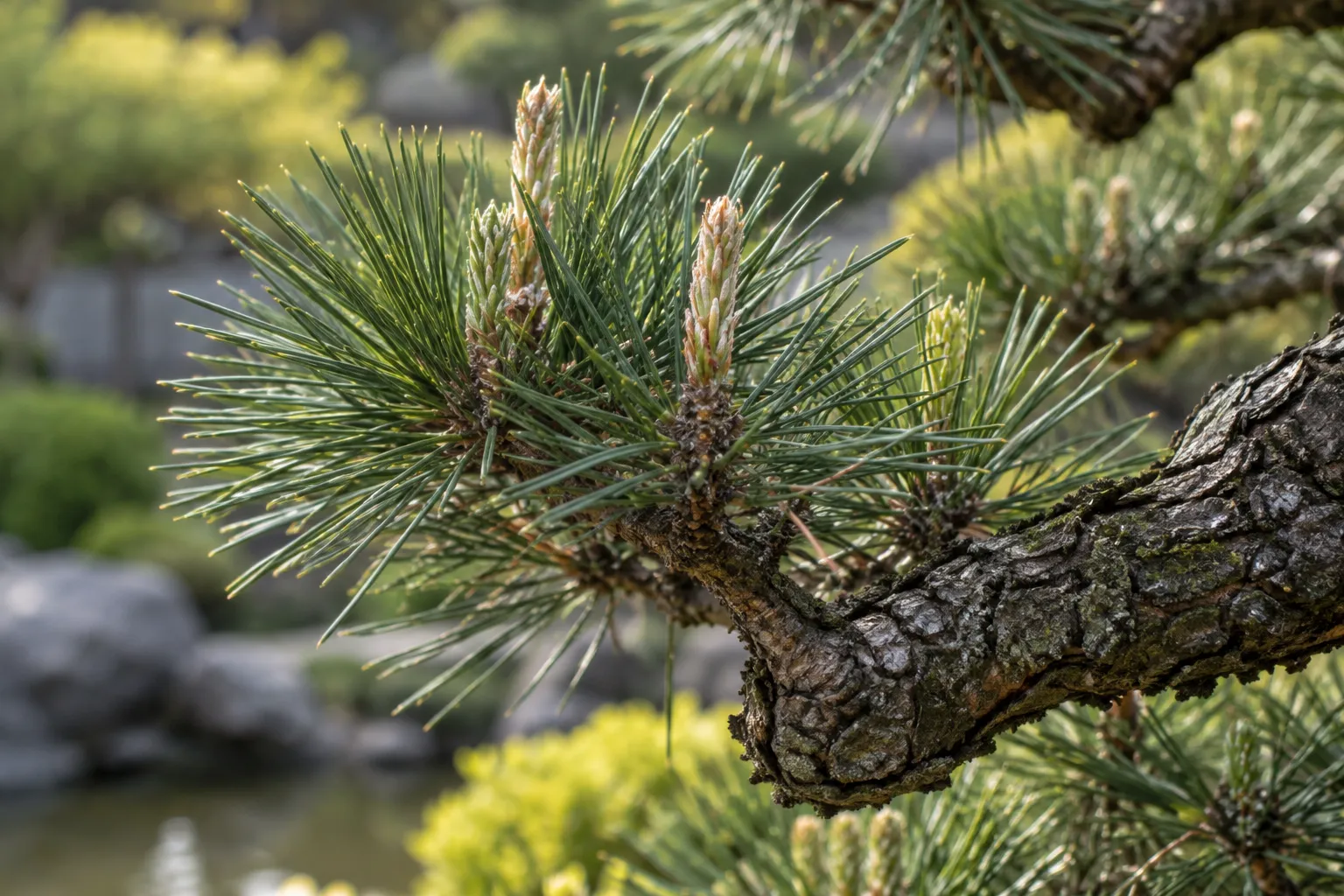
Niwaki pine pruning needs the species, candle growth and intended form established first. Work should preserve living foliage and distinguish structural branches from removable extension. No universal decandling calendar is supplied here: a technique appropriate to one pine or climate can be unsuitable for another specimen.
Niwaki Pine Health Assessment
Niwaki pine health assessment must look beyond a sparse or irregular crown, because that outline may be intentional. Compare current needles and growth with previous photographs and the identified species. Inspect root condition and recent interventions before deciding whether reduced foliage is styling, stress or a diagnosed problem.
Talk to Boone’s about Niwaki Pine
Own crews, licensed and insured, working Conroe, Houston and Montgomery County since 2010.
How it works
How a Niwaki Pine project starts
- 01
Call or send photos
Call (936) 206-7627 or use the form with the address and a few photos of the area.
- 02
We walk the property
We look at the site, the light, the soil and the access before anything is priced.
- 03
Written estimate
You get a detailed estimate in writing at no cost, and the work is done by our own crews.
Common questions about Niwaki Pine
Is niwaki a particular variety of pine?
No. The term describes garden-tree training. Several species can be used, and their care is not identical. The purchase specification should identify the actual species and the trained form instead of relying on the style name alone.
Can a niwaki pine be maintained with ordinary hedge clipping?
Not without losing the intended structure. The work follows selected branches and foliage pads, using a method appropriate to the actual pine. Agree the desired silhouette and pruning responsibilities rather than treating the specimen as a uniformly clipped shrub.
What does the nursery need to show before purchase?
Request the species, individual photographs, trained branch structure and current root condition. Record the intended viewing face. A style name and height do not describe the years of training or establish that another specimen is visually interchangeable.
Can any pine follow a Japanese black-pine candle schedule?
No. Pine species and plant vigor differ, and techniques used for bonsai cannot simply be transferred to every garden tree. The maintenance plan should name the species and the purpose of each operation instead of importing a generic calendar.
Related plants and projects
Japanese Black Pine
Japanese black pine is a character tree with paired needles and an increasingly irregular crown.
Shimpaku Juniper
Shimpaku juniper is sought for fine evergreen foliage and a sculptural framework.
Japanese Plum Yew
Japanese plum yew is a useful candidate for an evergreen planting where shade limits other conifers.
Tree Planting
Tree planting should match the actual tree to a place where it can develop.
Tree Health Assessment
A tree health assessment investigates symptoms before choosing treatment.
Get a free estimate for Niwaki Pine
Call (936) 206-7627 or send the address and a few photos through the form. We walk the property and put the price in writing at no cost.