
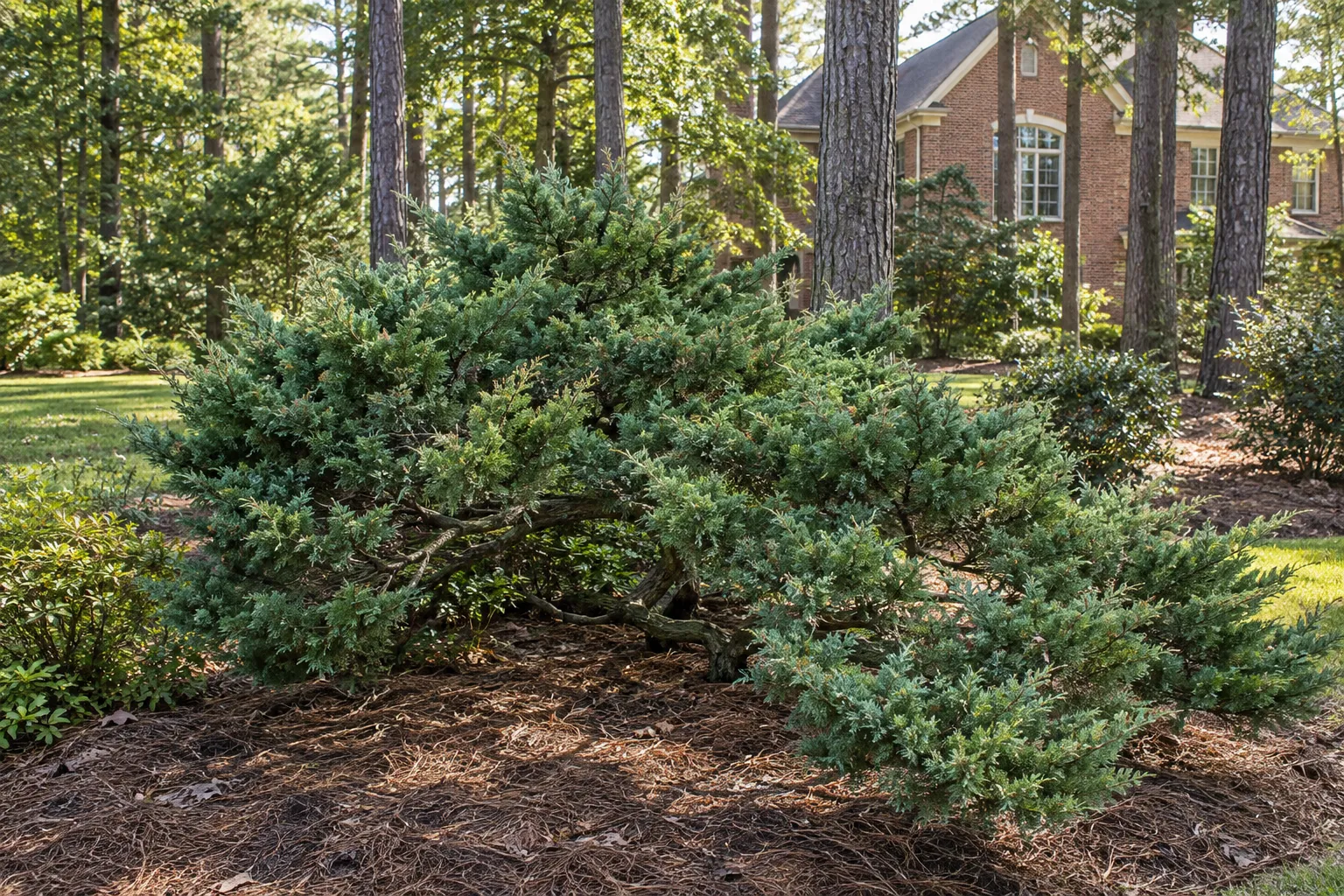
Shimpaku Juniper Planting & Care in Conroe & Houston
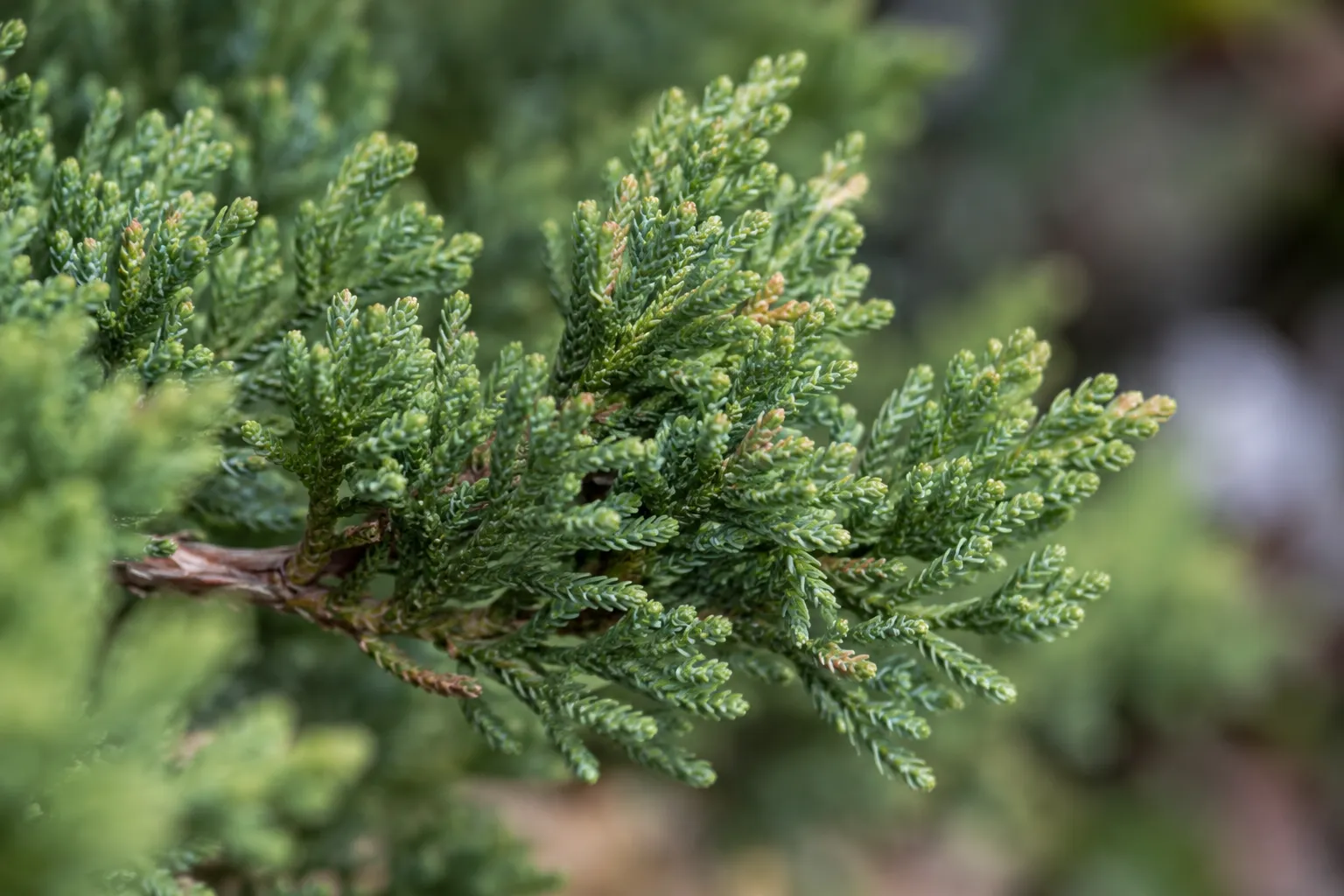
Shimpaku juniper is sought for fine evergreen foliage and a sculptural framework.
Family-owned since 2010 · Own crews · Licensed & insured · Free written estimates
Shimpaku Juniper planting and care requirements
The nursery selection and training history matter more than the generic juniper label. Confirm how much of the shape is natural and how much depends on repeated skilled work before choosing it for a focal position.
For shimpaku juniper work in Houston, Conroe, Katy or Spring, send Boone’s the address, a few photos of the area and what you want done. Boone’s is based in Montgomery, TX.
Services
What Boone’s handles for Shimpaku Juniper. Each is priced after we walk the property.
Shimpaku Juniper Planting
Shimpaku juniper planting should provide a bright position with usable air space around the crown. The Chinese juniper reference supports well-drained conditions, but does not define every Shimpaku selection's final dimensions. Set the root flare correctly and position the actual framework where it will not need immediate shortening.
Shimpaku Juniper Nutrition & Fertilization
Shimpaku juniper fertilization should be linked to healthy growth rather than the density of its sculpted outline. A deliberately open crown is not automatically underfed. Review root moisture and the confirmed selection before adding nutrients; nutrition inputs should not become a routine response to every change in needle color.
Shimpaku Juniper Soil Assessment & Soil Replacement
Shimpaku juniper soil assessment should favor a well-aerated, draining root environment. Chinese juniper tolerates a range of soil reactions, so an expensive universal replacement recipe needs justification. Investigate compaction and water movement before deciding that the existing soil itself is the problem.
Shimpaku Juniper Sourcing
Shimpaku juniper sourcing should document the named selection and whether the specimen has been trained. Photographs of the trunk, live foliage pads and root-ball condition help distinguish the actual tree from a generic display image. Do not assume all nursery material sold under the name has identical form.
Shimpaku Juniper Irrigation Installation
Shimpaku juniper irrigation needs access beneath the trained foliage. Check output and root-ball moisture rather than relying on a spray that merely wets the canopy. Established junipers can tolerate some dryness; a recently transplanted specimen still needs its own monitored establishment program.
Shimpaku Juniper Root Drainage
Shimpaku juniper root drainage should keep excess water from collecting around a low-mounted root ball. Inspect runoff from neighboring paving and the bed's outlet. A gravel surface is a finish, not proof that the soil underneath drains properly.
Shimpaku Juniper Transplanting
Shimpaku juniper transplanting requires protection of live foliage as well as roots. The species' general transplantability does not establish the feasibility of moving an old, trained individual. Check root preparation, dimensions and lifting access before agreeing that a replacement location is practical.
Shimpaku Juniper Aftercare & Maintenance
Shimpaku juniper aftercare should compare new growth with the intended branch design. Keep maintenance access open and avoid constant wetting of foliage from adjacent irrigation. When appearance changes, inspect the root environment and recent pruning before treating the tree with either fertilizer or pesticide.
Shimpaku Juniper Pruning
Shimpaku juniper pruning should preserve live foliage on the branches that define its outline. Junipers generally do not regenerate well from old bare wood. Use selective cuts rather than clipping every pad into the same shape, and keep the documented training objective separate from ordinary hedge maintenance.
Shimpaku Juniper Health Assessment
Shimpaku juniper health assessment should identify lesions or galls before choosing a remedy. Chinese juniper can participate in cedar-apple rust, but not every discolored shoot represents that disease. Compare foliage changes, irrigation and the confirmed cultivar; obtain a diagnosis when symptoms cannot be explained by site conditions.
Talk to Boone’s about Shimpaku Juniper
Own crews, licensed and insured, working Conroe, Houston and Montgomery County since 2010.
How it works
How a Shimpaku Juniper project starts
- 01
Call or send photos
Call (936) 206-7627 or use the form with the address and a few photos of the area.
- 02
We walk the property
We look at the site, the light, the soil and the access before anything is priced.
- 03
Written estimate
You get a detailed estimate in writing at no cost, and the work is done by our own crews.
Common questions about Shimpaku Juniper
Can any Chinese juniper replace a Shimpaku specimen?
Not without approval. Chinese junipers include many habits and foliage presentations. Where the design depends on fine texture or a trained trunk, specify those features and inspect the actual plant before accepting an alternative.
Can bare old juniper wood be expected to grow back after a severe cut?
Do not rely on it. Junipers generally regenerate poorly from old bare wood. Retain useful foliage on the framework and avoid a hedge-style cut that leaves exposed stubs where the design needs a permanent green pad.
What distinguishes a trained Shimpaku order from an ordinary juniper?
The selected trunk, branch pads, foliage and viewing face are part of the purchase. Record them with photographs and nursery identification. A generic Chinese juniper matching the pot size may not preserve the composition or maintenance needs of the approved specimen.
Why must irrigation be checked beneath the foliage pads?
Dense trained foliage can conceal the root area and watering components. Inspect where water actually reaches the root ball and how long it remains there. A tidy canopy does not show whether the roots are alternately drying and staying saturated.
Related plants and projects
Japanese Black Pine
Japanese black pine is a character tree with paired needles and an increasingly irregular crown.
Niwaki Pine
Niwaki describes a trained garden tree, not a botanical species.
Japanese Plum Yew
Japanese plum yew is a useful candidate for an evergreen planting where shade limits other conifers.
Tree Planting
Tree planting should match the actual tree to a place where it can develop.
Tree Health Assessment
A tree health assessment investigates symptoms before choosing treatment.
Get a free estimate for Shimpaku Juniper
Call (936) 206-7627 or send the address and a few photos through the form. We walk the property and put the price in writing at no cost.
Sources
- Plant reference: Juniperus chinensis selections sold as Shimpaku
- ISA TreesAreGood — tree planting principles
- UNH Extension — when trees and shrubs need fertilizer
- US EPA WaterSense — irrigation management
- LSU AgCenter — moving established trees and shrubs within the landscape
- The Morton Arboretum — evergreen tree and shrub pruning