
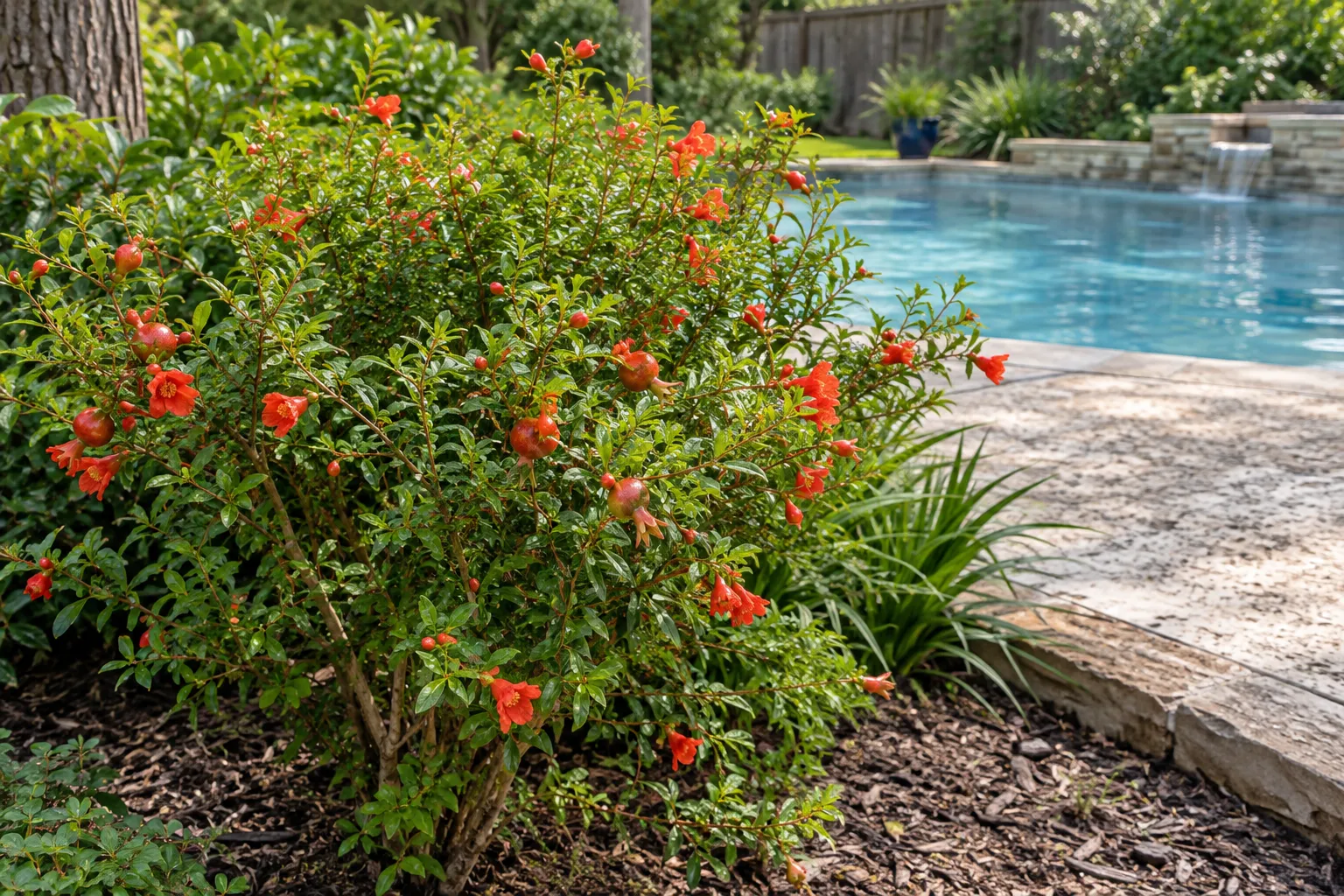
Ornamental Pomegranate Planting & Care in Conroe & Houston
Ornamental pomegranate should be selected for the named cultivar's form and display, not sold with an assumed fruiting outcome.
Family-owned since 2010 · Own crews · Licensed & insured · Free written estimates
Ornamental Pomegranate planting and care requirements
The species favors warm, relatively dry conditions, and humid-region fruiting can be unreliable. Clarify whether flowers, a hedge or edible fruit is the objective before choosing the plant.
For ornamental pomegranate work in Houston, Conroe, Katy or Spring, send Boone’s the address, a few photos of the area and what you want done. Boone’s is based in Montgomery, TX.
Services
What Boone’s handles for Ornamental Pomegranate. Each is priced after we walk the property.
Ornamental Pomegranate Planting
Ornamental pomegranate planting can use sun or partial shade, with a position that provides adequate drainage. Confirm the cultivar's mature dimensions before fitting it near a path. A flowering ornamental selection should not be treated as interchangeable with a fruit-production cultivar merely because both are Punica granatum.
Ornamental Pomegranate Nutrition & Fertilization
Ornamental pomegranate fertilization should reflect growth and the intended ornamental use. The source notes unreliable fruiting in some humid southeastern conditions, so a poor crop is not proof of nutrient shortage. Check cultivar, pollination and site conditions before prescribing feeding as the answer.
Ornamental Pomegranate Transplanting
Ornamental pomegranate transplanting should preserve the chosen stem form and a workable root ball. Assess the established plant before moving it for a new terrace or bed. Relocation is not a guaranteed way to improve fruiting, especially when cultivar and humid-site limitations have not been resolved.
Ornamental Pomegranate Soil Assessment & Soil Replacement
Ornamental pomegranate soil can vary provided drainage and suitable moisture are available. The species' adaptability does not justify burying the base or ignoring compaction. Inspect the receiving area before specifying soil replacement, and separate a visual planting theme from an actual soil-management requirement.
Ornamental Pomegranate Sourcing
Ornamental pomegranate sourcing should state the cultivar and whether fruit is an expected feature. Flowering form, eventual size and fruit characteristics can differ. Ask for the actual selection rather than accepting a generic pomegranate when the intended role is a compact ornamental specimen or formal hedge.
Ornamental Pomegranate Irrigation Installation
Ornamental pomegranate irrigation should support establishment before relying on the species' later drought tolerance. Check root moisture directly and adapt to rainfall. A plant selected for ornamental flowers still needs a coherent water plan; fruit expectations should not automatically dictate an unverified heavy irrigation schedule.
Ornamental Pomegranate Root Drainage
Ornamental pomegranate root drainage should be checked in low or enclosed beds. The reference identifies root rot among possible problems. Correct persistent water accumulation before repeating a replacement planting, rather than assuming a new cultivar or stronger fertilizer will resolve the same site constraint.
Ornamental Pomegranate Aftercare & Maintenance
Ornamental pomegranate aftercare should compare growth and flower display with the named selection. Normal deciduous behavior should not be treated as plant failure. Keep the intended stem form and moisture conditions under review, while avoiding promises of edible fruit quality that were never established for the cultivar.
Ornamental Pomegranate Pruning
Ornamental pomegranate pruning should follow the chosen form and flowering objective. A multi-stem specimen and a clipped hedge are different maintenance briefs. The cited profile does not establish one local pruning calendar, so agree timing and desired retained structure instead of applying routine severe reduction.
Ornamental Pomegranate Health Assessment
Ornamental pomegranate health assessment should inspect leaves, stems and any fruit, with moisture history available. The source lists several possible pests and diseases, but does not diagnose a particular specimen. Separate an unreliable crop from actual declining health before selecting a treatment.
Distinguish cosmetic fruit blemishes, leaf symptoms and root-related decline rather than treating them as one problem. Photographs and timing help determine whether the concern affects appearance, fruit use or the plant's continued growth.
Talk to Boone’s about Ornamental Pomegranate
Own crews, licensed and insured, working Conroe, Houston and Montgomery County since 2010.
How it works
How a Ornamental Pomegranate project starts
- 01
Call or send photos
Call (936) 206-7627 or use the form with the address and a few photos of the area.
- 02
We walk the property
We look at the site, the light, the soil and the access before anything is priced.
- 03
Written estimate
You get a detailed estimate in writing at no cost, and the work is done by our own crews.
Common questions about Ornamental Pomegranate
Will every ornamental pomegranate provide a reliable edible harvest?
No. Selection and growing conditions matter, and some plants are purchased primarily for floral or dwarf characteristics. The order should explicitly state whether edible production is part of the objective.
Can an ornamental pomegranate be selected mainly for flowers?
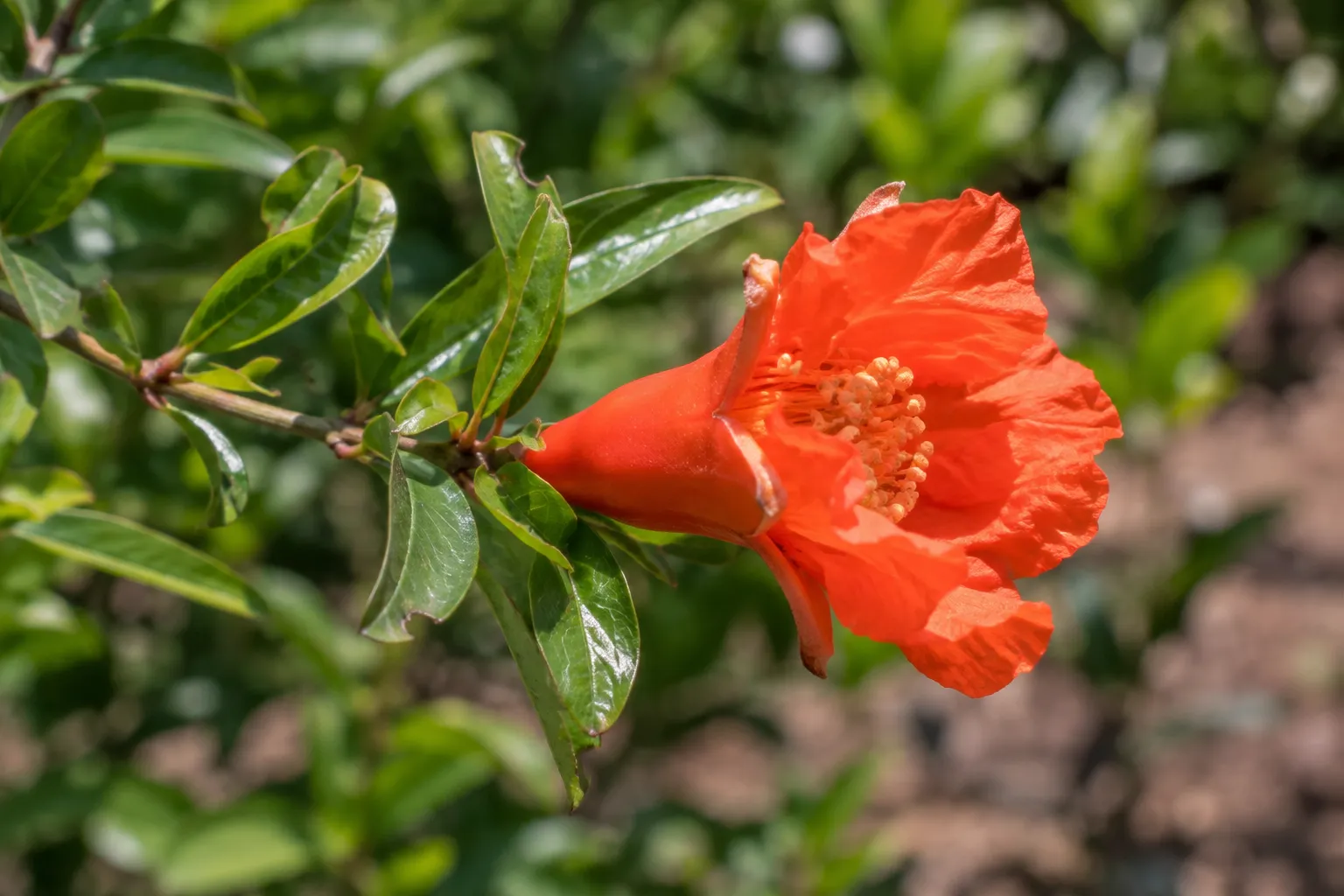
Yes, but name the cultivar and its intended role. Ornamental and dwarf selections can differ from plants chosen for a productive fruit crop. A flowering photograph alone does not establish mature size, fruit quality or reliable harvests in a humid location.
How does pruning change the appearance?
A bushy, multi-stem planting and a trained small tree need different frameworks. Agree which one is intended before removing basal growth. Repeatedly changing between those objectives wastes useful structure and makes the long-term maintenance brief unclear.
Does drought tolerance mean the new plant needs no watering?
No. Establishment must account for the limited nursery root ball and the receiving soil. Check moisture and drainage before adjusting irrigation. Once roots expand, the program can change; the species' eventual tolerance is not a first-week watering instruction.
Related plants and projects
Camellia Japonica
Camellia japonica is a long-lived flowering evergreen whose success depends on the bed as much as the cultivar.
Sasanqua Camellia
Sasanqua camellia offers an autumn-to-winter flower display, distinct from many japonica selections.
Satsuki Azalea
Satsuki azalea is a selection group, so the cultivar must be identified before size and flowering promises are made.
Tree Planting
Tree planting should match the actual tree to a place where it can develop.
Tree Health Assessment
A tree health assessment investigates symptoms before choosing treatment.
Get a free estimate for Ornamental Pomegranate
Call (936) 206-7627 or send the address and a few photos through the form. We walk the property and put the price in writing at no cost.