
Southern Magnolia Care, Pruning & Planting in Conroe & Houston
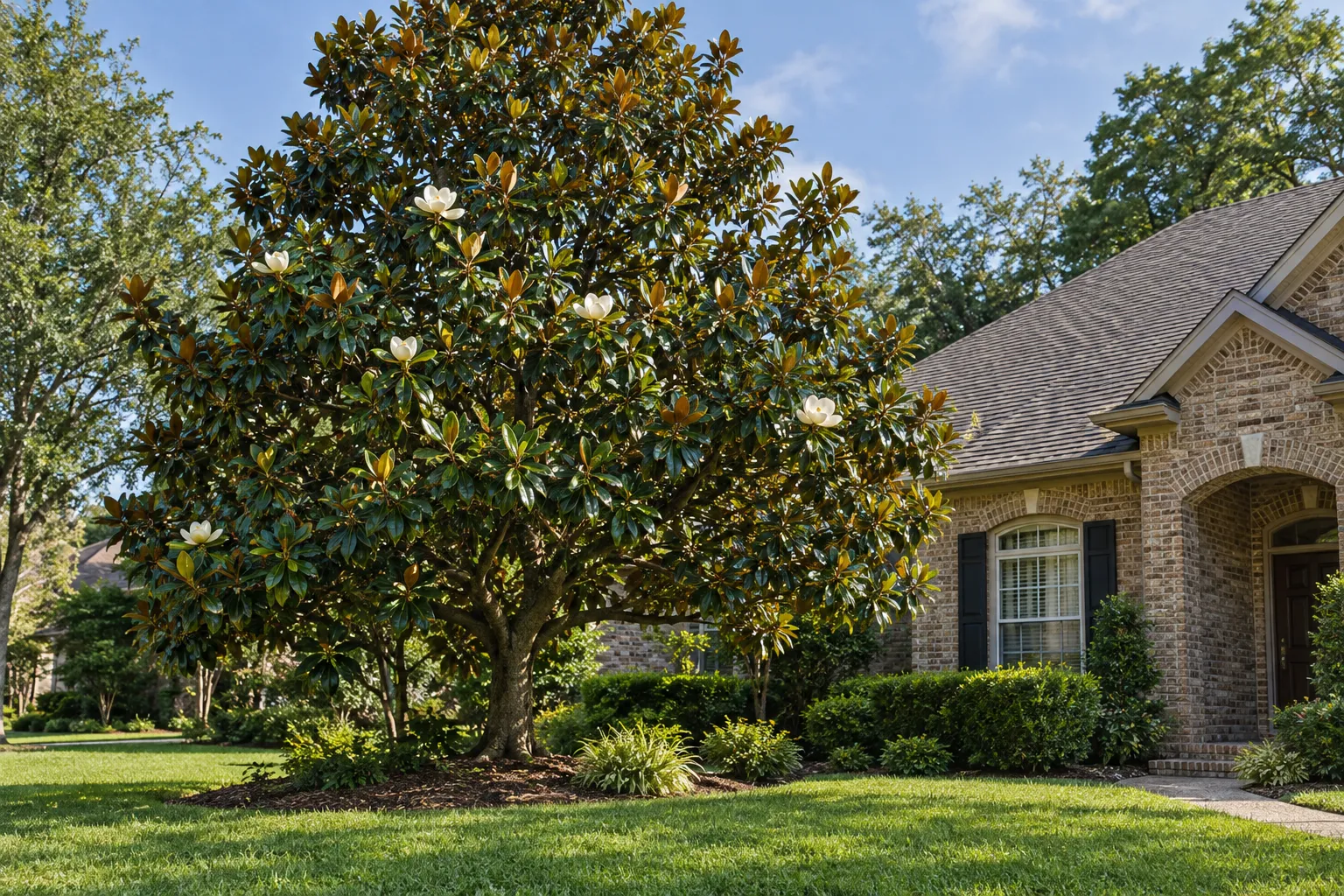
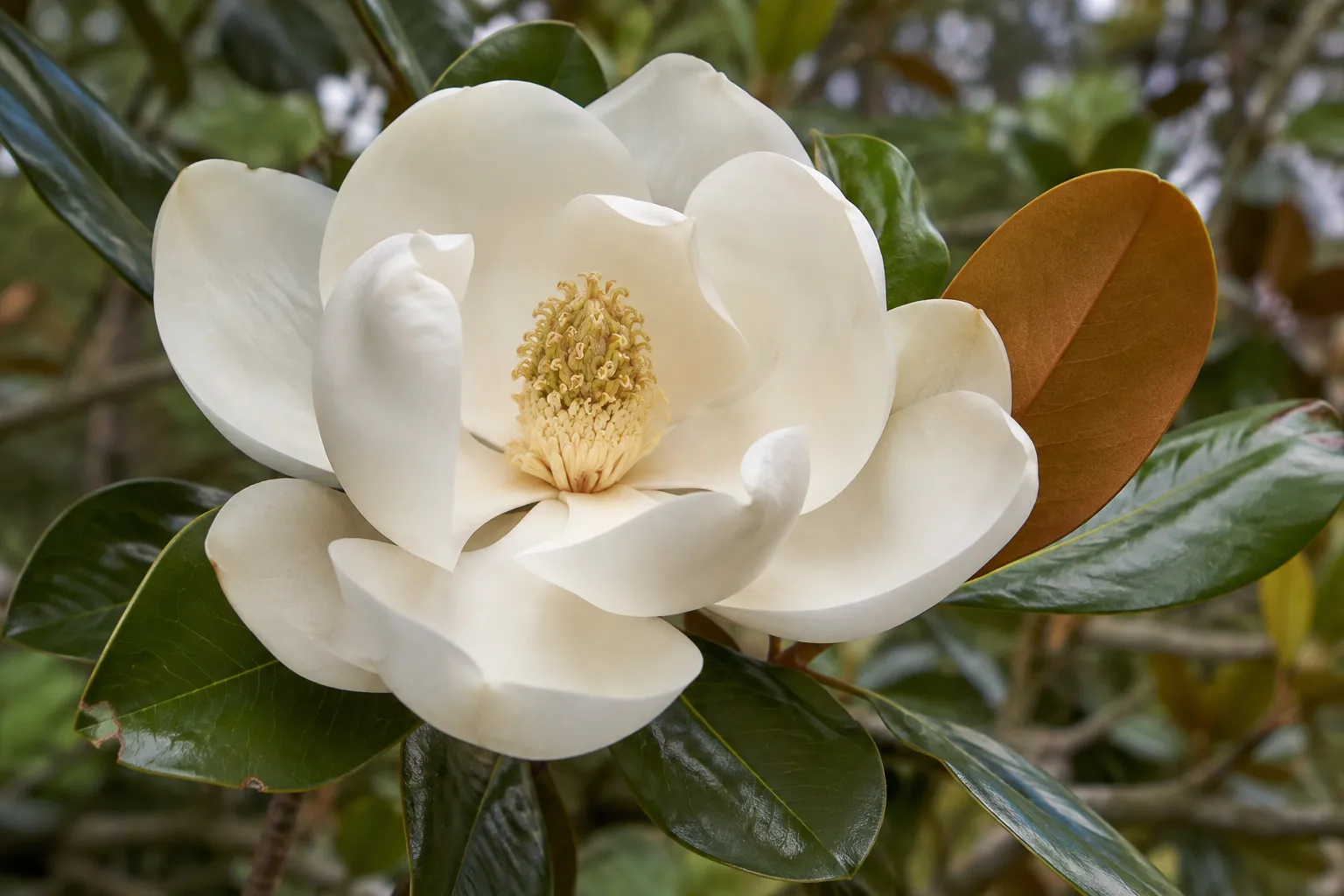
Southern magnolia is valued for large leaves, flowers and a full evergreen presence.
Family-owned since 2010 · Own crews · Licensed & insured · Free written estimates
Southern Magnolia planting and care requirements
A standard tree can become too large for a confined yard, while smaller cultivars have different dimensions. Decide whether low branches are part of the design before placing lawn, paths or seating beneath the future canopy.
For southern magnolia inquiries in Houston and Conroe, send the address, plant photographs and the work required. Confirm availability and the site-specific scope with Boone’s before ordering.
Services
What Boone’s handles for Southern Magnolia. Each is priced after we walk the property.
Southern Magnolia Planting
Southern magnolia planting should reserve space for a broad, heavily foliaged crown. Select a smaller cultivar when the site cannot accommodate the species' scale. Consider whether the intended ground beneath will be mulched rather than expecting a dense magnolia canopy to coexist with a permanent full-sun lawn.
Leave room for both the low limbs and maintenance around the planting edge. A magnolia chosen for its full crown should not immediately require branch removal to clear a path that was drawn too close.
Southern Magnolia Sourcing
Southern magnolia sourcing should identify the cultivar and expected mature size. A compact selection is not equivalent to a young standard tree that currently has the same height. Compare leaf condition, branch arrangement and root-ball dimensions before accepting a substitute for a prominent garden position.
Southern Magnolia Aftercare & Maintenance
Southern magnolia aftercare should accommodate its leaf litter and shade. Keep the area under the canopy suitable for root health instead of repeatedly disturbing it to restore struggling turf. Inspect moisture and new growth; large leaves shed in spring or fall can be part of normal renewal.
Southern Magnolia Nutrition & Fertilization
Southern magnolia fertilization should be based on vigor and soil evidence. Normal seasonal shedding can leave many large leaves on the ground without indicating nutrient shortage. Evaluate new growth, moisture and root condition before selling feeding as the answer to an otherwise healthy tree's leaf drop.
Southern Magnolia Pruning
Southern magnolia pruning should respect the intended canopy. Lower limbs naturally contribute to a full specimen, and removing them to force lawn access changes that character. Identify actual conflicts or damaged branches before cutting rather than treating routine canopy lifting as essential maintenance for every tree.
Southern Magnolia Soil Assessment & Soil Replacement
Southern magnolia soil should retain appropriate moisture without remaining swampy. The species tolerates moist conditions but not prolonged flooding. Inspect the receiving area and avoid assuming that another magnolia's preference for wet ground applies to this tree; sweetbay and southern magnolia need separate judgments.
Southern Magnolia Health Assessment
Southern magnolia health assessment should distinguish ordinary leaf turnover from unusual yellowing, scale or dieback. Examine both old and new foliage and note any recent excavation. The amount of leaf litter alone does not tell whether fertilizer, pest treatment or a change in irrigation is appropriate.
Southern Magnolia Irrigation Installation
Southern magnolia irrigation should reach the establishing root ball and later the expanding rooting area. Dense leaves can hide delivery problems and alter the ground's drying rate. Check moisture below mulch instead of transferring the runtime from the adjacent sunny lawn unchanged.
Southern Magnolia Root Drainage
Southern magnolia root drainage should prevent prolonged ponding around the base. Its preference for moisture must not be confused with tolerance of swamp conditions. Trace runoff from roofs and new paving before choosing a position, particularly where a heavy root ball would be difficult to relocate later.
Southern Magnolia Transplanting
Southern magnolia transplanting should be assessed before excavation because a large evergreen crown and root system need careful handling. Compare the receiving space and recovery requirements with leaving the tree in place. The general species profile does not provide a guarantee that an established specimen can be moved successfully.
Talk to Boone’s about Southern Magnolia
Own crews, licensed and insured, working Conroe, Houston and Montgomery County since 2010.
How it works
How a Southern Magnolia project starts
- 01
Call or send photos
Call (936) 206-7627 or use the form with the address and a few photos of the area.
- 02
We walk the property
We look at the site, the light, the soil and the access before anything is priced.
- 03
Written estimate
You get a detailed estimate in writing at no cost, and the work is done by our own crews.
Common questions about Southern Magnolia
Are Southern and sweetbay magnolia interchangeable?
No. They differ in foliage, scale and response to moisture. The correct choice depends on the site and the desired appearance. Compare the botanical names and the exact cultivars rather than accepting any plant labeled magnolia.
Can the lower branches stay on a Southern magnolia?
Yes, where the design allows them room. A full-to-ground crown can be part of the species' character. Raising it for access changes the appearance, so choose between a broad specimen and a cleared-underneath tree before maintenance begins.
Will lawn grow well directly beneath the mature crown?
Dense shade, leaf litter and roots can make that difficult. Consider a mulched area instead of promising uninterrupted turf to the trunk. The planting plan should account for the actual space beneath the tree, not just its flowers above eye level.
Does every Southern magnolia grow to the same size?
No. Named cultivars can be much smaller than the species. Specify the selection and its mature proportions before placing it near buildings. Buying a small nursery tree does not by itself create a compact long-term specimen.
Related plants and projects
Japanese Maple
Japanese maple is a focal tree for a sheltered position, not a substitute for a large shade canopy.
Shantung Maple
Shantung maple offers a rounded deciduous canopy at a more moderate scale than a large oak.
Live Oak
Live oak is a long-term canopy decision.
Tree Planting
Tree planting should match the actual tree to a place where it can develop.
Tree Health Assessment
A tree health assessment investigates symptoms before choosing treatment.
Get a free estimate for Southern Magnolia
Call (936) 206-7627 or send the address and a few photos through the form. We walk the property and put the price in writing at no cost.