
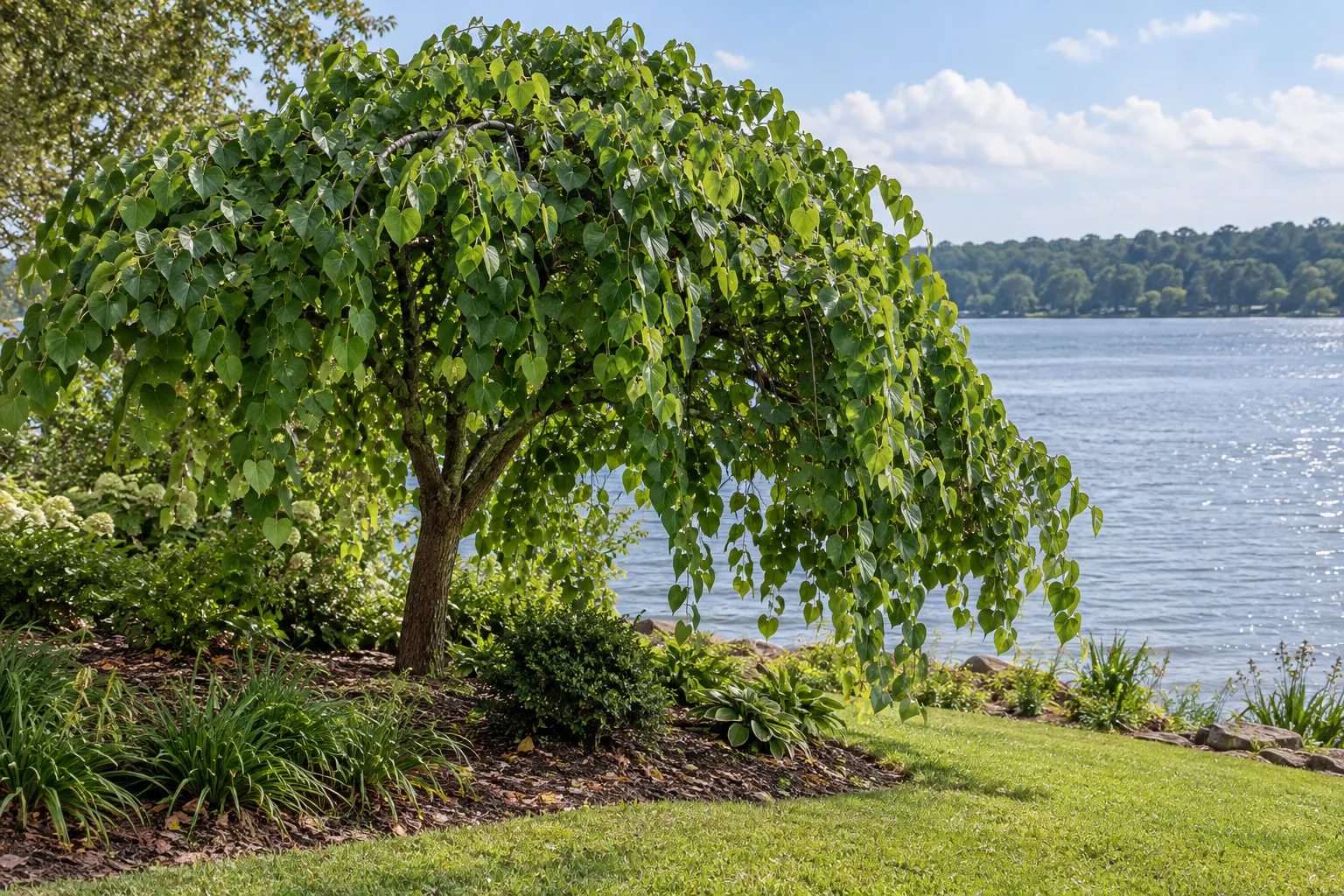
Weeping Redbud Planting & Care in Conroe & Houston
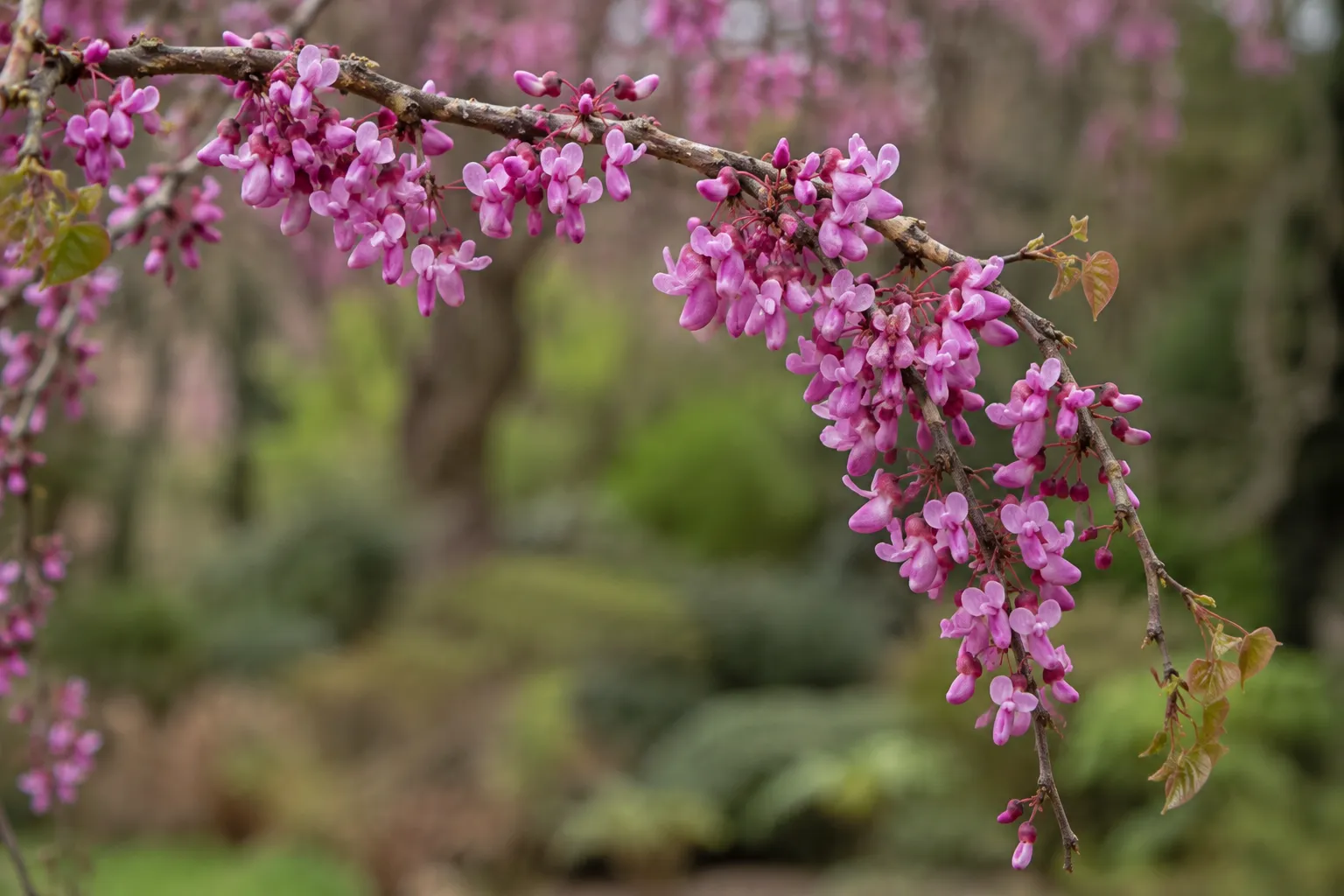
Weeping redbud describes a growth habit across named selections, not a single tree with one mature size.
Family-owned since 2010 · Own crews · Licensed & insured · Free written estimates
Weeping Redbud planting and care requirements
The graft and trained framework affect the result. Choose the exact cultivar and permanent position carefully, because the general redbud reference identifies sensitivity to root disturbance.
For weeping redbud work in Houston, Conroe, Katy or Spring, send Boone’s the address, a few photos of the area and what you want done. Boone’s is based in Montgomery, TX.
Services
What Boone’s handles for Weeping Redbud. Each is priced after we walk the property.
Weeping Redbud Planting
Weeping redbud planting should make room for the selected canopy without forcing branches out of a walkway. Confirm the cultivar and root depth before positioning it. A protected location and suitable moisture are important; the ornamental shape is not a reason to ignore heat, drought or wet-ground concerns.
Weeping Redbud Nutrition & Fertilization
Weeping redbud nutrition should be assessed separately from its naturally hanging habit. Low branches or a small crown do not prove weak growth. Inspect moisture, planting depth and current extension before fertilization; extra nutrients cannot compensate for unsuitable exposure or a root system damaged during relocation.
Weeping Redbud Transplanting
Weeping redbud transplanting deserves caution because redbuds can be sensitive to root disturbance. Assess an established specimen before committing to a move. Retaining it in a suitable permanent position may be preferable to relocation, particularly where access would require a small or damaged root ball.
Weeping Redbud Soil Assessment & Soil Replacement
Weeping redbud soil should support roots without waterlogging. The species can grow in different textures, but a permanently wet pocket is unsuitable. Check compaction and the planned finished grade before soil replacement, and preserve a visible stem base rather than hiding the grafted specimen in a deep mulch mound.
Weeping Redbud Sourcing
Weeping redbud sourcing should specify the cultivar, graft height and existing branch framework. Those details affect the final silhouette. A generic Cercis canadensis reference cannot determine the height or width of every weeping selection, so do not approve an unspecified substitute from leaf color alone.
Weeping Redbud Irrigation Installation
Weeping redbud irrigation should keep a new root ball adequately moist while avoiding stagnant conditions. Check water delivery beneath the low crown, where blocked equipment can be hard to see. A retained specimen disturbed by construction needs reassessment rather than an unchanged schedule inherited from before the work.
Weeping Redbud Root Drainage
Weeping redbud root drainage should be reviewed before a low ornamental bed is selected. Inspect runoff from adjoining steps or paving. Water held under a low canopy may go unnoticed, so visual screening of the soil should not replace inspection of how the planting actually drains.
Weeping Redbud Aftercare & Maintenance
Weeping redbud aftercare should preserve the cultivar's trained form and monitor the graft area. Protect the tree from routine lawn chemicals and physical injury; the general species reference notes sensitivity to lawn herbicides. Diagnose unexpected shoots or decline before treating them as ordinary shaping work.
Protect the trunk and root area from unnecessary disturbance, including lawn operations close to the stem. Keep watering checks possible beneath the canopy without repeatedly lifting or breaking low branches.
Weeping Redbud Pruning
Weeping redbud pruning should retain the named cultivar's intended cascade and identify growth arising below a graft. Do not apply the clearance rules of an upright shade tree automatically. Agree the desired structure and have timing assessed before removing branches that establish the specimen's form.
Weeping Redbud Health Assessment
Weeping redbud health assessment should connect canopy symptoms with root disturbance, moisture and possible lawn-treatment exposure. Inspect the whole tree, including the grafted framework. A damaged or poorly established specimen needs diagnosis before a nutrition treatment is presented as the solution.
Talk to Boone’s about Weeping Redbud
Own crews, licensed and insured, working Conroe, Houston and Montgomery County since 2010.
How it works
How a Weeping Redbud project starts
- 01
Call or send photos
Call (936) 206-7627 or use the form with the address and a few photos of the area.
- 02
We walk the property
We look at the site, the light, the soil and the access before anything is priced.
- 03
Written estimate
You get a detailed estimate in writing at no cost, and the work is done by our own crews.
Common questions about Weeping Redbud
Will any redbud eventually become a weeping tree?
No. A weeping habit belongs to particular selections or training, not to all redbuds. Specify the cultivar, graft height and current form rather than expecting an ordinary upright tree to develop the desired silhouette.
What determines the height and outline of a weeping redbud?
The named cultivar, graft position and training all influence the result. Specify those features when ordering. A generic redbud or an upright seedling will not automatically grow into the cascading specimen shown in a design photograph.
Can an established weeping redbud be relocated casually?
No. Redbuds can be sensitive to root disturbance. Compare relocation with retaining the tree and changing nearby features before digging. A valuable crown should not be preserved visually while accepting an inadequately planned loss of roots.
How should low cascading branches be managed beside a walk?
Provide enough space for the intended habit and remove specific conflicts selectively. Cutting all branch tips to a horizontal line creates a different appearance. If permanent clearance is essential, reconsider the location or cultivar instead of turning every visit into corrective trimming.
Related plants and projects
Japanese Maple
Japanese maple is a focal tree for a sheltered position, not a substitute for a large shade canopy.
Shantung Maple
Shantung maple offers a rounded deciduous canopy at a more moderate scale than a large oak.
Live Oak
Live oak is a long-term canopy decision.
Tree Planting
Tree planting should match the actual tree to a place where it can develop.
Tree Health Assessment
A tree health assessment investigates symptoms before choosing treatment.
Get a free estimate for Weeping Redbud
Call (936) 206-7627 or send the address and a few photos through the form. We walk the property and put the price in writing at no cost.