
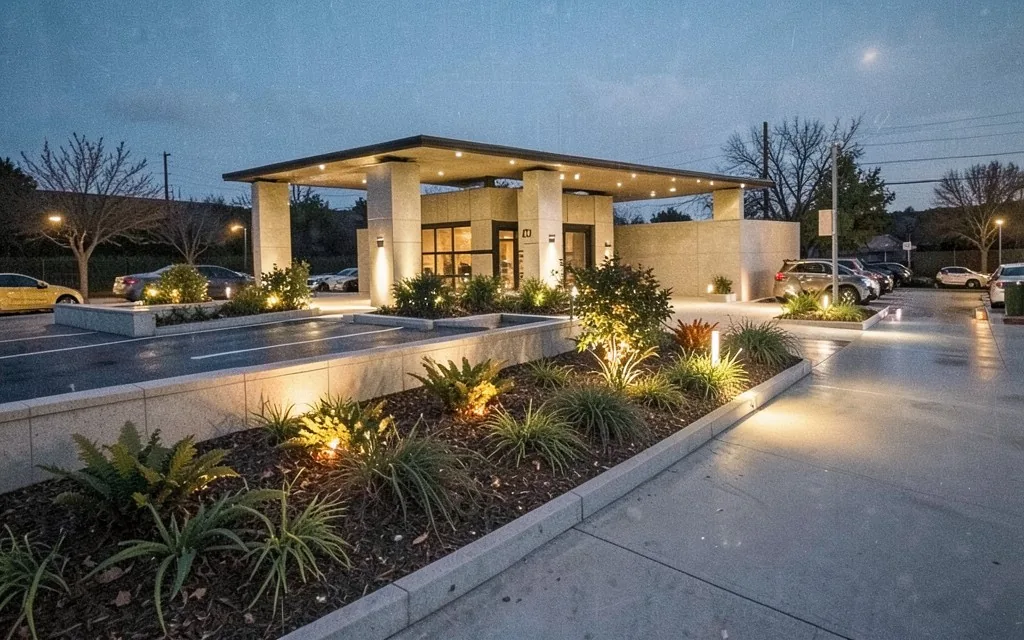
Compare commercial landscape scopes by separating recurring maintenance, corrective work and new installation, then identifying the areas, standards and responsibilities included in each proposal. A useful comparison shows what gets done, how exceptions are handled and which decisions remain with the property representative. A shared site address is not enough to make two scopes equivalent.
Separate maintenance from landscape improvements
List the routine work independently from proposed changes. Replacing a declining planting area, correcting a known irrigation problem and maintaining the existing grounds are different tasks. If they appear in one proposal, keep their boundaries and acceptance criteria distinguishable.
Identify the property's representative and who can approve changes. Include the person responsible for tenant, resident or business communication where relevant. A site discussion is more useful when the decision-maker and the person reporting day-to-day issues have a shared description of the work.
Define the commercial landscape service area
Use a plan, marked photographs or an agreed area schedule. Distinguish beds, turf, trees, irrigation and areas maintained by another party. Record access restrictions, operating hours supplied by the property and requirements for coordinating work around its users.
Keep project-specific conditions attached to the actual site. An office park, retail property and HOA landscape can have different users and coordination needs; the proposal should not assume the same priorities simply because all three need landscape services.
Compare tasks, responsibilities and exceptions
| Scope element | What to record |
|---|---|
| Areas | Included boundaries, exclusions and shared responsibilities |
| Tasks | Recurring work, corrective items and separate installation |
| Coordination | Access, property operations and communication contacts |
| Exceptions | How extra work, conditions and proposed changes are authorized |
| Review | How issues are logged, reviewed and closed |
Ask how work frequency or scheduling will be agreed for the actual scope. Do not infer a response commitment, staffing arrangement or emergency service from a general maintenance description. Any such commitment belongs in the written agreement if it is part of the proposal.
Assign reporting and change approval
Agree how the property reports a concern and what information helps resolve it: location, date, photographs and the relevant scope item. Establish who can authorize a change and how the approval is recorded. A problem log should distinguish an unfinished included task from a proposed addition.
For an improvement project, record selections, interfaces with ongoing maintenance and handover instructions. Identify when the maintenance team takes responsibility for new work and which establishment or specialist tasks remain separately assigned.
Prepare a commercial landscape scope checklist
- Identify the property representative and approver.
- Mark included areas and exclusions.
- Separate recurring work from improvements.
- Record access and operating constraints.
- Agree reporting and extra-work authorization.
- Assign handover and continuing care responsibilities.
Explore commercial landscape maintenance, office park landscaping or HOA landscaping. For a phased improvement program, use the landscape master-plan guide to organize the sequence before comparing installation scopes.