
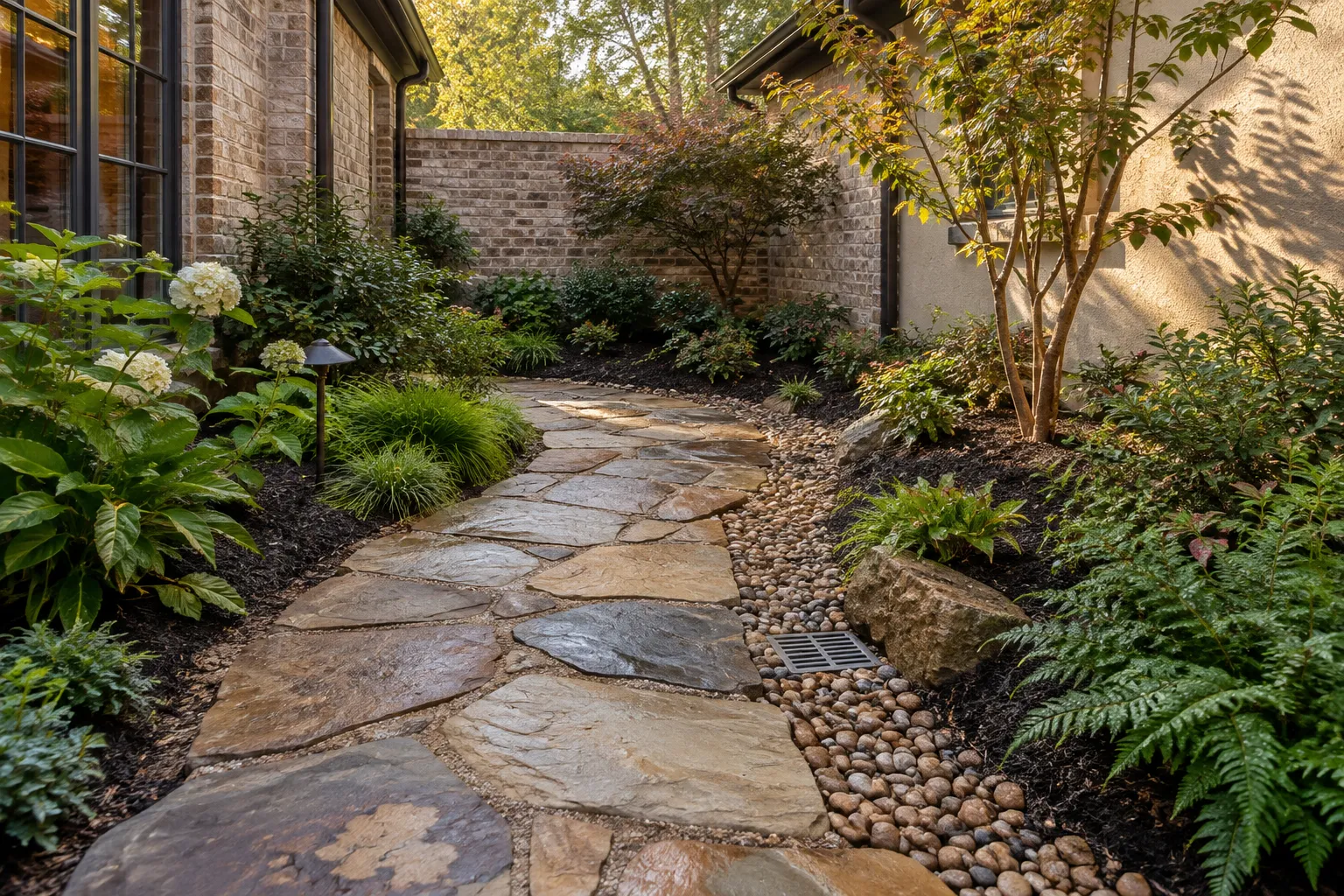
Clay Soil Drainage Solutions in Conroe & Houston
Clay-soil drainage begins by distinguishing slow soil infiltration from a surface that simply traps water.
Family-owned since 2010 · Own crews · Licensed & insured · Free written estimates
Clay Soil Drainage Installation requirements
Those are related but not identical problems. Observe the site after rainfall and irrigation before choosing grading, a drain or a change in watering; the presence of clay alone is not a complete diagnosis.
For clay soil drainage installation work in Houston, Conroe, Spring or Montgomery, send Boone’s the address, a few photos of the area and what you want done. Boone’s is based in Montgomery, TX.
Services
What Boone’s handles for clay soil drainage installation. Each is priced after we walk the property.
Clay-soil wet-area investigation
Map the wet area and record how long water remains. Compare it with rainfall, irrigation zones and nearby surface levels. Look beyond the visible puddle: runoff entering from paving or a leaking line can create a problem that should not be attributed solely to the soil's texture.
Use photographs from a consistent viewpoint and note whether the surface dried between events. Compare a nearby unaffected area. That history is more informative than one close-up and helps the visit establish the problem's true extent.
Surface grading versus subsurface drainage
Determine whether water is held on the surface by low ground or moving through the soil toward a trapped area. The proposed response should follow that distinction. A pipe can leave an unrelated surface depression untouched, while reshaping the surface may not address every subsurface-water condition.
Ask which observed condition each intervention addresses. Grading, irrigation repair and buried drainage can coexist, but their functions should stay distinct. This clarifies what happens when one stage proceeds and another is deferred.
Drain route and workable discharge
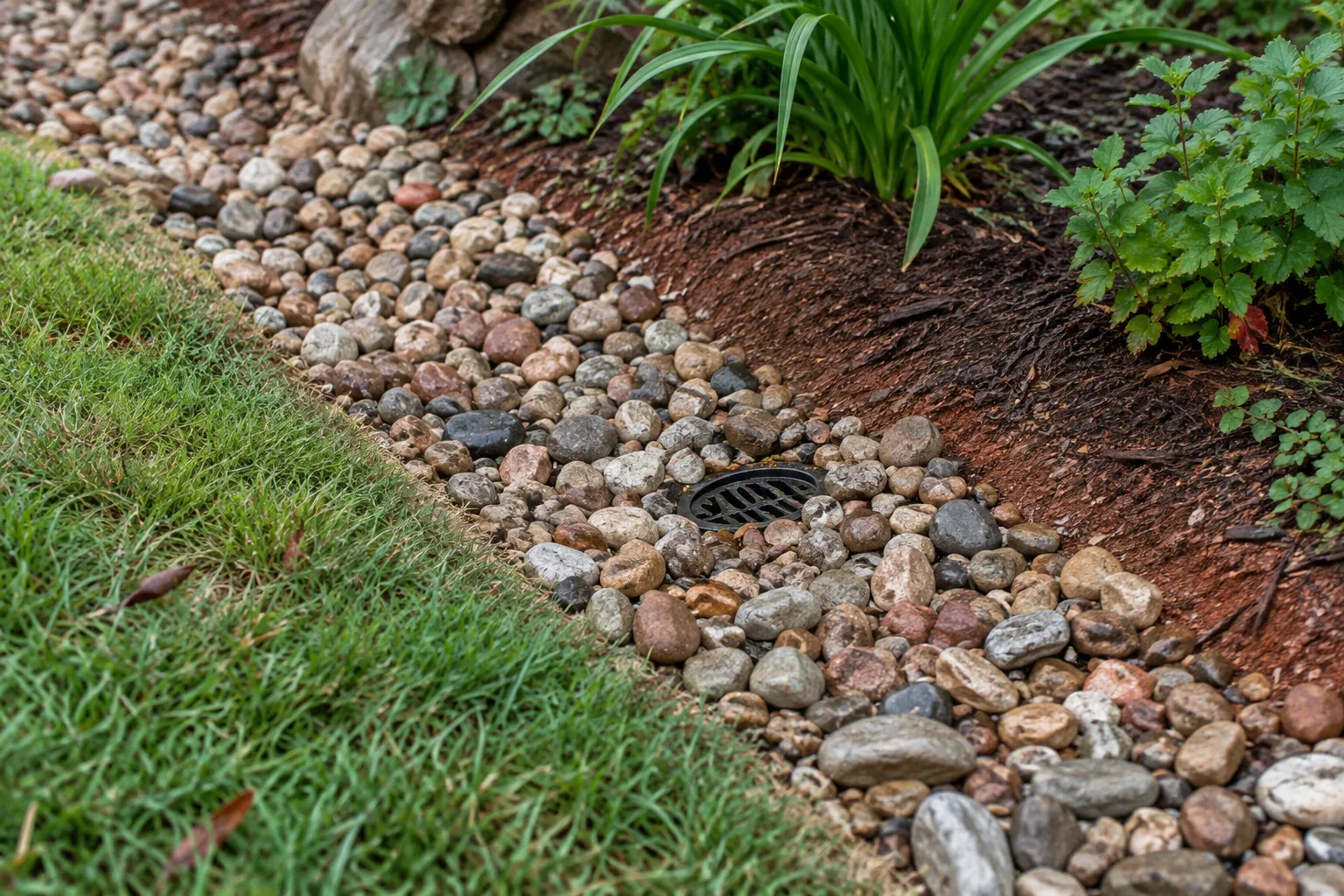
Confirm an actual destination for collected water before specifying pipe or aggregate. The design needs to fit the available levels and site constraints. Do not present a buried gravel-filled trench as a complete solution when its route, capacity and discharge have not been considered.
Locate inspection points and identify the surfaces that a repair would disturb. Show path crossings separately. A route selected only to minimize initial excavation may make later cleaning or replacement unnecessarily difficult.
Irrigation changes in slow-draining soil
Review the existing watering schedule and distribution before adding drainage construction. EPA guidance supports adjusting irrigation to site conditions and avoiding runoff. A bed repeatedly saturated by an unnecessary timer setting may need a control or distribution correction alongside, or instead of, excavation.
Change one operating variable at a time and record the response. A simultaneous timer adjustment and leak repair can obscure which problem mattered. Keep the observations instead of repeatedly resetting the controller without a record.
Planting-bed reconstruction and soil work
Inspect compaction and the relationship between replacement material and surrounding clay. A small improved pocket does not by itself resolve water movement across the bed. Define the problem first, then choose an appropriate intervention rather than selling a universal soil-removal package under the drainage label.
List plants to retain, lift or replace during reconstruction. Root areas constrain machinery and stockpiling. Price restoration of the planting separately from the drainage components so the proposal describes a completed garden repair.
Drainage completion and observation
Review the final surface and access to inspection points, and establish how performance will be observed after rain. Keep the solution's limits clear: no system is established as suitable from a dry-day appearance alone.
Map completed routes before grass or mulch conceals them. Demonstrate access points and record the conditions of the initial observation. This establishes a useful baseline without claiming every possible storm has been simulated.
Talk to Boone’s about clay soil drainage installation
Own crews, licensed and insured, working Conroe, Houston and Montgomery County since 2010.
How it works
How a clay soil drainage installation project starts
- 01
Call or send photos
Call (936) 206-7627 or use the form with the address and a few photos of the area.
- 02
We walk the property
We look at the site, the light, the soil and the access before anything is priced.
- 03
Written estimate
You get a detailed estimate in writing at no cost, and the work is done by our own crews.
Questions about clay soil drainage installation
Does every wet clay yard need a French drain?
No. Surface grading, a leaking irrigation component or unsuitable watering can produce wet areas that a subsurface drain does not address well. Identify the water source and its route first. The right proposal explains why the selected method fits the observed problem.
Will adding sand to one planting hole solve slow drainage?
Not as a dependable general solution. The surrounding ground and the destination for water still control the result. Evaluate the full bed and root environment before choosing amendments, replacement soil or drainage work; a bagged ingredient is not a site-level outlet.
Can water simply be discharged to the nearest boundary?
That cannot be assumed. The destination must be appropriate for the property and applicable requirements, and it should not transfer a problem elsewhere. Confirm the proposed route before excavation instead of deciding where the pipe ends after the trench is dug.
What evidence is helpful before a drainage visit?
Send photographs during or shortly after rain, the duration of ponding, irrigation settings and any recent grading changes. Identify downspouts and recurring wet spots. A dry-day photograph is useful for layout but cannot show the whole moisture problem on its own.
Related plants and projects
Large Property Grading
Large-property grading should begin with measured elevations and a clear purpose.
Foundation Drainage Installation
Foundation drainage work should identify the source and route of water before a pipe is proposed.
Large Property Earthworks
Large-property excavation needs a defined purpose, measured limits and a material-handling plan.
Estate Landscape Master Planning
An estate landscape master plan should resolve how the whole property works before individual features are ordered.
Tree Planting
Tree planting should match the actual tree to a place where it can develop.
Get a free estimate for clay soil drainage installation
Call (936) 206-7627 or send the address and a few photos through the form. We walk the property and put the price in writing at no cost.