
Japanese Cedar Planting & Care in Conroe & Houston
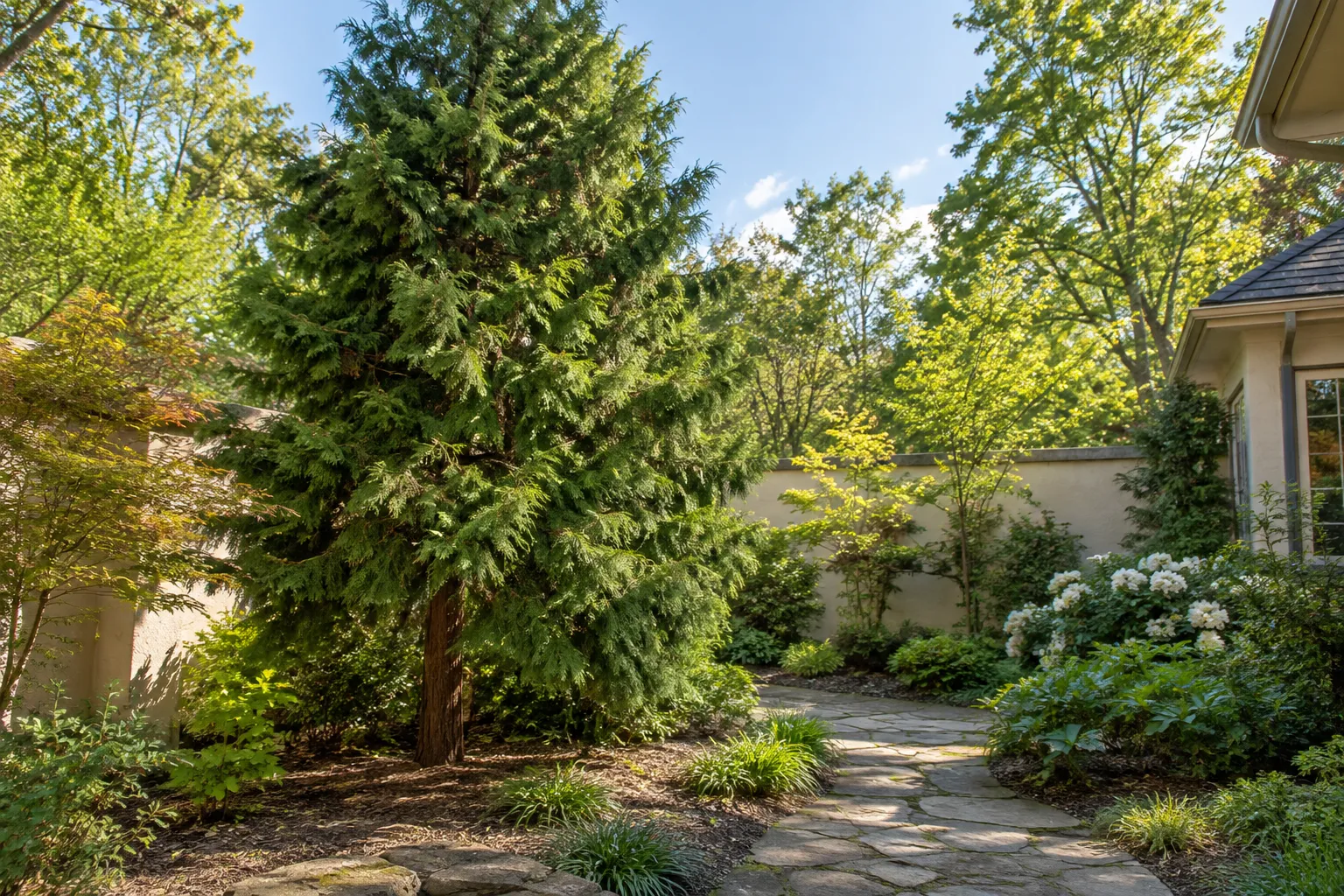
Japanese cedar can create a soft evergreen backdrop, but the species grows into a substantial tree.
Family-owned since 2010 · Own crews · Licensed & insured · Free written estimates
Japanese Cedar planting and care requirements
Compact cultivars are separate choices, not the result of continually shortening a large one. The planting needs to be planned around its eventual outline and the moisture conditions available through summer.
For Japanese cedar work in Houston, Conroe, Katy or Spring, send Boone’s the address, a few photos of the area and what you want done. Boone’s is based in Montgomery, TX.
Services
What Boone’s handles for Japanese Cedar. Each is priced after we walk the property.
Japanese Cedar Planting
Japanese cedar planting should accommodate a conical tree with significant height and width unless a compact cultivar is specifically selected. Sun, dappled light or partial shade can be suitable. Keep enough root space outside a narrow foundation bed rather than treating the current nursery size as the permanent footprint.
Japanese Cedar Nutrition & Fertilization
Japanese cedar nutrition should be judged from actual vigor and soil conditions. Its naturally soft foliage and seasonal changes do not establish a fertilizer requirement. Investigate moisture and root damage first when a recently installed tree declines; a richer feeding program cannot repair a poor receiving site.
Japanese Cedar Transplanting
Japanese cedar transplanting becomes more demanding as the conical crown and root system enlarge. Check excavation clearance and whether the tree can be supported without damaging low branches. A move should be assessed before construction begins, not added after foundations or fences have already restricted access.
Japanese Cedar Soil Assessment & Soil Replacement
Japanese cedar soil assessment should consider its preference for moist, acidic, well-drained ground. Adaptability to other textures does not eliminate the need to investigate compaction. Specify soil replacement only where the existing condition warrants it, with attention to the area future roots will occupy.
Japanese Cedar Sourcing
Japanese cedar sourcing should identify Cryptomeria japonica and the cultivar. Standard trees and dwarf selections differ greatly in scale. Check the supplier's dimensions and photographs, and avoid approving a generic cedar substitute where the soft texture and form are central to the planting.
Japanese Cedar Irrigation Installation
Japanese cedar irrigation should maintain establishment moisture without repeatedly saturating the trunk base. Low branches can conceal the watering arrangement; leave access for checks. Measure how the root ball dries in relation to surrounding soil instead of inheriting the schedule of a nearby lawn zone.
Japanese Cedar Root Drainage
Japanese cedar root drainage should be checked before using it as a continuous screen. A low section of a long bed can remain wet while the ends drain normally. Assess the full row after rain rather than treating every tree in it as though the ground were identical.
Japanese Cedar Aftercare & Maintenance
Japanese cedar aftercare should compare foliage changes with the cultivar and the conditions at the affected branches. Keep maintenance machinery away from the stem and monitor support ties. A large eventual tree needs a long-term rooting area, not progressively deeper mulch to hide a crowded base.
Keep irrigation checks accessible behind the screen. As lower foliage thickens, a leaking or blocked watering point can be difficult to notice from the outside, while the tree's root conditions continue to change.
Japanese Cedar Pruning
Japanese cedar pruning should retain its characteristic conical form where that is the design intent. Choosing a smaller cultivar is preferable to promising indefinite severe size control. The referenced profile does not provide a local pruning schedule, so substantial reshaping needs an assessment of the individual tree.
Japanese Cedar Health Assessment
Japanese cedar health assessment should examine the distribution of leaf spots, blight or dieback rather than automatically increasing irrigation. The species source lists fungal problems among possible issues. Distinguish those possibilities from physical root damage or poor drainage before a treatment is selected.
Talk to Boone’s about Japanese Cedar
Own crews, licensed and insured, working Conroe, Houston and Montgomery County since 2010.
How it works
How a Japanese Cedar project starts
- 01
Call or send photos
Call (936) 206-7627 or use the form with the address and a few photos of the area.
- 02
We walk the property
We look at the site, the light, the soil and the access before anything is priced.
- 03
Written estimate
You get a detailed estimate in writing at no cost, and the work is done by our own crews.
Common questions about Japanese Cedar
Is winter bronzing always a sign that Japanese cedar is dying?
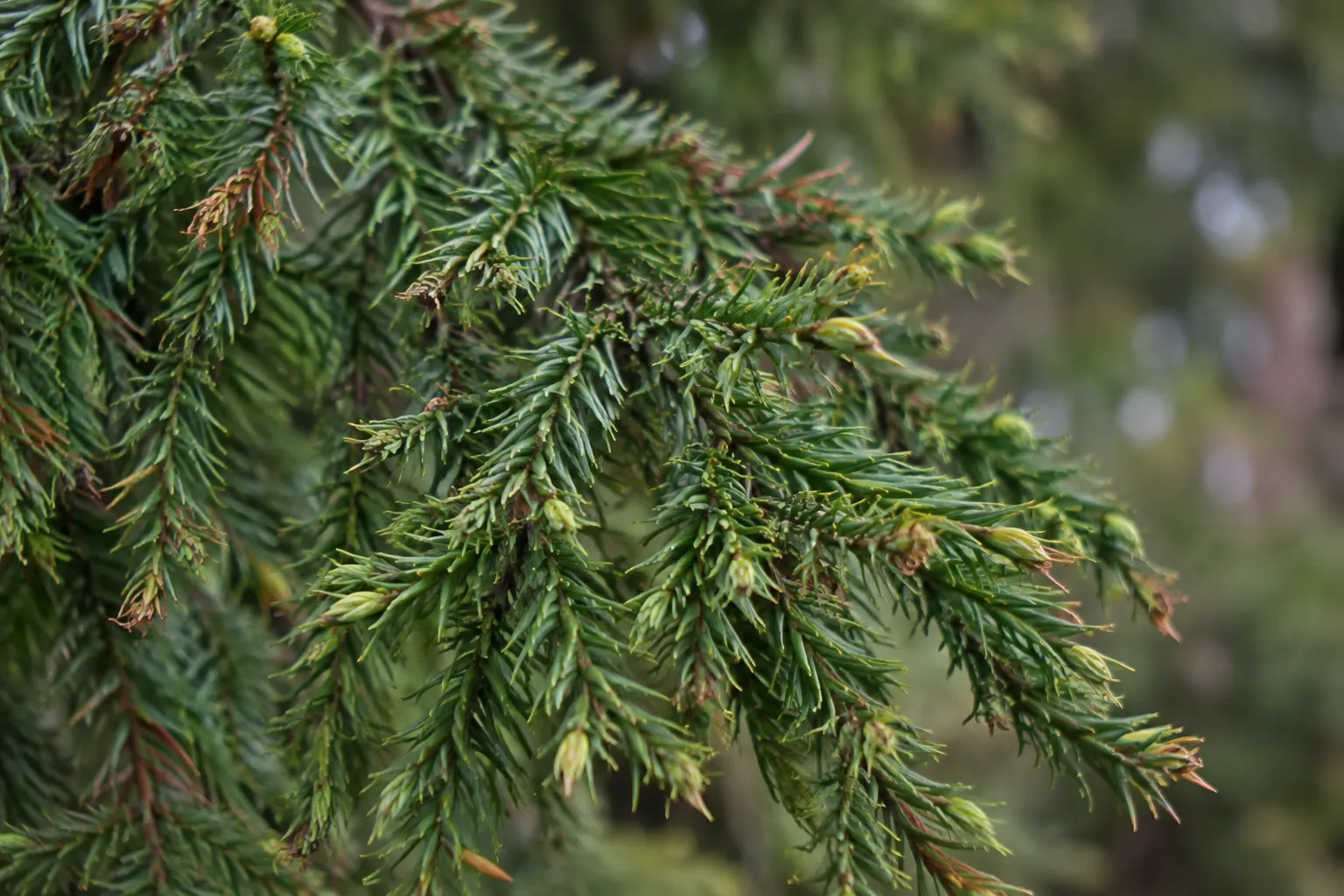
No. Seasonal bronzing occurs in some cultivars, while others retain greener color. Identification, distribution of symptoms and root-zone conditions help distinguish expected seasonal appearance from a plant-health problem.
Can a dwarf Japanese cedar be exchanged for the species?
No. Cultivars can differ greatly in final scale and foliage presentation. Use the complete selection name when ordering and retain it after installation. A nursery-sized plant does not reveal whether it will remain a compact feature or become a substantial tree.
What if bronzing appears only on one damaged branch?
Do not explain every brown area as normal winter color. Compare the affected branch with the rest of the tree, the season and recent moisture conditions. Localized or progressing dieback calls for investigation before cosmetic clipping hides the pattern.
Does Japanese cedar suit a permanently dry corner?
The species generally favors moist, draining ground. Assess irrigation access and exposure before using it in a hot, dry position. The fact that it is an evergreen screen does not make its requirements interchangeable with a drought-adapted conifer.
Related plants and projects
Japanese Black Pine
Japanese black pine is a character tree with paired needles and an increasingly irregular crown.
Niwaki Pine
Niwaki describes a trained garden tree, not a botanical species.
Shimpaku Juniper
Shimpaku juniper is sought for fine evergreen foliage and a sculptural framework.
Tree Planting
Tree planting should match the actual tree to a place where it can develop.
Tree Health Assessment
A tree health assessment investigates symptoms before choosing treatment.
Get a free estimate for Japanese Cedar
Call (936) 206-7627 or send the address and a few photos through the form. We walk the property and put the price in writing at no cost.
Sources
- Plant reference: Cryptomeria japonica
- ISA TreesAreGood — tree planting principles
- UNH Extension — when trees and shrubs need fertilizer
- LSU AgCenter — moving established trees and shrubs within the landscape
- US EPA WaterSense — irrigation management
- The Morton Arboretum — evergreen tree and shrub pruning