
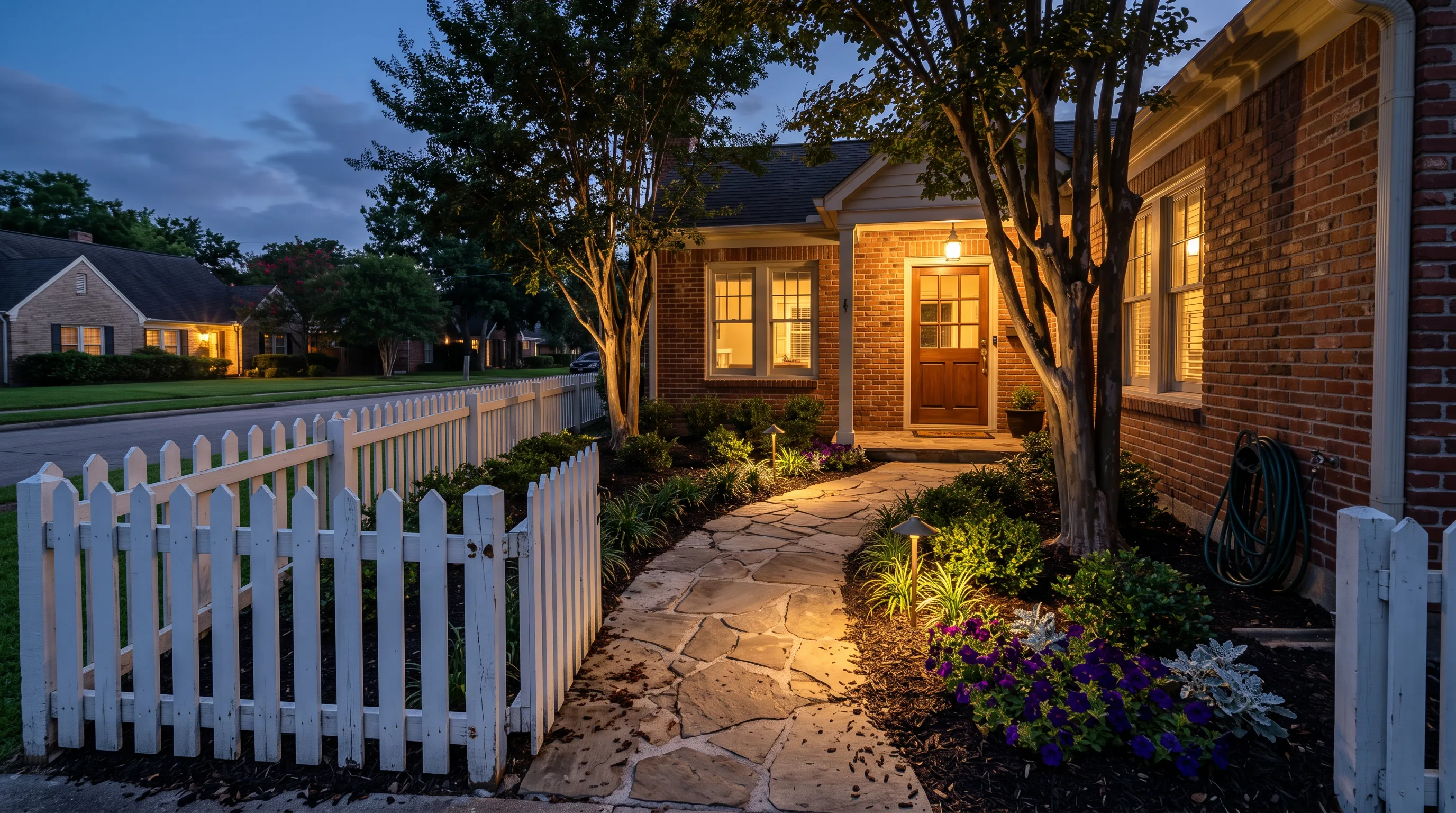
Plan landscape lighting around the activities and features that need light, then review the result from the house, the garden and neighboring viewpoints. Agree the intended coverage, controls, installation scope and adjustment process before comparing fixture counts. More fixtures do not, by themselves, describe a more useful lighting plan.
Map the outdoor tasks and views that need lighting
List the routes, steps, seating, cooking areas and selected features you want to use or see after dark. Separate everyday tasks from occasional entertaining. Mark existing lights, including those on the house, so the discussion starts with the complete setting rather than an empty plan.
Photograph the property in daylight and note what feels difficult after dark. Ask how the proposed layout relates to planting and the scale of the actual features. A tree shown in a reference photograph may not have the same form, position or surrounding surfaces as the tree on your property.
Evaluate useful light and unwanted spill together
DarkSky and the Illuminating Engineering Society's principles recommend lighting that serves a purpose, targets the intended area, uses suitable output, is controlled and favors warmer color where appropriate. Apply that as a set of design questions, not as a promise that any particular fixture automatically resolves the setting.
Review where light will be seen as well as where it will land. Include windows, seating positions and adjoining properties in the conversation. Ask how glare and spill will be assessed once the fixtures are installed and whether a nighttime adjustment visit is part of the agreed scope.
Compare lighting controls and installation inclusions
| Decision | Question for the proposal |
|---|---|
| Coverage | Which tasks, routes and features are included? |
| Equipment | What products and finishes are specified? |
| Controls | Who sets operating times, zones and owner access? |
| Installation | What access, protection, professional work and restoration are included? |
| Adjustment | How will aiming and the nighttime result be reviewed? |
Have service routes and installation requirements coordinated for the actual location. Do not assume lighting can share every route or construction detail with another service. If paving, irrigation or planting is being changed, assign the interface before the work is covered.
Agree lighting handover and ongoing care
Request the final equipment schedule, control instructions and the process for reporting a fault. Confirm the actual product and workmanship terms rather than treating a component's advertised lifespan as coverage for the whole system. Keep the information where the person responsible for the property can find it.
Discuss how future planting changes or a later construction phase may affect the layout. A useful handover explains what the owner can adjust and which changes should go back to the installer. Record any outstanding aiming, controls or restoration items separately.
Prepare a landscape lighting brief
- Map the routes and activities used after dark.
- Mark existing lights and selected landscape features.
- Identify windows, viewpoints and spill concerns.
- Compare equipment, zones and controls.
- Assign installation and adjoining-work coordination.
- Confirm nighttime review and handover inclusions.
Explore landscape lighting services. Coordinate a cooking area with the outdoor kitchen guide, or include lighting in a phased master plan.
Reference: DarkSky: Five Principles for Responsible Outdoor Lighting, read November 13, 2026. The worksheet is original editorial guidance.