
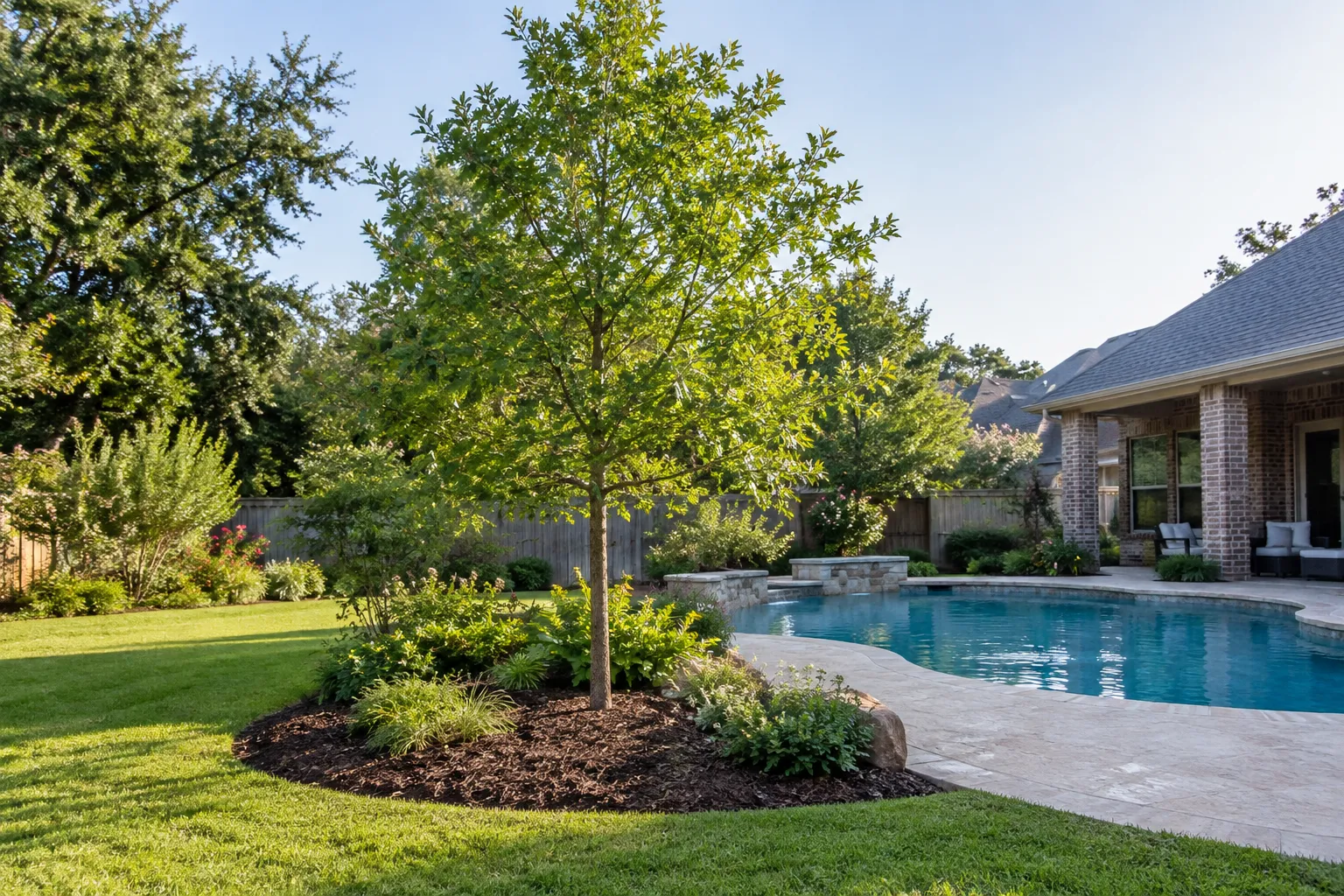
Plan tree and specialty planting by matching the purpose of the planting to the actual site and the care it will receive. Record available space, light, access and retained features before selecting a specimen. A complete proposal identifies the plant, preparation, installation responsibilities and the handover needed to support the planting.
Describe what the planting needs to do
Start with the intended role: shade, screening, a focal point, a collection or an edge to an outdoor room. Describe where the benefit is needed and what must stay visible or accessible. A request for instant screening may involve different choices from a specimen intended to develop over time.
Bring photographs and a plan showing the house, paving, services you know about and existing trees. Mark uncertainty rather than presenting an estimated space as a surveyed dimension. Keep plant preferences separate from the site assessment, so the selection can change if the actual conditions call for a different approach.
Compare plant selection with the available conditions
University of Maryland Extension's planting guidance highlights soil assessment, an appropriate plant choice, available sunlight and room for the plant at maturity. Those general selection questions are useful here; its regional planting-calendar advice should not be treated as a Texas schedule.
Ask how the proposed plant fits the intended location, including its mature form and the surrounding uses. A species name alone may not describe the variety, supplied size or shape being proposed. Where a particular specimen matters, agree how it will be selected and what happens if the preferred material is unavailable.
Coordinate retained trees, access and installation
Identify features that should be assessed before the new layout is fixed. If construction is proposed near an existing tree, ask who evaluates the interface and how the agreed protection appears in the work scope. Do not interpret this planning guide as permission to excavate beside a retained tree.
| Scope item | What to document |
|---|---|
| Plant selection | Name, variety where relevant, supplied form and approval process |
| Site information | Available space, assessment and retained-feature constraints |
| Delivery | Access, protection and handling responsibilities |
| Installation | Preparation, professional work and adjoining restoration |
| Care | Instructions, responsible person and actual coverage terms |
Agree planting care before handover
Identify who will carry out the care and how they will receive the instructions. Discuss the actual plant and site rather than relying on a single watering rule for every installation. If another company maintains the property, include that handoff in the plan.
Keep final plant records, approved substitutions, care guidance and written coverage terms together. Review the installed scope and record outstanding items. Planting an example variety or showing an illustrative image does not establish a guarantee about the growth or survival of every supplied plant.
Prepare a tree and planting project checklist
- Describe the planting's intended role.
- Mark space, retained features and known services.
- Record preferences separately from confirmed selections.
- Compare plant identity, form and substitution terms.
- Assign access, protection and installation responsibilities.
- Agree the care instructions and responsible person.
Explore tree planting and specialty plants. For an existing tree that may be moved, discuss tree transplanting assessment rather than assuming relocation is the right option.
Reference: University of Maryland Extension: Planting a Tree or Shrub, read November 13, 2026; used for general site and plant-selection principles, not a local planting calendar.