
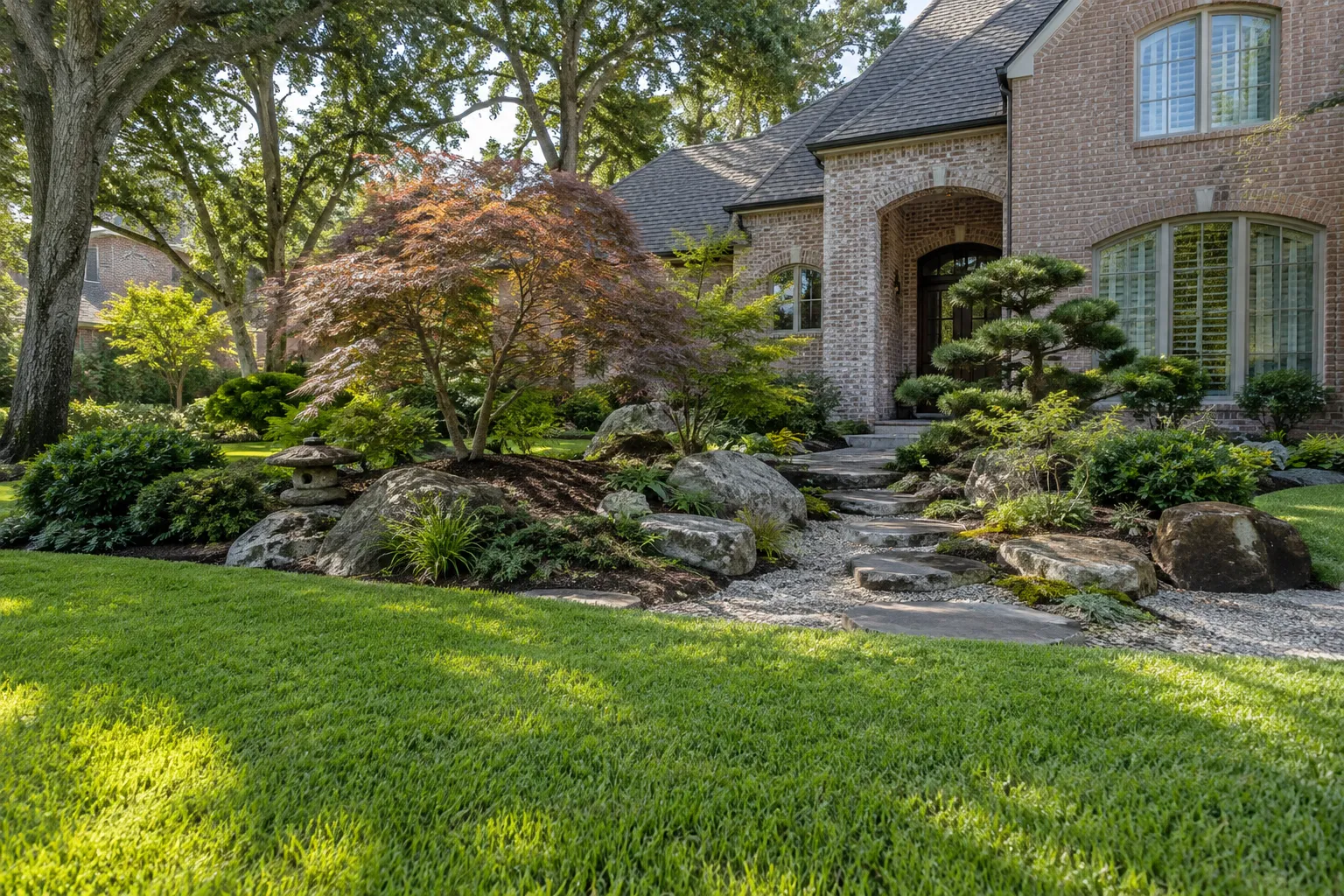
Japanese Garden Design & Landscaping in Conroe & Houston
Japanese garden design should create a coherent relationship between space, stone, plants and the way the garden is experienced.
Family-owned since 2010 · Own crews · Licensed & insured · Free written estimates
Japanese Garden & Landscape Design requirements
It is not a checklist of lanterns, bamboo and a maple. The design can be restrained and specific to the property without pretending that every traditional plant or imported specimen suits the local conditions.
For Japanese garden & landscape design work in Houston or Conroe, send Boone’s the address, a few photos of the area and what you want done. Boone’s is based in Montgomery, TX.
Services
What Boone’s handles for japanese garden design. Each is priced after we walk the property.
Garden views and movement
Identify the principal view from the house and the route through or beside the garden. Decide where the composition should open and where it should feel enclosed. A compact courtyard may need a focused view rather than a collection of features competing for the same small area.
Decide whether visitors enter the composition or view it mainly from a terrace. A viewing garden uses space differently from a walking garden. That choice locates maintenance access without making every narrow gap look like an intended path.
Stone, gravel and path composition
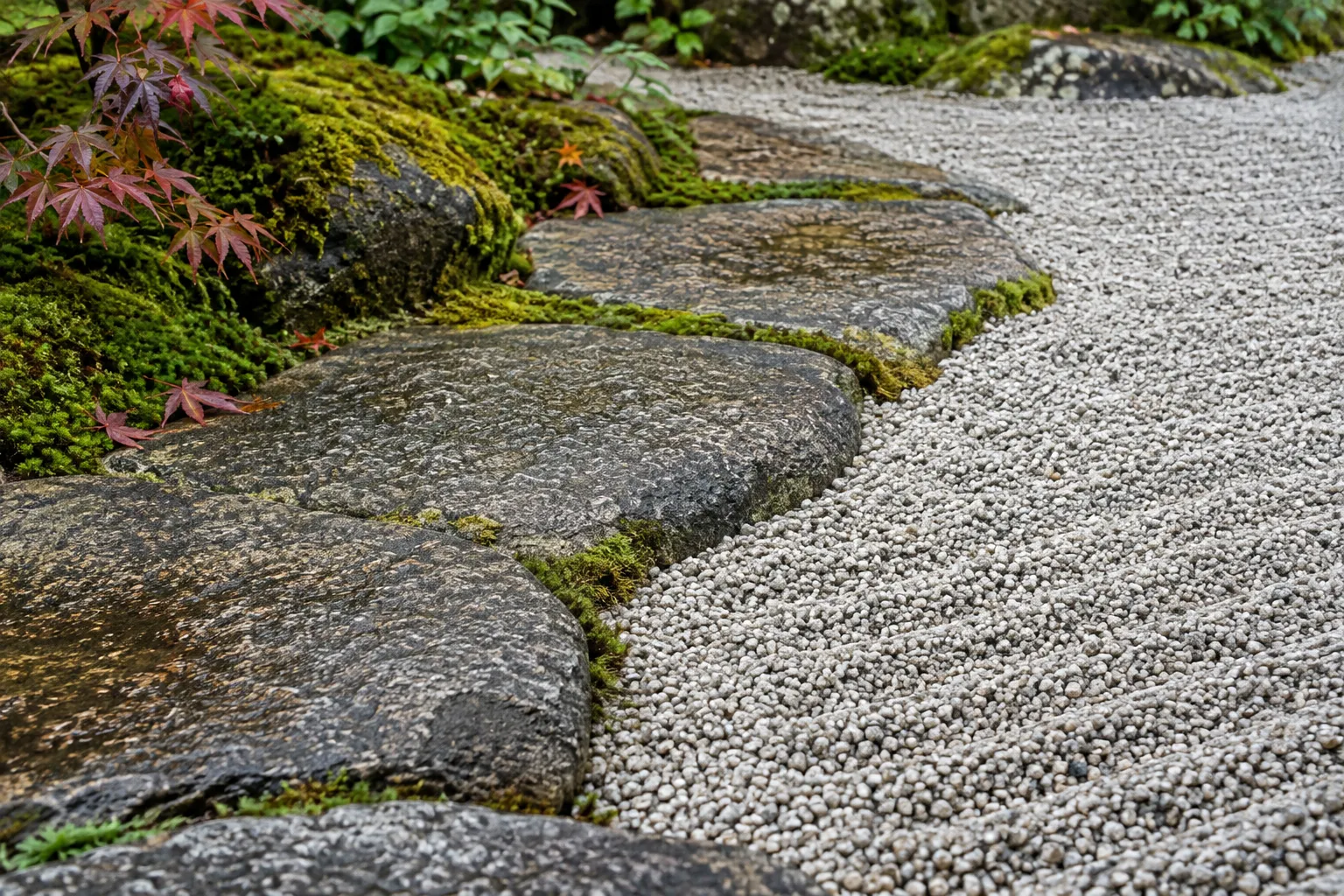
Choose the scale and arrangement of hard materials with the intended movement and maintenance in mind. Stone placement should also respect access and water routes. A natural-looking composition is not a reason to leave unstable units, inaccessible equipment or unresolved drainage hidden beneath decorative gravel.
Try a small arrangement of the proposed stone and gravel before fixing its extent. Compare it with the house and foliage, and discuss leaf collection. The cleaning routine should fit the selected texture.
Japanese garden plant selection
Select plants for the site's actual light, moisture and available mature space. A Japanese maple, trained pine and shade shrub have different requirements. Use exact species and cultivar names where possible, and treat a niwaki form as a maintenance commitment rather than a separate botanical plant.
Show the winter outline alongside the leafy-season effect. Decide which evergreens hold the composition when a maple is bare. This develops a relationship between plants rather than selecting every specimen from a peak-season photograph.
Water features and drainage
Decide whether water is part of the design and what operating care it will require. A dry composition still needs a plan for rainfall and runoff. Keep a decorative water effect separate from the property's drainage function so the garden does not conceal a persistent low wet area.
Listen from the intended seat before committing to a water effect. Sound welcomed at an entrance may be intrusive beside an open window. Independent controls allow water and pathway lighting to operate for different purposes.
Pruning intent and long-term care
Agree whether plants will develop naturally or retain a trained outline. The maintenance plan should preserve the composition without copying one technique across unrelated species. Do not promise a specialist pruning calendar for an unidentified specimen; establish the plant and its requirements before the styling work is specified.
Record the branches and open spaces that define a trained silhouette in dated photographs. This gives successive maintenance visits the same objective without prescribing identical cuts for unrelated pines, maples and flowering shrubs.
Design scope and plant availability
Review the concept against actual stock, access and the household's willingness to maintain it. Document substitutions before they change the intended proportions.
Identify which stone and specimen positions need approval on site before final fixing. Small changes in orientation can affect the principal view. Allow that decision point rather than trying to settle every three-dimensional relationship from a flat drawing.
Talk to Boone’s about japanese garden design
Own crews, licensed and insured, working Conroe, Houston and Montgomery County since 2010.
How it works
How a japanese garden design project starts
- 01
Call or send photos
Call (936) 206-7627 or use the form with the address and a few photos of the area.
- 02
We walk the property
We look at the site, the light, the soil and the access before anything is priced.
- 03
Written estimate
You get a detailed estimate in writing at no cost, and the work is done by our own crews.
Plants for a Japanese garden
Japanese Maple
Japanese maple is a focal tree for a sheltered position, not a substitute for a large shade canopy.
Bloodgood Japanese Maple
Bloodgood is an upright Japanese maple chosen for a broad crown and dark foliage.
Coral Bark Japanese Maple
Coral bark Japanese maple is selected for the seasonal color of young branches as much as for its leaves.
Laceleaf Japanese Maple
Laceleaf refers to deeply divided foliage, not one cultivar with one final shape.
Japanese Black Pine
Japanese black pine is a character tree with paired needles and an increasingly irregular crown.
Niwaki Pine
Niwaki describes a trained garden tree, not a botanical species.
Japanese Cedar
Japanese cedar can create a soft evergreen backdrop, but the species grows into a substantial tree.
Japanese Holly
Japanese holly provides small evergreen leaves and a compact outline, but it should not be selected on appearance alone.
Japanese Plum Yew
Japanese plum yew is a useful candidate for an evergreen planting where shade limits other conifers.
Japanese Snowbell
Japanese snowbell offers hanging flowers and a refined branching pattern, but its tolerance of heat and drought is limited.
Satsuki Azalea
Satsuki azalea is a selection group, so the cultivar must be identified before size and flowering promises are made.
Shimpaku Juniper
Shimpaku juniper is sought for fine evergreen foliage and a sculptural framework.
Podocarpus
Podocarpus can be a clipped evergreen screen or a more open specimen, but those outcomes need different spacing and maintenance.
Camellia Japonica
Camellia japonica is a long-lived flowering evergreen whose success depends on the bed as much as the cultivar.
Sasanqua Camellia
Sasanqua camellia offers an autumn-to-winter flower display, distinct from many japonica selections.
Questions about Japanese garden & landscape design
Does a Japanese garden have to use only plants from Japan?
No. A useful planting scheme starts with the actual site and the desired composition. Japanese species can be appropriate, but their names do not override light, moisture or mature space. Choose compatible plants rather than treating geographic origin as proof of suitability.
Is niwaki a separate type of pine?
No. Niwaki describes garden-tree training and presentation, not a single species. Identify the pine before specifying its care. A pruning method appropriate to one pine should not be copied onto another tree merely because both were sold with cloud-shaped foliage.
Can a small courtyard support a Japanese-style garden?
A compact space can work through a focused view, a limited material palette and carefully sized planting. Check how the area will be maintained and seen from inside the home. Adding every familiar feature can make a small garden harder to use rather than more complete.
What maintenance should be agreed before installation?
Separate ordinary establishment care from specialist shaping and any water-feature servicing. Identify which plants will retain trained forms and which can develop naturally. That makes the ongoing workload clear before mature specimens, paths and stones restrict access.
Related plants and projects
Estate Landscape Master Planning
An estate landscape master plan should resolve how the whole property works before individual features are ordered.
Outdoor Living Spaces
Outdoor living construction should start with the activities that need a place: dining, conversation, cooking or looking across the garden.
Backyard Landscape Construction
Backyard landscape construction should resolve the ground, access and retained features before decorative work begins.
Large Property Grading
Large-property grading should begin with measured elevations and a clear purpose.
Tree Planting
Tree planting should match the actual tree to a place where it can develop.
Get a free estimate for japanese garden design
Call (936) 206-7627 or send the address and a few photos through the form. We walk the property and put the price in writing at no cost.